
Material de mecanizado CNC de nailon (PA)
El nailon, conocido químicamente como poliamida (PA), es un termoplástico semicristalino versátil ampliamente reconocido por su excelente resistencia mecánica, bajo coeficiente de fricción y superior resistencia al desgaste. Sirve como material sustituto premium del metal en el mecanizado CNC, particularmente para piezas que requieren durabilidad y autolubricación. En JUCHENG, aprovechamos una amplia experiencia en fabricación para proporcionar servicios de mecanizado CNC de nailon de precisión. Nuestra instalación maneja una amplia gama de grados, incluyendo PA6, PA66 y nailon relleno de vidrio, utilizando tecnología CNC avanzada para entregar prototipos funcionales y piezas de producción que cumplen con los estrictos estándares ISO 13485 e IATF 16949.
Mecanizado CNC de PA
¿Qué es el nailon (PA)?
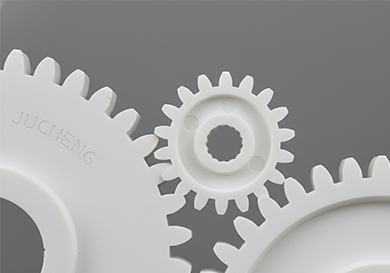
El nailon es un polímero termoplástico sintético que es resistente, ligero y resistente a productos químicos y a la abrasión. Es uno de los plásticos más utilizados en ingeniería debido a su capacidad para funcionar en entornos mecánicos exigentes. Se utiliza comúnmente para fabricar piezas móviles que necesitan soportar fricción y desgaste sin lubricación, como engranajes, cojinetes y patines deslizantes.
Ventajas del mecanizado CNC de nailon (PA)
| Ventaja | Descripción |
| Excepcional resistencia al desgaste | El nailon es naturalmente autolubricante y resiste la abrasión, lo que lo hace ideal para piezas móviles que experimentan alta fricción. |
| Alta resistencia a la tracción | Ofrece alta capacidad de carga y rigidez, especialmente en grados PA66 y rellenos de vidrio, adecuado para uso estructural. |
| Resistencia química | Altamente resistente a aceites, combustibles, grasas y disolventes, lo que lo hace perfecto para aplicaciones automotrices bajo el capó. |
| Resistencia a la fatiga | Un material resistente y elástico capaz de absorber impactos y soportar cargas cíclicas repetidas sin fallar. |
| Aislamiento eléctrico | Buenas propiedades aislantes combinadas con resistencia al calor lo hacen adecuado para componentes y conectores eléctricos. |
Parámetros Técnicos y Propiedades del Material
Almacenamos y mecanizamos varios grados de Nylon para adaptarse a aplicaciones de ingeniería específicas:
| Categoría de Grado | Características y Usos Ideales |
| Nailon 6 (PA6) | Buen equilibrio de resistencia, tenacidad y resistencia química. Mejor acabado superficial que PA66.Usos: Carcasas generales, arandelas, almohadillas de desgaste, prototipos estructurales. |
| Nailon 66 (PA66) | Mayor rigidez, resistencia y resistencia al calor que PA6. Menor absorción de agua.Usos: Engranajes mecánicos de alta carga, componentes de motor automotriz, sujetadores. |
| Nylon relleno de vidrio (PA+GF) | Reforzado con fibras de vidrio (ej., GF30) para máxima rigidez y estabilidad dimensional (Abrasivo para mecanizar).Usos: Piezas estructurales, carcasas de alta resistencia, cuerpos de bomba. |
| Nylon relleno de aceite | Contiene lubricante incrustado para el coeficiente de fricción más bajo.Usos: Cojinetes de alta resistencia, tiras de desgaste, rodillos transportadores, placas deslizantes. |
Guías de mecanizado CNC para Nylon (PA)
Mecanizar Nylon es relativamente fácil, pero la precisión requiere abordar su absorción de humedad y propiedades térmicas. JUCHENG sigue estas pautas:
- Gestión de la humedad: El Nylon es higroscópico (absorbe humedad), lo que causa hinchazón. Almacenamos la materia prima en ambientes controlados de humedad y recomendamos diseñar tolerancias no más ajustadas de +/- 0.1 mm para piezas grandes para tener en cuenta la expansión ambiental.
- Control de calor: El Nylon tiene un punto de fusión relativamente bajo en comparación con los metales. Usamos herramientas de carburo afiladas, altas velocidades del husillo y velocidades de avance agresivas para expulsar las virutas rápidamente, llevando el calor lejos de la pieza para evitar la fusión.
- Eliminación de rebabasAl mecanizar nailon, a menudo quedan rebabas tenaces. Empleamos técnicas especializadas de desbarbado (criogénico o recorte manual) para garantizar bordes limpios y afilados en características complejas como dientes de engranaje.
- Estrategia de RefrigeranteEl refrigerante por inundación es esencial para minimizar la acumulación de calor y eliminar las virutas largas y fibrosas que de otro modo podrían enrollarse alrededor de la fresa.
Escenarios de aplicación
El nailon se utiliza predominantemente en aplicaciones funcionales que implican fricción, desgaste o carga en diversas industrias:
- Ingeniería MecánicaEngranajes, ruedas dentadas, poleas, cojinetes, bujes y tiras de desgaste.
- AutomotrizColectores de admisión de aire, cubiertas de motor, cárteres de aceite, conectores a presión y tapas de combustible.
- ElectrónicaBobinas de bobina, interruptores automáticos, aisladores eléctricos y bridas para cables.
- Productos de consumoCarcasas de herramientas eléctricas, fijaciones de esquí, ruedas duraderas y ruedas giratorias.
- IndustrialComponentes de sistemas de transporte, asientos de válvulas y lavadoras a alta presión.
Tabla de propiedades físicas
| Propiedad | Nailon 6 (PA6) | Nailon 66 (PA66) | Nailon 66 + 30% GF | Unidad |
| Densidad | 1.14 | 1.15 | 1.35 | g/cm³ |
| Resistencia a la tracción | 80 | 85 | 160 | MPa |
| Punto de Fusión | 220 | 260 | 260 | °C |
| Absorción de agua (24h) | 1.6 | 1.2 | 0.9 | % |
| Dureza (Rockwell) | R118 | R120 | R121 | - |

Solicite su DFM y cotización – Cargue sus dibujos
ㆍComplete sus requisitos y cargue su archivo 2D y 3D, le enviaremos su cotización del proyecto y DFM en un plazo de 24 horas.ㆍTipos de archivo: STEP, STP, IGES, IGS, SLDPRT, 3DM, SAT, X_T, DWG, DXF, STL, PDF, ZIP y más. Tamaño de archivo: < 128 MB Tamaño de pieza: < 1500*1500*1500 mm
ㆍPrivacidad: Respetamos su privacidad. Aquí puede encontrar un ejemplo de un acuerdo de confidencialidad. Al enviar este formulario, acepta nuestros términos y condiciones y política de privacidad.
ㆍPrivacidad: Respetamos su privacidad. Aquí puede encontrar un ejemplo de un acuerdo de confidencialidad. Al enviar este formulario, acepta nuestros términos y condiciones y política de privacidad.
