


Seleccionar la ruta de fabricación óptima para una nueva plataforma autónoma o un complejo gabinete médico a menudo lleva a una encrucijada técnica: la elección entre un modelo hecho a mano y una pieza inyectada por máquina. En el mundo actual de alto riesgo de Servicios de Prototipado Rápido, el dilema de RIM vs Fundición al Vacío es más que una cuestión de precio; es una decisión que dicta la supervivencia estructural y la preparación regulatoria de su hardware. Si bien ambos procesos utilizan resinas de poliuretano líquidas, sirven a etapas fundamentalmente diferentes del ciclo de vida del desarrollo del producto. Lograr una transición exitosa de un prototipo Alpha a una ejecución piloto Beta requiere una comprensión profunda de cómo estos "Gigantes Líquidos" manejan el estrés mecánico, la estabilidad dimensional y la lógica financiera de la inversión en herramientas.
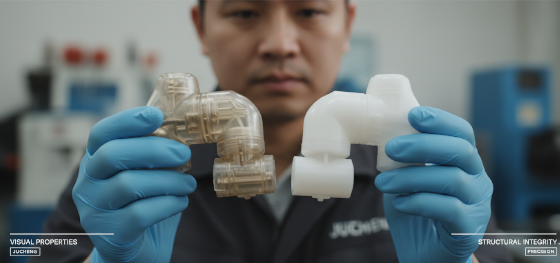
La integridad mecánica en gabinetes de gran tamaño depende de la transición de la validación visual a la producción estructural. La fundición al vacío es la favorita de la industria para las primeras 5 a 10 unidades, proporcionando una estética lista para la venta al menor costo de entrada posible. Sin embargo, una vez que el hardware entra en la fase de pruebas de campo, los requisitos cambian hacia los cimientos inquebrantables de Fabricación de Bajo Volumen. Jucheng Precision aborda estos obstáculos críticos de desarrollo proporcionando una solución integrada que cubre todo el ciclo de vida del poliuretano. Jucheng Precision utiliza su capacidad de 150+ máquinas CNC y 25 unidades Haas/Mazak de 5 ejes para fabricar tanto los patrones maestros de alta fidelidad para moldes de silicona como las herramientas de aluminio de alta resistencia requeridas para el proceso de moldeo por inyección de reacción.
Operando bajo un triple mandato de ISO 13485, ISO 14001, e IATF 16949, Jucheng Precision actúa como el asesor estratégico de alto nivel para OEM globales de MedTech y robótica. Jucheng Precision ofrece un análisis DFM gratuito en 24 horas para garantizar que sus diseños CAD estén optimizados para la física específica de cualquiera de los procesos, evitando los costosos ciclos de retrabajo que afectan a la I+D no validada. Esta guía explora los enfrentamientos de materiales esenciales, las dinámicas de mezcla, y la estabilidad de fluencia a largo plazo necesarias para dominar RIM vs. fundición al vacío para garantizar que su próxima innovación llegue al mercado con 100% de confianza en la durabilidad de su hardware.
contenido:
Descripción general del proceso: dinámicas de vertido manual vs. inyección por máquina
Enfrentamiento de materiales: RIM de grado ingeniería vs. resinas de prototipado
Estrategias de herramientas: silicona flexible vs. aluminio rígido
Tamaño y escala: ¿por qué domina RIM en gabinetes robóticos masivos?
Lógica económica: encontrando el volumen adecuado para tu ROI
Solución JUCHENG: dominando todo el ciclo de vida del poliuretano
Preguntas frecuentes: respuestas reales para etapas de prototipado y logística
Descripción general del proceso: dinámicas de vertido manual vs. inyección por máquina
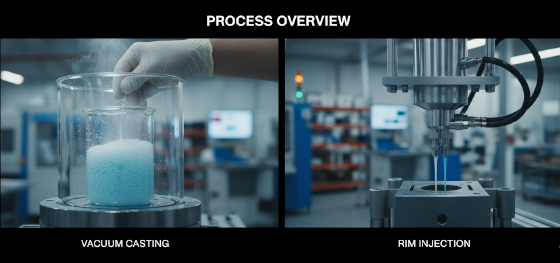
La división fundamental entre estos dos procesos es el método de entrega química y gestión de presión. El moldeo por vaciado es un proceso manual, impulsado por gravedad, donde un técnico mezcla dos componentes de resina a mano o en un pequeño mezclador estático. El líquido se desgasifica en una cámara de vacío para eliminar burbujas de aire y se vierte en un molde de silicona flexible. Este enfoque de baja tensión es ideal para la etapa Alfa de un ensamblajes de robot prototipo, donde el objetivo es verificar la forma visual y el ajuste interno de los componentes electrónicos. Sin embargo, la naturaleza manual del proceso significa que la consistencia de pieza a pieza depende completamente de la habilidad del operador, creando un riesgo de variación en flotas Beta a gran escala.
¿Qué proceso proporciona una mejor consistencia molecular?
Moldeo por inyección de reacción (RIM). El uso de bombas automáticas de alta presión y cabezales de mezcla por choque asegura que la proporción química esté perfectamente homogeneizada a nivel molecular en cada disparo.
La tecnología RIM representa la evolución industrializada del procesamiento de poliuretano. En lugar de verter a mano, los componentes A y B se dosifican mediante bombas servo de alta precisión y se colisionan a velocidades superiores a 150 metros por segundo en un cabezal de mezcla especializado. Esta energía cinética asegura una homogeneización del 100%, resultando en una matriz de polímero significativamente más resistente que las alternativas vertidas a mano. Jucheng Precision utiliza esta precisión automatizada para entregar hardware que cumple con los estrictos ISO 13485 requisitos para equipos médicos, proporcionando la "Evidencia de Fabricación" requerida para la aprobación de la FDA que el moldeo por vaciado manual a menudo tiene dificultades para proporcionar.
El entorno de curado también determina la calidad final de la pieza. Las piezas moldeadas por vacío curan a temperatura ambiente durante varias horas dentro de un molde de silicona blanda. Este proceso lento puede provocar una deriva dimensional sutil a medida que el material se hunde bajo su propio peso mientras aún está "verde". El proceso RIM de Jucheng Precision ocurre dentro de moldes de aluminio con control de temperatura, donde la reacción exotérmica se gestiona mediante circuitos integrados de enfriamiento por agua. Esta disciplina térmica asegura que las bases de precisión logradas en el centro de Shenzhen se "bloqueen" instantáneamente, previniendo la deformación posterior al moldeo que arruina el ajuste de ensamblajes multipieza de gran tamaño en robótica de alta gama.
Enfrentamiento de materiales: RIM de grado ingeniería vs. resinas de prototipado

Elegir entre resinas de grado ingenieril y poliuretanos de prototipado determina si tu hardware sobrevive su primera semana en el campo. En la comparación de Propiedades de materiales: RIM vs. moldeo por vaciado, la densidad de entrecruzamiento del polímero es el principal impulsor del rendimiento. Las resinas de vaciado al vacío están diseñadas para velocidad y facilidad de vertido, a menudo sacrificando la resistencia a la fatiga a largo plazo por un curado rápido. Las resinas RIM son sistemas de ingeniería de alto nivel diseñados para simular los perfiles mecánicos exactos de ABS, polipropileno y nailon relleno de vidrio de grado de producción. Jucheng Precision ayuda a los ingenieros a navegar estas compensaciones metalúrgicas para garantizar que su hardware esté "Listo para la Misión"."
¿Pueden los materiales RIM soportar temperaturas más altas?
Sí. Los poliuretanos RIM generalmente tienen una temperatura de deflexión térmica (HDT) más alta que las resinas de vaciado, lo que los convierte en la opción superior para carcasas que albergan procesadores de IA de alta potencia.
El refuerzo estructural mediante cargas es otro diferenciador importante. El proceso RIM permite la integración de fibras de vidrio molidas o minerales, lo que resulta en Poliuretano RIM Reforzado (RRIM) compuestos que rivalizan con el aluminio en rigidez. El vaciado al vacío está físicamente limitado por el proceso de vertido manual; agregar altas cargas de fibra haría que la resina fuera demasiado espesa para fluir en un molde de silicona. Jucheng Precision utiliza cabezales de mezcla especializados para manejar estas lechadas abrasivas, entregando Plástico Estructural de Alta Rigidez hardware que mantiene tolerancias sub-milimétricas incluso bajo la intensa carga solar de una cosecha agrícola al aire libre.
| Propiedad | Resina de Vaciado al Vacío | PU RIM de Ingeniería | Impacto Clínico/de Campo |
|---|---|---|---|
| Resistencia a la Tracción (psi) | 3,000 - 5,000 | 6,000 - 9,000 | Soporte de Carga Estructural |
| Elongación a la Rotura | 10% - 30% | Hasta 400% (Flexible) | Impacto y Seguridad en Choques |
| Resistencia química | Moderada | Excepcional | Resiste Desinfectantes Agresivos |
| Módulo de Flexión (psi) | 200,000 | 350,000 - 800,000+ | Estabilidad dimensional |
Estos datos ilustran que, aunque el moldeo por vaciado al vacío es perfecto para maquetas estéticas, carece del "Respaldo" necesario para piezas de robots industriales que deben operar en entornos de alta vibración. Las formulaciones RIM de Jucheng Precision están diseñadas para una estabilidad UV a largo plazo e inmunidad química, asegurando que los gabinetes de sus dispositivos médicos sobrevivan miles de ciclos de esterilización sin desarrollar el "Agrietamiento" superficial que afecta a las resinas fundidas de menor calidad. Al ofrecer hardware con propiedades mecánicas "Bloqueadas", Jucheng Precision permite que su equipo valide la verdadera vida útil funcional de su dispositivo años antes de que comience la producción en masa.
Estrategias de herramientas: silicona flexible vs. aluminio rígido
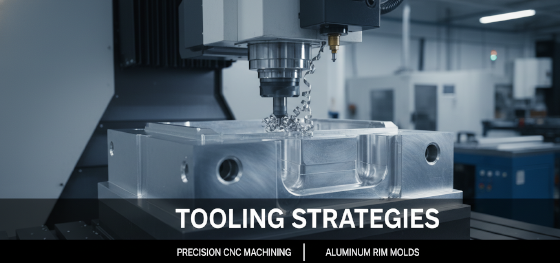
La durabilidad y precisión del herramental representan la principal división económica entre los dos caminos. El moldeo por vaciado al vacío utiliza moldes de silicona creados al verter silicona líquida alrededor de un patrón maestro impreso en 3D. Este enfoque de "Herramental Suave" es la estrategia definitiva de mitigación de riesgos para la fase Alfa, ya que permite el menor costo posible Costos NRE. Sin embargo, la silicona es un material elástico; bajo el peso de la resina y la presión del vacío, el molde puede flexionarse, lo que lleva a un límite de tolerancia de aproximadamente +/- 0,3 mm. Para articulaciones robóticas o ensamblajes entrelazados que requieren precisión de +/- 0,05 mm, la naturaleza flexible de la silicona se convierte en una barrera técnica.
¿Cuánto dura un molde de silicona?
Normalmente de 20 a 25 inyecciones. Más allá de esto, el molde pierde su textura superficial y precisión dimensional, lo que lo hace inadecuado para ensayos Beta comerciales.
El moldeo RIM utiliza herramental de aluminio rígido mecanizado a partir de palanquillas de alta resistencia 7075-T6. Debido a que el molde es rígido, Jucheng Precision puede mantener tolerancias significativamente más estrictas—hasta +/- 0,1 mm en grandes extensiones—de lo que es posible con el moldeo por vaciado al vacío. Los moldes de aluminio también son mucho más duraderos, capaces de entregar hasta 10,000 inyecciones sin desviación dimensional. Este Herramienta Ágil enfoque es lo que permite a Jucheng Precision cerrar la brecha desde un solo prototipo hasta una ejecución piloto comercial de 1,000 unidades sin problemas. Si se necesita un cambio de diseño a mitad del lote, el molde de aluminio puede soldarse y re-mecanizarse en nuestro taller CNC dentro de 48 horas, un nivel de flexibilidad que el herramental de acero no puede igualar.
Operando bajo ISO 14001 estándares, Jucheng Precision enfatiza la sostenibilidad del herramental de aluminio. A diferencia de los moldes de silicona, que son un producto de desecho consumible que debe desecharse después de 25 piezas, los moldes de aluminio son 100% reciclables. Para una flota Beta de 500 unidades, el impacto ambiental de consumir 20 herramientas de silicona es significativamente mayor que una sola herramienta RIM de aluminio. Al ofrecer soluciones de fabricación "ESG-Amigables", Jucheng Precision ayuda a las empresas globales de MedTech y robótica a construir una cadena de suministro a prueba de futuro que cumpla con las crecientes demandas regulatorias de fabricación limpia y eficiencia de materiales.
Tamaño y escala: ¿por qué domina RIM en gabinetes robóticos masivos?
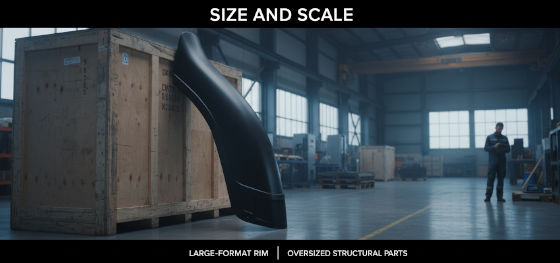
Gestionar la escala física de un vehículo autónomo o un escáner de diagnóstico junto a la cama revela los límites de tamaño de la tecnología actual. El moldeo por vaciado al vacío está físicamente limitado por el tamaño de la cámara de vacío. Si una pieza supera los 600 mm de longitud, el equipo necesario para desgasificar la resina y el molde se vuelve prohibitivamente grande y costoso para un servicio de prototipos. La mayoría de los talleres de moldeo por vaciado al vacío alcanzan un "Techo de Cristal" en la marca del medio metro. Jucheng Precision aborda este obstáculo de escalabilidad proporcionando piezas de plástico a gran escala a través de nuestro departamento RIM dedicado, que cuenta con prensas hidráulicas de gran tamaño y fresadoras CNC de pórtico para piezas de hasta 2,5 metros de longitud.
¿Cuál es el tamaño máximo de pieza para RIM en Jucheng?
We regularly manufacture monolithic structural panels, fenders, and hoods up to 2,500mm long with consistent wall thickness and zero internal voids.
Variable wall thickness capability is the secondary reason for RIM's scale advantage. Large enclosures often require 10mm structural ribs to support heavy sensors, but must maintain a 3mm aesthetic skin. Traditional vacuum casting often results in "Post-Cure Warpage" when thick and thin sections are combined, as the material cools unevenly in the insulating silicone tool. Jucheng Precision’s RIM process utilizes the expanding chemical reaction to fill límites de espesor de pared variables (3 mm-15 mm) with 100% density. By managing the heat through the aluminum mold walls, we ensure that your massive 2-meter shells remain perfectly flat, providing the "Zero-Gap" fitment required for retail-ready aesthetics.
Handling and logistics for these giant parts are managed within Jucheng’s integrated hub. We understand that a 20kg plastic shell is a high-value R&D asset. We provide custom-fitted wooden flight cases and specialized internal shock-dampening for all oversized functional prototypes. By managing the entire lifecycle—from the 2.5-meter mold to the international air-freight crate—Jucheng Precision ensures that your hardware arrives in the lab calibrated and ready for its first power-up. This focus on "Oversized Reliability" is what makes Jucheng Precision the preferred partner for the world's most aggressive AgTech and industrial robotics firms in the Shenzhen hub.
Lógica económica: encontrando el volumen adecuado para tu ROI
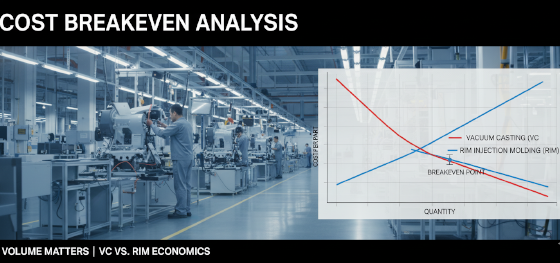
Success in hardware optimization depends on matching the process to the quantity. If you only need 3 units for a design review, vacuum casting is the financial winner because it has near-zero NRE costs. However, as the quantity increases toward the 25-unit mark, the high labor cost and mold-wear of vacuum casting begin to inflate the piece price. Jucheng Precision provides transparent cost modeling to help you find the Punto de Equilibrio del Moldeo por Inyección de Reacción. For most complex robotic enclosures, the breakeven between vacuum casting and RIM typically occurs between 20 and 40 units. Beyond this point, the speed and repeatability of the RIM machine make it the more profitable choice.
| Métrica | Vacuum Casting (Alpha) | RIM Molding (Beta) | Financial driver |
|---|---|---|---|
| NRE de Herramientas | $800 - $1,500 | $3,500 - $12,000 | CapEx vs. Agility |
| Piece Price | Maximum (High Labor) | Moderate (Automated) | Scaling Efficiency |
| Modification Speed | Instant (New Silicone) | Rapid (CNC aluminum) | Agilidad iterativa |
| Optimal Batch | 1 - 15 Units | 25 - 3,000 Units | Market Pilot Ready |
The "Time-to-Parts" factor is the final variable in the ROI equation. Jucheng Precision provides 4 day rapid delivery for initial functional iterations via CNC or vacuum casting, allowing your software team to start coding months before a mass-production tool would even be finished. By utilizing RIM as a bridge, you can begin commercial operations and secure early revenue while your high-volume hardened steel tool is still being built. This capital agility is essential for maintaining a healthy R&D runway, allowing you to iterate on your product-market fit with the same precision you apply to your mechanical designs.
Solución JUCHENG: dominando todo el ciclo de vida del poliuretano
Dominating the hardware market requires a partner that doesn't just sell one process, but understands the lifecycle of them all. Jucheng Precision operates with a 24/7 manufacturing mindset in our Shenzhen precision manufacturing hub, delivering both hand-fitted vacuum cast models and high-tolerance RIM structural parts with industry-leading speed. Jucheng Precision provides the bridge to production that ensures your innovations move from CAD to field trial with 100% metallurgical and dimensional confidence. Jucheng Precision provides a análisis DFM gratuito en 24 horas to ensure your design is optimized for the unyielding reality of the field, whether you are building an autonomous medical assistant or a heavy-duty industrial mobile base.
Integrating your structural design with JUCHENG’s expertise ensures that your RIM vs. Vacuum Casting decision is based on performance data, not guesswork. Jucheng Precision offer comprehensive DFM reviews within 24 hours, identifying potential thermal-expansion risks or machining bottlenecks in your design before they become field failures. Whether you are building an autonomous vineyard scout or a multi-part MRI housing, Jucheng Precision provides the rigid, precise, and chemicals-optimized foundations that keep your innovation moving through the high-stakes cycles and the years of hard labor.
Our facility is equipped with dedicated high-pressure RIM assembly cells and dedicated quality labs, allowing Jucheng Precision to manage the entire hardware lifecycle in one location. Jucheng Precision manage the complexity of multi-material bonding and automotive-grade finishing so your engineering team can focus on the clinical outcomes and the AI. By combining Shenzhen's speed with industrial-grade material verification and global quality standards, Jucheng Precision remains the preferred partner for the world's most aggressive hardware challenges. Contact the Shenzhen hub today to start your next project.
Preguntas frecuentes: respuestas reales para etapas de prototipado y logística
Is the surface finish of vacuum casting better than RIM?
VC is excellent for reproducing textures, but RIM provides a more stable surface for high-gloss automotive painting on large-format parts.
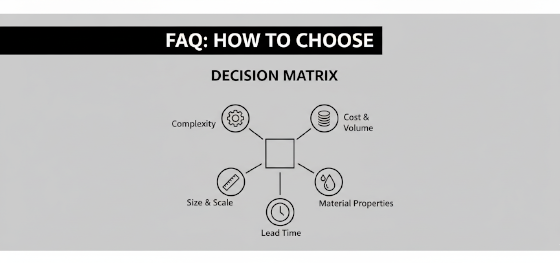
How do I know when to switch from VC to RIM?
As a rule of thumb, once your quantity exceeds 20 pieces or your part length exceeds 600mm, RIM becomes the more reliable and cost-effective choice.
Can JUCHENG overmold silicone gaskets in both processes?
Yes. We specialize in bonding elastomeric seals to both cast and RIM-molded shells to achieve hermetic environmental protection.
Do you offer Pantone color matching for vacuum casting?
Yes. We mix high-stability pigments into the resin for permanent, color-through aesthetics for all Alpha and Beta builds.
What is the typical lead time for a 1-meter RIM part?
Custom aluminum rapid tools and initial T1 samples are typically delivered in 15 to 20 business days.
Tooling debt and material fatigue are absolute project killers in the MedTech and robotics sectors. Partnering with Jucheng Precision ensures that your functional iterations are built with the cost-effective polyurethane reaction injection molding and specialized RIM vs. Vacuum Casting knowledge the industry demands. Reach out to our Shenzhen manufacturing hub today for a complete DFM review and build the unyielding foundation your autonomous fleet requires.

