Piezas de Robot Industrial: RIM de Poliuretano Rígido vs Flexible
Vistas: 1 Autor: Allen Xiao Fecha de publicación: 2026-04-24


Seleccionar la dureza correcta para un recinto de 2 metros de largo en [2026] revela el debate más frecuente en el proceso de moldeo por inyección de reacción¿necesita la pieza mantenerse en pie como una pared o actuar como un escudo? Elegir entre RIM de Poliuretano Rígido vs Flexible no se trata solo de la "sensación" del plástico; se trata de cómo el material disipa la energía cuando un vehículo autónomo golpea un estante de almacén o un técnico médico golpea un escáner de millones de dólares. Si el material es demasiado rígido, se rompe; si es demasiado blando, no protege la pila de cómputo de IA interna. Dominar esta selección es crítico para la supervivencia a largo plazo de hardware de alto valor.

Los modernos Piezas de robots industriales exigen un nivel de rendimiento que los termoplásticos tradicionales como ABS o PP a menudo no pueden alcanzar en formatos de gran tamaño. Mientras que las piezas moldeadas por inyección sufren de tensión interna y modos de falla frágil, Servicios de Moldeo de Poliuretano permiten a los ingenieros "ajustar" la personalidad mecánica exacta de una pieza ajustando el entrecruzamiento químico. Jucheng Precision aborda estos dilemas de selección proporcionando una gama de Materiales Resistentes a Impactos, desde marcos estructurales duros como vidrio hasta parachoques elastoméricos que pueden absorber un golpe de mazo y volver a su forma original en segundos.
Operando dentro del centro de fabricación de precisión de Shenzhen, JUCHENG actúa como el socio de inteligencia mecánica para OEMs globales. Transformamos química líquida cruda en pieles estructurales validadas que protegen su tecnología del caos del campo. Esta guía explora los estándares esenciales de dureza Shore, datos de elongación a la rotura y la lógica de aplicación necesaria para decidir entre RIM de Poliuretano Rígido vs Flexible para asegurar que su próxima flota de máquinas autónomas esté construida sobre una base de fiabilidad inquebrantable.
PU Rígido: ¿Cuándo Necesita su Hardware Rigidez Absoluta?
Datos Técnicos: Comparando Especificaciones Mecánicas Rígidas vs Flexibles
RIM Flexible: Usando Elastómeros para Resolver la Crisis de Impacto
El Término Medio Semi-Rígido: ¿Lo Mejor de Ambos Mundos?
Centro JUCHENG: Ayudándole a ajustar su material en Shenzhen
Preguntas frecuentes: Respuestas reales para seleccionar la dureza adecuada del material
PU Rígido: ¿Cuándo Necesita su Hardware Rigidez Absoluta?
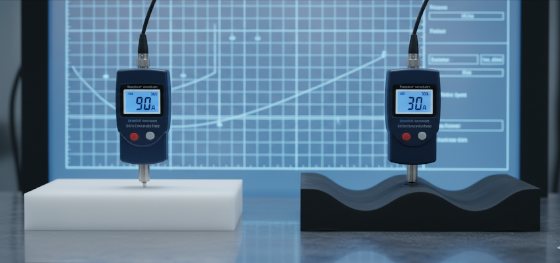
La rigidez absoluta es el requisito principal para consolas de diagnóstico médico a gran escala y marcos estructurales de robots. En la batalla entre poliuretano RIM rígido vs. flexible, el lado "rígido" imita el comportamiento de plásticos de ingeniería de alto rendimiento como ABS y policarbonato, pero con una rigidez a la flexión mucho mayor para piezas de gran tamaño. Si su carcasa debe soportar el peso de una pantalla táctil de 24 pulgadas o albergar sensores LiDAR de alta precisión que no pueden tolerar un micrón de movimiento, el PU rígido es la única opción. Las formulaciones rígidas de JUCHENG alcanzan niveles de dureza Shore D de 85+, proporcionando una base sólida como una roca que evita el "fantasma de vibración" que arruina los algoritmos de autonomía.
¿Se romperá una pieza rígida si se cae?
A diferencia de las resinas frágiles impresas en 3D, los materiales RIM rígidos de JUCHENG están químicamente reticulados para proporcionar una alta tenacidad al impacto, lo que significa que se abollan o "magullan" antes de romperse.
La estabilidad térmica es una ventaja silenciosa del lado rígido. En la fabricación de electrónica de [2026], las pilas de cómputo internas generan un calor masivo. El PU RIM rígido tiene una temperatura de deflexión térmica (HDT) más alta que su contraparte flexible, asegurando que la carcasa permanezca dimensionalmente perfecta incluso cuando las temperaturas internas alcanzan los 80°C. JUCHENG utiliza polioles especializados de "alta viscosidad" para crear una malla molecular densa que resiste la fluencia térmica, asegurando que las uniones y los sellos de junta de su escáner médico permanezcan herméticos durante un turno de 24 horas en una sala sin control de clima.
La estética de la superficie es otra razón por la que los ingenieros eligen RIM rígido para sus ensamblajes de robot prototipo construcciones. Debido a que el material es duro, se puede lijar y pulir hasta obtener un acabado automotriz Clase A. JUCHENG aplica recubrimientos de uretano 2K de alto brillo a estas carcasas rígidas, creando una apariencia lista para el comercio minorista que es esencial para demostraciones en ferias comerciales y presentaciones de capital de riesgo. Esta combinación de "Columna Vertebral Estructural" y "Perfección Visual" es lo que hace de JUCHENG un socio preferido para empresas globales de robótica que necesitan transmitir madurez técnica y excelencia en diseño.
Datos Técnicos: Comparando Especificaciones Mecánicas Rígidas vs Flexibles
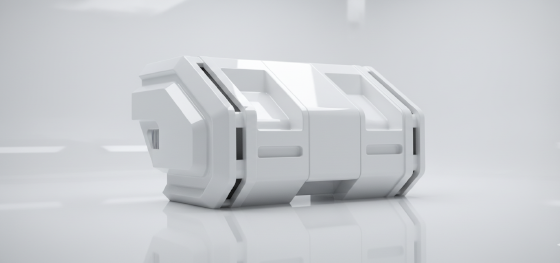
Comprender los datos detrás del poliuretano RIM rígido vs. flexible es la única manera de evitar una falla de hardware en el campo. Mientras que su diseñador industrial podría querer una sensación de "toque suave", su ingeniero mecánico necesita saber si la pieza se combará bajo su propio peso. Jucheng Precision proporciona registros completos de lotes químicos y físicos para ayudarle a validar sus diseños. La siguiente tabla compara las métricas de rendimiento esenciales para nuestras formulaciones estándar rígidas y flexibles en el mercado de [2026].
| Métrica | RIM rígido (estructural) | RIM flexible (elastomérico) | Impacto en Ingeniería |
|---|---|---|---|
| Dureza (Shore) | 80 - 85 D | 40 - 90 A | Determina abolladura vs. rebote |
| Módulo de Flexión (psi) | 250,000 - 320,000 | 5,000 - 50,000 | Rigidez para carcasas |
| Elongación a la Rotura | 5% - 15% | 150% - 400% | Critical for Crash Zones |
| Specific Gravity | 1.05 - 1.15 | 0.95 - 1.05 | Weight and Buoyancy |
The "Elongation at Break" is the key differentiator for Materiales Resistentes a Impactos. In a flexible RIM part, the material can stretch up to four times its original length before it tears. This allows JUCHENG to manufacture robotic "skins" and bumpers that act like airbags for the robot’s skeleton. By contrast, the low elongation of the rigid side ensures that mounting points remain geometrically constant, even when subjected to the high-torque vibrations of large-scale motor reversals.
RIM Flexible: Usando Elastómeros para Resolver la Crisis de Impacto
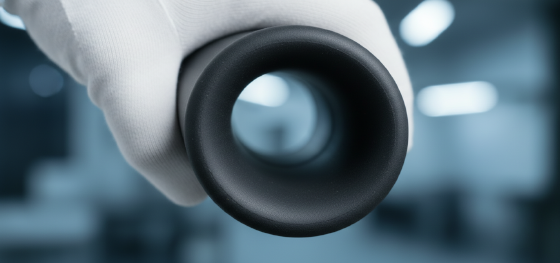
Collision events are non-negotiable for autonomous mobile robots (AMRs). No matter how advanced the AI, a robot will eventually strike an obstacle. In RIM de Poliuretano Rígido vs Flexible, the "Flexible" side provides the ultimate defensive hardware. JUCHENG’s elastomeric RIM materials are engineered to absorb the kinetic energy of an impact through molecular deformation. This means that instead of the force being transmitted directly into the expensive piezas de robots industriales (like the LiDAR or the gearbox), the flexible bumper "soaks up" the energy. This "Bionic Dampening" is essential for robots operating in shared human workspaces like fulfillment centers or hospital corridors.
Can a flexible part be used for structural mounting?
Generally no. Flexible RIM is designed to be a "protective skin" or bumper; it lacks the stiffness needed to hold tight tolerances for motor or sensor alignment.
Vibration isolation is a secondary superpower of flexible RIM. By overmolding a flexible polyurethane layer onto a rigid chassis, JUCHENG creates a monolithic part with integrated dampening features. This "Soft-on-Hard" architecture is a core competency of our Servicios de Moldeo de Poliuretano. It allows us to protect delicate electronics from the high-frequency vibrations of the drivetrain, effectively extending the mean-time-between-failures (MTBF) of the entire robot. In our Shenzhen hub, we use specialized bonding agents to ensure the flexible and rigid layers never delaminate, even after millions of flex cycles.
Comfort and ergonomics are the final drivers for the flexible side. In collaborative robotics (cobots), the machine must be "safe to touch." JUCHENG utilizes flexible RIM to produce "soft skins" that cover the metallic joints of the robot. This reduces the risk of pinching injuries for human operators and makes the robot feel more like a tool and less like a threat. By achieving a "Warm-Touch" surface finish on these elastomeric parts, we help our clients pass human-factors testing and increase the user-acceptance of their automation solutions in the [2026] market.
El Término Medio Semi-Rígido: ¿Lo Mejor de Ambos Mundos?
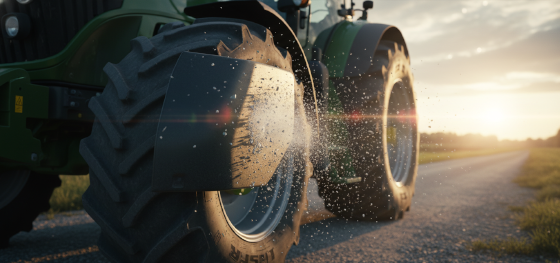
Sometimes, your hardware needs the stiffness of a shell but the impact resistance of a tire. This is where the "Semi-Rigid" category of RIM de Poliuretano Rígido vs Flexible wins the day. JUCHENG specializes in semi-rigid formulations (Shore D 60-70) that offer "Ductile Toughness." These materials are favored for piezas de robots industriales like fenders and side-skirts on autonomous tractors or mining robots. A semi-rigid part will flex significantly under a direct rock-strike, absorbing the energy without shattering, but will snap back to its original shape perfectly once the load is removed.
Is semi-rigid cheaper than rigid PU?
The material cost is similar, but the ROI is often higher because semi-rigid parts survive the "Rough-Handling" of shipping and installation better than ultra-rigid alternatives.
Thickness management is the key to semi-rigid success. JUCHENG’s DFM team helps you optimize the wall thickness to achieve the desired "Spring Effect." By thickening the ribs and thinning the aesthetic faces, we can create a part that feels rigid when handled but behaves like a spring during a crash. This variable mechanical behavior is unique to the proceso de moldeo por inyección de reacción and is impossible to replicate with traditional injection molding or 3D printing. We provide 100% density in these parts, ensuring no internal air pockets can become starting points for cracks.
Dimensional stability in semi-rigid parts is maintained through the low-pressure RIM cycle. Unlike traditional high-impact plastics that want to warp as they cool, JUCHENG’s semi-rigid PU cures in a relaxed state. This ensures that large tractor fenders or robot battery covers fit the steel chassis perfectly with zero "forced assembly." In the fast-moving Shenzhen hub, we deliver these "High-Forgiveness" parts to global clients who need hardware that can survive the transition from the lab to the mud without a single field recall, ensuring a zero-defect launch in the [2026] season.
Centro JUCHENG: Ayudándole a ajustar su material en Shenzhen
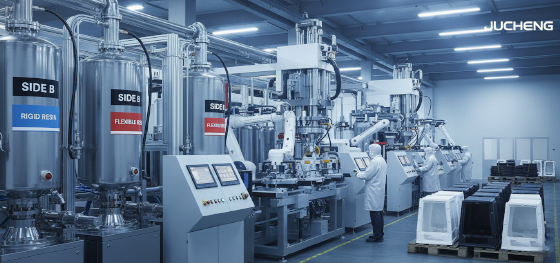
Dominating the hardware market requires a partner that doesn't just sell one process, but understands the chemistry of survival. Jucheng Precision operates with a 24/7 manufacturing mindset in our Shenzhen precision manufacturing hub, delivering high-tolerance RIM components and structural piezas de robots industriales with industry-leading speed. We provide a "Bridge to Production" that allows you to move from a single hand-poured prototype to a commercial deployment of 5,000 units with consistent chemical and dimensional quality.
Integrating your structural design with JUCHENG’s expertise ensures that your RIM de Poliuretano Rígido vs Flexible decision is based on data, not guesswork. We offer comprehensive DFM reviews within 24 hours, identifying potential impact risks or thermal-expansion bottlenecks in your design before they become field failures. Whether you are building an autonomous vineyard scout or a multi-part surgical robot, Jucheng Precision provides the rigid, precise, and *chemically optimized* foundations that keep your innovation moving through the high-stakes cycles and the years of hard labor.
Our facility is equipped with 150+ CNC machines and dedicated high-pressure RIM assembly cells, allowing us to manage the entire material and part lifecycle in one location. We manage the complexity of multi-material bonding and custom polyol blending so your engineering team can focus on the motion control and the AI. By combining Shenzhen's speed with industrial-grade material verification and global ISO 13485 standards, JUCHENG remains the preferred partner for the world's most aggressive Materiales Resistentes a Impactos challenges. Contact us today to start your next project.
Preguntas frecuentes: Respuestas reales para seleccionar la dureza adecuada del material
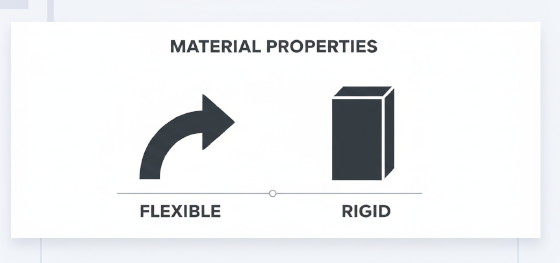
What is the typical hardness of a rigid medical enclosure?
We recommend Shore D 80 to 85. This provides the stiffness of ABS but with much better durability for large parts.
Can I overmold a flexible bumper onto a rigid frame?
Yes. We specialize in dual-durometer RIM molding where an elastomeric layer is permanently bonded to a rigid skeleton.
Which material is best for high-vibration environments?
Semi-rigid PU (Shore D 65) is ideal because it possesses enough internal dampening to protect sensitive sensors.
Is flexible RIM resistant to chemical wipe-downs?
Yes. We utilize specialized polyols that are chemically inert to hospital disinfectants and agricultural fertilizers.
What is the maximum part size JUCHENG can mold in flexible PU?
We regularly produce flexible bumpers and protective skins up to 2,000mm in length.
Brittle fractures and heavy vibration are absolute innovation killers for large-scale robotics. Partnering with Jucheng Precision ensures that your functional iterations are built with the precision-balanced proceso de moldeo por inyección de reacción and specialized RIM de Poliuretano Rígido vs Flexible techniques the industry demands. Reach out to our Shenzhen manufacturing hub today for a complete DFM review and build the unyielding foundation your autonomous fleet requires.

ㆍPrivacidad: Respetamos su privacidad. Aquí puede encontrar un ejemplo de un acuerdo de confidencialidad. Al enviar este formulario, acepta nuestros términos y condiciones y política de privacidad.