
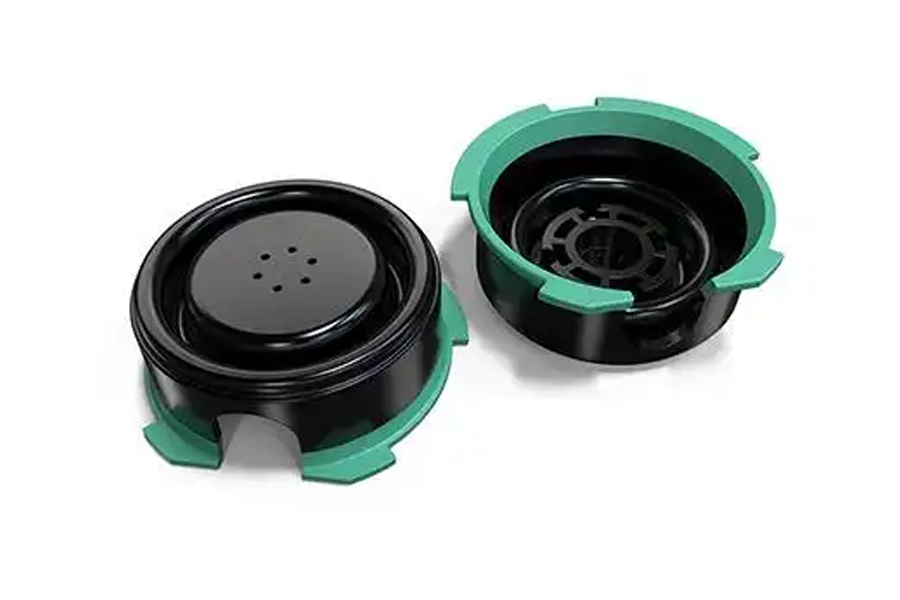
Entendiendo el sobremoldeo
Una materiales disímiles en una sola pieza moldeada para agarre, sellado y rendimiento multimaterial.
¿Qué es el sobremoldeo?
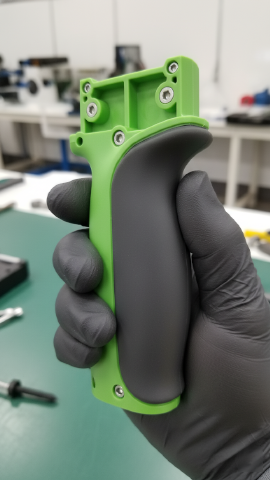
El sobremoldeo moldea un segundo material—a menudo un elastómero blando—sobre un sustrato rígido en un solo proceso. El resultado es una pieza unida con superficies de tacto suave, sellos, alivio de tensión o características multicolor sin ensamblaje secundario.
Los sustratos pueden ser de plástico o metal. Los materiales comunes de sobremoldeo incluyen TPE, TPU y plásticos rígidos compatibles. La combinación cuidadosa de materiales y el diseño del molde proporcionan una fuerte adhesión y cosmética consistente desde el prototipo hasta la producción.
Jucheng Precision apoya el sobremoldeo junto con el moldeo por inserción y opciones de dos disparos, con utillaje interno, revisión de DfM y control de calidad certificado.
Proceso detallado de sobremoldeo
Cuatro pasos controlados desde la preparación del sustrato hasta la inspección final.
Preparación inicial del sustrato
Producir o obtener el sustrato base (plástico o metal), luego limpiar y preparar las superficies para una adhesión óptima al material de sobremoldeo.
Selección del material de sobremoldeo
Seleccionar el segundo material según flexibilidad, resistencia a la abrasión, compatibilidad química y rendimiento de adhesión con el sustrato.
Diseño y ingeniería del molde
Diseñe el utillaje con CAD y FEA para la ubicación de la compuerta, ventilación y geometría de unión, de modo que los materiales blandos y duros se unan limpiamente en una secuencia de un solo disparo.
Proceso de moldeo por inyección
Inyecte el material de sobremoldeo alrededor o sobre el sustrato para que se una durante el moldeo, luego inspeccione la adhesión, la estética y la precisión dimensional.
Capacidades técnicas
Materiales, acabados y opciones de proceso de un vistazo.
Materiales de sobremoldeo
Sustratos de TPE, TPU, PP, nailon y metal para empuñaduras, sellos, casquillos y combinaciones estructurales blando-duro.
Opciones de proceso
Sobremoldeo, moldeo por inserción y moldeo de dos disparos, adaptados al volumen, la geometría y las necesidades de combinación de materiales.
Precisión y adhesión
Control estricto de líneas de unión, rebabas y estética con comentarios de DfM antes de cortar el utillaje.
Acabado de superficies
Opciones de pulido, texturizado/mate y pintura de recubrimiento para piezas de consumo, médicas e industriales.
Aplicaciones comunes
Piezas sobremoldeadas listas para la industria para empuñadura, sellado y durabilidad.
Automotriz
Empuñaduras ergonómicas para palancas de cambio y controles, además de sellos de alta precisión para sistemas de fluidos y aire.
Dispositivos médicos
Instrumentos manuales de tacto suave y combinaciones de materiales biocompatibles para dispositivos orientados al paciente.
Equipo industrial
Componentes robustos con fuerte adhesión para herramientas de alto estrés e interfaces de equipos.
Electrónica de consumo
Carcasas y recintos duraderos con estética mejorada y capas blandas que absorben impactos.
¿Por qué elegir el sobremoldeo de Jucheng?
Ventajas prácticas cuando los materiales blandos y duros deben funcionar como una sola pieza.
Experiencia incomparable
Sobremoldeo de precisión para diseños complejos y combinaciones de materiales desafiantes.
Instalaciones de última generación
Máquinas de moldeo avanzadas y pruebas de materiales internas para asegurar la calidad en cada paso.
Integridad de pieza mejorada
Las piezas multimaterial unidas reducen los pasos de ensamblaje y mejoran la alineación entre características.
Sobremoldeo vs. Otros Procesos
Elija la estrategia multimaterial adecuada para su diseño.
El sobremoldeo es ideal cuando necesita combinar materiales disímiles para agarres de tacto suave, sellos o rendimiento multimaterial en volúmenes medios o altos con unión fuerte y cosmética limpia.
Moldeo por inserción es mejor cuando se deben encapsular insertos metálicos o plásticos prefabricados, común para contactos eléctricos, casquillos y herrajes roscados.
Moldeo de dos disparos se adapta a diseños intrincados de múltiples colores o materiales donde ambos materiales se inyectan en una secuencia coordinada para piezas de consumo y precisión.
Servicios Relacionados
Combine el sobremoldeo con servicios complementarios de moldeo por inyección.


ㆍPrivacidad: Respetamos su privacidad. Aquí puede encontrar un ejemplo de un acuerdo de confidencialidad. Al enviar este formulario, acepta nuestros términos y condiciones y política de privacidad.
