
Commodity Plastics Injection Molding Materials (ABS, PP, PE)
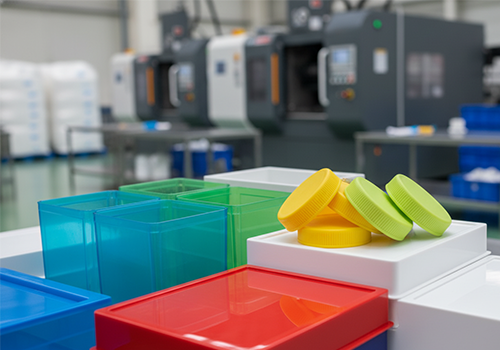
Commodity plastics represent the backbone of the global manufacturing industry, accounting for the vast majority of plastic parts produced today. These materials—primarily ABS, Polypropylene (PP), and Polyethylene (PE)—are prized for their versatility, low weight, and exceptional cost-effectiveness. At JUCHENG, we specialize in the high-volume injection molding of these standard thermoplastics. With a facility equipped with high-speed injection machines ranging from 50T to 1000T, we offer scalable manufacturing solutions, from single-cavity prototype molds to high-cavitation production tools, delivering millions of consistent parts for the consumer electronics, packaging, and household appliance sectors.
Plastics Injection Molding Materials
JUCHENG's Molding Capabilities for Commodity Plastics
To maximize the value of these cost-effective materials, efficient processing is key. JUCHENG delivers:
- Multi-Cavity Tooling: We design and manufacture multi-cavity molds and family molds to produce multiple parts per cycle, drastically reducing unit costs.
- Hot Runner Systems: For high-volume PP and PE parts, we utilize hot runner systems to eliminate runner waste and reduce cycle times.
- Acabado Superficial: While these are "commodity" materials, we elevate them with premium mold textures (VDI/SPI), high-gloss polishing (for ABS), and in-mold labeling (IML).
- Moldeo por inserción: We can integrate metal inserts into ABS or PP parts during the molding process for enhanced assembly strength.
Perfiles detallados de materiales
We stock and process the complete range of general-purpose thermoplastics:
Apps: Industrial buckets, fuel tanks, rigid bottle caps, cutting boards.
Apps: Squeeze bottles, snap-on lids, flexible tubing, cable insulation.
1、ABS (Acrylonitrile Butadiene Styrene)
- Descripción: ABS is the most common amorphous polymer used for structural housings. It bridges the gap between commodity and engineering plastics, offering a great balance of rigidity, impact strength, and glossy aesthetics.
- Ventajas clave: excellent surface finish (high gloss), good impact resistance, easy to paint and glue, low shrinkage compared to semi-crystalline plastics.
- Aplicaciones Ideales: Consumer electronics housings (routers, remote controls), keyboard caps, household appliance bodies, toys (LEGO-like bricks).
- Descripción: A semi-crystalline thermoplastic known for its chemical resistance and flexibility. We offer both Homopolymer (higher strength/stiffness) and Copolymer (higher impact resistance/flexibility).
- Ventajas clave: Lowest density of common plastics (floats in water), resistant to chemicals and moisture, high fatigue resistance (Living Hinges), food-safe grades available.
- Aplicaciones Ideales: Living hinge caps, food containers, automotive bumpers, chemical tanks, medical packaging.
- HDPE (High-Density Polyethylene):
Apps: Industrial buckets, fuel tanks, rigid bottle caps, cutting boards.
- LDPE (Low-Density Polyethylene):
Apps: Squeeze bottles, snap-on lids, flexible tubing, cable insulation.
Tabla comparativa completa
Physical properties comparison of standard injection molding grades:
| Propiedad | ABS (General Purpose) | PP (Homopolymer) | HDPE (Alta Densidad) | LDPE (Baja Densidad) | Unidad |
| Estructura | Amorfo | Semicristalino | Semicristalino | Semicristalino | - |
| Densidad | 1.04 - 1.07 | 0.90 - 0.91 | 0.94 - 0.96 | 0.91 - 0.93 | g/cm³ |
| Mold Shrinkage | 0.4 - 0.7 | 1.0 - 2.5 | 1.5 - 3.0 | 1.5 - 3.5 | % |
| Resistencia a la tracción | 30 - 50 | 30 - 40 | 20 - 30 | 8 - 12 | MPa |
| Módulo de flexión | 2,000 - 2,500 | 1,200 - 1,700 | 1,000 - 1,400 | 200 - 400 | MPa |
| Notched Impact | Alto | Low/Medium | Alto | Muy alta | - |
| Deflexión térmica (0.45 MPa) | 90 - 100 | 100 - 110 | 70 - 80 | 40 - 50 | °C |
| Cost Level | Medio | Bajo | Bajo | Bajo | - |
FAQ: Commodity Plastics
Q: Can PP be painted?
A: PP has low surface energy, making paint adhesion difficult. We recommend using colored resin (pigmented) instead of painting, or flame treatment if painting is necessary.
Q: Which material is best for outdoor use?
A: Standard ABS yellows under UV light. For outdoor housings, we recommend adding UV stabilizers or switching to ASA (Engineering grade). Black HDPE offers decent UV resistance.
A: PP has low surface energy, making paint adhesion difficult. We recommend using colored resin (pigmented) instead of painting, or flame treatment if painting is necessary.
Q: Which material is best for outdoor use?
A: Standard ABS yellows under UV light. For outdoor housings, we recommend adding UV stabilizers or switching to ASA (Engineering grade). Black HDPE offers decent UV resistance.

Solicite su DFM y cotización – Cargue sus dibujos
ㆍComplete sus requisitos y cargue su archivo 2D y 3D, le enviaremos su cotización del proyecto y DFM en un plazo de 24 horas.ㆍTipos de archivo: STEP, STP, IGES, IGS, SLDPRT, 3DM, SAT, X_T, DWG, DXF, STL, PDF, ZIP y más. Tamaño de archivo: < 128 MB Tamaño de pieza: < 1500*1500*1500 mm
ㆍPrivacidad: Respetamos su privacidad. Aquí puede encontrar un ejemplo de un acuerdo de confidencialidad. Al enviar este formulario, acepta nuestros términos y condiciones y política de privacidad.
ㆍPrivacidad: Respetamos su privacidad. Aquí puede encontrar un ejemplo de un acuerdo de confidencialidad. Al enviar este formulario, acepta nuestros términos y condiciones y política de privacidad.
