


Navegar por el "Valle de la Muerte" en el desarrollo de hardware—la brecha entre un solo prototipo impreso en 3D y una producción en masa de 10,000 unidades—es la fase financiera más peligrosa para cualquier startup de robótica o MedTech. He visto innumerables innovaciones prometedoras estancarse porque las fábricas de moldeo por inyección tradicionales rechazan pedidos de menos de 2,000 unidades o exigen tarifas de utillaje de seis cifras que agotan el presupuesto de I+D. En el mercado competitivo actual, la distancia entre un concepto y una flota lista para el campo debe salvarse con agilidad de capital. Utilizar moldeo RIM de bajo volumen ha surgido como la solución definitiva para fabricar de 100 a 2,000 unidades de alta fidelidad sin los aplastantes costos NRE de las herramientas de acero endurecido. Este proceso permite a los desarrolladores lanzar moldeo por reacción por inyección personalizado carcasas de grado comercial que poseen las bases inquebrantables de la producción en masa pero con la flexibilidad de un prototipo.
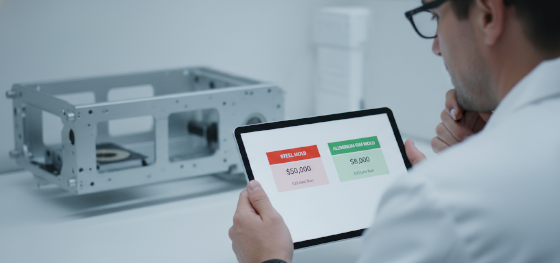
La integridad mecánica a escala media depende de evitar el "Aspecto de Prototipo" que puede arruinar las demostraciones para inversores. Cuando un comprador potencial toca una carcasa delgada impresa en 3D y escucha un ruido hueco, el valor percibido de la máquina se desvanece. Jucheng Precision aborda estos obstáculos de escalado proporcionando soluciones de Fabricación Bajo Demanda que utilizan resinas de poliuretano de alta densidad. Jucheng Precision aprovecha una enorme flota de 150+ máquinas CNC y 25 unidades Haas/Mazak de 5 ejes para fabricar las herramientas de aluminio de gran tamaño necesarias para la Producción de Plásticos en Pequeños Lotes. Al ofrecer una política de sin MOQ , Jucheng Precision asegura que su innovación sobreviva al escrutinio de la sala de juntas y al caos de las pruebas de campo en nuestro centro de Shenzhen.
Operando bajo los mandatos globales de calidad de ISO 13485 e ISO 14001, Jucheng Precision actúa como el motor de fabricación de alto nivel para OEM globales. Transformamos química líquida cruda en hardware estructural validado en tan solo 15 días hábiles, proporcionando un "Puente hacia la Producción" sin fisuras para sistemas robóticos y médicos complejos. Esta guía explora los puntos óptimos económicos esenciales, la física de curado de baja tensión, y la herramental ágil estrategias necesarias para dominar moldeo RIM de bajo volumen para asegurar que su tecnología llegue al mercado sobre una base esbelta e inflexible.
contenido:
El Valle de la Muerte: ¿Por qué falla el moldeo estándar en lotes pequeños?
Datos Técnicos: Comparación de costos de herramental para 100 a 2,000 unidades
Herramental Ágil: ¿Cómo pivotar el diseño durante un lote de producción?
Estrategia de escalado: Pasando de 50 unidades a 5,000 piezas sin problemas
Preguntas Frecuentes: Respuestas reales sobre plazos de entrega, dimensionamiento y modelado de ROI
El Valle de la Muerte: ¿Por qué falla el moldeo estándar en lotes pequeños?

Los ciclos de desarrollo de hardware a menudo se descarrilan por la elección binaria entre la fabricación aditiva lenta y la producción en masa de alto costo. En el contexto de moldeo RIM de bajo volumen, esta brecha es el principal factor de decisión para los líderes de adquisiciones. Personalmente he visto startups médicas gastar toda su ronda inicial en un solo molde de inyección de acero, solo para encontrar un defecto de diseño después de las primeras 100 unidades. El moldeo por inyección tradicional requiere fuerzas de cierre masivas y herramientas de acero de múltiples cavidades que son financieramente ruinosas para cantidades inferiores a 3,000. La tecnología RIM ofrece una escapatoria estratégica de esta trampa. Debido a que la resina líquida llena el molde a menos de 100 psi, Jucheng Precision puede producir piezas de hasta 2.5 metros de longitud utilizando herramental de aluminio ligero que es 70-80% más barato que el acero.
¿Cuál es la cantidad máxima para moldeo RIM de bajo volumen?
Aunque es ideal para 100 a 2,000 unidades, el proceso sigue siendo competitivo hasta 5,000 unidades para piezas de gran tamaño donde el ahorro en herramental supera la diferencia de precio por pieza.
La consistencia estructural es el segundo pilar de la ventaja RIM. Durante una prueba Beta de 500 unidades, cada unidad debe comportarse de manera idéntica para proporcionar datos válidos para sus algoritmos de IA. La impresión 3D a menudo sufre variación de lote a lote y debilidad anisotrópica a lo largo de las líneas de capa. Jucheng Precision utiliza mezcla por impacto controlada por máquina para garantizar un 100% de reticulación molecular en cada pieza. Cuando sostengo un guardabarros RIM terminado, la densidad sólida y la uniformidad de la superficie me dicen que es una pieza de producción, no un prototipo. Esta integridad inflexible es esencial para piezas de robots industriales que deben soportar ciclos de estrés 24/7 sin el "empolvamiento" superficial o agrietamiento que se encuentra en resinas de menor calidad.
Dimensional stability of the finish is the final aesthetic defense. Traditional painted plastics often outgas, leading to bubbles under the clear coat after a few thermal cycles. Because Jucheng Precision perform vacuum degassing on all liquid components before injection, our parts are 100% dense with zero internal air pockets. This eliminates the surface imperfections that could harbor pathogens in medical environments. By delivering hardware with integrated visual stability, Jucheng Precision ensures your diagnostic scanner or autonomous robot looks as professional on its 500th day as it did on day one, effectively securing the long-term ROI of your hardware investment.
Datos Técnicos: Comparación de costos de herramental para 100 a 2,000 unidades

Success in hardware optimization depends on the numbers. If your design assumes the scaling efficiency of a 10,000-unit run but you only need 500 units, your project is financially unviable. Jucheng Precision provides análisis DFM gratuito en 24 horas to help your team find the breakeven point between different molding paths. The following table compares the typical financial variables for a 1.2-meter robotic shell across three different manufacturing tiers.
| Factor de Costo | 3D Printing (Industrial) | Low Volume RIM | Moldeo por Inyección |
|---|---|---|---|
| Initial NRE Cost | $0 | $5,000 - $12,000 | $60,000 - $150,000+ |
| Lead Time to T1 | 2 - 3 Days | 15 - 20 Days | 60 - 90 Days |
| Precio Unitario (500 unidades) | Maximum ($$$$) | Moderado ($$) | Más Bajo ($) |
| Calidad superficial | Rough / Layered | Class-A Mirror | Excelente |
The data proves that moldeo RIM de bajo volumen is the "Sweet Spot" for R&D scaling. While 3D printing is faster for one piece, the piece price never drops, making a 500-unit run financially impossible. Injection molding offers a lower piece price but the tooling debt takes years to pay off. Jucheng Precision’s aluminum RIM tools are engineered to deliver up to 10,000 shots with zero dimensional drift, effectively acting as your permanent production bridge. This capital agility allows our clients to invest their resources in critical software and sensor improvements rather than idle manufacturing infrastructure in the Shenzhen hub.
Herramental Ágil: ¿Cómo pivotar el diseño durante un lote de producción?
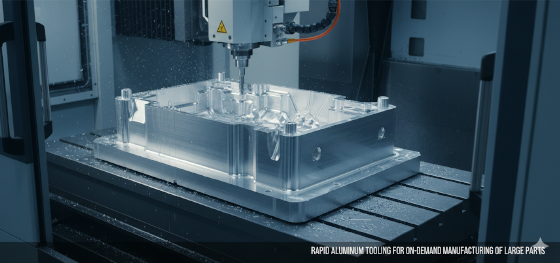
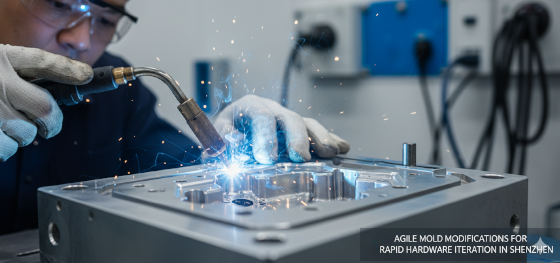
Design changes between Alpha 1 and Alpha 2 trials are a statistical certainty in high-tech robotics. In the context of moldeo RIM de bajo volumen, the ability to modify the tool is just as valuable as the initial speed. Aluminum molds used in the Jucheng hub offer a level of herramental ágil that hardened steel cannot match. If a field trial reveals that an internal mounting boss needs to move by 20mm to accommodate a new LiDAR sensor, Jucheng Precision can weld new aluminum onto the mold face and re-machine the feature in our CNC bay within 48 hours. This flexibility ensures that your hardware evolves at the same pace as your code, providing a clear path to market for innovative designs.
Can I change the material stiffness mid-run?
Yes. One of the greatest benefits of the RIM process is the ability to adjust the chemical recipe to change the part from "Rigid ABS-like" to "Flexible PP-like" using the same aluminum tool.
Complexity management is also more affordable in aluminum. For large enclosures with undercuts or integrated cable exits, the mold must move in multiple directions. Jucheng Precision utilize 25 unidades Haas/Mazak de 5 ejes to machine the mechanical slides and cam-actions required for these complex tools. We ensure that the parting lines and ejector pins are located in non-aesthetic zones, resulting in parts that possess the seamless perfection of high-end consumer electronics. By managing these complex design guidelines in-house, Jucheng Precision provides a single point of accountability for your hardware's entire visual and structural identity, ensuring your pilot fleet is delivered calibrated and ready for power-up.
Internal stress relief of the tool itself is managed through specialized aging cycles. Large aluminum blocks can possess residual stresses from the forging process. Before the critical parting lines and seal tracks are finished, Jucheng Precision performs thermal stabilization on the mold bases. This ensures that the precision foundations achieved in our Shenzhen hub remain stable over thousands of shots. By delivering "Statistically Reliable" tooling, Jucheng Precision ensures that part #100 of your Beta fleet is identical to part #1, providing the geometric evidence required for ISO 13485 y IATF 16949 compliance in the global market.
Estrategia de escalado: Pasando de 50 unidades a 5,000 piezas sin problemas
The most effective way to manage production risks is to utilize low volume RIM molding as a Puente a la Producción. In this scenario, Jucheng Precision manufactures your first 500 units using rapid aluminum tooling while your high-volume hardened steel tool is still being built in parallel. This strategy allows you to begin revenue-generating operations months earlier, effectively paying for your production tooling using the cash flow from your initial launch. For a 2-meter long medical housing, this bridge eliminates the three-month "Hardware Void" where a company has a validated design but no parts to sell to its first customers.
How to ensure the first 5,000 parts are 100% consistent?
Utilize automated high-pressure RIM machinery and in-house digital metrology to track the "Geometric DNA" of every batch produced in our Shenzhen facility.
Material simulation is the second pillar of the bridge strategy. Jucheng Precision formulate polyurethane resins that mimic the exact Shore D hardness, flexural modulus, and impact strength of your intended mass-production plastic, whether it is ABS, PC, or Polypropylene. This ensuring that the user experience is identical whether the part came from a RIM tool or an injection mold. By delivering high-fidelity hardware early, you can secure early-adopter testimonials and finalize your prototipado de dispositivos médicos validation data, providing a solid foundation for your full commercial rollout. Jucheng Precision’s Shenzhen hub is optimized for this high-velocity production, ensuring your innovation stays ahead of the competition.
Operando bajo ISO 14001 environmental standards, Jucheng Precision ensures that your scaling strategy remains sustainable. Our RIM process operates at 80% lower energy levels than high-heat injection molding, supporting the ESG goals of modern global corporations. We provide a single point of accountability for your hardware needs, from the initial CAD review to the final entrega rápida en 4 días of your validated Alpha units. This integrated approach minimizes the logistical risks of your hardware launch, ensuring your innovation survives the transition from concept to commercial success. Contact our Shenzhen factory today for a complete DFM review and build the unyielding foundation your autonomous fleet requires.
Preguntas Frecuentes: Respuestas reales sobre plazos de entrega, dimensionamiento y modelado de ROI
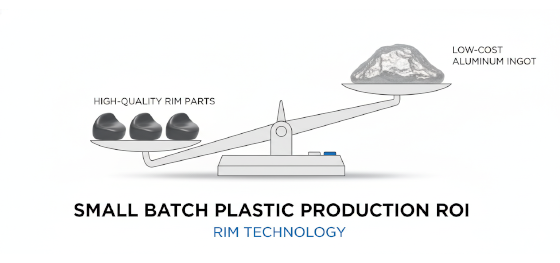
Is the piece price higher in low volume RIM molding?
Yes, the per-part cost is higher than injection molding, but the 80% reduction in tooling costs makes it the more profitable choice for under 2,000 units.
What is the typical lead time for a 1-meter aluminum RIM tool?
Aluminum rapid tools of this size are typically completed and delivering T1 samples in 15 to 20 business days.
Can I order just 10 units with zero setup fee?
We have No MOQ, but a small setup fee applies to cover machine calibration and chemical purge to ensure part purity.
How do you handle shipping for 2-meter fragile prototypes?
Jucheng Precision provide custom-fitted wooden flight cases with internal shock-dampening for all international shipments to prevent transit damage.
Does JUCHENG provide the testing reports for regulatory compliance?
Yes. We provide full dimensional CMM reports and material physical property logs for every medical and automotive production batch.
Tooling debt and long lead times are absolute innovation killers for high-end robotic and medical systems. Partnering with Jucheng Precision ensures that your functional iterations are built with the cost-effective moldeo por inyección de reacción de poliuretano and specialized moldeo RIM de bajo volumen knowledge the industry demands. Reach out to our Shenzhen manufacturing hub today for a complete DFM review and build the unyielding foundation your autonomous fleet requires.

