


Define the manufacturing scope
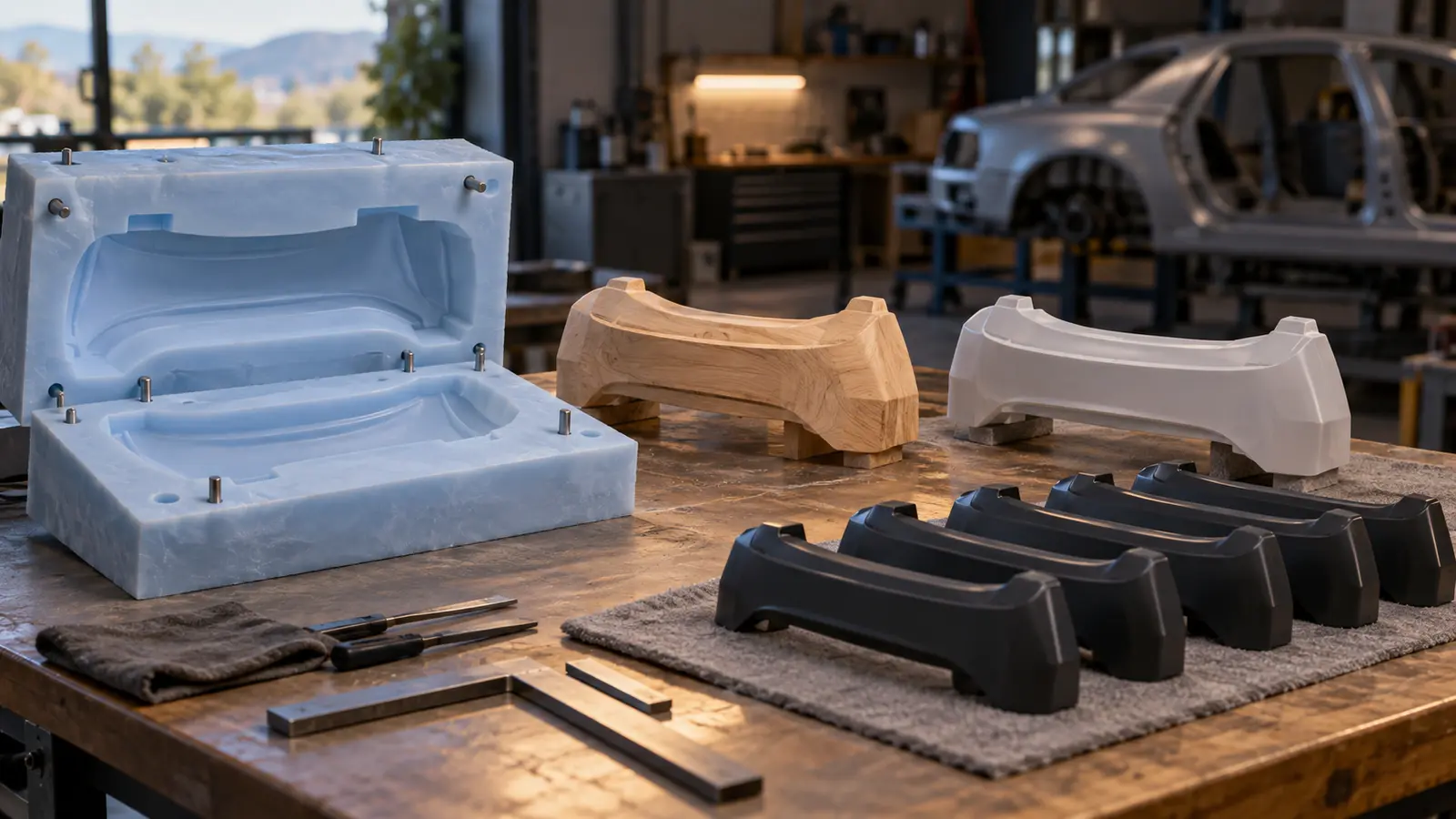
Start with the vehicle function, critical interfaces, expected quantity, exposure, and test conditions. A prototype, pilot part, and production component may need different materials and process controls.
Nuestro automotive rapid prototyping workflow connects geometry, material, and assembly decisions early.
Design around the process
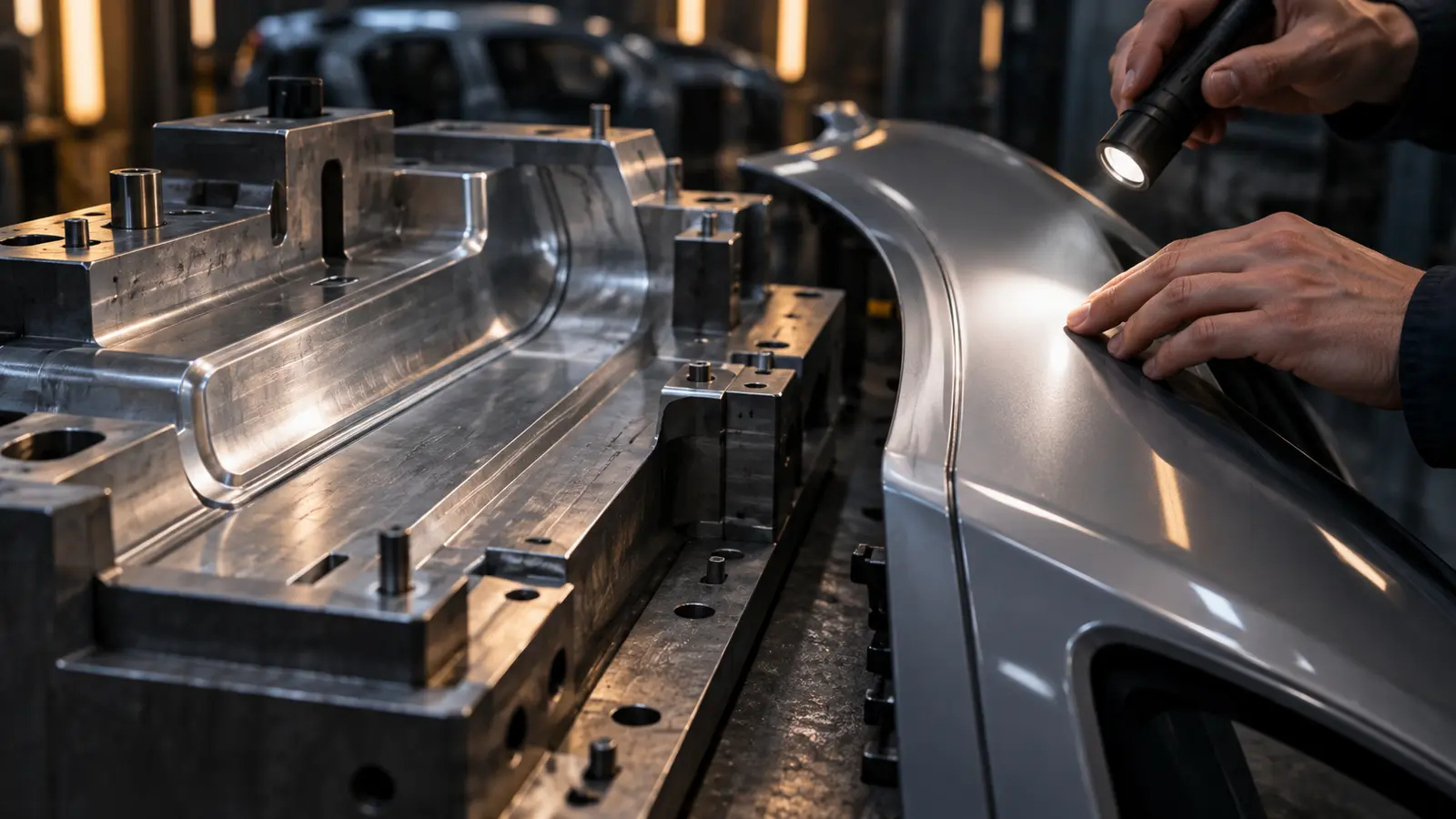
Review wall transitions, datums, access, joining, surface requirements, and likely secondary operations before release. Manufacturing constraints should be visible in the drawing rather than discovered after sampling.
| Requisito | Review point |
|---|---|
| Fit | Datums and interface stack-up |
| Función | Load, temperature, and movement |
| Apariencia | Texture, finish, and visible zones |
| Quantity | Tooling and repeatability |
Connect production with inspection
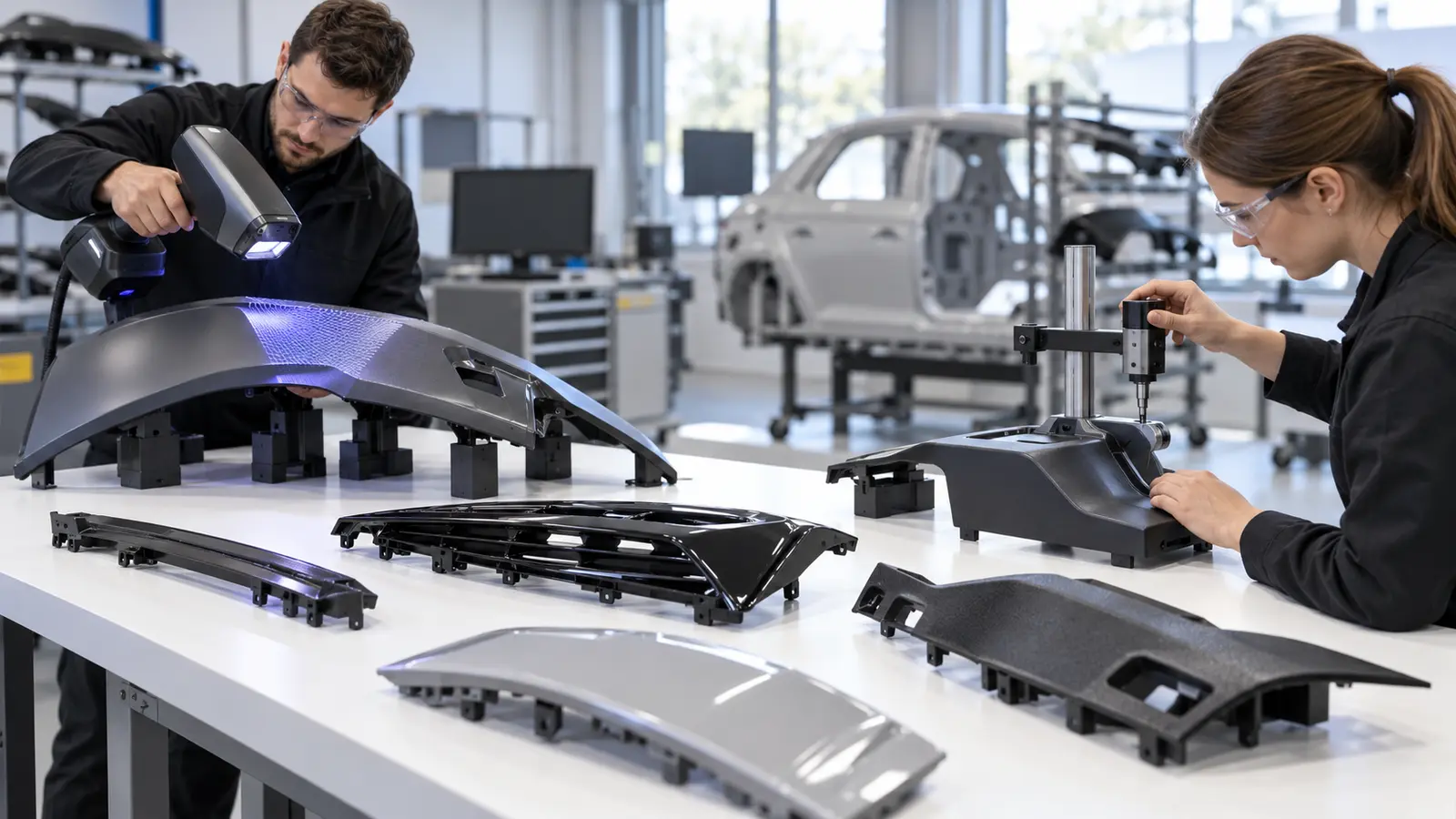
Define first-article checks, critical dimensions, material records, finish verification, and assembly tests. Inspect the completed part or subassembly when the requirement depends on the relationship between several features.
Use the relevant surface finishing services and process route together so finishing does not change a critical fit.
Choose the next step from evidence
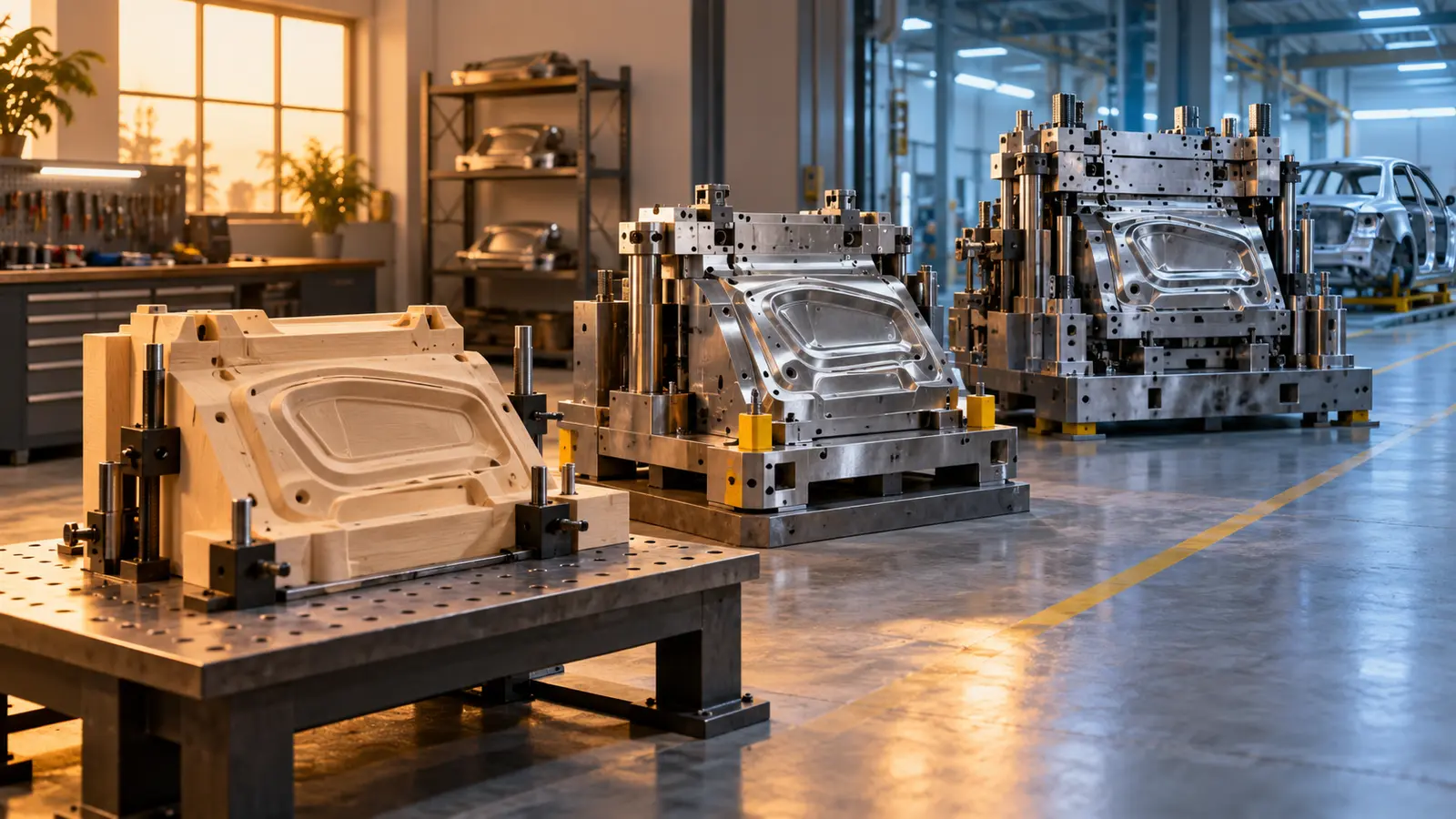
Compare prototype results with the intended production requirement. Record what is representative, what remains provisional, and which design or process change should happen next. This turns a single batch into useful program knowledge.
Frequently Asked Questions

What should determine the process?
Function, quantity, geometry, material, finish, tolerance, and validation conditions.
Why is inspection planned early?
Because a requirement that cannot be measured or located clearly is difficult to control.
Can several manufacturing processes be combined?
Yes. CNC, molding, sheet metal, additive, casting, finishing, and assembly can be combined when each solves a defined part of the program.
Engineering decisions for automotive soft tooling
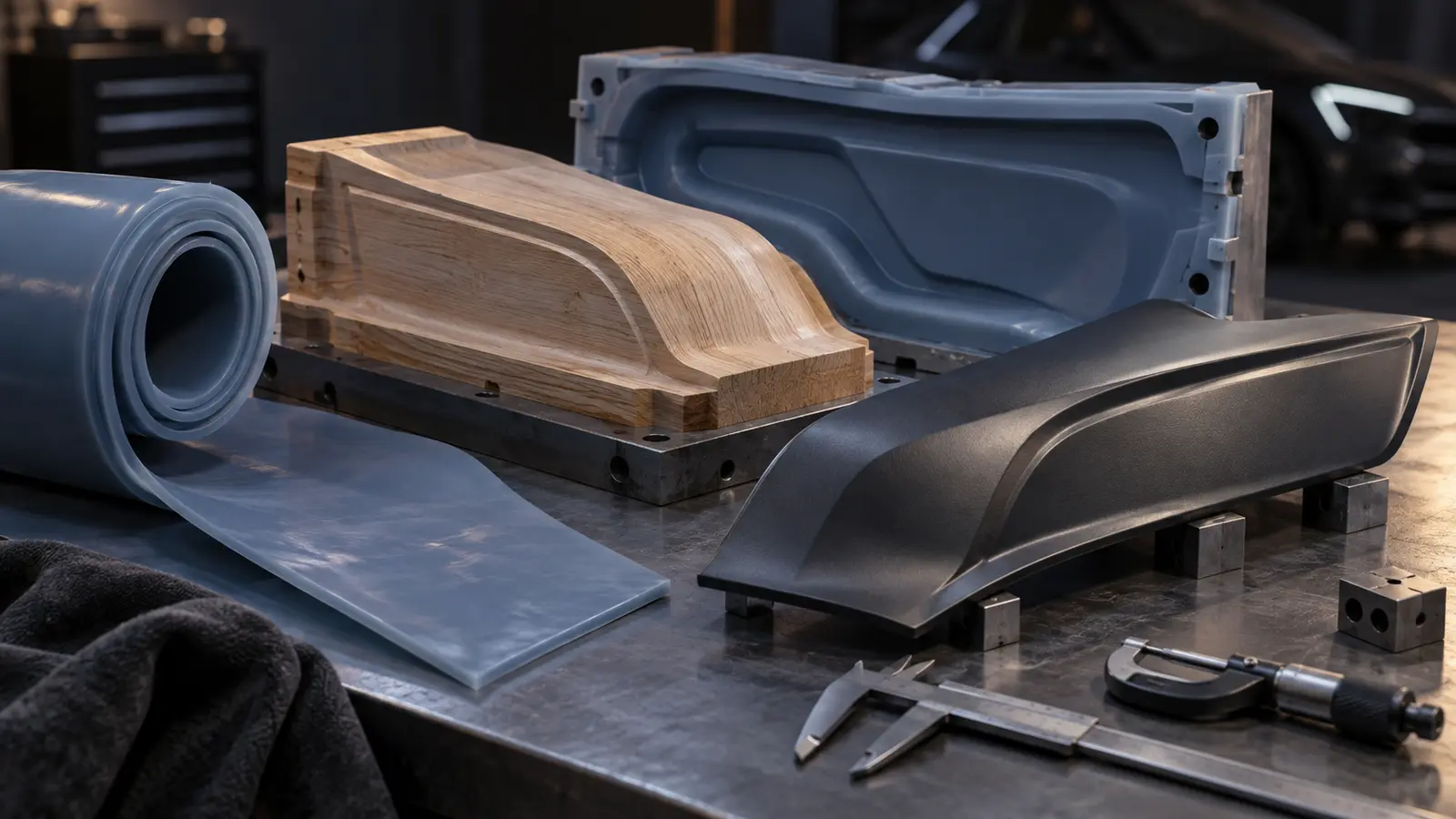
The right manufacturing route starts with the automotive part function, expected quantity, and validation evidence required. A prototype used only for packaging may tolerate different material and surface variation from a part used in thermal, vibration, torque, sealing, or durability tests. Define that distinction before ordering so the sample is judged against the correct standard.
Review mounting faces, locating holes, clips, seals, fasteners, moving surfaces, cable paths, and areas that service technicians must reach. Then mark critical datums and calculate the tolerance chain between the part and its mating components. Many failures occur because an individual part passes inspection while the assembled relationship does not.
Material selection should follow stiffness, impact, thermal expansion, chemical exposure, moisture, abrasion, electrical needs, and appearance. If the prototype material differs from production, record the difference in the test plan. A material name alone does not define behavior; grade, process, orientation, finish, and exposure history also matter.
| Review area | Question | Evidence |
|---|---|---|
| Geometría | Can the part be made and released? | DFM review |
| Interfaces | Which datums control fit? | Assembly measurement |
| Material | What behavior must be reproduced? | Material record |
| Calidad | What defines acceptance? | Inspection report |
Design for manufacturing includes trimming, machining, deburring, cleaning, coating, painting, assembly, and inspection. These operations can change dimensions and surface behavior. Critical features should be inspected after the final operation that can affect them. A clear quotation should identify process assumptions, likely variation, secondary work, packaging, and approval milestones.
Testing should reproduce the real use condition as closely as the prototype purpose allows. Check installation cycles, torque, movement, temperature, vibration, moisture, chemical contact, service access, appearance, or surface integrity as appropriate. Photograph failures, record measurements, and connect each result to a design feature or process step. A failed sample is useful when it narrows the next decision.
For low-volume automotive programs, flexibility is valuable because the model may change. That flexibility should remain controlled through revision numbers, approved material records, first-article checks, and a clear distinction between cosmetic and functional samples. When the design stabilizes, compare the prototype route with the intended production process and document which characteristics need revalidation.
An RFQ should include the CAD model, drawing, quantity, material preference, finish, mating components, critical datums, test objective, inspection method, packaging requirements, and delivery stages. Include marked-up views when an interface or assembly action is difficult to understand from the model. Clear inputs reduce clarification cycles and make the quotation useful to engineering and procurement.
How should the first sample be judged?
Judge it against the stated validation question, approved drawing, declared material, and declared process limitations. Do not use a visual pass as evidence of strength, thermal performance, or long-term durability unless those properties were tested.

