


Superar las limitaciones geométricas de los componentes estándar es el primer hito importante en el desarrollo de productos modernos. Desarrollar diseños de chapa metálica personalizados permite a los equipos de ingeniería construir componentes a medida que se ajustan a huellas físicas precisas, optimizan el flujo de aire convectivo térmico interno y gestionan cargas estructurales sin desperdiciar espacio. Para los desarrolladores de hardware en sectores de alto crecimiento, esta personalización estructural es la clave para construir hardware ligero, duradero y comercialmente viable.
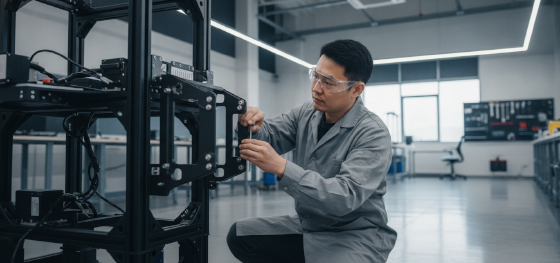
Depender de soportes estándar de catálogo a menudo compromete la huella física de su producto, obligándole a diseñar soluciones complejas e innecesarias que aumentan los tiempos de ensamblaje. Los gabinetes estándar también carecen de las configuraciones de montaje precisas necesarias para los trazados de PCB modernos y los sensores avanzados. Pasar a una estrategia de chapa metálica personalizada y trabajada en frío proporciona total libertad de diseño, asegurando que su carcasa externa se integre perfectamente con sus componentes eléctricos internos.
Analicemos cómo la metalistería personalizada optimiza los ensamblajes médicos y robóticos avanzados, exploremos cómo la creación rápida de prototipos le permite probar geometrías rápidamente y revisemos las mejores estrategias para escalar sus diseños desde los primeros artículos hasta la producción de bajo volumen.
contenido:
El auge de la chapa metálica a medida en medicina y robótica
Prototipado rápido: pruebe su diseño personalizado rápidamente
Escalado sin fisuras a la fabricación de bajo volumen
JUCHENG: su socio principal para proyectos de chapa metálica personalizada
Preguntas frecuentes: preguntas críticas sobre diseños de chapa metálica personalizada
El auge de la chapa metálica a medida en medicina y robótica
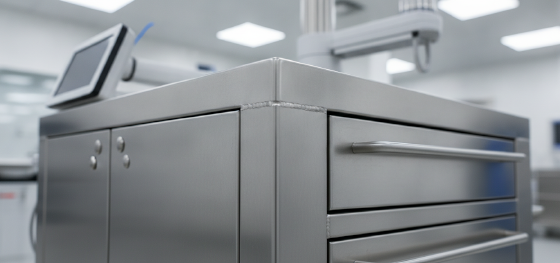
¿Por qué los desarrolladores de dispositivos médicos y robóticos evitan los soportes estándar de catálogo?
El hardware médico y robótico exige una eficiencia espacial extremadamente alta, propiedades específicas de anticorrosión y un blindaje EMI robusto que solo los paneles conformados a medida pueden proporcionar.
La integración de componentes especializados en dispositivos médicos complejos y máquinas autónomas requiere una profunda dependencia de los diseños de chapa metálica personalizados. Una carcasa rectangular estándar es muy rentable, pero los sistemas robóticos exigen componentes a medida con geometrías complejas para proteger los conjuntos de sensores sensibles y los motores de alto par. Diseñamos chasis robóticos personalizados que maximizan el volumen interno mientras resisten fuertes vibraciones exteriores.
In the healthcare sector, sterile hygiene is paramount. Standard plastics are highly prone to surface cracking under chemical disinfectants. To meet strict sanitation rules, we fabricate bespoke medical housings and carts from high-grade stainless steel or aluminum. These materials feature smooth, non-porous surfaces that can withstand continuous high-pressure washes and chemical sterilization without rust.
Prototipado rápido: pruebe su diseño personalizado rápidamente
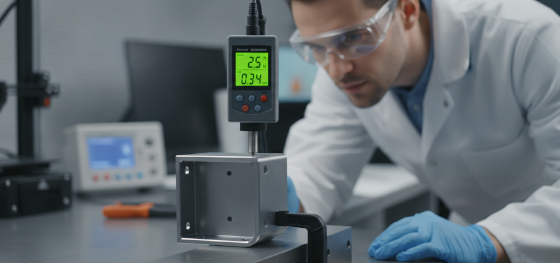
How do designers validate custom sheet metal geometries before mass production?
Ejecutamos prototipado rápido controlado por software para cortar piezas planas y doblar bridas sin costosos utillajes personalizados, permitiendo ajustes geométricos inmediatos.
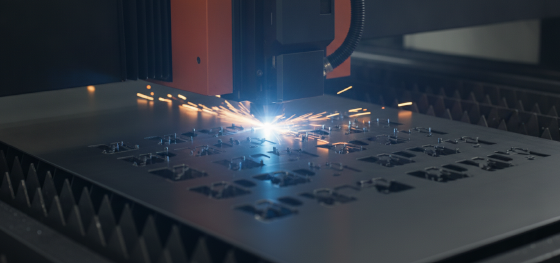
Before committing significant capital to mass production, validating your physical part geometry is essential. Our prototipado rápido célula utiliza láseres de fibra de alta potencia y plegadoras CNC para cortar y doblar piezas personalizadas directamente desde sus perfiles CAD. Este proceso controlado por software elimina la necesidad de matrices de estampado personalizadas, manteniendo los costos de prueba iniciales excepcionalmente bajos.
This hands-on prototyping phase allows designers to verify actual material behavior, check for flange-to-edge clearances, and run physical fitment tests. If a mounting hole is misaligned by a fraction of a millimeter, we can correct the digital flat pattern instantly. This iterative loop ensures that your custom parts are fully optimized for manufacturability before scaling.
Escalado sin fisuras a la fabricación de bajo volumen
What is the most cost-effective path to scale custom assemblies from prototypes to production?
We transition parts to low-volume manufacturing using modular tooling and progressive nesting, minimizing raw material waste and setup times.
When your custom hardware moves from first articles to ongoing production, managing the unit cost becomes the primary design driver. Running laser cutting and CNC bending is perfect for batches under 100 units. However, once you scale, transitioning to automated fabricación de bajo volumen ensures that you achieve high consistency and low per-piece costs.
We manage this transition by utilizing modular tooling and high-speed CNC punching presses. This structural scalability ensures that your custom components are fabricated with zero dimensional drift between batches. By reusing the flat CAD layouts verified during the prototyping phase, we ensure that your low-volume production units match the physical characteristics of your approved prototypes.
JUCHENG: su socio principal para proyectos de chapa metálica personalizada
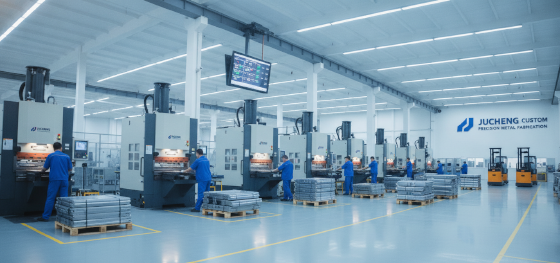
How does JUCHENG guarantee tight tolerances and clean cosmetic finishes on bespoke metal parts?
We operate high-power fiber laser cutters, CNC press brakes, and automated insertion lines managed by skilled technicians, checking all alignments before assembly.
Integrating these structural parameters, modular interfaces, and custom finishes into your early diseño de chapa metálica cycle is the single most effective way to eliminate production defects. JUCHENG integrates these advanced geometric and material validations into our digital manufacturing network, ensuring that your CAD files translate into fully finished, durable custom brackets with extreme dimensional precision.
We process a wide range of raw sheets, including lightweight aluminum, high-yield stainless steel, and formable carbon steel, matching each to its mathematically calculated springback allowances. Our technical department provides a 24-hour free DFM analysis to check your CAD models, checking tolerances and tool clearances before production. Supported by our no MOQ policy and rapid delivery guarantee, we manage your project from initial flat pattern cutting to final packaging and assembly.
Preguntas frecuentes: preguntas críticas sobre diseños de chapa metálica personalizada

Why is anodizing preferred over powder coating for custom aluminum robotics parts?
Anodizado is an electro-chemical process that grows an integrated oxide layer directly on the aluminum surface, providing extreme wear resistance and custom metallic colors without adding physical thickness. Powder coating applies a thick, plastic layer that can chip off under heavy friction and can alter the tight tolerances of interlocking robotic joints.
How do you design a custom stainless steel medical enclosure to resist aggressive chemical corrosion?
We recommend utilizing medical-grade SUS316 stainless steel, which contains molybdenum to resist chemical pitting. After fabrication, we run the parts through chemical pasivación washes to remove any embedded iron particles, restoring the chromium oxide passive layer to ensure maximum corrosion resistance.
What causes bend line cracking during the prototyping of high-strength alloys?
Cracking occurs when a tight bend is executed parallel to the rolling grain direction of the plate, or when the inner radius is set below the material's physical limits. We prevent this during our nesting phase by orienting all major bend lines perpendicular or diagonal to the grain, and maintaining a generous minimum bend radius.
How does JUCHENG prevent tolerance errors in high-precision custom sheet metal designs?
Our quality control department checks every custom model during our complimentary DFM stage. If your design features slots that are too close to a bend, or flanges that are too short to form safely, we suggest clear modifications like adding relief slots or adjusting tolerances, delivering high-precision, ready-to-assemble custom components.

