


El colapso térmico es el juez definitivo de la integridad de la ingeniería. Los diseñadores de hardware a menudo se enfrentan a una "Crisis del Punto de Fusión" al pasar de maquetas visuales a pruebas funcionales en compartimentos de motor o inmersión electrónica. Las resinas estándar de impresión 3D y los filamentos comunes comienzan a perder su módulo estructural a temperaturas tan bajas como 50°C, convirtiendo un recinto preciso en un fallo deformado y combado en cuestión de minutos de funcionamiento. Cuando su proyecto requiere un sustituto físico que pueda soportar un uso continuo a 120°C o resistir el calor localizado de un transformador de potencia, la única solución de ingeniería viable es la fundición de poliuretano de alta temperatura. Este dominio especializado de la fundición al vacío de poliuretano utiliza resinas termoestables avanzadas con puntos de Transición Vítrea (Tg) elevados para garantizar que sus prototipos mantengan su soberanía dimensional bajo estrés térmico extremo. Jucheng Precision opera como un santuario de materiales de alta temperatura, entregando piezas fundidas que poseen la columna vertebral térmica y la resistencia mecánica de materiales de grado de producción final como Nylon relleno de vidrio o PPS.
Navegar por las compensaciones de la replicación a alta temperatura requiere más que un horno caliente; requiere una comprensión quirúrgica del entrecruzamiento de polímeros. Las resinas de alta temperatura son notoriamente difíciles de procesar debido a sus agresivas reacciones exotérmicas y su fragilidad inherente. Jucheng Precision elimina la "Trampa Térmica" utilizando sistemas químicos premium de líderes como Hei-Cast, asegurando que sus datos de prueba sean 100% predictivos del comportamiento de producción en masa. Esta guía desglosa la física de la Temperatura de Deflexión Térmica (HDT), la necesidad de ciclos de post-curado estabilizados, y por qué nuestra asesoría técnica es la elección obligatoria para equipos de hardware automotriz y aeroespacial.
Descifrando la HDT: La Física de la Deflexión Térmica
Resiliencia Molecular: La Ciencia de las Resinas de Alta Temperatura
Soberanía Electrónica: Gestión de Calores Localizados
Estabilización Post-Curado: El Secreto de la Geometría sin Desviación
Compensaciones Mecánicas: Equilibrando Resistencia al Calor y al Impacto
Asesoría JUCHENG: Ingeniería para Entornos Extremos
Descifrando la HDT: La Física de la Deflexión Térmica
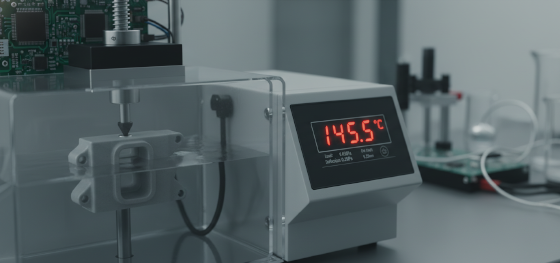
La Temperatura de Deflexión Térmica (HDT) es la métrica más crítica en cualquier hoja de datos técnicos, sin embargo, a menudo es la más malinterpretada. Representa la temperatura específica a la que una muestra de polímero se deforma bajo una carga especificada (generalmente 0.45 MPa o 1.82 MPa). En fundición de poliuretano de alta temperatura, we target resins that can push this threshold into the 120°C to 150°C range. For an automotive engineer testing a sensor housing near a radiator, an HDT of 60°C is a death sentence; the part will sag under its own weight before the vehicle even reaches operating temperature. Jucheng Precision provides exact HDT mapping for our resin library. We understand that "Thermal Stiffness" is a combination of polymer chemistry and geometry. If your design features thin walls (under 1.5mm), the thermal load is felt more aggressively. We assist in calculating the necessary rib reinforcements to ensure that the material's Tg (Glass Transition) isn't breached during high-heat environmental cycles, delivering functional surrogates that stay straight when the temperature rises.
Resiliencia Molecular: La Ciencia de las Resinas de Alta Temperatura
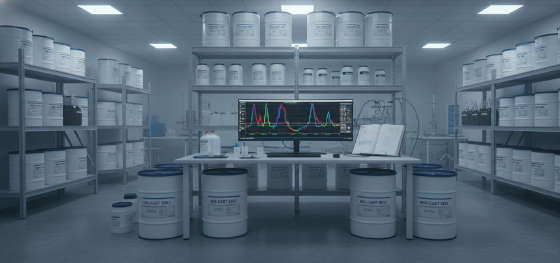
Reaching 150°C in a prototype requires abandoning generic urethanes in favor of specialized chemical systems. Jucheng Precision utilizes elite resins such as the Hei-Cast 8263 series, which are specifically engineered for under-the-hood automotive applications. These resins operate on the logic of "Dense Cross-Linking." During the fundición al vacío de poliuretano process, the A and B components form a three-dimensional grid that is chemically permanent. Once cured, this grid refuses to slide or melt, unlike the linear chains of a thermoplastic. However, processing these high-performance liquids is a high-stakes operation. These resins exhibit a violent exothermic peak; if the volume of the part is too large, the internal heat can cause the part to char or develop internal stress fractures. Our technicians utilize "Mass Management" strategies—such as staged pouring and thermal sinks—to control this chemical energy. We ensure that the molecular bonds lock correctly, providing a rock-solid part that mirrors the heat resistance of production-grade Glass-Filled Nylon.
Soberanía Electrónica: Gestión de Calores Localizados
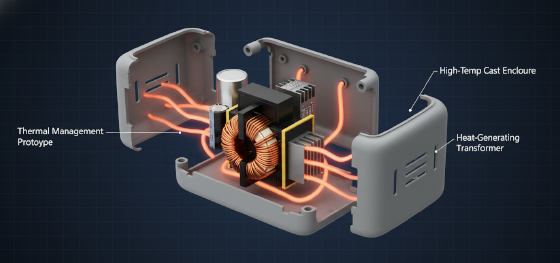
Modern electronics development is a battle against "Hot Spots." High-performance server racks, drone power distribution boards, and rapid-charging power adapters generate intense localized heat. Validating the fit of these components requires fundición de poliuretano de alta temperatura to ensure the enclosure doesn't deform and cause a short circuit or a cooling fan failure. Jucheng Precision works with electronics firms to produce "High-HDT Assemblies" that can survive 48-hour burn-in tests at peak power. Standard 3D prints would fail these tests, leading to false negative data regarding your design's airflow and thermal management. Our cast parts provide a stable enclosure that allows your engineers to measure real-world thermistor data, ensuring your venting slots and heat-sink clearances are technically sound. We provide the material certainty that your prototype won't become a safety hazard in the lab.
Estabilización Post-Curado: El Secreto de la Geometría sin Desviación
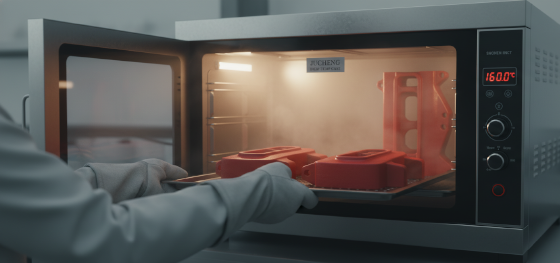
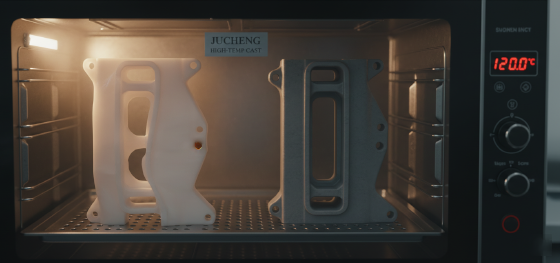
High-temperature performance is "earned" in the oven, not just the vacuum chamber. A part pulled fresh from a silicone mold has only reached about 80% of its mechanical potential. Reaching the final HDT spec requires a rigorous "Post-Curing" protocol. Jucheng Precision utilizes digitally controlled industrial ovens to subject your parts to a specific "Ramp-and-Soak" cycle. We gradually increase the temperature—for example, moving from 60°C to 80°C to 120°C over several hours. This prevents "Thermal Shock" and allows the remaining unreacted molecules to find their cross-linking partners. Skipping this step is what causes parts from inferior shops to warp the moment they hit the field. We document these oven cycles for our IATF 16949 automotive clients, ensuring that every fundición de poliuretano de alta temperatura batch is dimensionally stable and chemically complete. This stabilization ensures that your tenth part is as dimensionally accurate as your first, even after being subjected to intense environmental stress.
Compensaciones Mecánicas: Equilibrando Resistencia al Calor y al Impacto
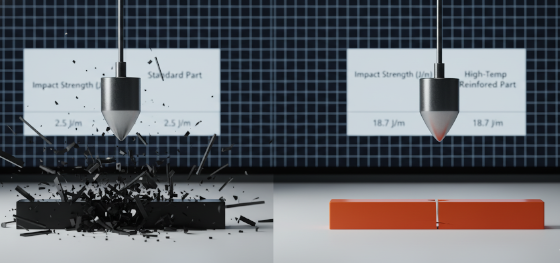
Engineering is the art of the compromise. In the world of high-heat polymers, there is an inescapable physics trade-off: as HDT goes up, impact resistance typically goes down. The denser the molecular cross-linking, the more "brittle" the material becomes. An ultra-high-temp resin might survive 160°C but shatter like a dinner plate if dropped from waist height. Jucheng Precision engineers act as your "Material Navigators" in this space. We don't just sell you the highest HDT resin; we analyze your functional requirements. If your part needs to survive a 100°C soak *and* a snap-fit assembly, we might recommend an impact-modified resin that targets 110°C instead of 150°C. We provide the Izod Impact and Elongation-at-Break data you need to make an informed decision. We ensure that you don't procure a part that is "too hot to handle" or too brittle to assemble, balancing thermal sovereignty with mechanical survival.
Asesoría JUCHENG: Ingeniería para Entornos Extremos
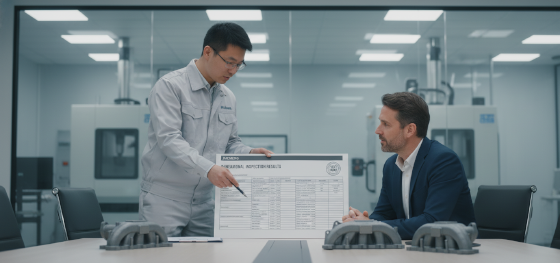
Manufacturing prototypes for extreme environments leaves zero room for vendor error. Jucheng Precision combines a massive fleet of 5-axis CNC machines for master-pattern precision with the industry's most advanced high-temp casting cleanrooms. We provide full material lot traceability and CMM inspection reports for every batch of fundición de poliuretano de alta temperatura, ensuring that your hardware validation data is defensible during regulatory or executive audits. Stop compromising your project's safety with mockups that melt. Leverage our decade of thermal engineering expertise to validate rapidly and launch confidently. Contact our technical team today for a free DFM review and let us determine the exact resin chemistry needed to armor your next hardware breakthrough against the heat.

