


Medical device coatings add a functional surface to a component, but they also change its interface with neighboring parts and the environment. A coating selected for protection or lower friction can reduce a clearance, alter a contact surface or introduce an adhesion risk. Treat the coating as part of the component specification, not a decorative operation after the dimensions have already been approved.
This guide concerns manufactured parts and assemblies: housings, fixtures, moving interfaces and selected device components. It does not assume that a coating makes an unsuitable substrate biocompatible or that Jucheng supplies every specialized medical coating. Establish the required function and the qualified coating route before choosing a material name.
First Decide What the Surface Must Do

Protection from a chemical exposure, electrical insulation, controlled friction and optical behavior are different objectives. A surface that succeeds at one can be unsuitable for another. Write a functional requirement that can be evaluated on the relevant finished component.
For an internal electronic assembly, the concern may be environmental protection while preserving electrical connections. For a sliding interface, the concern may be consistent friction without damaging the coating during repeated movement. For a visible housing, appearance may matter, but cleaning compatibility and resistance to handling can be equally important.
Do not replace the requirement with a material designation alone. Specifying a particular coating without thickness, coverage and acceptance criteria leaves the manufacturer to decide details that may change the device’s performance.
| Functional objective | Interface that needs attention | Evaluation to discuss |
|---|---|---|
| Barrier protection | Edges, openings and damaged regions | Coverage and relevant exposure performance |
| Lower friction | Sliding contact and applied load | Friction or wear under representative conditions |
| Electrical insulation | Contacts and intentionally exposed surfaces | Insulation performance and masking boundaries |
| Optical behavior | Window or sensing surface | Relevant transmission or reflection requirement |
| Protective appearance | Frequently handled or cleaned surface | Adhesion, appearance and exposure resistance |
El medical device materials parent page addresses the underlying material decision. A coating should complement that choice rather than hide a substrate that cannot support the required geometry or service conditions.
Thickness Belongs in the Tolerance Stack
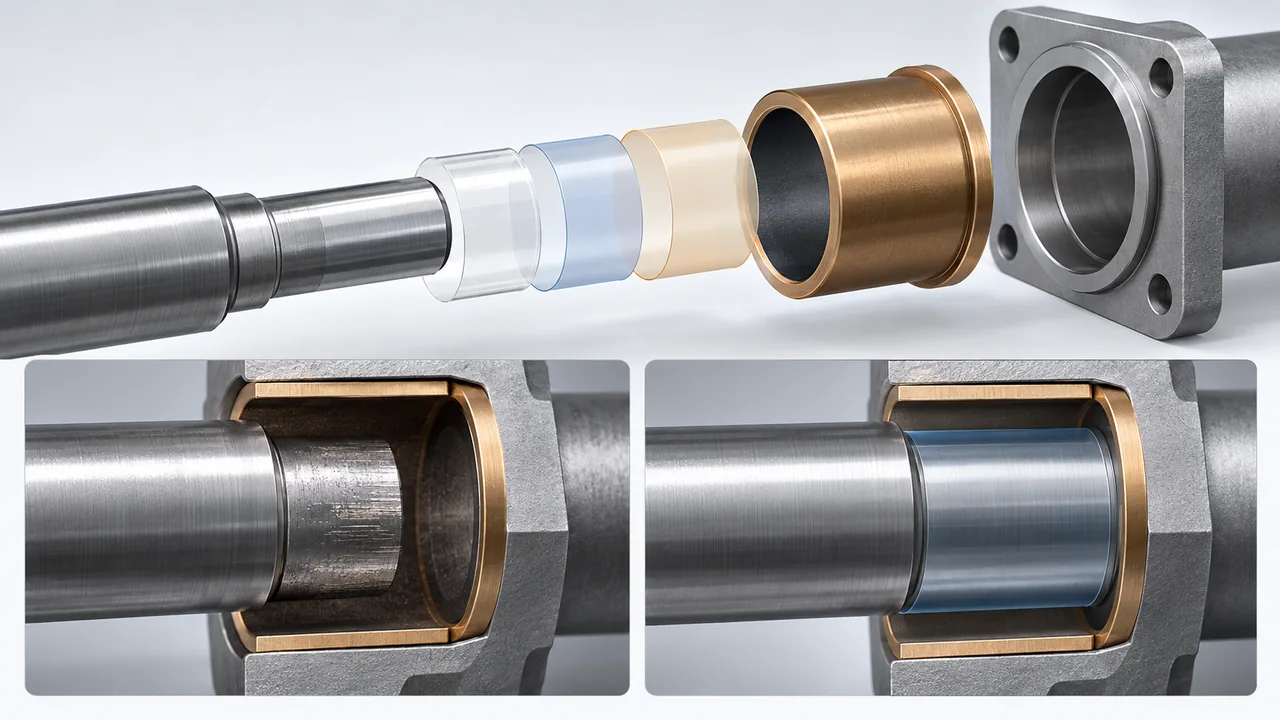
Coating changes the size of surfaces that face each other. On an external cylindrical feature, a layer on both sides increases the overall diameter. On an internal opening, coating can reduce the available space. A thickness acceptable for an isolated surface may therefore be unacceptable at a close-fitting interface.
As an illustrative geometry calculation, a uniform 10 micrometer layer around an external cylindrical pin adds approximately 20 micrometers to its diameter. This is not a recommended coating thickness or a supplier capability claim; it shows why the drawing must distinguish substrate dimensions from finished coated dimensions.
Define which state is inspected. If the fit depends on the coated surface, a report for the bare part is not sufficient. If a precision feature must remain uncoated, specify its mask and the permitted transition rather than relying on an operator’s interpretation.
Ask the coating specialist about distribution on the actual geometry. Deep recesses, edges, holes and fixture contact points can require special consideration. Do not assume that a nominal thickness measured on a witness coupon describes every location on a complex component.
Avoid the Invisible Double Allowance
A common planning risk occurs when the machinist allows for a coating but the drawing is already dimensioned for the bare substrate. Another occurs when neither party allows for it. State the dimensional basis clearly in the drawing and purchase package, and reconcile it before either operation begins.
El CNC machining service can be discussed as the upstream route for producing that substrate. Its quotation should identify the finishing sequence and inspection state so the handoff does not rely on an unrecorded assumption.
Adhesion Starts Before the Coating Is Applied
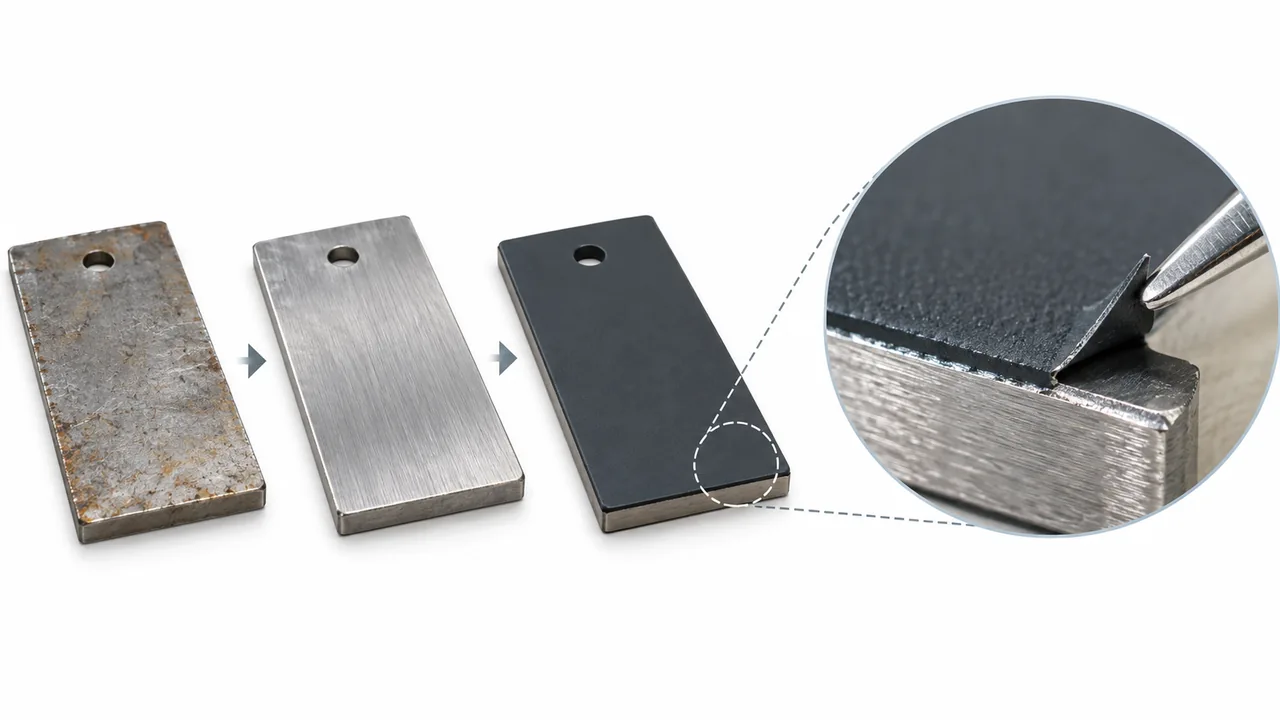
Surface contamination, unsuitable preparation or handling after cleaning can affect adhesion. The substrate’s history therefore matters: machining fluid, polishing compound, molding-related residues and storage conditions can influence the coating process.
Identify preparation that changes dimensions or roughness. A treatment that helps adhesion may also alter a critical land or edge. Manufacturing and coating teams should agree which surfaces are prepared, protected and inspected, and how parts are handled between operations.
Adhesion testing should represent the relevant substrate and exposure. A favorable result on a flat coupon can support development but may not cover a stressed edge or a flexible component. Select the method and acceptance criteria with qualified specialists rather than choosing a convenient test merely because it produces a number.
Specialty Coating Systems’ medical coating overview describes several coating families with different functions. It is useful evidence of the breadth of specialized approaches, not proof that their performance can be transferred to every material or finished assembly.
Masking Is an Engineering Interface
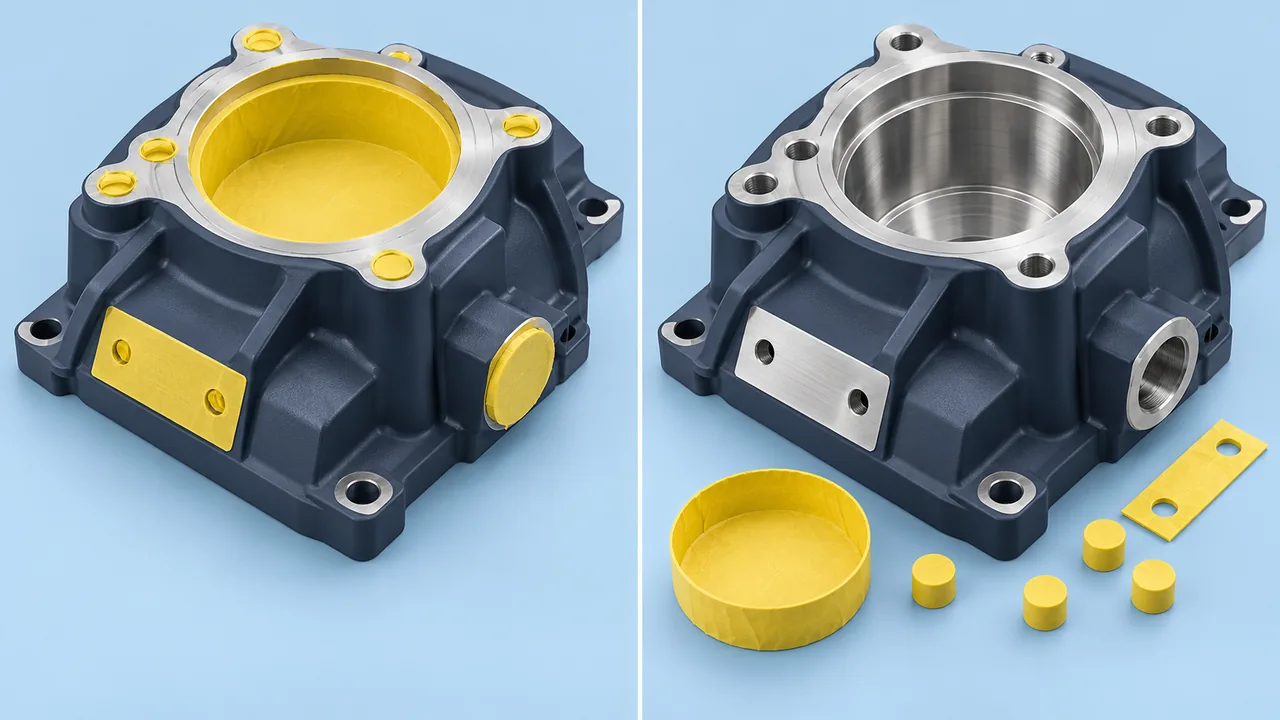
Electrical contacts, bonding surfaces, threads and controlled-fit features may need to remain exposed. Mark these areas on the drawing and define the boundary. A mask line at the wrong position can interfere with assembly or leave an unintended exposed region.
Consider how the part will be held during application. Fixture contact can create an uncoated witness area; changing the holding method can move that area to a critical surface. Discuss the allowed fixture marks during development and keep the approved arrangement controlled.
Where coating and adhesive meet, determine the assembly order. Bonding to a coated surface may have a different behavior from bonding directly to the substrate. The design should identify which interface is intended and what evidence supports it.
For a molded housing, review the same questions at bosses, snaps and sealing lands. A coating on a flexing latch may experience strain that a rigid panel does not. Coverage should follow function, not a desire to coat every visible surface indiscriminately.
Evaluate the Surface After Its Real Exposure

Cleaning agents, disinfection, sterilization, handling and mechanical motion can affect a coating differently. Define the exposure relevant to the device and inspect the endpoints that protect its function. A cosmetic check alone may miss a loss of insulation or a change in friction.
Sequence can matter. A surface may pass an exposure when new but behave differently after mechanical wear. A moving component may generate debris that changes the interface. Where these conditions are relevant, the development plan should address their interaction instead of testing every condition in isolation.
For patient-contact applications, a qualified biological evaluation must consider the finished surface and intended contact. Do not use a generic coating claim to bypass device-specific assessment. The same caution applies when the surface is damaged or when processing changes its final condition.
The existing medical surface finishing article discusses finishing more broadly. Keep coating selection focused on the added layer’s function and interfaces rather than repeating the entire finishing overview.
A Drawing Note That Can Survive the Handoff

Specify the coating identity, substrate condition, required thickness or functional criterion, coverage, masks and inspection state. Include relevant preparation and exposure requirements, and identify which changes require approval. This makes the surface a reproducible part of the product.
For a Jucheng component inquiry, provide the coating’s purpose and the critical interfaces along with the CAD data. Confirm the available upstream fabrication and finishing route and whether a specialized coating partner is required. Do not assume that a broad manufacturing capability automatically includes a validated coating for a particular medical use.
Should Coating Thickness Be as Thin as Possible?
Not necessarily. The required function, coverage, wear and fit must be balanced. A thinner layer may help clearance but fail another requirement; a thicker layer may improve one property while interfering with motion. Establish the relevant endpoints first.
Can We Measure Only the Bare Part?
Only where that measurement answers the specified requirement. If functional fit depends on the finished coated surface, inspect or otherwise verify that state with an appropriate method. Keep substrate acceptance and finished-component acceptance clearly separated.

