


Ofrecer la estética premium y pesada del metal sólido pulido mientras se mantienen las características ultraligeras de los polímeros industriales representa el santo grial definitivo para los diseñadores de hardware automotriz y sanitario. Aplicar pintura metálica barata en aerosol sobre un parachoques de plástico crudo se ve terrible y se desprende inmediatamente con una manipulación física mínima. Ejecutar un enlace metálico perfecto y permanente requiere estrictamente consultar una guía industrial rigurosa de galvanoplastia sobre plástico ABS antes de finalizar sus planos de fabricación.
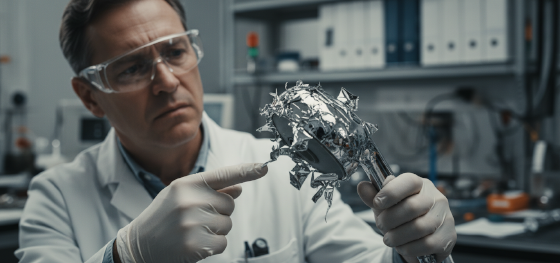
Obtener estos acabados cosméticos altamente complejos obliga a los gerentes de adquisiciones a navegar por un peligroso campo minado químico. Asegurar una galvanoplastia legítima requiere transformar una pieza de ABS (Acrilonitrilo Butadieno Estireno) crudo fundamentalmente no conductora en un sustrato altamente conductor capaz de aceptar fuertes corrientes eléctricas. Saltarse pasos críticos de neutralización durante esta violenta conversión química garantiza que la costra metálica brillante se ampollará y pelará físicamente en cuestión de semanas.
Dominar exactamente cómo reaccionan los plásticos especializados a los ácidos cáusticos hirviendo separa los talleres de prototipado amateur de los pesos pesados de la cadena de suministro global. Intentar galvanizar materiales altamente estresados y porosos inevitablemente atrapa químicos tóxicos en lo profundo de la geometría, causando una corrosión aguas abajo horrible. Los veteranos de ingeniería de hardware aplican rigurosamente reglas de diseño estrictas para garantizar que cada componente polimérico sobreviva físicamente a los castigadores baños químicos.
Operando en lo profundo del centro de fabricación de precisión de Shenzhen, nuestro equipo de control de calidad elimina por completo estos desastres de tratamiento de superficies. Rechazamos activamente archivos CAD comprometidos que presenten agujeros ciegos imposibles o geometrías que atrapen líquidos mucho antes de que lleguen a la línea de galvanoplastia. Desplegar esta autoridad de ingeniería intransigente asegura que sus componentes minoristas premium lleguen con un acabado impecable y similar a un espejo que sobrevive a entornos físicos brutales.
contenido:
Dominando el grabado agresivo con ácido crómico
Derrotando el desprendimiento por expansión térmica violenta
Ejecutando una deposición impecable de cobre sin electrólisis
Centro JUCHENG: Dominando el procesamiento químico pesado
Preguntas frecuentes: Adhesión química
Dominando el grabado agresivo con ácido crómico
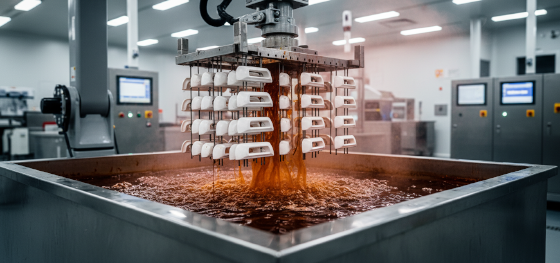
¿Por qué los componentes de plástico liso deben sumergirse en ácido tóxico hirviendo antes de galvanizar?
Los átomos de metal no pueden adherirse a plásticos lisos. Hervir la pieza en ácido cáustico elimina químicamente moléculas específicas en la superficie, creando millones de cavernas microscópicas y dentadas que actúan como puntos de anclaje mecánico para el metal.
Controlling the violence of chromic acid etching dictates the ultimate success or failure of your entire cosmetic batch. Acrylonitrile Butadiene Styrene possesses a highly unique molecular structure containing microscopic butadiene rubber particles suspended inside a rigid plastic matrix. The extreme acidic bath aggressively attacks and dissolves only these soft rubber particles, leaving behind a heavily cratered, sponge-like microscopic landscape.
Leaving the plastic component submerged inside the boiling acid tank for just thirty seconds too long completely destroys the structural integrity of the part. Over-etching melts the underlying plastic skeleton entirely, turning precision mounting brackets into useless, degraded mush. Elite factory technicians deploy strictly automated robotic hoists to guarantee absolute second-by-second timing accuracy during this terrifying chemical phase.
Substituting alternative engineering materials frequently triggers catastrophic adhesion failures. Attempting to utilize this exact chemical process on standard Policarbonato (PC) yields terrible results because it lacks the specific butadiene rubber particles necessary to create the microscopic anchoring caverns. Specifying the correct plating-grade polymer formula upfront strictly protects your operational budget from massive scrap rates.
Derrotando el desprendimiento por expansión térmica violenta
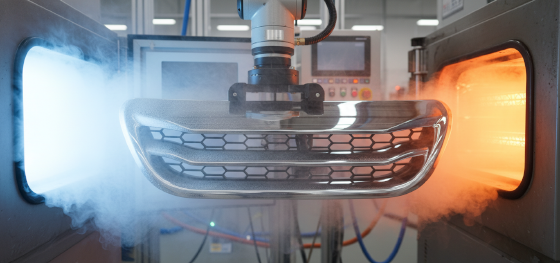
Will a perfectly plated plastic badge survive being baked in the hot summer sun?
Only if the engineering team successfully calculated the mechanical stress variables. Plastics expand under heat significantly faster than rigid metals, creating massive internal sheer forces that physically tear the heavy metallic coating straight off the substrate.
Surviving unpredictable environmental weather absolutely demands defeating thermal expansion peeling before shipping the product. When an automotive door handle bakes at sixty degrees Celsius, the underlying polymer aggressively swells and expands outward. Because the rigid exterior chrome layer refuses to stretch, the violent internal kinetic energy forcibly rips the microscopic anchoring bonds completely apart, leaving ugly flaking blisters.
Mitigating this destructive physics forces electroplating facilities to heavily engineer the intermediary metallic layers. Instead of depositing rigid chrome directly onto the raw plastic, technicians first apply a highly ductile, semi-flexible layer of pure copper. This specialized copper strike acts as a critical microscopic shock absorber, physically stretching and flexing to absorb the violent thermal mismatch between the plastic and the final chrome crust.
Evaluating comprehensive environmental test data remains absolutely non-negotiable for automotive and aerospace procurement teams. Facilities must heavily subject finalized beta components to brutal thermal shock testing, repeatedly plunging the parts from boiling water directly into freezing cryogenic baths. Passing these merciless stress tests proves the chemical adhesion actually meets rigorous global manufacturing standards.
| Substrate Manufacturing Method | Internal Material Density | Acid Bleed-Out Risk | Electroplating Success Rate |
|---|---|---|---|
| Moldeo por Inyección | 100% Solid Monolithic | Zero (No internal voids) | Maximum (Industry standard for chrome) |
| Mecanizado CNC (Extruded Billet) | 100% Solid Monolithic | Muy Baja | Excellent (Requires high-polish milling) |
| Impresión 3D (FDM Extrusion) | Highly Porous (Layer gaps) | Extreme (Traps toxic chemicals) | Catastrophic (Finish peels within days) |
| Vacuum Casting (Polyurethane) | Dense but chemically incompatible | Bajo | Poor (Cannot properly etch the rubber matrix) |
Ejecutando una deposición impecable de cobre sin electrólisis
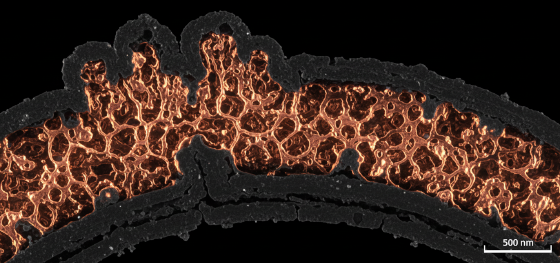
How do technicians attach electrical wires to a piece of plastic without it instantly melting?
They don't attach wires to bare plastic. Operators utilize a specialized chemical bath to grow a thin layer of conductive metal across the entire surface entirely without electricity, fundamentally turning the plastic into a metallic conductor.
Initiating electroless copper deposition forms the absolute most critical phase of this entire operation. After etching the microscopic caverns into the polymer, technicians forcefully seed the plastic surface with highly expensive palladium catalysts. Submerging the seeded plastic into a chemical copper bath triggers an aggressive auto-catalytic reaction, slowly growing a highly conductive, thin copper shell completely around the raw part.
Skipping rigorous neutralization washes before this phase ruins the plating tank instantly. If any residual chromic acid remains trapped inside blind threaded holes, it will violently leak out and poison the delicate palladium catalyst bath. This terrifying chemical cross-contamination immediately shuts down the entire automated factory line, costing hundreds of thousands of dollars in ruined chemicals.
Reading a generic plating on abs plastic guide rarely warns engineers about the dangers of sharp internal corners. Electrical current naturally concentrates heavily on sharp exterior spikes while completely ignoring deep interior crevices. Designers must heavily radius all sharp edges within their CAD files to guarantee the final heavy nickel and chrome layers distribute evenly without causing ugly, burnt metallic buildup on the corners.
Centro JUCHENG: Dominando el procesamiento químico pesado
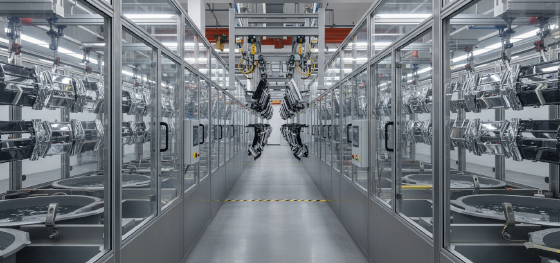
Why do elite hardware startups strictly avoid using 3D printed components for electroplating runs?
Layered printing naturally creates millions of microscopic internal voids. These voids act like sponges, aggressively trapping the boiling caustic acid. Days later, the trapped acid bleeds out, permanently ruining the shiny metallic finish.
Partnering with Jucheng Precision ensures your underlying substrate physically survives the heavy chemical vats. We aggressively steer clients away from porous additive technologies when premium cosmetic plating is required. We utilize heavy 5-axis CNC machining to carve absolutely dense, monolithic polymer billets that entirely reject internal chemical absorption.
Executing uncompromising Design for Manufacturability (DFM) audits protects your corporate treasury from horrific scrap rates. We actively identify impossible blind holes and dangerous sharp corners before cutting any physical material. Controlling the entire manufacturing lifecycle under one massive Shenzhen roof ensures your premium automotive and consumer electronics arrive flawlessly finished and perfectly tolerant.
Preguntas frecuentes: Adhesión química
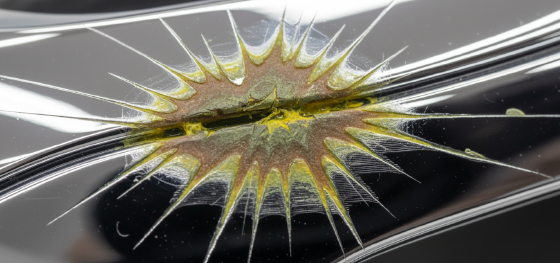
Does the final layer of shiny chrome actually protect the part from severe physical scratches?
Yes. While the intermediate copper and nickel layers provide anti-corrosion protection and deep brilliant color, the final microscopic flash of hexavalent or trivalent chromium provides immense surface hardness, aggressively resisting severe daily physical abrasion.
Why does the electroplating process drastically change the dimensions of my precision threaded holes?
Chemical deposition physically grows distinct layers of heavy metal across the entire exterior surface, actively shrinking internal hole diameters. Precision programmers must deliberately oversize threaded holes during the initial CNC machining phase to mathematically accommodate this inevitable metallic growth.
Is it possible to selectively plate only one specific half of a plastic enclosure?
Yes, but it heavily increases manual labor costs. Technicians must meticulously hand-paint specialized chemical-resistant masking resins over the areas designated to remain raw plastic. After the violent plating process finishes, workers must peel this protective masking away entirely by hand.

