


A press fit uses interference between mating parts to create contact pressure. Retention depends on the geometry, materials, wall thickness, surface condition and how the joint is loaded. When evaluating tolerancias de impresión 3D, distinguish the nominal size difference from the range the manufactured parts can reach. A tolerancia de ajuste a presión en impresión 3D starts with the finished pin and bore limits. Equal nominal diameters do not determine the fit: the actual parts may clear or interfere depending on their size limits and form.
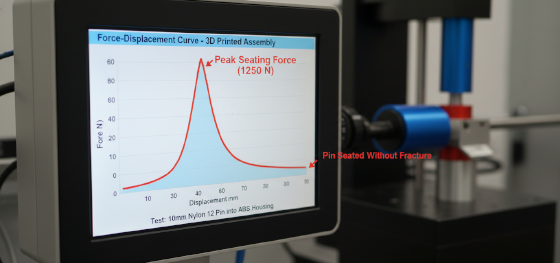
An undersized interference can leave a joint loose; too much can damage the printed bore during assembly. Use the example below to check both limits, then consider the entry geometry and verify the assembly on representative parts.
Check insertion and retention rather than relying on how a part feels at assembly. For joints exposed to sustained load, humidity or heat, include the relevant conditioning in the validation plan.
Matemáticas de la interferencia: Definiendo el sobredimensionamiento de 0.08 mm
Módulo del material: Por qué la ductilidad previene la fractura catastrófica
Sacrificios geométricos: El papel estratégico de las nervaduras de aplastamiento
Deriva ambiental: Cómo la humedad hincha la zona de interferencia
Estándar funcional de JUCHENG: Validando la fuerza de retención
Matemáticas de la interferencia: Definiendo el sobredimensionamiento de 0.08 mm
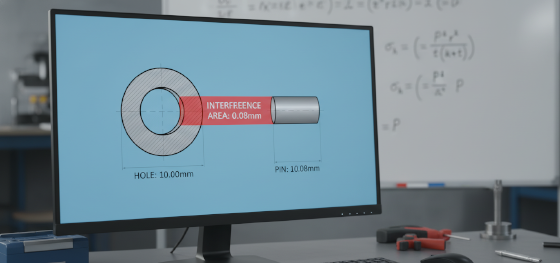
A press fit requires actual diametral interference. For tolerancia de ajuste a presión en impresión 3D, subtract the largest permitted bore from the smallest permitted pin to find minimum interference. Subtract the smallest bore from the largest pin to find maximum interference. A negative result means clearance, not interference.
For example, a 10.00 mm pin and a 9.92 mm nominal bore give 0.08 mm nominal interference. If the pin is exact and the bore prints 0.10 mm oversize, it becomes 10.02 mm and leaves 0.02 mm clearance. These numbers illustrate the tolerance stack, not a recommended allowance. For the selected impresión 3D process, verify the finished bore size and form in the required build orientation and finish. Measure insertion and retention on representative joints; an average diameter alone does not establish holding force.
Módulo del material: Por qué la ductilidad previene la fractura catastrófica
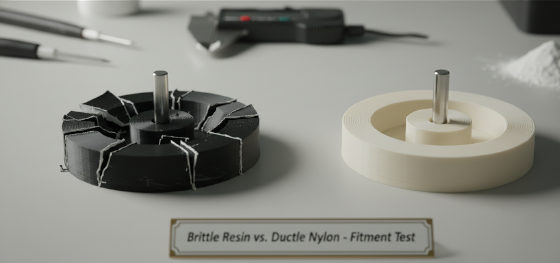
El éxito en tolerancia de ajuste a presión en impresión 3D depends on how the printed material and the bore wall respond to assembly. The pin develops circumferential tensile stress in the surrounding material. Use the exact grade, orientation and wall geometry; general resin labels do not establish the strain the actual part can tolerate.
PA12 and tougher photopolymer grades may be candidates, but validate the actual printed condition. Check for cracks or unacceptable deformation during insertion, then measure retention after a representative dwell or service exposure if applicable.
Sacrificios geométricos: El papel estratégico de las nervaduras de aplastamiento
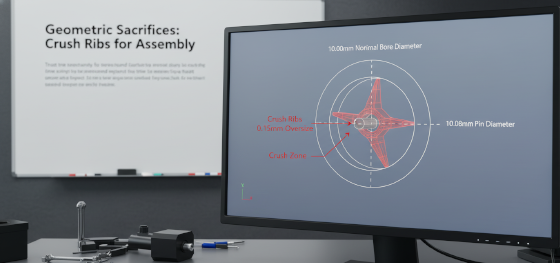
A veces, la forma más inteligente de lograr tolerancia de ajuste a presión en impresión 3D is to localize contact using crush ribs rather than loading the full bore. Compare both geometries for the actual assembly, and use a controlled lead-in and support so the press load does not pass through an unsupported feature.
Ribs can deform locally during insertion, changing both insertion force and retention. Their dimensions do not turn a looser print tolerance into a guaranteed fit. Specify the lead-in and engagement length, then use coupons or representative parts to verify assembly force, damage and the required retention.
Deriva ambiental: Cómo la humedad hincha la zona de interferencia
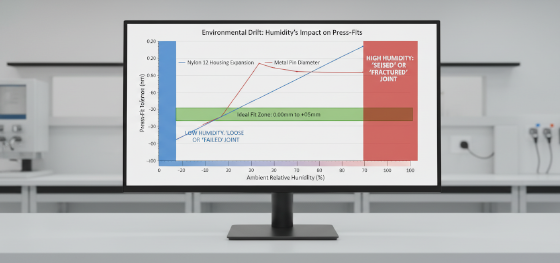
Moisture uptake, temperature and loading can change the dimensions and mechanical behavior of printed polyamides. The magnitude and direction of a bore change depend on the grade, geometry and constraints. Specify the measurement and service conditions for tolerancia de ajuste a presión en impresión 3D before comparing results.
When environmental change matters, measure the finished parts before and after representative conditioning. Consider post-machining or an alternative retention method if the printed bore cannot hold the required limits; confirm the final fit after any finishing operation.
Estándar funcional de JUCHENG: Validando la fuerza de retención
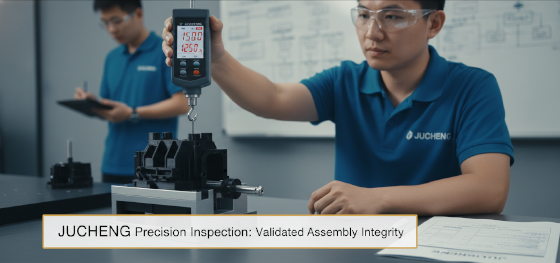
Agree on the acceptance method before manufacturing. For critical tolerancia de ajuste a presión en impresión 3D orders, test representative finished bores with the specified pin. Record insertion force and seating, inspect for damage, and measure push-out or pull-out force in the relevant direction after conditioning if required.
Use dimensional inspection to check bore size, taper or roundness as specified. Use a separate force test for retention. Ask the supplier to list the inspection and documentation included with your tolerancias de impresión 3D quote, including sampling, test method and acceptance limits where applicable.

