


Desembalar un escáner de diagnóstico de 2 metros de altura en [2026] y ver un arañazo o una astilla de pintura descascarada es la forma más rápida de perder un contrato hospitalario. En el proceso de moldeo por inyección de reacción, el esqueleto mecánico es solo la mitad de la batalla; la calidad final de la superficie es lo que define el valor percibido de su máquina. La mayoría de los termoplásticos como el polipropileno (PP) o el polietileno (PE) son conocidos por "rechazar" la pintura, requiriendo imprimaciones costosas y grabadores químicos solo para lograr que un recubrimiento básico se adhiera. Dominar la pintura y unión de poliuretano RIM es la ventaja estratégica para los desarrolladores que necesitan acabados de grado automotriz y ensamblajes estructurales irrompibles sin el típico dolor de cabeza de fallas en la superficie.
Tradicional Moldeo de plástico personalizado a menudo trata el acabado como algo secundario, lo que lleva a piezas que se ven "plásticas" y baratas. Debido a que el poliuretano es un material termoestable con alta energía superficial, es esencialmente el "Rey de la Adhesión". La pintura no solo se asienta en la superficie; crea un apretón de manos químico microscópico con la matriz polimérica. Jucheng Precision aborda estos obstáculos estéticos proporcionando servicios de alto nivel Servicios de Moldeo de Poliuretano que incluyen pintura libre de polvo y ensamblaje estructural internos. Entregamos hardware que va más allá de los "aspectos de prototipo" para proporcionar la perfección lista para la venta que exigen los sectores médico, industrial y de consumo de alta gama.
Operando dentro del centro de fabricación de precisión de Shenzhen, JUCHENG actúa como el "Maestro del Acabado" para OEM globales. Transformamos la química líquida cruda en carcasas estructurales validadas y de alto brillo que pueden sobrevivir a la realidad abrasiva del campo. Esta guía es una mirada realista a por qué la pintura se adhiere mejor al RIM, cómo preparar piezas gigantes para la cabina de pintura y por qué la unión estructural es el secreto para construir grandes ensamblajes de robot prototipo que se sienten como una sola pieza de piedra. Exploremos la ciencia de la pintura y unión de poliuretano RIM.
El Rey de la Adhesión: ¿Por qué el RIM es la mejor superficie para la pintura?
Datos Técnicos: Comparación de Adhesión de Pintura y Resistencia de Unión
Protocolos de Preparación: Lijado, Desengrasado y Tratamiento con Llama
Unión de Piezas Grandes: Adhesivos vs. Sujetadores Mecánicos
Centro JUCHENG: Gestión de Procesamiento Posterior Integral en Shenzhen
Preguntas Frecuentes: Respuestas Reales para Logística de Acabado y Ensamblaje
El Rey de la Adhesión: ¿Por qué el RIM es la mejor superficie para la pintura?
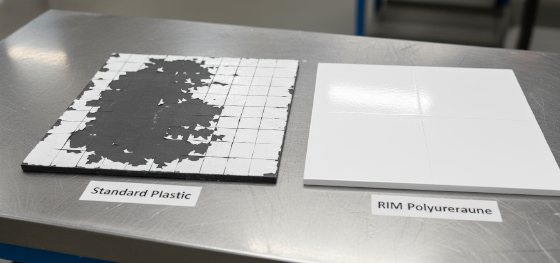
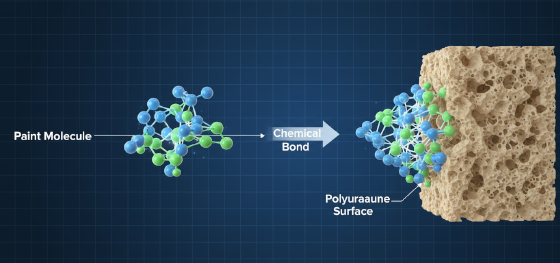
El secreto para un acabado tipo espejo en un guardabarros de robot a gran escala o en una consola médica se encuentra a nivel molecular. En pintura y unión de poliuretano RIM, la energía superficial del material es naturalmente más alta que la de los plásticos a base de olefinas como el polipropileno. Mientras que una pieza de PP actúa como una "sartén antiadherente", el poliuretano es químicamente receptivo. Cuando JUCHENG aplica pintura de uretano 2K de alto contenido de sólidos, las moléculas del recubrimiento penetran los "poros" microscópicos externos de la pieza de RIM. Esto resulta en una unión mecánica y química que es prácticamente imposible de pelar, incluso cuando la pieza se flexiona o se somete a cambios extremos de temperatura.
¿Es siempre necesaria una imprimación para piezas de RIM?
No. Aunque a menudo usamos imprimaciones de alto espesor para ocultar texturas superficiales microscópicas, la adhesión de la capa superior al poliuretano crudo es tan fuerte que rara vez se necesitan promotores de adhesión estándar, ahorrándole tiempo y costo.
La resistencia química inherente del sustrato protege el acabado de adentro hacia afuera. En entornos médicos [2026], los dispositivos son constantemente rociados con agentes de limpieza agresivos. Si la pintura está sobre un plástico de baja adhesión, el limpiador se filtrará debajo de la pintura en un pequeño rasguño y "levantará" todo el recubrimiento. Debido a que los Servicios de Moldeo de Poliuretano de JUCHENG aseguran una unión monolítica entre la resina y la pintura, el recubrimiento permanece intacto. Esta es la razón por la que RIM es la opción preferida para carcasas de MRI y carcasas de robots quirúrgicos: es la única manera de garantizar un aspecto de "máquina nueva" durante toda la vida útil de 10 años del equipo.
La planitud superficial dictada por la física de baja presión mejora aún más la calidad de la pintura. El moldeo tradicional de alta presión crea "marcas de hundimiento" sobre las nervaduras internas, que se vuelven dolorosamente visibles una vez que se aplica una pintura de alto brillo. El proceso RIM de JUCHENG produce piezas con cero tensión interna, asegurando que los paneles de 2 metros de largo permanezcan perfectamente planos. Esto permite que nuestro equipo de pintura en el centro de Shenzhen logre un acabado "Clase A" con un mínimo de trabajo de lijado, reduciendo directamente su presupuesto de I+D mientras entrega un ensamblajes de robot prototipo que parece recién salido de una línea de producción multimillonaria.
Datos Técnicos: Comparación de Adhesión de Pintura y Resistencia de Unión
Elegir la estrategia correcta de acabado y ensamblaje requiere datos, no suposiciones. Si su robot opera en una fábrica de alta vibración, la resistencia de la unión de su ensamblaje es más importante que el nivel de brillo de la pintura. Jucheng Precision proporciona especificaciones técnicas completas para ayudarle a validar su flota Beta. La siguiente tabla compara las métricas de rendimiento esenciales de pintura y unión de poliuretano RIM frente a alternativas termoplásticas comunes para el mercado [2026].
| Métrica | Polyurethane RIM (Painted) | Molded ABS (Painted) | Molded PP (Painted) |
|---|---|---|---|
| Adhesion (Cross-Hatch) | 5B (No peeling) | 4B - 5B | 1B - 2B (High failure) |
| Chemical Resistance (Alcohol) | Excepcional | Moderate (Stress cracks) | Low (Solvent swelling) |
| Shear Bond Strength (psi) | 1,200 - 1,800 | 800 - 1,100 | 300 - 500 |
| UV Stability (unpainted) | High (Additive-based) | Baja (Amarillea) | Moderada |
The "Shear Bond Strength" is the most critical data point for building large robotic assemblies. In pintura y unión de poliuretano RIM, the material can be chemically "fused" using structural urethane or epoxy adhesives. Because the adhesive and the part share similar chemical origins, the joint often becomes stronger than the surrounding material itself. This allows JUCHENG to manufacture four separate panels and bond them into a single, seamless 2-meter tall enclosure that can handle the vibrational loads of a heavy-duty industrial mobile base without any mechanical fasteners visible on the exterior.
Protocolos de Preparación: Lijado, Desengrasado y Tratamiento con Llama
Automotive-grade paint quality is not won in the spray booth; it is won at the sanding bench. For oversized piezas de robots industriales, JUCHENG implements a multi-stage surface preparation protocol. We begin with automated degreasing to remove any trace of wax-based mold release agents. Even a microscopic oily spot will cause a "fish-eye" defect in the final paint. We then move to 400-grit to 1000-grit wet sanding to ensure the parting lines and gate scars are 100% invisible. This labor-intensive prep is why our Moldeo de plástico personalizado results look so much more professional than parts from "rough prototyping" shops.
How to get paint to stick to a 2-meter part?
Use flame treatment to oxidize the surface molecules, temporarily increasing the surface energy and providing thousands of chemical "anchor points" for the paint.
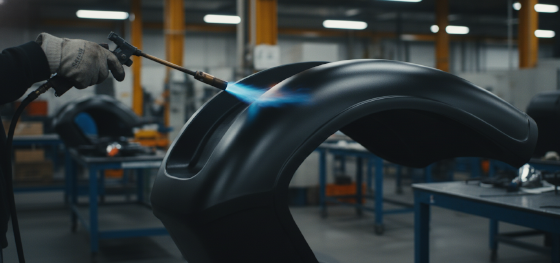
Flame treatment is JUCHENG’s high-tech "secret weapon" for large enclosures. By passing a specialized plasma or gas flame over the part, we break the surface molecular bonds and create polar groups. This makes the polyurethane even more receptive to high-performance topcoats. This process is essential for robots destined for outdoor AgTech use, where the hardware will be exposed to rain and mud. Without flame treatment, the moisture can eventually undermine the paint; with it, the coating becomes a permanent part of the shell, resisting the "sandblasting" effect of dust and debris during high-speed field travel.
Antistatic cleaning is the final prep step at our Shenzhen hub. Large plastic panels are magnets for dust due to static electricity. JUCHENG utilizes ionized air blow-offs and specialized tack-cloths immediately before the part enters the spray booth. This ensures that no tiny specks of dust are trapped under the paint. For 2026 medical-grade diagnostic equipment, this level of "Surgical Cleanliness" is mandatory to prevent the surface imperfections that could harbor bacteria or compromise the clinical professional image of your device.
Unión de Piezas Grandes: Adhesivos vs. Sujetadores Mecánicos
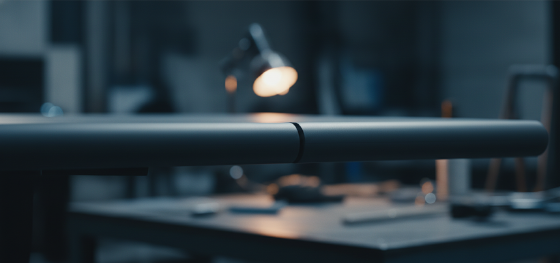
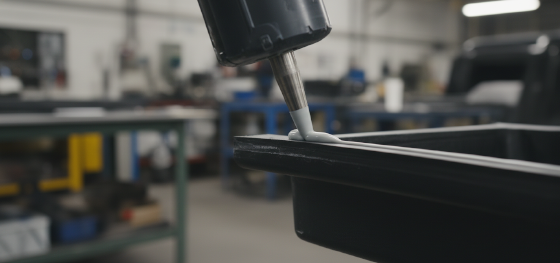
Designing massive ensamblajes de robot prototipo enclosures often requires building the part in segments and then joining them. In pintura y unión de poliuretano RIM, you have two choices: hide the joint or show it. JUCHENG recommends "Structural Bonding" for a seamless, retail-ready look. We utilize 5-axis CNC to machine interlocking tongue-and-groove features into the part edges. These features increase the surface area for the adhesive, providing a "Mechanical Interlock" that, when combined with industrial epoxies, creates a joint that can survive a 10-G impact test without cracking.
Can I use screws instead of glue for Beta trials?
Yes. JUCHENG can encapsulate threaded brass or steel inserts directly into the RIM part during the proceso de moldeo por inyección de reacción, allowing for a "Serviceable" bolted assembly that remains rigid.
Solvent bonding is another unique trick for polyurethane. Unlike ABS, which can be melted with simple solvents, PU requires a specialized "chemical fusion" agent. JUCHENG utilizes these agents for small, intricate details where a thick adhesive bead would be too bulky. This results in a "Cold-Weld" that is optically clear—essential for robots with integrated LED light guides or transparent sensor windows. By managing the bonding chemistry in-house, we eliminate the risk of "Stress Cracking" that occurs when engineers use the wrong hardware-store glue on high-performance industrial polymers.
Weight management is optimized through adhesive selection. Mechanical fasteners (bolts and nuts) add significant mass and create "stress risers" that can cause cracks in a large plastic shell. Bonding distributes the load over the entire length of the joint, allowing JUCHENG to use thinner wall sections in your design. This "Monocoque" approach is what allows us to deliver a 2-meter scanner console that weighs 40% less than a metal version but possesses identical structural rigidity. Every gram saved in assembly is a gram added to your robot’s battery life or sensor payload in the [2026] market.
Centro JUCHENG: Gestión de Procesamiento Posterior Integral en Shenzhen
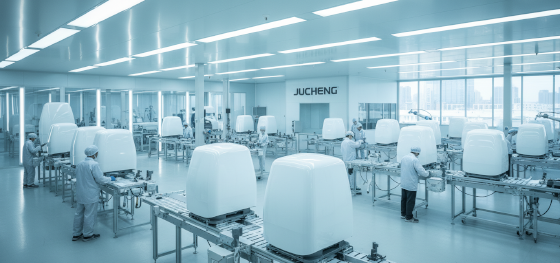
Dominating the large-format hardware market requires a partner that can scale from a single hand-painted prototype to a commercial deployment of 5,000 units without losing a millisecond of momentum. Jucheng Precision operates with a 24/7 manufacturing mindset in our Shenzhen precision manufacturing hub, delivering high-tolerance pintura y unión de poliuretano RIM and structural piezas de robots industriales with industry-leading speed. We provide a "Bridge to Production" that ensures your innovations move from concept to pilot run with 100% aesthetic and mechanical confidence.
Integrating your structural design with JUCHENG’s expertise ensures that your hardware survives the "First-Boardroom Contact" and moves into mass adoption. We offer comprehensive DFM reviews within 24 hours, identifying potential bonding-risks or "paint-traps" in your design before they become visual failures. Whether you are building an autonomous medical assistant or a heavy-duty industrial mobile base, Jucheng Precision provides the rigid, precise, and flawlessly finished foundations that keep your innovation moving through the high-stakes cycles and the years of hard labor.
Our facility is equipped with 150+ CNC machines and dedicated dust-free painting and cleanroom assembly cells, allowing us to manage the entire hardware lifecycle in one location. We manage the complexity of multi-material bonding and automotive-grade finishing so your engineering team can focus on the system integration and the AI. By combining Shenzhen's speed with industrial-grade material verification and global ISO 13485 standards, JUCHENG remains the preferred partner for the world's most aggressive Moldeo de plástico personalizado challenges. Contact us today to start your next project.
Preguntas Frecuentes: Respuestas Reales para Logística de Acabado y Ensamblaje
Can JUCHENG match a specific Pantone or RAL color?
Yes. We use computer-controlled paint mixing to match your brand colors with +/- 0.5 Delta-E accuracy in our dust-free booth.
What is the typical lead time for a fully painted large enclosure?
Fully finished and assembled enclosure sets are typically delivered in 15 to 20 business days.
Is the bonding strong enough for heavy-duty AgTech use?
Yes. Our structural adhesive joints are engineered to be stronger than the base polyurethane, surviving extreme impact and vibration.
Does the paint on RIM parts scratch easily?
No. We apply ceramic-infused 2K clear coats that provide automotive-grade scratch and chemical resistance.
Can you bond RIM parts to metal frames?
Yes. We specialize in multi-material bonding of polyurethane panels to aluminum or steel skeletons for hybrid robot designs.
Peeling paint and loose joints are absolute innovation killers for 2026 hardware. Partnering with Jucheng Precision ensures that your functional iterations are built with the unyielding proceso de moldeo por inyección de reacción and specialized pintura y unión de poliuretano RIM techniques the industry demands. Reach out to our Shenzhen manufacturing hub today for a complete DFM review and build the high-fidelity foundation your autonomous fleet requires.

