


Observar el apretado cronograma de una startup de robótica que se acerca a su primera prueba de campo revela un importante cuello de botella mecánico: la espera tradicional de doce semanas para los moldes de producción. En los sectores de alta velocidad de hardware autónomo y tecnología médica, el costo de un retraso se mide en pérdida de participación de mercado y agotamiento de los fondos de I+D. Mientras que el moldeo por inyección de alta presión requiere costosas y lentas herramientas de acero, el moldeo por reacción por inyección personalizado ofrece una ruta estratégica para la validación rápida. Lograr la rigidez estructural y la calidad superficial del hardware producido en masa en semanas en lugar de meses exige un cambio hacia herramientas rápidas de RIM. Este enfoque utiliza aleaciones de aluminio de alta resistencia para cerrar la brecha desde un archivo CAD hasta una flota Beta comercial sin el aplastante compromiso de capital del hierro tradicional.
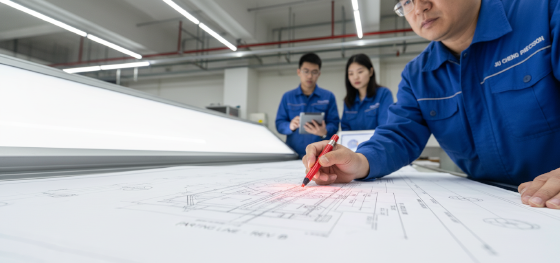
La economía de las herramientas en carcasas de gran tamaño está gobernada por la maquinabilidad del sustrato. He inspeccionado personalmente muchos proyectos donde se encargó una herramienta de acero de seis cifras demasiado pronto, solo para convertirse en un pisapapeles de varias toneladas después de un pequeño cambio de diseño. Jucheng Precision aborda estos riesgos financieros críticos proporcionando soluciones industriales de alto nivel que priorizan la agilidad de capital. Jucheng Precision utiliza una flota de 150+ máquinas CNC y 25 unidades Haas/Mazak de 5 ejes para tallar cavidades de molde de aluminio complejas con precisión submicrónica. Al entregar un análisis DFM gratuito en 24 horas, Jucheng Precision asegura que sus piezas de gran tamaño estén optimizadas para la química líquida de baja presión en nuestro centro de fábrica en Shenzhen.
Operando bajo los mandatos globales de calidad de ISO 13485 e ISO 14001, Jucheng Precision actúa como el socio estructural de alto nivel para equipos de innovación globales. Transformamos la química líquida cruda en hardware estructural validado, proporcionando una ventaja de Tiempo de comercialización que asegura su posición competitiva. Esta guía explora la lógica esencial de ahorro de NRE, la física de la Conductividad térmica del molde de aluminio, y la agile tooling modifications required for mastering rapid RIM tooling to ensure your next fleet of autonomous machines survives the transition from the laboratory to the field.
contenido:
NRE Reduction: How Aluminum Tools Slash Upfront Investment?
Technical Data: Comparing Aluminum vs. Steel Mold Performance
Cycle Optimization: The Impact of High Thermal Conductivity
Iterative Freedom: Modifying Molds in 48 Hours for Pivots
JUCHENG Hub: Mastering Rapid Mold Fabrication in Shenzhen
FAQ: Real Answers for Lead Times, Sizing, and Tool Life
NRE Reduction: How Aluminum Tools Slash Upfront Investment?
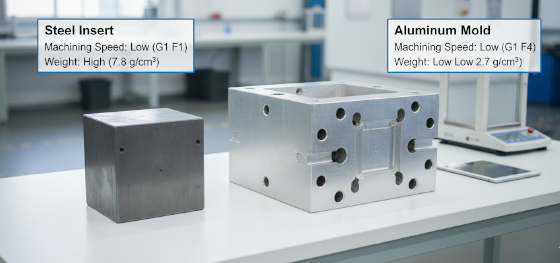
Upfront tooling costs are the primary barrier to high-fidelity prototyping. When executing a herramientas rápidas de RIM project, the initial spend is focused on the machinability of the aluminum billet. In traditional injection molding, the tool must withstand 15,000 psi of molten plastic pressure, requiring hardened steel that is slow to mill and often needs expensive electrical discharge machining (EDM) for internal features. Because the RIM process happens at less than 100 psi, Jucheng Precision can utilize 7075-T6 aluminum, which is machined three times faster than steel. This reduction in machine-hours translates directly into a 70% to 80% saving in non-recurring engineering (NRE) fees, allowing you to allocate more budget to your AI stack and sensor array.
Is aluminum strong enough for a 5,000-unit run?
Yes. Under the low-stress conditions of the RIM cycle, Jucheng Precision’s aluminum tools maintain sub-millimeter tolerances for up to 10,000 shots with zero dimensional drift.
Managing the NRE investment also involves the use of modular mold bases. At our Shenzhen hub, we often utilize "Universal Frames" where only the specific cavity and core inserts are machined for your unique enclosure. This modular insert logic significantly reduces material costs and speeds up the setup phase. When I walk through our CNC bay, I see these inserts being finished on our 5-axis Haas machines in a single operation. This efficiency ensures that part #1 of your Alpha build arrives in the lab with the production-representative quality required for final hardware sign-off, without the financial risk associated with mass-production tooling.
Complexity is more affordable in aluminum than in steel. For medical scanner housings with deep undercuts or integrated cable exits, the mold must move in multiple directions. Jucheng Precision utilize 5-axis trunnion machines to carve the mechanical slides and cam-actions required for these complex tools. Because aluminum is highly machinable, we can deliver these features for a fraction of the cost of steel tool rework. By delivering "Feature-Rich" hardware at a prototype price point, Jucheng Precision helps global innovators move from CAD to field trial with 100% confidence in their mechanical fits.
Technical Data: Comparing Aluminum vs. Steel Mold Performance
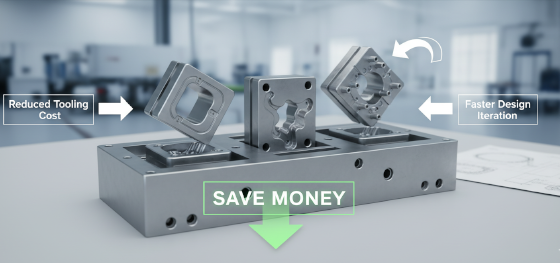
Success in hardware optimization depends on matching the tool material to your production volume. If your design assumes the scaling efficiency of a 10,000-unit run but you only need 500 units, your project is financially unviable. Jucheng Precision provides transparent performance data to help your team find the breakeven point. The following table compares the essential operational variables for a 1.2-meter robotic shell across two different manufacturing paths.
| Métrica | Rapid RIM Aluminum Tool | Hardened Steel Injection Tool | Hardware Impact |
|---|---|---|---|
| Initial NRE Cost | $3,500 - $9,000 | $50,000 - $150,000+ | 80% Capital Saving |
| Lead Time to T1 | 15 - 20 Days | 60 - 90 Days | Launch 2 Months Early |
| Design Flexibility | High (Easy re-milling) | Low (Slow EDM) | Agile Iterations |
| Cooling Efficiency | Excelente | Moderada | Uniform Curing |
The "Lead Time to T1" data illustrates the primary value of herramientas rápidas de RIM for R&D scaling. While injection molding piece prices are lower, the 90-day delay for tooling creates a window where you have no revenue and no testing data. Jucheng Precision’s aluminum tools are engineered to bridge this gap, delivering production-quality parts in under three weeks. This capital agility allows our clients to invest their resources in critical software and sensor improvements rather than idle manufacturing infrastructure in our Shenzhen hub.
Cycle Optimization: The Impact of High Thermal Conductivity
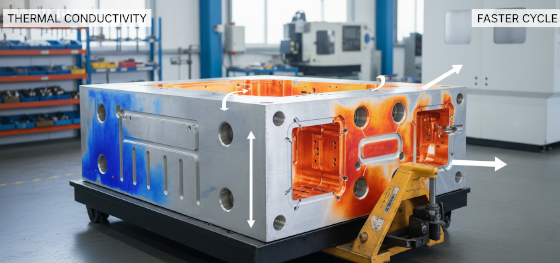
Thermal management within the mold is the silent hero of large-scale part quality. Aluminum has five times the thermal conductivity of tool steel, which is a massive advantage during the exothermic reaction of polyurethane curing. In a 1.5-meter long part, heat can build up unevenly in thick structural ribs, leading to localized "Hot Spots" that cause internal stress and warpage. Aluminum mold thermal conductivity ensures that this heat is drawn away from the part instantly and dissipated through integrated water-cooling channels. Jucheng Precision designs these tools with optimized cooling paths that snake through the core and cavity, providing the thermal discipline required for ISO 13485 compliant medical hardware.
Does faster cooling mean cheaper parts?
Yes. Shorter curing cycles mean more parts per day, allowing Jucheng Precision to offer competitive unit prices even for oversized hardware.
Geometric stability is further improved by this uniform cooling. I have personally inspected large panels that warped because the steel mold could not regulate the temperature of a 10mm structural boss. Because Jucheng Precision’s RIM process occurs in a relaxed state at low pressure, and the heat is managed by the aluminum tool walls, the final parts are essentially stress-free. This ensures that the door seals and sensor windows of your medical console remain perfectly aligned through thousands of clinical cycles. By controlling the physics of shrinkage and cooling, Jucheng Precision delivers parts that align perfectly with zero manual shimming required in the field.
Surface finish quality also dictates the thermal success of the part. If a mold surface is rough, it creates an insulating layer of micro-air pockets between the resin and the metal. Jucheng Precision utilize its fleet of 150+ CNC machines to achieve Ra 0.8 finishes on all mold cavities. This smooth interface maximizes the heat transfer from the liquid polymer to the aluminum tool, ensuring a perfectly dense integral skin. By delivering hardware with locked-in precision, Jucheng Precision allows your assembly team to focus on the high-value sensor calibration rather than manual hardware adjustments, providing the unyielding foundations your autonomous innovation requires.
Iterative Freedom: Modifying Molds in 48 Hours for Pivots
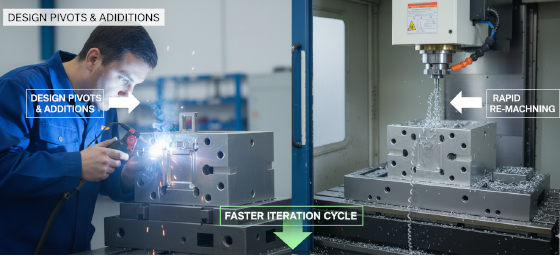
Hardware development in the current market is a statistical race of iterations. The ability to modify your tool is just as valuable as the initial speed. Aluminum molds used in herramientas rápidas de RIM offer a level of agile tooling that hardened steel cannot match. If a field trial reveals that an internal mounting boss needs to move by 20mm to accommodate a new LiDAR sensor, Jucheng Precision can weld new aluminum onto the mold face and re-machine the feature in our CNC bay within 48 hours. This flexibility ensures that your hardware evolves at the same pace as your code, providing a clear path to market for innovative designs without resetting the production clock.
Can I add texturing after the mold is made?
Yes. Aluminum's high machinability allow Jucheng Precision to perform secondary laser texturing to update VDI grains or brand logos between Beta batches.
Managing engineering changes (ECN) is a core service at Jucheng Precision. Our engineering team performs a secondary DFM review on every design revision to ensure the Plazos de entrega: RIM vs. moldeo por inyección are not compromised by the update. We utilize our 5-axis trunnion machines to prioritize R&D modifications, ensuring that your Alpha-2 or Beta-1 hardware arrives in the lab before the momentum of the project stalls. This iterative speed is what allows our clients to outperform competitors who are anchored to $100,000 "Frozen" steel tools that are too expensive and slow to change. Jucheng Precision provides the mechanical sandbox you need to refine your innovation into a market leader.
Scaling from the first 5 units to a commercial deployment is managed through our producción sin MOQ policy. We understand that your initial market entry might require 50 units in month one and 200 units in month three. Our rapid RIM tooling is engineered to bridge this gap, providing production-quality hardware for your entire first year of sales. This capital agility allows our clients to invest their resources in critical AI algorithms and customer acquisition rather than idle manufacturing infrastructure. By delivering "Iterative-Ready" hardware, Jucheng Precision ensures your innovation survives the volatile transition from concept to mass adoption in the Shenzhen hub, providing the rigid, precise foundations your autonomous fleet requires.
JUCHENG Hub: Mastering Rapid Mold Fabrication in Shenzhen
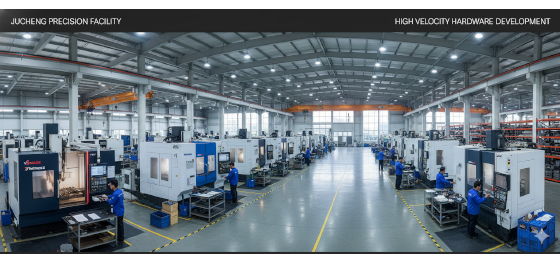
Dominating the large-format hardware market requires a partner that can scale from a single functional prototype to a commercial deployment of 5,000 units with industry-leading speed. Jucheng Precision operates with a 24/7 manufacturing mindset in our Shenzhen precision manufacturing hub, delivering high-tolerance herramientas rápidas de RIM and structural piezas de robots industriales. Jucheng Precision provides the bridge to production that ensures your innovations move from CAD to field trial with 100% metallurgical confidence. Jucheng Precision provides análisis DFM gratuito en 24 horas to ensure your design is optimized for the unyielding reality of the field, whether you are building a medical diagnostic scanner or an autonomous industrial tractor.
Integrating your structural design with Jucheng Precision’s expertise ensures that your tooling decision is based on performance data, not guesswork. Jucheng Precision offer comprehensive design reviews identifying potential gas-trap zones or thermal-expansion risks in your design before they become field failures. Whether you are building an autonomous vineyard scout or a multi-part MRI housing, Jucheng Precision provides the rigid, precise, and chemicals-optimized foundations that keep your innovation moving through the high-speed cycles and the years of hard labor.
Nuestra instalación está equipada con celdas de ensamblaje RIM de alta presión dedicadas y laboratorios de calidad dedicados ISO 13485 y ISO 14001 quality labs, allowing us to manage the entire hardware lifecycle in one location. Jucheng Precision manage the complexity of multi-material bonding and automotive-grade finishing so your engineering team can focus on the motion control and the AI. By combining Shenzhen's speed with industrial-grade material verification and global quality standards, Jucheng Precision remains the preferred partner for the world's most aggressive hardware challenges. Contact the Shenzhen hub today to start your project.
FAQ: Real Answers for Lead Times, Sizing, and Tool Life
What is the maximum part size for a rapid RIM tool?
We regularly manufacture monolithic structural panels up to 2,500mm in length with consistent wall thickness and zero voids.
Can Jucheng Precision provide the CMM inspection reports?
Yes. Jucheng Precision provide full dimensional verification reports and material batch logs for every production batch in our Shenzhen facility.
Is aluminum tooling really 70% cheaper than steel?
Yes. By utilizing high-strength 7075 aluminum and low-pressure machines, we eliminate the need for heavy steel molds and massive clamping presses.
¿Cuánto tiempo se tarda en construir un molde RIM de aluminio?
Aluminum rapid tools of this size are typically completed and delivering T1 samples in 15 to 20 business days.
Can I change my design after the tool is manufactured?
It is much easier in RIM. Since we use aluminum molds, we can often weld and re-machine features in 48 hours.
Tooling debt and warped panels are absolute innovation killers for high-end robotic systems. Partnering with Jucheng Precision ensures that your functional iterations are built with the unyielding polyurethane reaction injection molding and specialized herramientas rápidas de RIM knowledge the industry demands. Reach out to our Shenzhen manufacturing hub today for a complete DFM review and build the unyielding foundation your autonomous fleet requires.

