


Evaluating physical hardware concepts frequently traps venture-backed startups in a dangerous cycle of false positive data. Relying on brittle desktop extrusion systems to produce a functional prototype plastic part guarantees catastrophic failure during rigorous mechanical testing. Procuring components that perfectly mirror the ultimate end-use material behavior dictates whether your engineering team successfully launches a product or endlessly burns investor capital on broken iterations.

Mastering aggressive snap-fit joint validation separates elite mechanical engineers from amateur designers. Forcing a rigid Impresión 3D resin clip into a tight receiving slot inevitably violently shatters the fragile material, completely invalidating hours of expensive CAD development. Hardware procurement managers must aggressively demand physically robust materials that stretch and flex identically to mass-produced industrial pellets.
Executing flawless thermoplastic material mimicry completely bridges this terrifying gap between digital concepts and physical volume manufacturing. Replacing porous layered printing with advanced Mecanizado CNC or liquid pouring unlocks authentic physical performance. Engineers practically eliminate downstream assembly nightmares by executing rigorous pre-production dimensional verification before ever authorizing a fifty-thousand-dollar steel mold.
Operating deep within the Shenzhen precision manufacturing hub equips Jucheng Precision veterans to actively rescue doomed hardware projects. We aggressively steer clients away from inappropriate rapid technologies that mathematically cannot survive drop testing. Delivering retail-ready functional models ensures your corporate testing phase yields absolute, undeniable mechanical truth without exposing your intellectual property to disjointed supply chains.
contenido:
Defeating Snap-Fit Validation Failures
Mastering Thermoplastic Material Mimicry
Executing Pre-Production Dimensional Verification
Centro JUCHENG: Dominando la Escalabilidad del Hardware
Preguntas frecuentes: Física de polímeros
Defeating Snap-Fit Validation Failures

Can hardware engineers rely on standard photopolymer resins to test aggressive mechanical flexing?
Nunca. Las resinas de fotopolímero siguen siendo notoriamente frágiles y poseen prácticamente cero elongación a la rotura, lo que provoca que las pinzas de retención flexibles se rompan violentamente en el momento en que se aplica tensión cinética.
Obtener datos de pruebas mecánicas legítimas exige físicamente tallar la pieza de plástico prototipo directamente a partir de tochos sólidos extruidos. El fresado sustractivo de ABS altamente comprimido o POM (Delrin) increíblemente resistente proporciona una densidad monolítica absoluta. Esta estructura cristalina cruda absorbe perfectamente el choque cinético, permitiendo que las pinzas mecánicas se flexionen, doblen y aseguren firmemente en su lugar exactamente como un gabinete final producido en masa.
Diseñar ensamblajes de enclavamiento complejos requiere una iteración implacable para lograr la fuerza de inserción exacta. Si un diseño de riel deslizante se siente demasiado rígido durante las pruebas iniciales, los algoritmos de software no pueden predecir con precisión el coeficiente de fricción física. Los maquinistas ajustan físicamente las trayectorias de herramienta por meros micrones en la máquina CNC, probando continuamente la fricción deslizante real hasta que la sensación ergonómica es absolutamente perfecta.
La fijación de componentes internos pesados obliga a los ingenieros a abandonar por completo los plásticos débiles en capas. Atornillar pernos de acero inoxidable en paredes impresas porosas desgarra violentamente la geometría interna, causando una falla instantánea de la rosca. Las poliamidas mecanizadas sólidas poseen una inmensa resistencia al corte, aceptando sin problemas insertos de latón calentados por ultrasonido para proporcionar roscas de máquina permanentes e indestructibles para extracciones continuas del compartimento de la batería.
Mastering Thermoplastic Material Mimicry

¿La colada líquida de bajo volumen simula con precisión el rendimiento de los plásticos de ingeniería pesados?
Absolutamente. Las formulaciones químicas modernas imitan agresivamente las propiedades físicas exactas de los termoplásticos de alta gama, ofreciendo retardancia de llama V0, estabilidad UV intensa y rigidez estructural extrema.
Cerrar la enorme brecha financiera entre modelos visuales únicos y costosas Moldeo por Inyección series requiere desplegar la ágil tecnología de Vaciado al Vacío. Verter poliuretano líquido altamente reactivo en cavidades de silicona blanda permite a las fábricas producir rápidamente cincuenta unidades beta idénticas. Ajustar la mezcla química directamente dentro del tanque simula brillantemente policarbonato (PC) rígido o caucho elastomérico blando sin esfuerzo.
Igualar los colores exactos de la marca corporativa Pantone evita enormes dolores de cabeza durante las presentaciones a inversores. Aplicar pintura en aerosol espesa a componentes flexibles generalmente resulta en astillamiento y descascarillado catastróficos bajo manipulación intensa. Inyectar tintes líquidos altamente concentrados directamente en la resina de colada garantiza que el color vibrante penetre todo el espesor de la pared sólida, haciendo que los arañazos mecánicos profundos sean prácticamente invisibles.
Ejecutar sobremoldeo complejo de dos disparos se vuelve notablemente asequible utilizando este ágil proceso químico. Los técnicos suspenden fácilmente un chasis de plástico mecanizado rígido de nuevo en la cavidad de silicona blanda. Verter una resina flexible similar al caucho alrededor del esqueleto rígido simula perfectamente el costoso moldeo por inyección de dos materiales, ofreciendo una ergonomía táctil premium para dispositivos médicos de mano sin incurrir en grandes gastos de capital.
| Tecnología de Prototipado | Flexión y Elongación Mecánica | Acabado Superficial Cosmético | Aplicación de Prueba Óptima |
|---|---|---|---|
| Impresión Básica con Resina SLA | Extremadamente Pobre (Se rompe al instante) | Excelente (Requiere pintura) | Non-functional visual marketing mockups |
| Polyurethane Liquid Casting | High (Mimics injection molded ABS) | Flawless retail-ready texture | Low-volume beta testing and field trials |
| Subtractive 5-Axis Milling | Absolute Maximum (Solid Extruded Billet) | Machined finish (Can be vapor polished) | High-pressure pneumatic fluid manifolds |
| SLS Nylon Powder Sintering | Moderate (Excellent impact resistance) | Porous and slightly rough | Complex interlocking robotic drone gears |
Executing Pre-Production Dimensional Verification
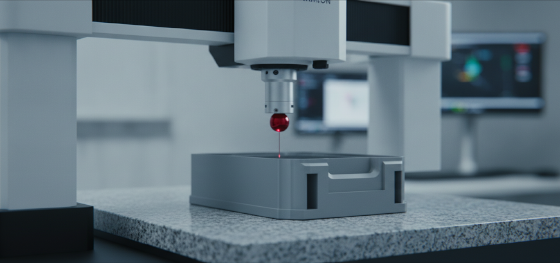
Should hardware startups order hardened steel molds immediately after approving a printed visual model?
Never. Additive physics differ entirely from high-pressure molten injection physics, practically guaranteeing your expensive steel tool will require massive, costly modifications to correct unexpected warpage.
Ordering a fully functional prototype plastic part explicitly forces the engineering team to confirm absolute design tolerances physically. Shrinkage rates vary wildly across different manufacturing disciplines. Validating the exact O-ring groove depth using a machined PEEK prototype perfectly ensures the final waterproof seal actually holds fifty PSI of hydraulic pressure before cutting any heavy tool steel.
Uncovering severe draft angle errors during the physical validation phase saves venture-backed companies millions in scrap rates. Modeling vertical plastic walls with zero-degree draft guarantees the hardened polymer will permanently shrink and seize onto the steel core during volume manufacturing. Veteran technicians physically review these critical draft angles on the machined model, highlighting impossible geometries instantly.
Running pilot assembly procedures completely dictates exactly how your final factory line will perform. Assembly workers physically practice routing delicate internal wiring harnesses and driving self-tapping screws into the authentic plastic enclosures. Identifying severe ergonomic bottlenecks early ensures your global product launch scales flawlessly without inducing terrifying labor shortages.
Centro JUCHENG: Dominando la Escalabilidad del Hardware

Why do aggressive hardware developers actively avoid bouncing digital files between scattered local print farms?
Because splitting the manufacturing liability completely destroys quality control. Transitioning designs between disconnected vendors guarantees severe dimension loss and terrifying intellectual property leaks.
Partnering directly with Jucheng Precision guarantees your physical models survive brutal mechanical testing. Submitting your complex CAD file triggers an immediate manual Design for Manufacturability (DFM) audit. We aggressively interrogate the physics of your design to recommend the absolute perfect material selection before cutting a single millimeter of expensive raw stock.
Leveraging our massive Shenzhen hybrid facility ensures you transition seamlessly from early mockups to high-volume pilot runs. We combine heavy 5-axis milling centers with rapid casting vacuum divisions to deliver exactly what your strict testing timeline demands. Protecting your operational budget from impossible manufacturing requests remains our absolute top priority.
Preguntas frecuentes: Física de polímeros

Does machining extruded plastics cause severe dimensional warpage over time?
Yes. Aggressively milling away the tough outer skin of an extruded plastic block violently releases massive internal mechanical tension. Machinists must utilize stress-relieved polymer billets and take multiple balanced cuts across both sides to prevent the component from actively bowing.
Can a spinning CNC endmill create a perfectly sharp internal square corner inside a plastic housing?
It remains mathematically and physically impossible. Round cutting tools always leave a curved internal radius exactly matching their own diameter. Hardware designers must intelligently engineer dog-bone reliefs into the CAD file to allow square mating electronics to assemble properly.
Why do highly detailed printed plastics suddenly fail high-impact drop tests despite feeling very solid?
Layered printing naturally creates millions of microscopic internal voids. These microscopic gaps act as terrifying stress concentrators, instantly tearing the brittle material apart the moment heavy kinetic shock travels through the plastic structure.

