


The Failure Mode Should Lead the Selection
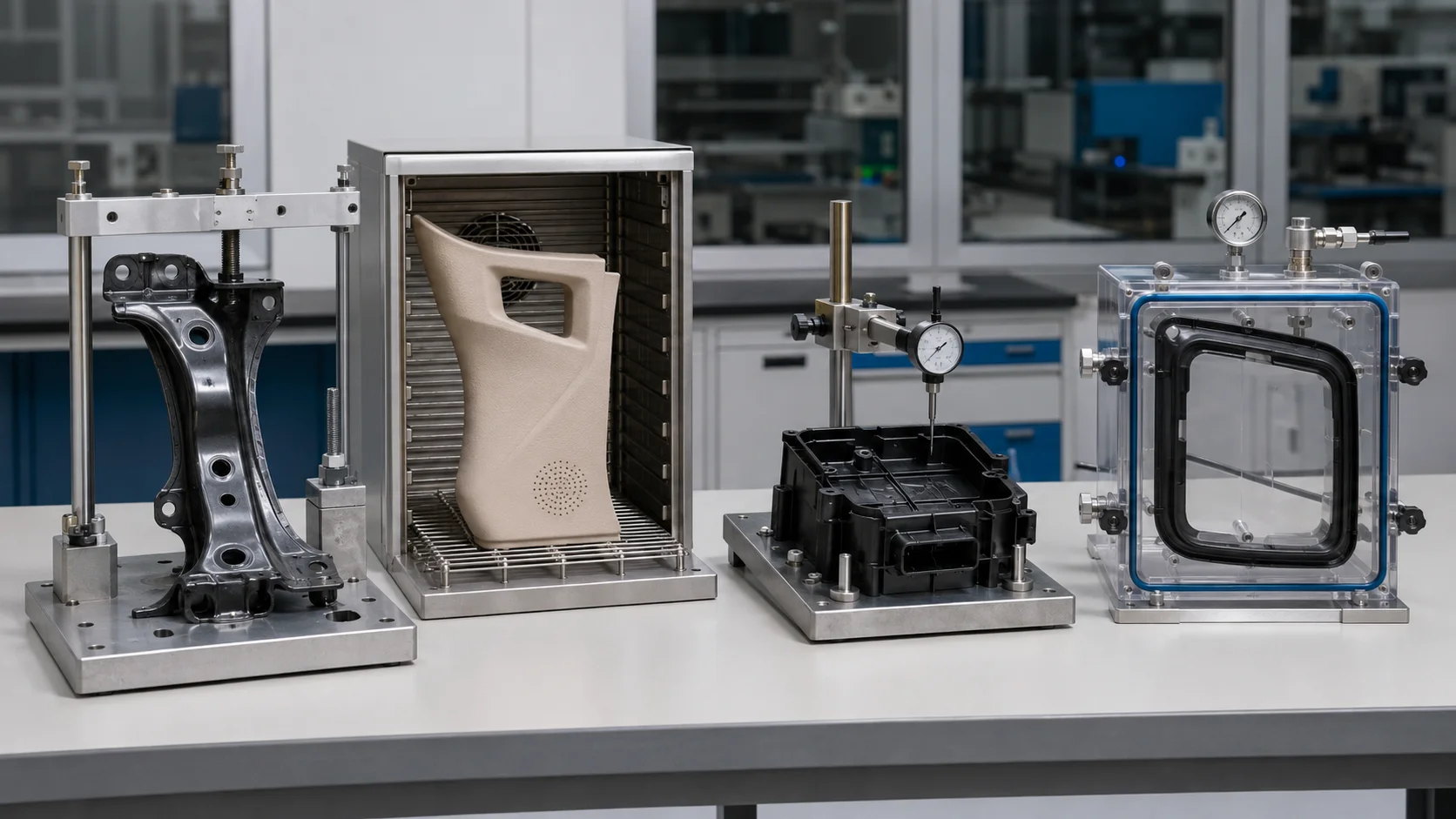
Begin with what could go wrong in use. A bracket may need stiffness and fatigue resistance; a trim part may need texture, color, and dimensional stability; a battery or electronics housing may need insulation, shielding, sealing, or heat management. Once the failure mode is clear, the material shortlist becomes much smaller.
| Primary concern | Material property to review | Prototype evidence |
|---|---|---|
| Structural load | Strength, stiffness, fatigue response | Load direction, fastening, deformation |
| Heat and fluids | Temperature resistance, chemical compatibility | Exposure condition and time |
| Apariencia | Texture, gloss, color, paint adhesion | Cosmetic sample under agreed lighting |
| Electrical function | Insulation, conductivity, shielding | Contact, grounding, or sensor test |
| Peso | Density and section efficiency | Mass target and installed stiffness |
Metal Families: Strength, Heat, and Finish
Aluminum alloys
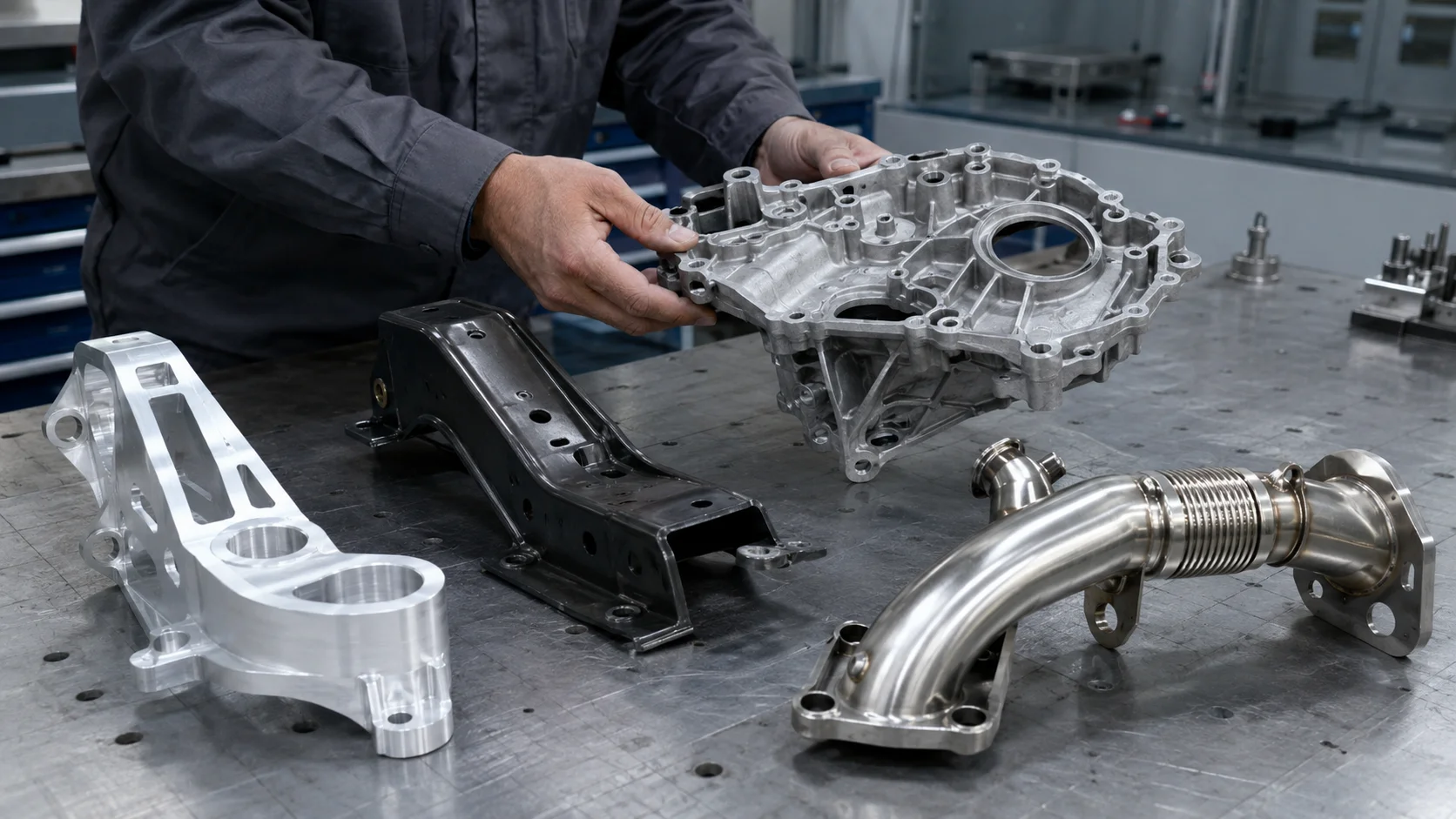
Aluminum is often useful when low density, machinability, and corrosion resistance matter. It can support accurate CNC prototypes and finished housings, but alloy, temper, wall thickness, and surface treatment still affect the result. The aluminum material guide is a useful starting point when an aluminum part must balance weight, strength, and finish.
Steel and stainless steel
Steel provides strength and wear resistance but can increase mass and machining time. Stainless grades add corrosion resistance but may change cutting behavior, surface appearance, and finishing requirements. Specify the environment and the critical surfaces rather than using “steel” as the entire material definition.
Die-cast and specialty alloys
Cast alloys can support lightweight housings and complex forms, but fill, solidification, porosity, machining allowance, and inspection must be considered. A prototype made by CNC may confirm geometry without reproducing cast-material behavior, so the test boundary should be explicit.
Engineering Plastics: More Than a Resin Name
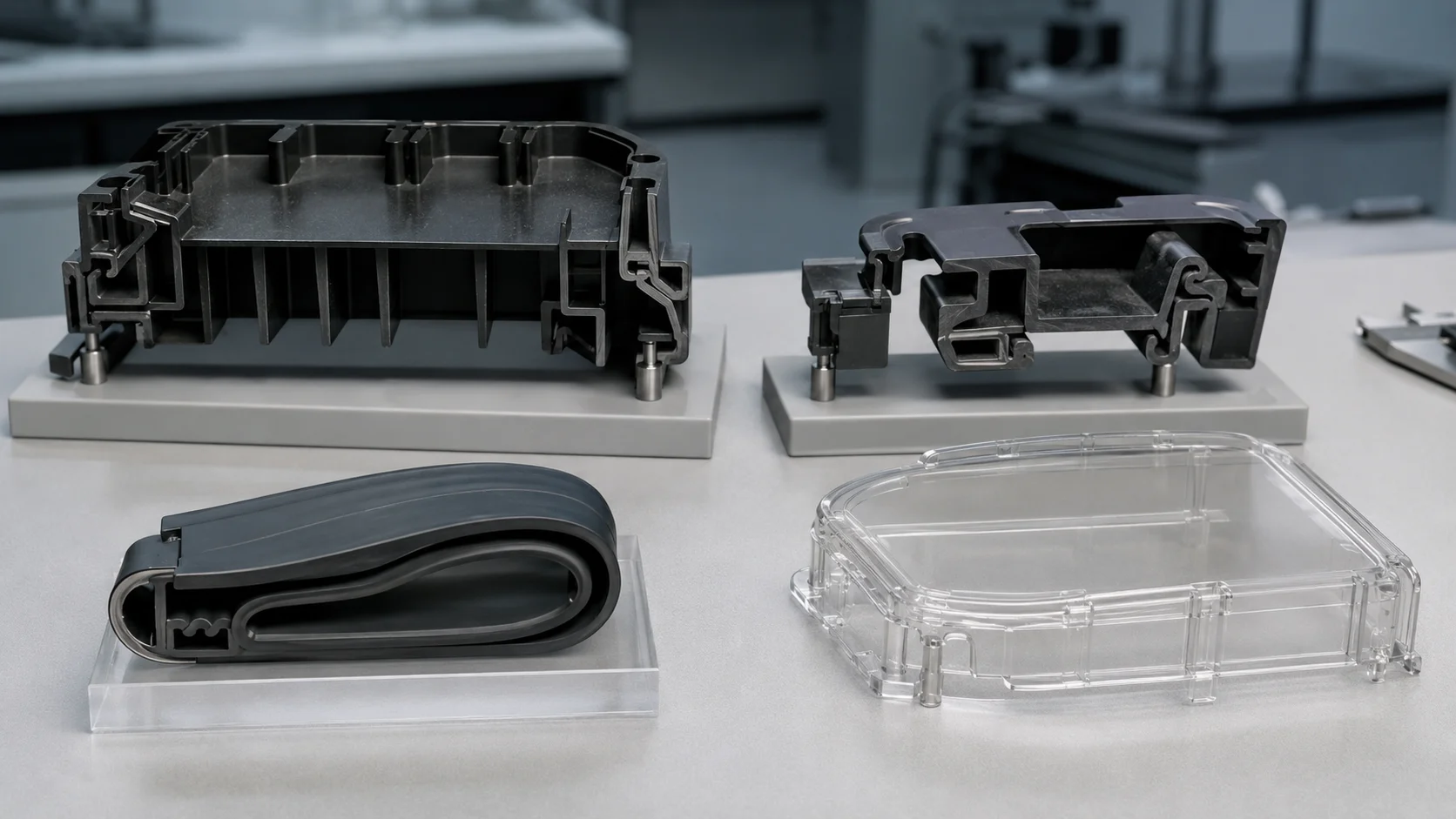
Plastic selection includes resin family, reinforcement, grade, color, process, moisture condition, and expected orientation. A glass-filled polymer may improve stiffness but introduce anisotropy and visible fiber effects. A flexible elastomer may improve grip or sealing but change dimensional response and assembly force.
For injection-molded parts, the injection molding materials guide can support an early comparison of common engineering plastics. For printed parts, the selected process and ciencia de los materiales de impresión 3D should be matched to the test because layer direction, porosity, and post-processing can influence the result.
| Part need | Questions beyond resin family |
|---|---|
| Rigid housing | Wall stability, bosses, thread strength, heat exposure |
| Snap-fit or clip | Deflection, fatigue, orientation, repeated assembly |
| Soft-touch area | Hardness, grip, bonding, chemical exposure |
| Transparent cover | Clarity, haze, polishing, optical distortion |
Process Changes the Material Decision
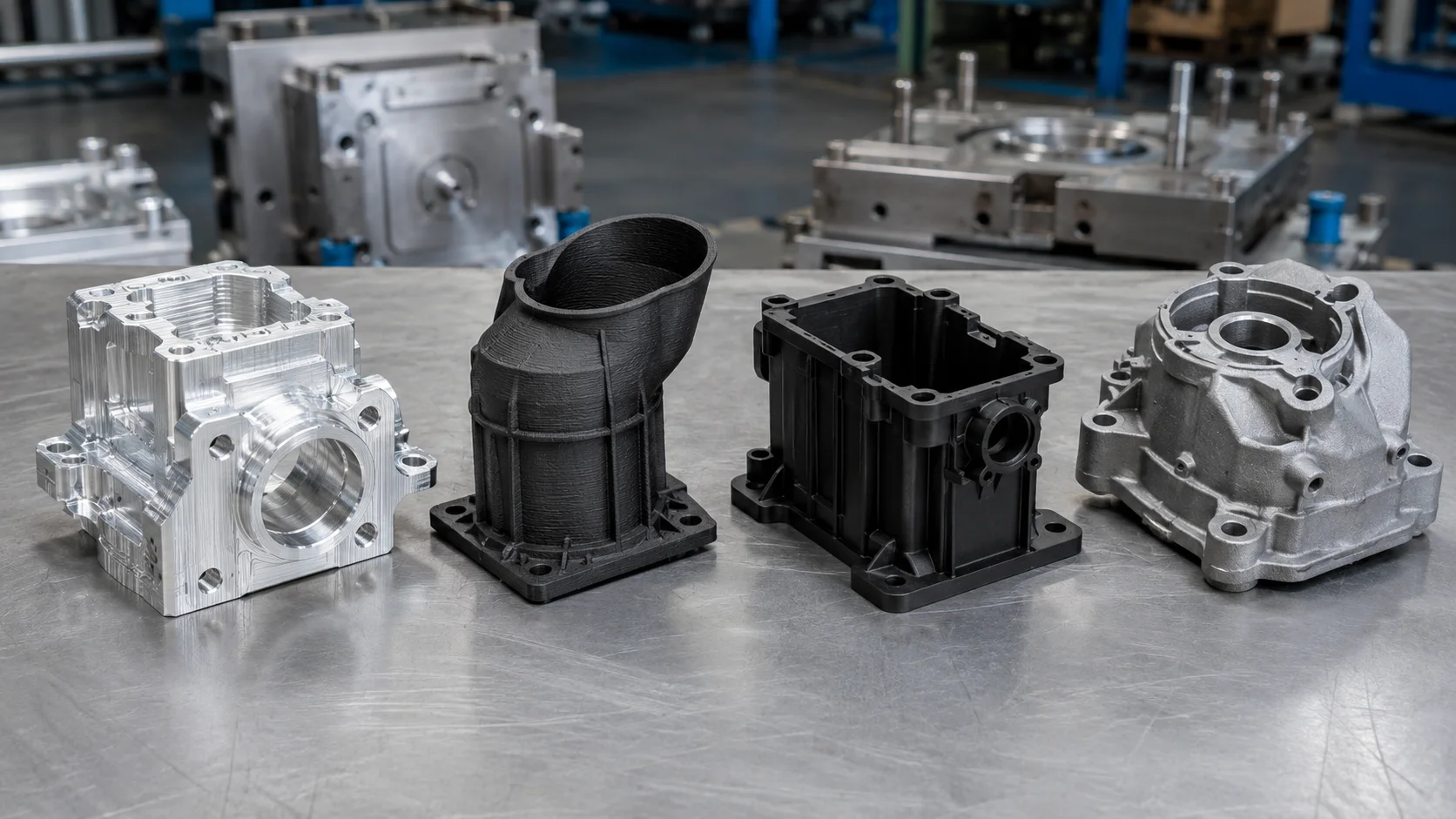
The same nominal material can produce different evidence when it is machined, printed, molded, or cast. CNC exposes bulk material behavior and provides strong control of interfaces. Additive processes accelerate geometry but introduce build-direction effects. Molding provides production-like flow and shrinkage behavior but needs tool and draft decisions. Casting can provide realistic cosmetic or low-volume forms while using a different material system from production.
Do not use a process label as a substitute for a material specification. Record the actual grade or approved equivalent, condition, color, reinforcement, surface treatment, and any post-processing.
A Selection Scorecard for Engineering Reviews
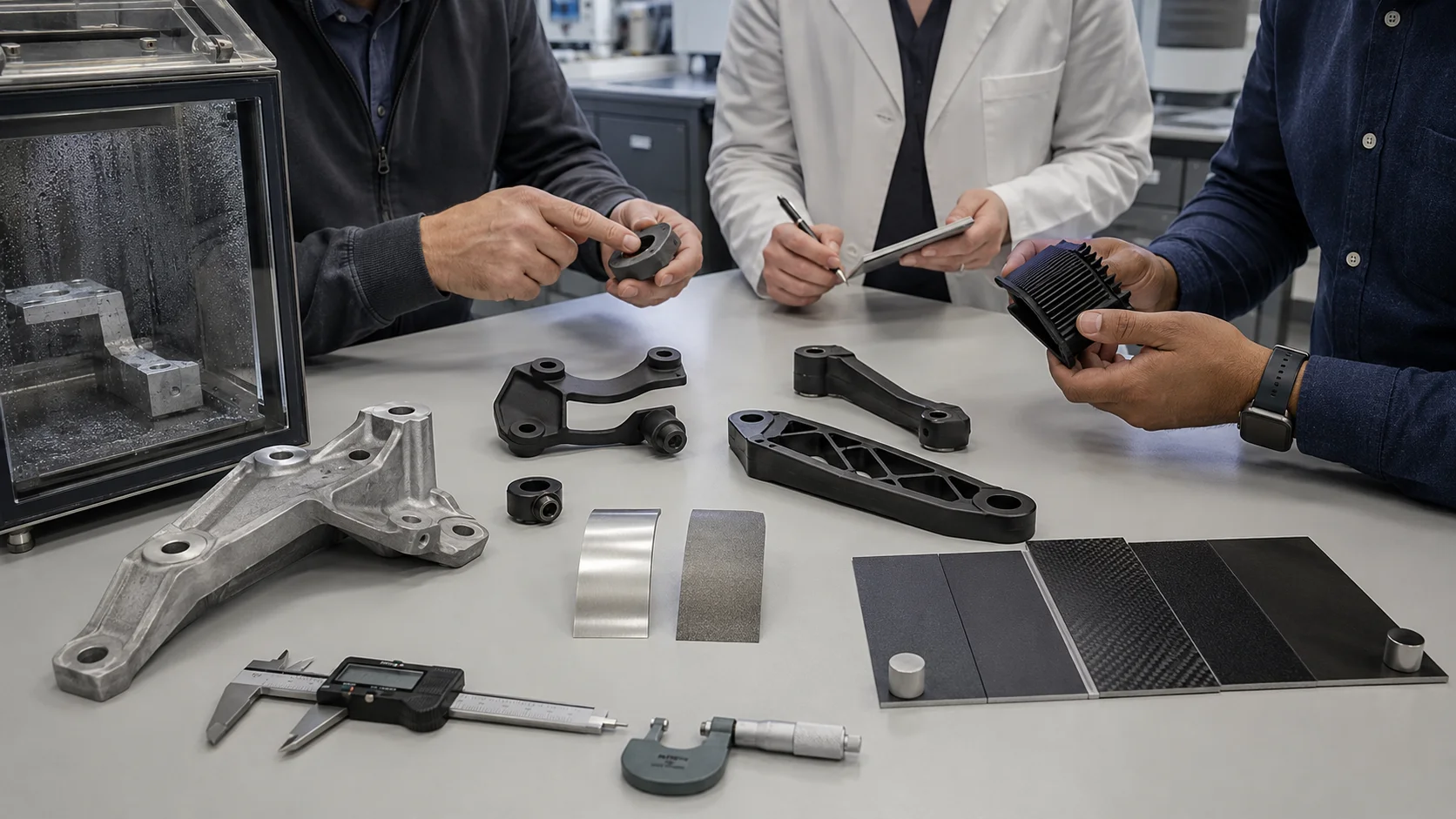
| Criterion | Low-risk question | Red flag |
|---|---|---|
| Función | Does the material reproduce the test behavior? | Visual similarity used for a load test |
| Manufacturability | Can the selected process make the geometry? | Thin walls, trapped features, or unprotected edges |
| Interface | Will fasteners, seals, and mating parts work? | Threads or fits ignored until assembly |
| Acabado | Can the required surface be repeated? | Color or texture described only as “high quality” |
| Supply | Can the grade be sourced again? | Untraceable substitute material |
Score the shortlist against these criteria before requesting a final quote. A slightly higher material cost can be worthwhile if it removes a misleading test result or a second prototype cycle.
Material and Surface Finish Must Be Coordinated
Coating, blasting, anodizing, painting, polishing, and other treatments can change appearance, dimensions, adhesion, and corrosion performance. A finish that works on a machined aluminum face may not produce the same result on a cast or printed surface. Define the visible zones, masking areas, contact surfaces, and acceptance limits together. The surface finishing service overview can help frame that discussion.
What to Put in the Material Line of an RFQ
- Material family, grade, temper, reinforcement, or approved equivalent.
- Process route and whether the part is functional, visual, or production-intent.
- Temperature, chemical, load, wear, electrical, or optical requirements.
- Color, texture, gloss, coating, masking, and visible-surface limits.
- Inspection, traceability, quantity, and whether repeat orders are expected.
This level of detail lets purchasing compare quotes on equivalent assumptions and gives engineering a clear record of what the prototype actually represents.
Frequently Asked Questions
Should a prototype always use the production material?
No. Use the production material when its behavior is central to the test. For an early form or fit review, a faster or more economical material may be appropriate if the difference is documented.
Is aluminum better than plastic for automotive prototypes?
Neither is universally better. Aluminum may suit stiffness, heat, and threaded interfaces; plastic may better represent a molded housing, insulation, weight, or ergonomic surface.
Why can two parts made from the same plastic behave differently?
Process, orientation, moisture, reinforcement, wall thickness, post-processing, and assembly conditions can all change the evidence. The material line should include the relevant grade and process assumptions.

