


El mantenimiento es el ladrón silencioso de la productividad industrial. En sistemas de automatización complejos, el requisito de lubricación manual constante de cojinetes, engranajes y guías deslizantes conduce a tiempos de inactividad inevitables y al riesgo de contaminación. Imagine un sistema de transporte en una planta de procesamiento de alimentos donde una sola gota de grasa filtrada puede arruinar un lote de producción completo. El mundo de la ingeniería necesitaba un material que pudiera proporcionar su propio lubricante: un polímero sólido que funcione como un cojinete engrasado pero sin el desorden ni el mantenimiento. Esta es la innovación detrás de Nylon relleno de aceite.
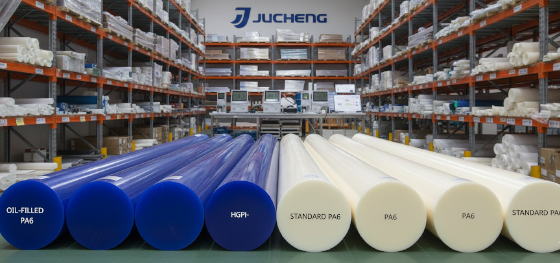
El nylon relleno de aceite es una evolución especializada de la familia de poliamidas, donde un lubricante líquido se dispersa permanentemente dentro de la matriz del material durante el proceso de fundición. Representa un avance significativo en mecanizado CNC de nailon, ofreciendo un coeficiente de fricción que es hasta un 50% más bajo que el nylon estándar sin relleno. En Jucheng Precision, nos especializamos en transformar estos polímeros resbaladizos en casquillos, rodillos y tiras de desgaste de alta precisión que sobreviven durante años en entornos donde la lubricación externa es imposible o está prohibida.
Si bien la idea de un "plástico resbaladizo" suena simple, la realidad de fabricación es altamente técnica. Si el material se sobrecalienta durante el corte, el aceite integrado puede salir prematuramente, arruinando el acabado superficial de la pieza. Esta guía profundiza en la química molecular de los nylons autolubricantes, los beneficios termodinámicos del proceso de relleno de aceite y las estrategias técnicas que JUCHENG utiliza para entregar componentes libres de mantenimiento a los principales fabricantes de automatización del mundo.
contenido:
La integración de la lubricidad: cómo funciona
Reducción de fricción y control de calor
Desafíos de mecanizado: gestión de herramientas y residuos
Aplicaciones críticas en alimentos y automatización
La experiencia de JUCHENG en plásticos especiales
La integración de la lubricidad: cómo funciona
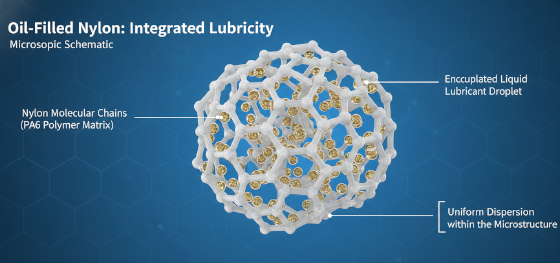
Para apreciar por qué Nylon relleno de aceite es tan efectivo, debemos entender su nacimiento. La mayoría de los plásticos se "lubrican" después de fabricarse aplicando un recubrimiento o grasa. En el nylon relleno de aceite (a menudo basado en PA6C), la lubricación no es un recubrimiento: es parte del ADN del material. Durante el proceso de polimerización aniónica, se introduce un lubricante líquido especializado (generalmente un aceite mineral o vegetal) en el monómero líquido. A medida que el nylon se endurece, el aceite queda atrapado en millones de bolsas microscópicas distribuidas uniformemente en toda la pieza.
Esta "microencapsulación" significa que el lubricante no puede filtrarse ni gotear durante el almacenamiento. Sin embargo, tan pronto como la pieza encuentra fricción, el calor y la presión del contacto causan que una cantidad microscópica de aceite se libere a la superficie. Esto crea una película continua y renovable de "grasa" en la interfaz de las dos piezas en movimiento. A diferencia de una pieza de nylon estándar que podría secarse o desgastarse después de que su engrase inicial desaparece, un componente de nylon relleno de aceite permanece resbaladizo hasta el día en que se retira. En Jucheng Precision, nos aseguramos de que la materia prima que obtenemos tenga una tasa de dispersión perfecta, de modo que ya sea que estemos mecanizando la superficie o un orificio interno profundo, las propiedades autolubricantes permanezcan consistentes en todo el volumen del metal.
Reducción de fricción y control de calor
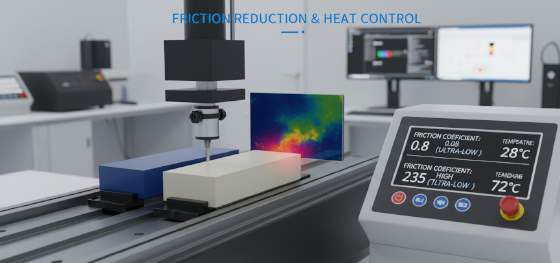
El principal enemigo de cualquier pieza móvil es la energía térmica. La fricción crea calor, y el calor conduce a la expansión y eventual agarrotamiento del mecanismo. En mecanizado CNC de nailon, el "límite de fricción" del material es una preocupación constante. Si un cojinete estándar de Nylon 6 funciona demasiado rápido, la superficie eventualmente se derretirá y se soldará al eje. El nylon relleno de aceite cambia las reglas termodinámicas del juego.
By lowering the friction coefficient from ~0.25 to as low as 0.12, the material generates significantly less heat during operation. This allows for higher PV (Pressure x Velocity) limits, meaning the parts can run faster or under heavier loads than their non-filled counterparts. Furthermore, the oil within the matrix acts as a secondary heat sink, slightly improving the material's thermal stability. For our clients in the high-speed conveyor industry, this means they can increase their line speeds by up to 20% just by switching their rollers and guides to oil-filled PA6C. JUCHENG uses precision testing to verify that our machined surfaces maintain this low-friction profile, ensuring that your dynamic systems run cooler and last longer.
Desafíos de mecanizado: gestión de herramientas y residuos
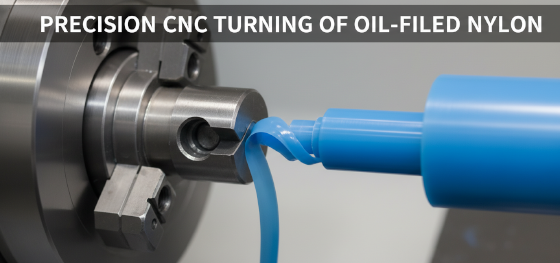
One would think that a slippery material is easier to cut, but Nylon relleno de aceite introduces its own set of technical hurdles. Because the material is naturally lubricated, the cutting tool has a tendency to "skate" over the surface rather than bite into it. If the tool is not sharp enough, it creates a rubbing action that generates excessive heat, which can cause the integrated oil to "boil" out of the surface, leaving a pitted and hazy finish.
At Jucheng Precision, we solve this with high-positive rake angle tooling and extremely high chip loads. We want to "slice" the nylon quickly before the oil has time to react to the friction of the tool. We also pay close attention to "Residue Management." The fine dust and oily chips generated during the process are much stickier than standard nylon waste. If they are not cleared instantly, they can "paste" onto the part, obscuring the dimensions and potentially causing tool breakage. We use high-pressure air blast systems to keep the cutting zone pristine. This careful control allows us to achieve tolerances of +/- 0.05mm, which is exceptional for a material that is technically designed to be unstable. We also perform a specialized ultrasonic cleaning process after machining to ensure the parts arrive at your door clean and ready for assembly, with the lubrication stored safely inside the plastic, not on the surface.
Aplicaciones críticas en alimentos y automatización
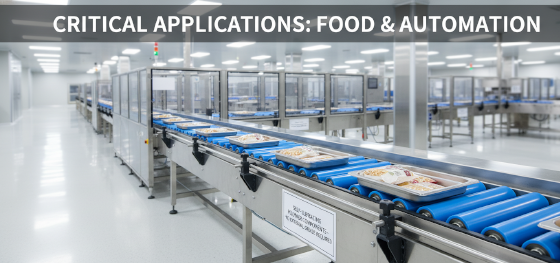
Where is self-lubrication a mandatory requirement? The answer is "No-Grease Zones." In the food processing and pharmaceutical industries, external lubricants are a major contamination risk. Even food-grade grease can collect bacteria or drip into the product. Oil-filled nylon is a miracle material for these sectors. Because the oil is trapped in the polymer, there is no "dripping" or "bleeding." The lubrication stays exactly where the friction happens.
JUCHENG frequently machines oil-filled PA6C for star wheels, timing screws, and bottling plant guides. These parts must survive millions of cycles while being washed down with harsh cleaning chemicals daily. The integrated oil ensures that even after a high-pressure wash, the parts remain self-lubricating. In the heavy automation sector, we produce large-scale telescopic boom pads and wear plates for cranes and forklifts. These parts must move under massive loads without seizing. Replacing steel-on-steel contact with oil-filled nylon bushings eliminates the need for technicians to climb high structures for weekly greasing, dramatically improving safety and reducing maintenance budgets.
La experiencia de JUCHENG en plásticos especiales
Working with specialty engineering plastics like oil-filled nylon is the hallmark of a high-end manufacturer. At Jucheng Precision, we don't just follow a CAD drawing; we act as material consultants. We often work with clients who are experiencing premature failure in their standard nylon or Delrin bushings. Our first recommendation is often a switch to Nylon relleno de aceite to solve the underlying friction issues.
Our facility is equipped with specialized high-speed spindles and climate-controlled production zones to manage the unique expansion characteristics of polyamides. We understand that transparency in sourcing is critical, which is why we only utilize premium, certified oil-filled stock from world-class suppliers. Whether you need a small batch of prototypes for a new medical assembly or a full production run of industrial gears, Jucheng Precision has the technical rigor and the manufacturing capacity to deliver. We provide the smoothness of oil with the precision of CNC. Contact our engineering team today for a free DFM review and see how our self-lubricating plastic solutions can move your business forward.

