


Medical Device Manufacturing Processes: The Complete Guide
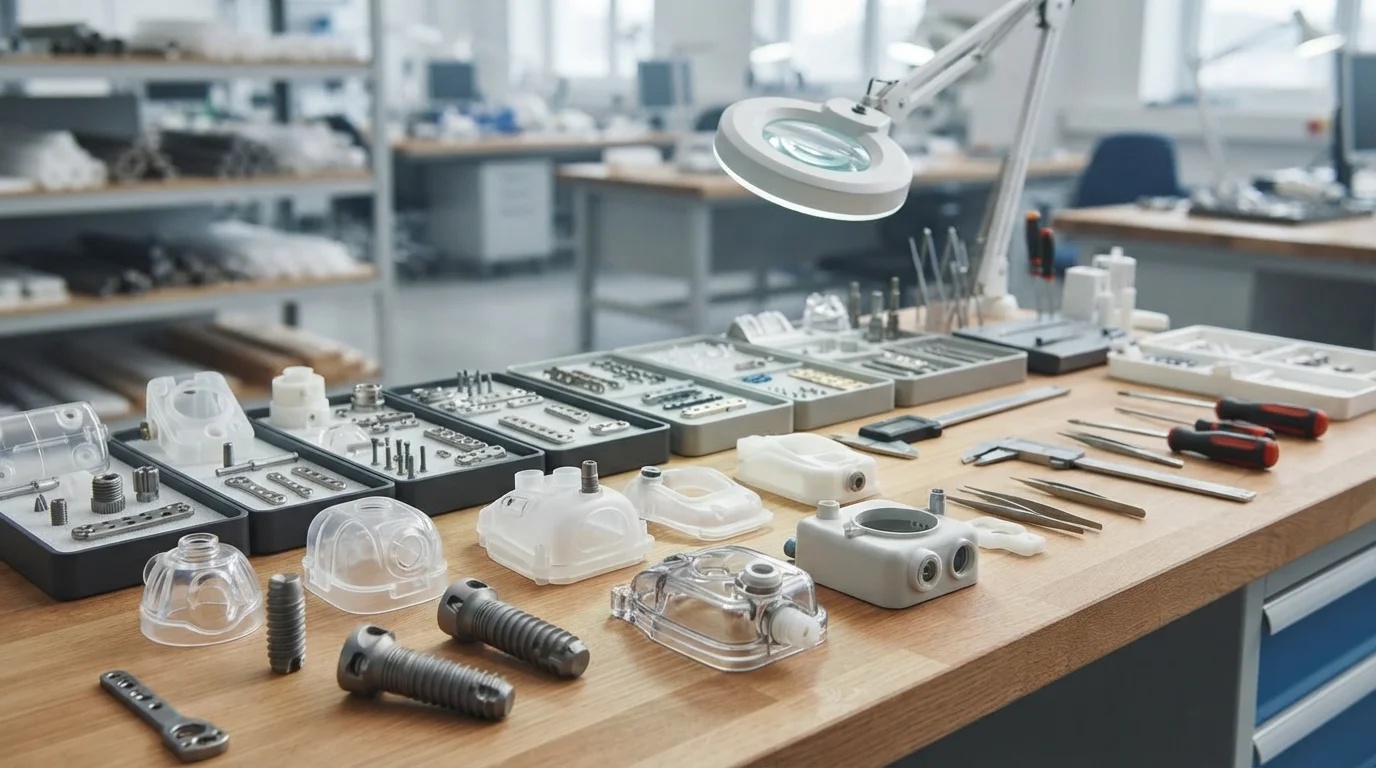
Engineering life-saving diagnostic systems, minimally invasive surgical tools, and custom orthopedic implants requires a sophisticated blend of fabrication technologies that meet uncompromising regulatory scrutiny. When biomedical companies scale innovative healthcare hardware, choosing the correct medical device manufacturing processes dictates whether a product satisfies strict biocompatibility benchmarks and mechanical load profiles. Navigating the transition from early laboratory prototypes to full-scale clinical production demands a deep understanding of subtractive, formative, and additive capabilities.
Utilizing certified production partners ensures that high-purity comercialmente puro implants and transparent polycarbonate (PC) fluid cassettes maintain structural integrity across aggressive autoclave cycles. Let us examine the full stack of precision manufacturing methods that power modern medical breakthroughs.
Module 1 – Definition and Working Principles of Clinical Fabrication
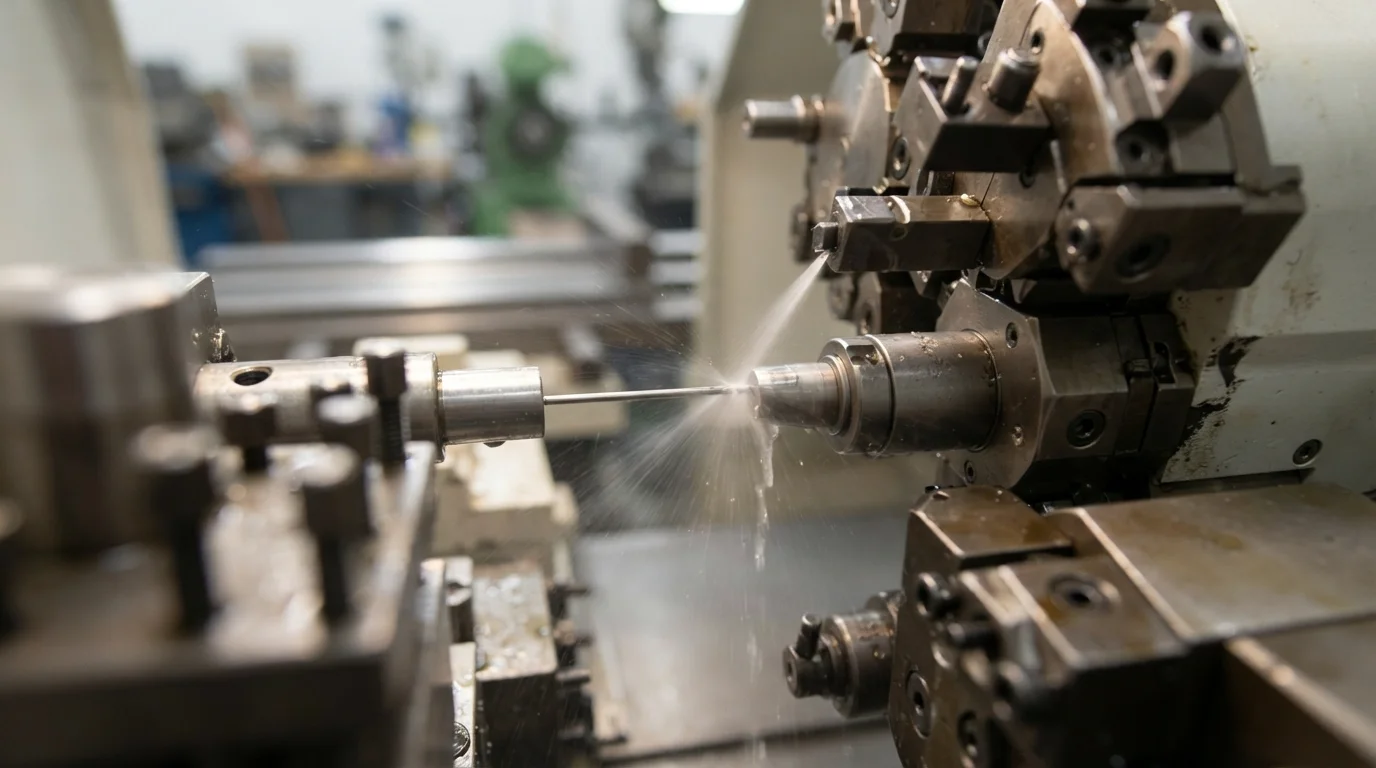
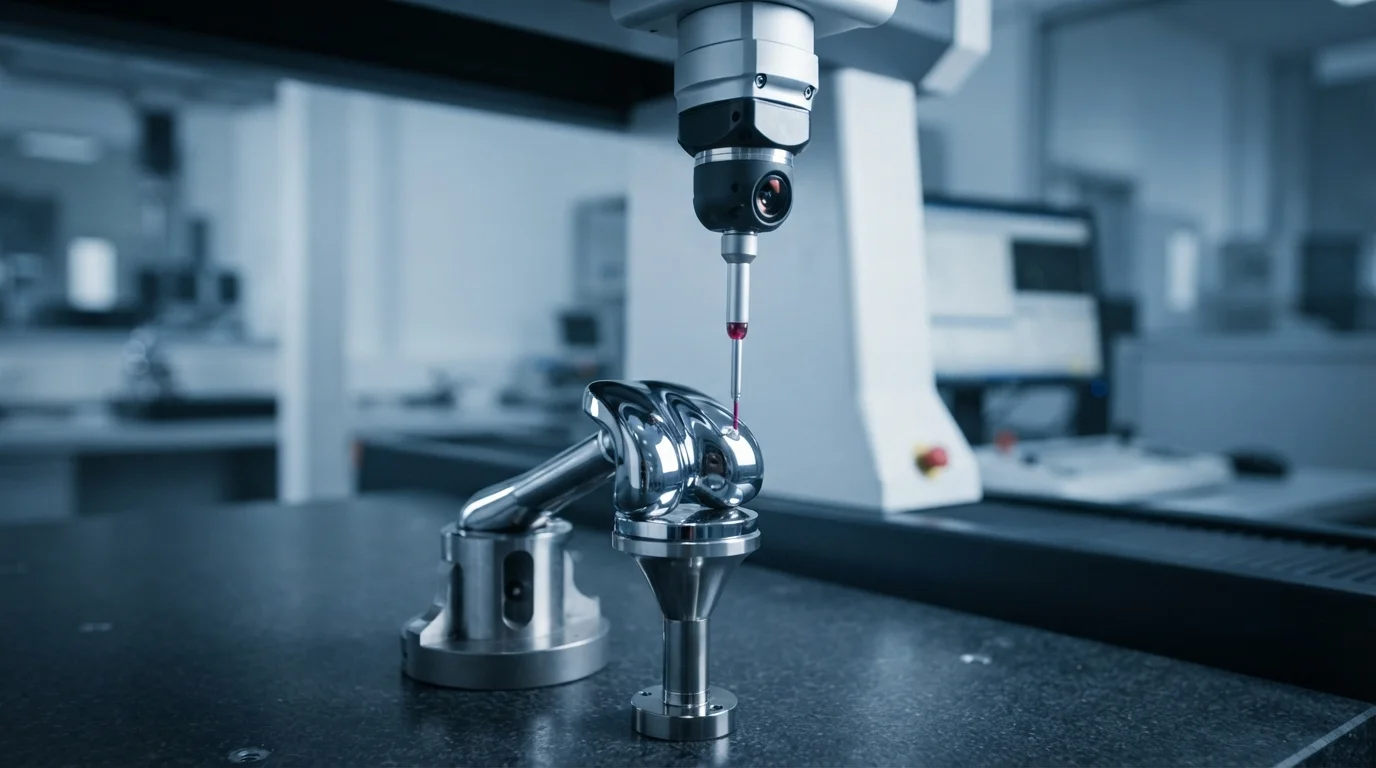
Manufacturing medical hardware requires integrating multi-axis subtractive cutting, high-pressure polymer molding, precision sheet metal forming, and additive sintering. The working principle relies on translating validated 3D CAD models into physical components without introducing chemical contaminants, burrs, or dimensional deviations. Subtractive methods like mecanizado CNC de 5 ejes and Swiss micro-turning shape high-strength metals with sub-micron fidelity, while formative medical injection molding and reaction injection molding (RIM) mass-produce complex polymer shells.
To execute a structured manufacturing workflow on medical-grade hardware, engineering teams could follow these practical steps:
- Micro-Machining Execution: Deploy Swiss CNC lathes with high-pressure oil cooling to turn miniature bone screws and catheter tips from 316L stainless steel.
- Additive Sintering: Utilize direct metal laser sintering (DMLS) to build porous titanium bone-ingrowth lattices impossible to machine conventionally.
- Cleanroom Enclosure Molding: Inject medical-grade PEEK or liquid silicone rubber (LSR) inside controlled cleanrooms to prevent particulate contamination.
Módulo 2 – Escenarios de aplicación principales
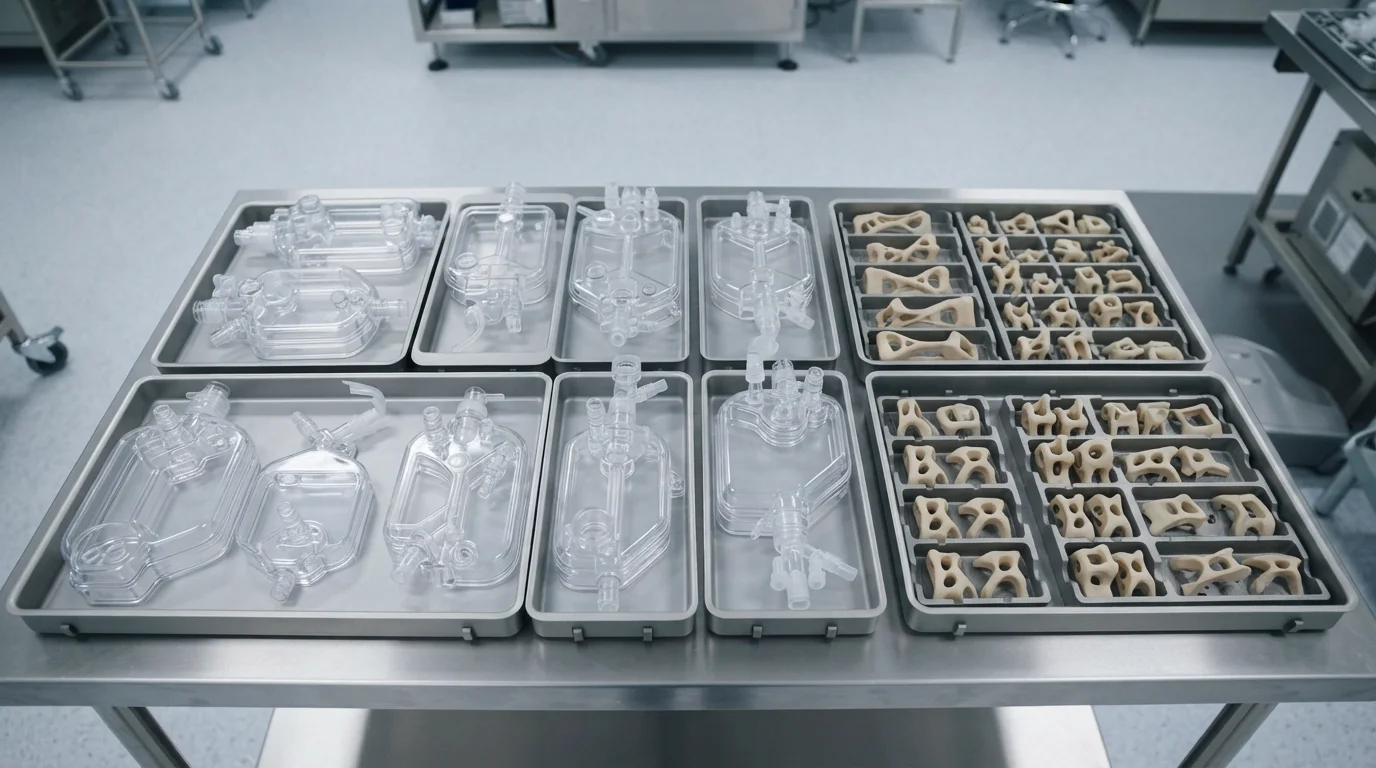
Deploying specialized clinical manufacturing is vital across surgical robotics, orthopedic reconstruction, and automated diagnostic cart frameworks where part failure directly impacts patient safety. When healthcare developers scale diagnostic machines, selecting optimal medical device manufacturing processes eliminates assembly interference and bio-contamination risks. Feedback from biomedical engineering groups on Reddit and Facebook highlights that combining CNC micro-machining with cleanroom injection molding delivers the fastest path to clinical trials.
Los sectores de aplicación principales incluyen:
- Orthopedic Implants: Machining titanium spinal cages, femoral stems, and porous acetabular cups requiring cellular bone-ingrowth structures.
- Diagnostic Equipment: Fabricating sheet metal chassis carts, CT scanner structural covers, and fluidic manifolds.
- Surgical Handpieces: Molding ergonomic, autoclave-resistant PEEK handles and overmolded liquid silicone seals.
Módulo 3 – Factores clave de selección para el éxito del proyecto
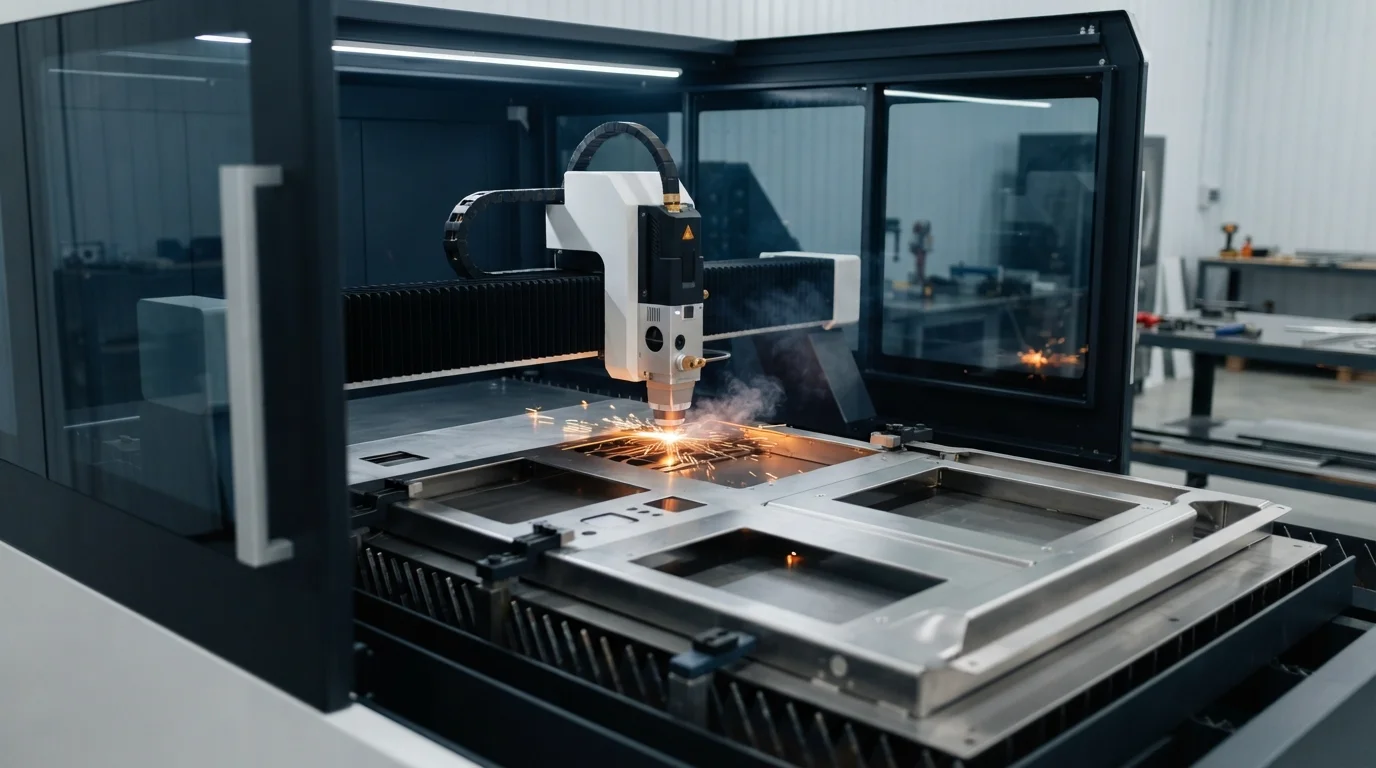
When specifying production methods for clinical hardware, engineering teams must evaluate biocompatibility compliance, mechanical tolerance thresholds, and batch volume scalability. Evaluating these core parameters ensures your medical devices achieve international regulatory approvals.
| Método de fabricación | Materiales Primarios | Key Clinical Advantage |
|---|---|---|
| 5-Axis & Swiss CNC | Titanium Ti-6Al-4V ELI, 316L Stainless Steel, PEEK | Micron tolerances (±0.005 mm) for implants and surgical tools |
| Medical Injection Molding | Medical Polycarbonate, ABS, Liquid Silicone Rubber | High-volume, low-cost disposable fluidic cassettes and housings |
| Sheet Metal & Welding | Structural Aluminum, 304 Stainless Steel | Rigid, cleanable diagnostic chassis frames and mobile carts |
Módulo 4 – Consejos de instalación y mantenimiento
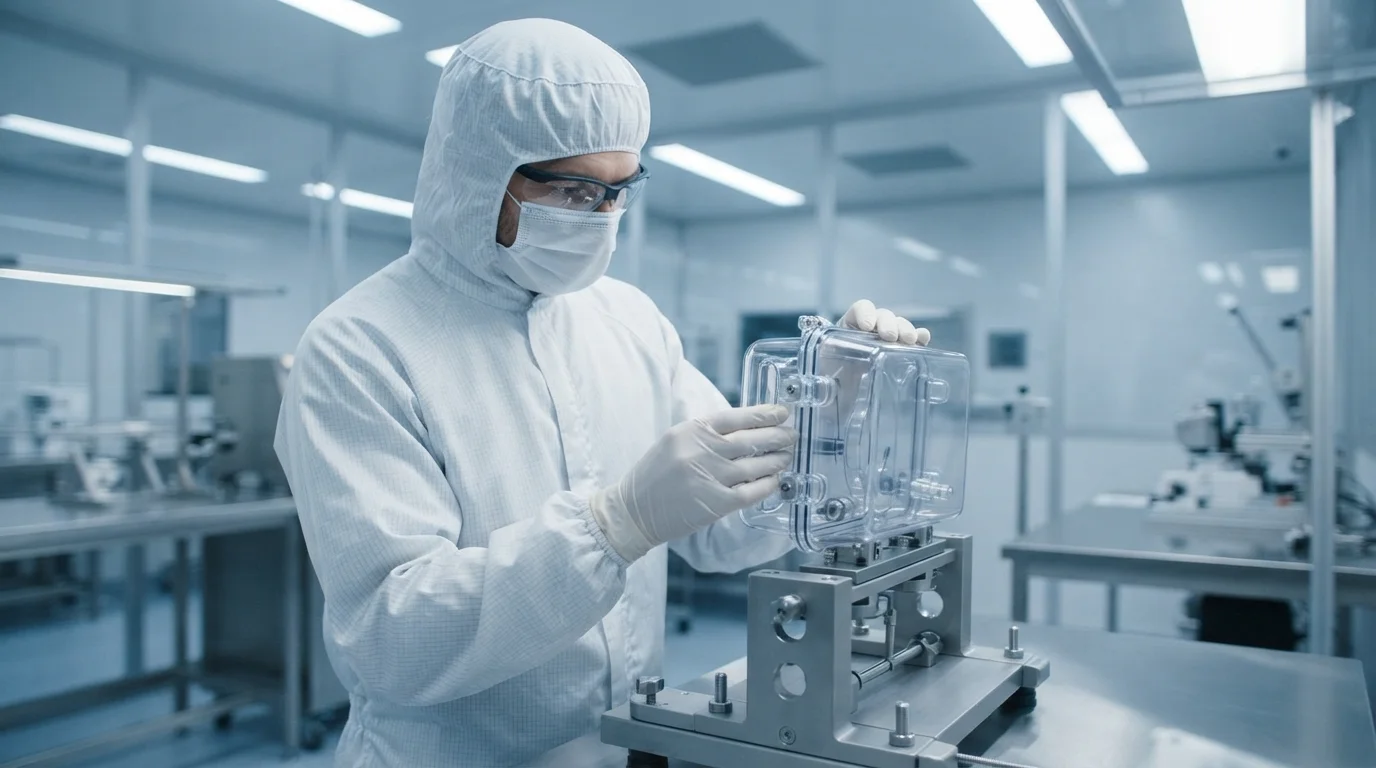
Proper cleanroom assembly, passivation, and routine sterilization validation safeguard medical device performance throughout clinical lifecycles. Protecting active mating surfaces from particulate build-up ensures long-term operational safety.
Key installation and maintenance tips include:
- Citric Acid Passivation: Treat machined stainless steel components in chemical passivation baths to remove free iron and maximize corrosion resistance.
- Cleanroom Ultrasonic Washing: Decontaminate plastic and metallic parts using multi-stage ultrasonic deionized water baths before sterile packaging.
- Autoclave Cycle Auditing: Inspect polymer seals and housing joints periodically under magnification to verify resistance to 134°C pressurized steam.
Module 5 – Frequently Asked Questions (FAQ)
1. What is the most common manufacturing process for medical devices?
Multi-axis CNC machining and Swiss micro-turning are most common for high-precision implants and surgical instruments, while medical injection molding dominates high-volume disposables and diagnostic housings.
2. How does ISO 13485 certification impact medical component manufacturing?
ISO 13485 enforces strict lot traceability, cleanroom environmental monitoring, risk management, and validated quality inspection protocols across every production batch.
3. What materials are considered biocompatible under ISO 10993 standards?
Biocompatible materials include Ti-6Al-4V ELI titanium, 316L surgical stainless steel, implantable PEEK, medical-grade polycarbonate, and platinum-cured liquid silicone rubber.
4. Can 3D printing replace CNC machining for orthopedic implants?
DMLS 3D printing excels at creating complex porous bone-ingrowth lattices, but critical threaded interfaces and precision mating faces still require secondary CNC machining touch-ups.
5. Why is chemical passivation mandatory for surgical stainless steel parts?
Passivation dissolves exogenous surface iron particles left behind by cutting tools, forming a chromium oxide passive film that prevents pitting during repeated sterilization.
6. How does Jucheng Precision support medical device manufacturing?
Jucheng Precision provides 5-axis CNC micro-machining, medical injection molding, cleanroom assembly, and full Certificate of Analysis (CoA) traceability under ISO 13485 quality systems.
Module 6 – Why Choose JUCHENG for Your Project
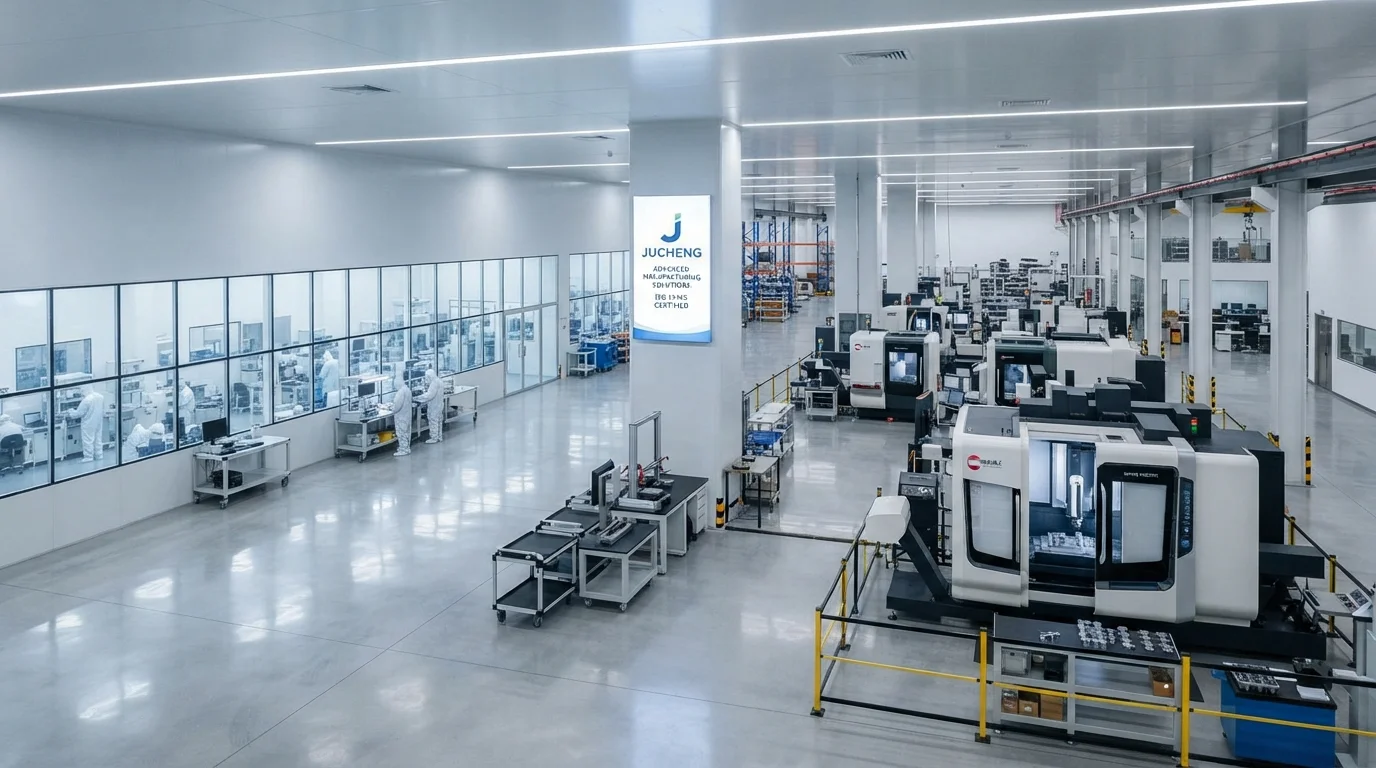
Achieving uncompromising clinical safety requires an experienced manufacturing partner with certified quality infrastructure. JUCHENG supports healthcare innovators by delivering comprehensive DFM gratuito las 24 horas reviews that analyze biocompatibility, wall thicknesses, and tool paths prior to production. Founded in Shenzhen in 2012 with an 8,000-square-meter facility in Dongguan, our factory houses 150+ advanced machines, including 25+ high-performance 5-axis Haas and Mazak milling centers alongside dedicated medical molding cleanrooms.
Backed by ISO 9001, ISO 14001, ISO 13485, and IATF 16949 certifications, our engineering teams ensure that executing high-precision medical device manufacturing processes achieves sub-micron accuracy, complete material traceability, and absolute batch consistency.
Ready to Manufacture Your Certified Medical Hardware?
Upload your 3D models today to receive instant feedback, competitive pricing, and professional DFM analysis from our seasoned engineering experts. Let JUCHENG bring your complex designs to life with unmatched speed and reliability!

