


A plastic does not become suitable for a medical device because its generic resin family appears on a familiar materials list. The selected grade must survive the device’s actual combination of heat, chemicals, stress, cleaning, sterilization, wear, optical demand, and manufacturing history. Medical grade plastics are therefore selected as documented material-process systems, not as interchangeable names such as PC, PEEK, or PP.
This guide starts with exposure and function, then compares common engineering plastics, prototype routes, production effects, and evidence requirements. It is intended for housings, fixtures, diagnostic equipment, reusable instruments, fluid-handling components, and other non-specific applications; final suitability still depends on the device, contact category, market, and validated process.
Contents
- Start with exposure, not a resin acronym
- A practical material map
- Sterilization changes the selection
- Machining and molding create different evidence
- Color, clarity, and additives are functional variables
- Build a grade-specific qualification package
- Prototype the material decision with Jucheng
- Preguntas frecuentes
Start With Exposure, Not a Resin Acronym
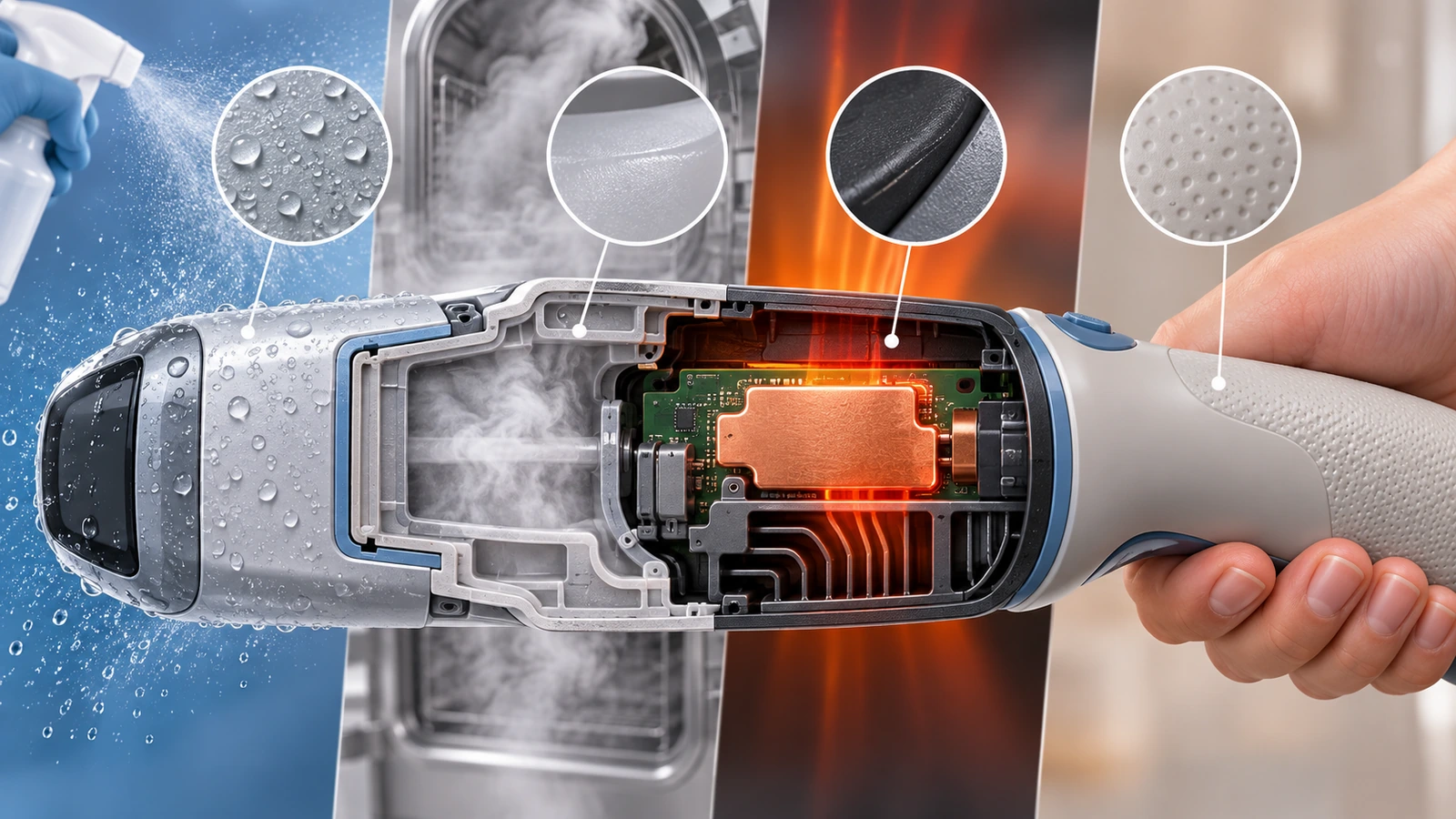
Material selection begins with the worst credible exposure sequence. A reusable handle may see detergent, heat, moisture, impact, torque, and repeated sterilization. A diagnostic cartridge may need dimensional stability, optical inspection, fluid compatibility, and reliable molding at thin features. An equipment cover may prioritize flame behavior, cleaning resistance, color stability, and low-volume manufacturability.
Write the sequence as a profile: temperature range, duration, number of cycles, chemicals, mechanical load, UV exposure, patient or fluid contact, shelf life, and expected cleaning method. Then separate mandatory requirements from preferences. The parent guide to medical device materials provides the wider metal-and-polymer context; this page focuses on choosing a specific plastic grade and processing route.
Five questions before opening a datasheet
- What does the component do when the device is operating normally?
- Which failure mode matters most: cracking, creep, wear, haze, distortion, swelling, or loss of strength?
- What contact, cleaning, and sterilization exposures occur over its life?
- Will the component be machined, printed, cast, or injection molded?
- What supplier evidence and change notification are required?
A Practical Map of Common Medical Engineering Plastics
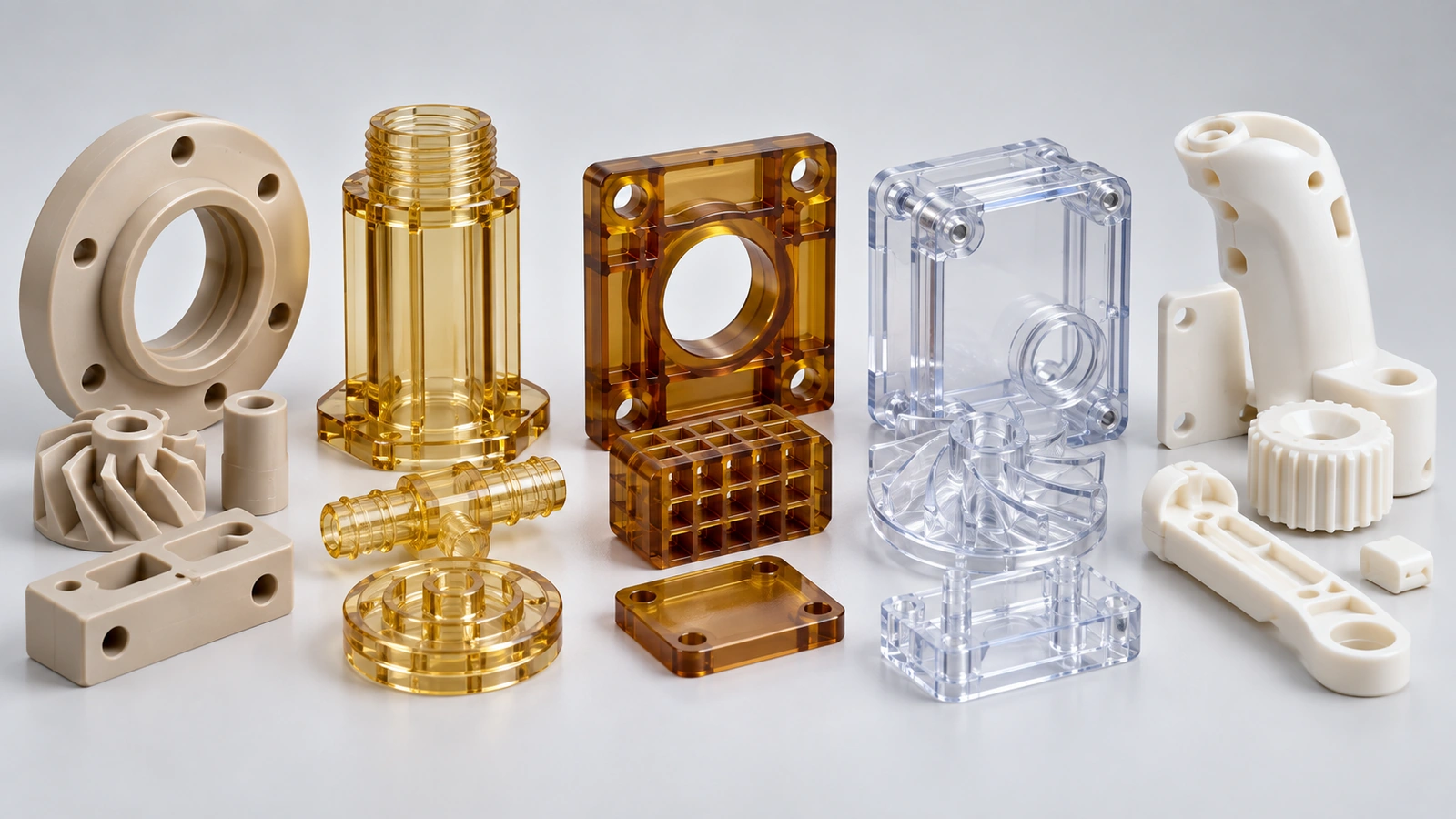
Resin families contain many grades, and the table below is a screening map rather than an approval list. Reinforcement, pigment, processing aid, molecular weight, and supplier formulation can change performance and documentation.
| Material family | Useful characteristics | Watch closely | Typical design conversation |
|---|---|---|---|
| Policarbonato (PC) | Impact strength, transparency, dimensional capability | Chemical stress cracking, coating compatibility, repeated exposure | Windows, housings, protective covers |
| PEEK | Heat, wear, chemical resistance, mechanical performance | Cost, machining stress, molding temperature, grade-specific evidence | High-performance components and fixtures |
| PPSU | Toughness and repeated steam-sterilization potential | Processing conditions, stress, color shift, supplier grade | Reusable instrument components |
| PEI | Heat resistance, stiffness, dimensional stability | Chemical compatibility and notch sensitivity | Rigid technical housings and structural parts |
| POM | Low friction, wear behavior, machinability | Bonding, certain chemicals, formaldehyde-related processing controls | Gears, guides, moving mechanisms |
| Polipropileno (PP) | Chemical resistance, living hinges, low density | Creep, stiffness, dimensional change, bonding | Disposable fluid and packaging components |
| ABS | Cost-effective housings, finish, prototyping availability | Heat, chemicals, sterilization limits, grade documentation | External equipment enclosures |
A family-level comparison narrows the field, but procurement must lock the exact supplier and grade. Two materials labeled with the same polymer acronym may use different additives or carry different regulatory support packages. Substitution therefore requires technical and quality review, not only a purchasing match.
Sterilization Is a Lifetime Exposure
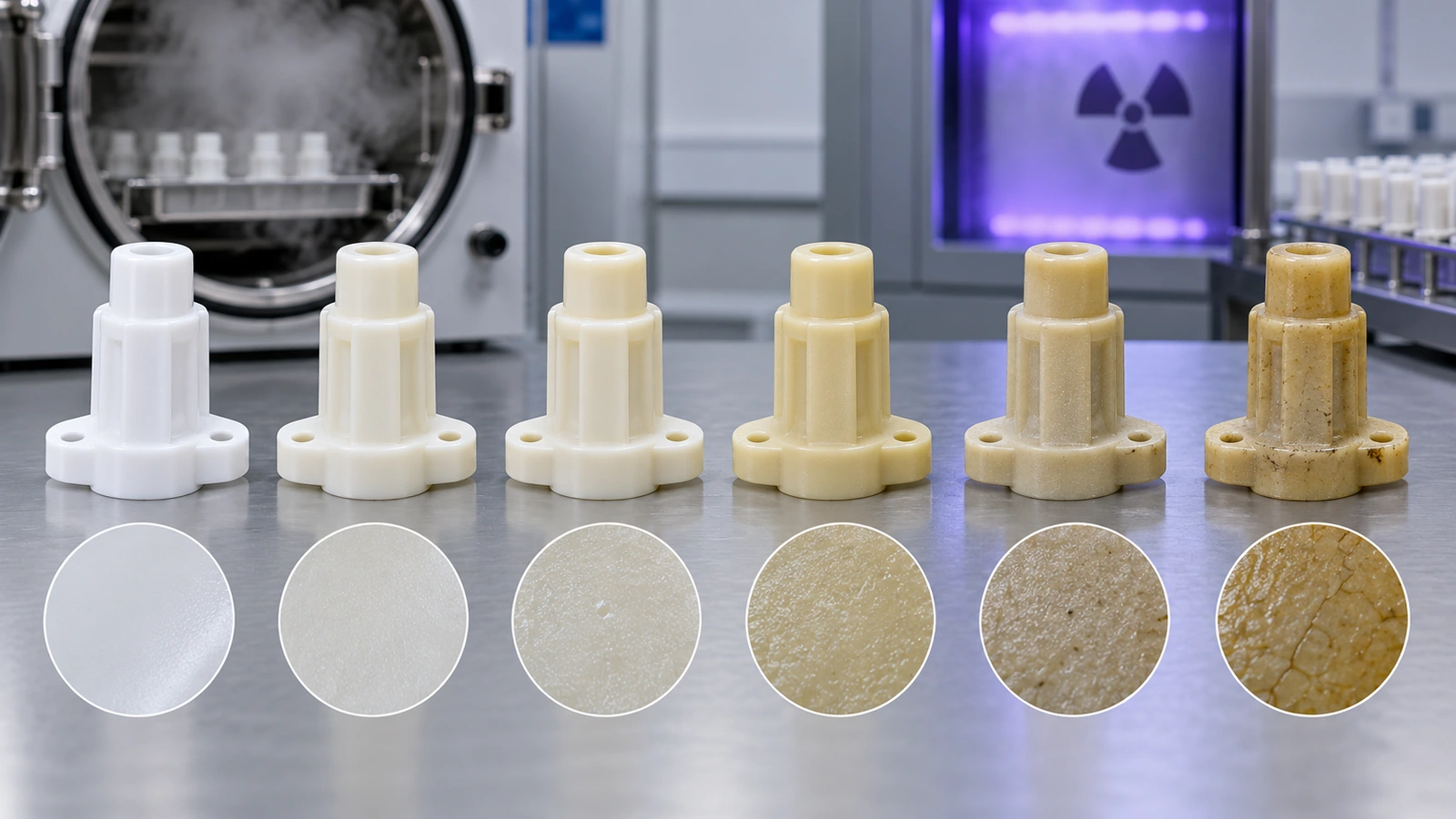
A single successful cycle does not prove lifetime suitability. Heat can accelerate creep or hydrolysis. Radiation can change color and reduce mechanical properties. Chemical disinfectants can trigger swelling or environmental stress cracking. The part may also carry molded-in stress, weld lines, sharp corners, or press-fit loads that amplify exposure damage.
Evaluate the actual method, dose or temperature window, humidity, cycle count, packaging condition, and mechanical load during exposure. Test production-representative geometry because coupons do not reproduce stress concentrations, wall transitions, molded orientation, or assembly strain. The U.S. Food and Drug Administration’s biocompatibility guidance emphasizes a risk-based evaluation in the context of the finished device; a resin designation alone cannot answer the complete biological-safety question.
Design warning: transparent parts deserve extra attention. A material can remain mechanically intact while haze, tint, microcracking, or surface damage makes an optical feature unusable.
Machining and Molding Create Different Material Histories
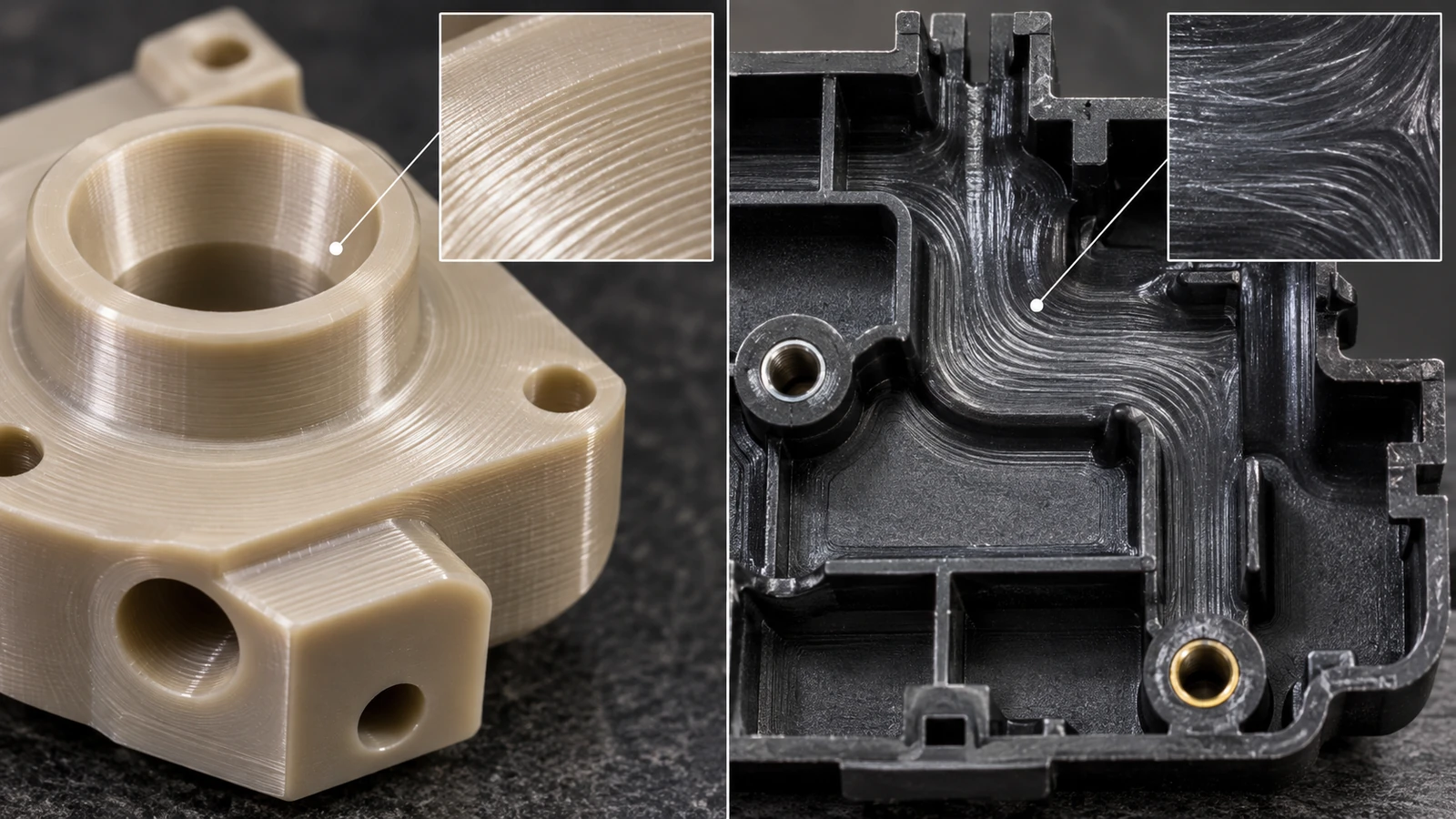
A machined prototype and a molded production part may share a resin grade but not the same structure or residual stress. Machining removes material from stock shape and can introduce heat, burrs, surface damage, and stress release. Injection molding adds melt history, flow orientation, weld lines, shrinkage, gate effects, moisture sensitivity, and cooling gradients.
Use machining when geometry is changing, quantities are low, or the team needs material-realistic parts without production tooling. Use molding when the goal is to evaluate the production process, thin walls, snap features, texture, flow-dependent performance, or repeatable volume. The choice should match the evidence needed at that development stage, not simply the lowest cost per sample.
Jucheng’s CNC machining service can support engineering-grade plastic prototypes, while low-volume tooling and molding support production-intent evaluation. Teams should document when they transition between routes because dimensions, appearance, and failure behavior may move.
Color, Clarity, and Additives Are Functional Variables

Pigments, radiopaque fillers, glass fiber, lubricants, flame-retardant systems, UV stabilizers, and processing aids can affect more than appearance. They may alter flow, shrinkage, strength, wear, laser-marking response, extractables profile, or sterilization stability. A color match made with an unapproved masterbatch can therefore create a material change even when the base polymer is unchanged.
Treat appearance specifications as measurable requirements
- Define gloss, texture, transparency, and acceptable viewing conditions.
- Specify color tolerance and the measurement method where color matters.
- Identify cosmetic zones separately from sealing, bonding, or optical surfaces.
- Evaluate marking, cleaning, and repeated handling on representative texture.
- Control approved additive and masterbatch suppliers by exact grade.
This approach prevents subjective acceptance disputes and helps suppliers choose compatible polishing, texture, gate location, and handling methods.
Build a Grade-Specific Qualification Package
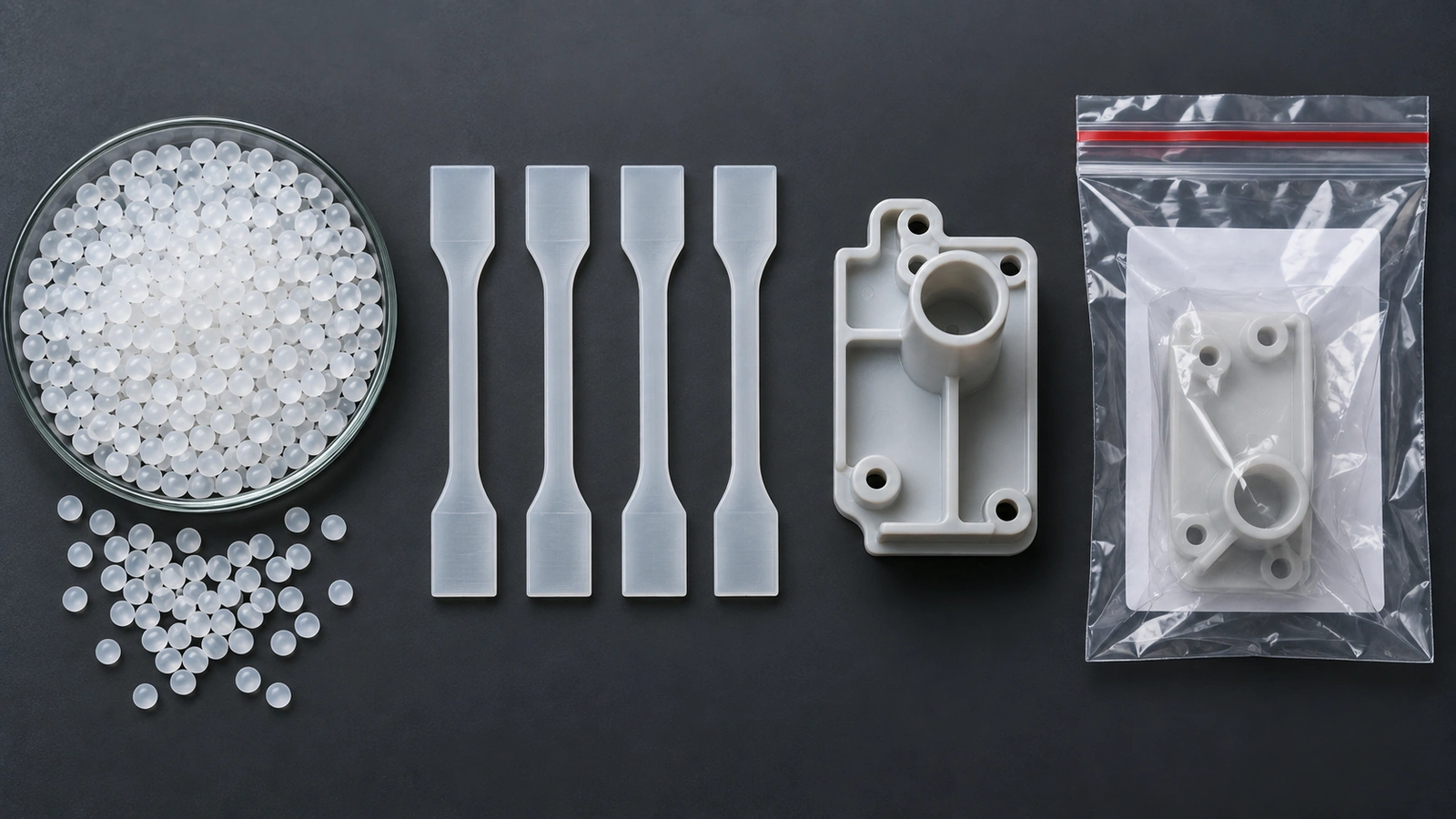
The material file should tell a reviewer exactly what was purchased, processed, tested, and approved. Include manufacturer, trade name, grade, color or additive system, lot traceability, certificate requirements, storage conditions, drying instructions, regrind policy, and prohibited substitutions. Link those controls to drawings, bills of material, purchasing data, and change-notification agreements.
| Evidence layer | What it answers |
|---|---|
| Supplier documentation | What is the exact material and what support data exists? |
| Process records | Was the approved grade stored and processed inside the defined window? |
| Part testing | Does representative geometry meet functional requirements? |
| Finished-device evaluation | Is the material suitable in its final contact, processing, and use context? |
Prototype the Material Decision With Jucheng
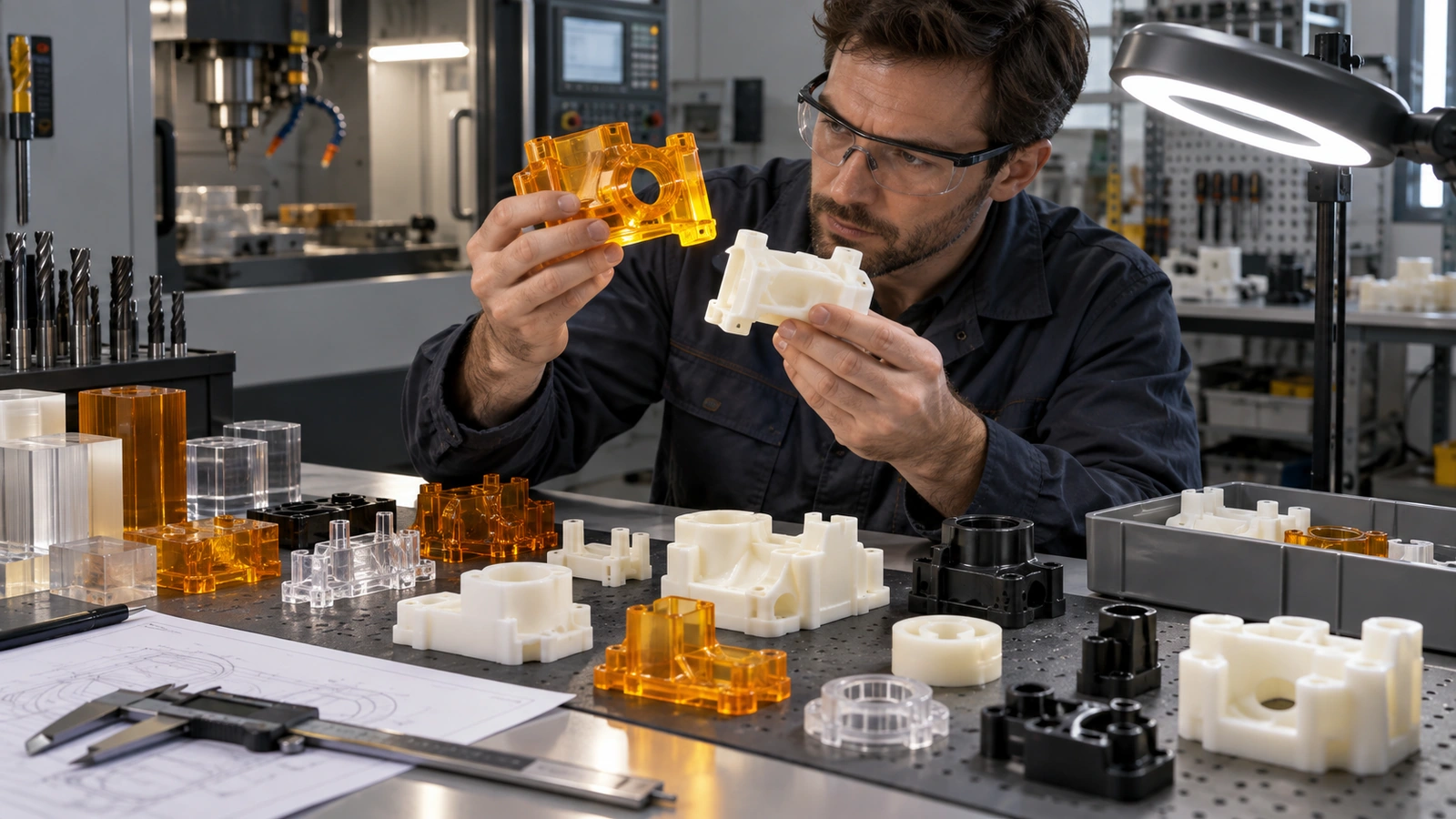
Jucheng Precision can compare candidate plastics across CNC machining, 3D printing, vacuum casting, reaction injection molding, rapid tooling, and injection molding. The goal is to choose a route that answers the current engineering question while preserving a realistic path toward production.
For a new housing, that may mean printed geometry models, machined engineering-plastic units for fit and chemical checks, vacuum-cast samples for user evaluation, and molded parts for final process behavior. Each stage should state what it proves and what it does not prove. The medical-device industry page provides a broader view of medical device prototyping and manufacturing across those routes.
Medical Grade Plastics: Practical Questions

What makes a plastic medical grade?
The term usually indicates that a specific supplier grade offers documentation, formulation controls, or testing support relevant to medical applications. It does not mean every grade in the polymer family is suitable for every device, nor does it replace finished-device risk evaluation.
Is PEEK always better than lower-cost plastics?
No. PEEK offers valuable heat, chemical, and mechanical performance, but it can add cost and processing complexity that an enclosure or disposable component does not need. The best material is the least complex grade that reliably satisfies the full requirement set.
Can a machined plastic prototype validate an injection-molded part?
It can validate many geometry, assembly, and material questions, but it does not reproduce molded flow orientation, weld lines, shrinkage, gate effects, or production residual stress. Use it for the evidence it can provide and plan molded evaluation for process-dependent risks.
Should the drawing specify only the polymer family?
Usually not when grade-specific performance or documentation matters. Specify the approved manufacturer and grade, relevant color or additive system, and any controlled alternatives. Define who can approve substitution.
How many sterilization cycles should be tested?
The number should reflect the claimed device life, exposure variability, safety margin, and risk-management plan. Test representative parts and assemblies using the intended process rather than selecting a universal cycle count from a generic materials chart.
Choose the Grade, Process, and Evidence Together
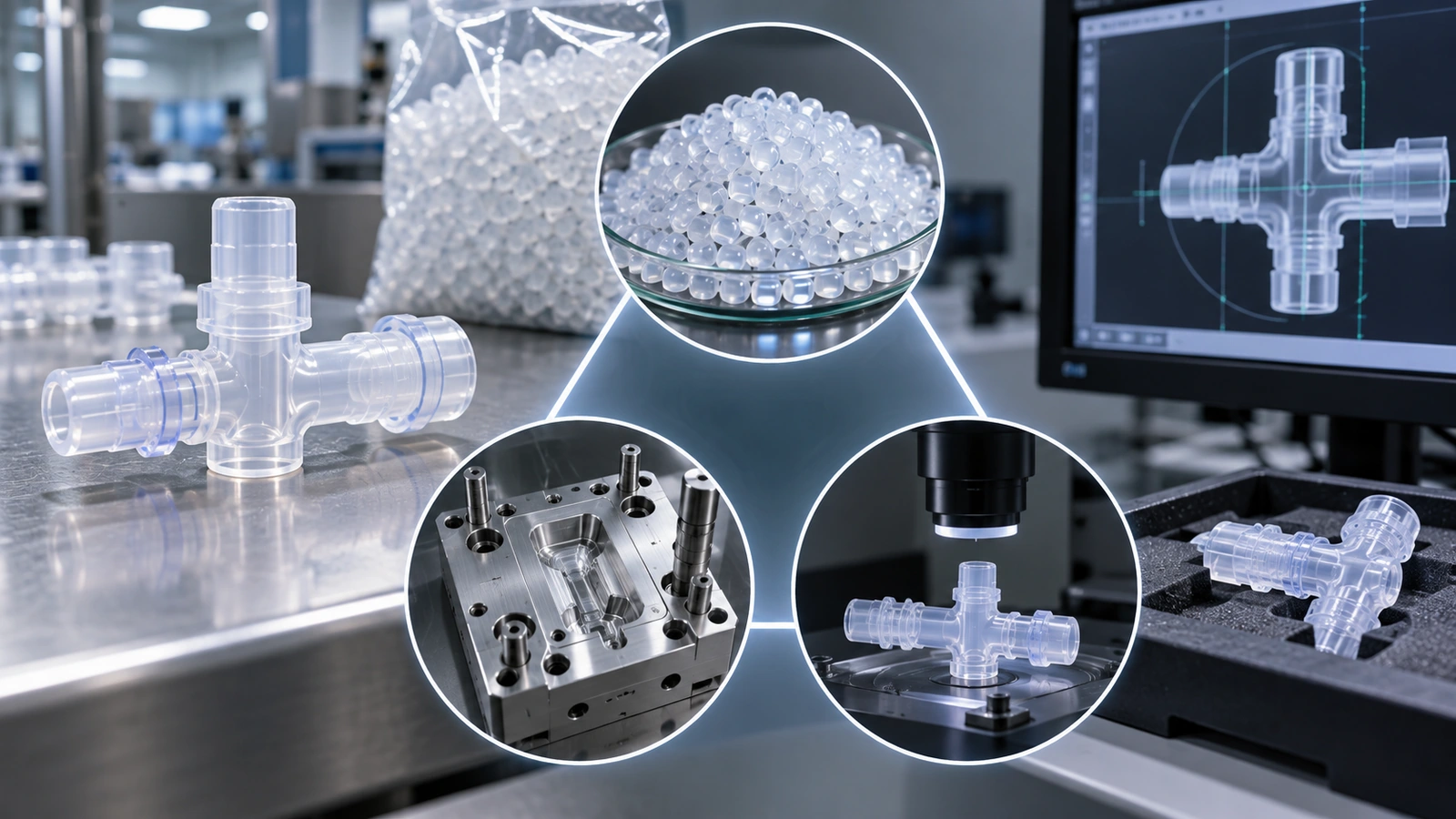
Medical grade plastics should be selected through a chain of reasoning: device function, exposure profile, exact grade, manufacturing route, representative testing, and controlled evidence. That chain is more dependable than choosing a familiar acronym and trying to justify it later.
Send Jucheng your plastic component files and requirements for process comparison, manufacturability feedback, and a prototype or low-volume production quotation.

