


Abriendo una cotización para un eje múltiple ensamblajes de robot prototipo en [2026] a menudo desencadena un "Impacto de Precio" inmediato para los líderes de ingeniería y fundadores de startups. La brecha entre una impresión 3D de grado de consumo y una máquina funcional de alta fidelidad no solo se mide en micras, sino en miles de dólares de mano de obra especializada y costos de materiales. En el mundo de alto riesgo del hardware autónomo, la cotización más baja rara vez es el mejor valor. Comprender las variables detrás de la estimación de costos de prototipos de robots es esencial para mantener una pista de I+D viable y evitar los colapsos presupuestarios de mitad de temporada que matan la innovación.
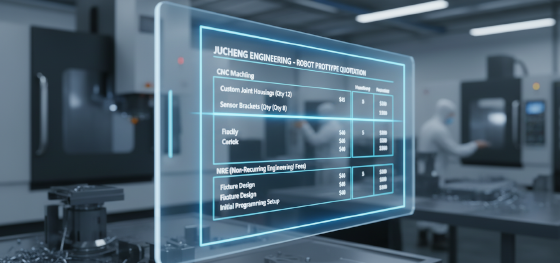
Los costos de fabricación para robótica son no lineales. Pequeñas decisiones de diseño, como un radio interno profundo o un requisito de acabado espejo, pueden triplicar el tiempo de mecanizado de un enlace estructural sin agregar un solo punto porcentual de rendimiento. Cuando los gerentes de adquisiciones tratan el abastecimiento de prototipos como compra de productos básicos, a menudo reciben hardware que requiere días de limado manual para ensamblar, transfiriendo efectivamente el costo del proveedor a su equipo de ingeniería interno. Jucheng Precision aborda estos riesgos financieros proporcionando cotizaciones transparentes basadas en DFM que identifican los generadores de costos antes de que gire el primer husillo.
Operando dentro del centro de fabricación de precisión de Shenzhen, JUCHENG proporciona una perspectiva financiera integral sobre el desarrollo de hardware. Nuestros más de 150 centros de mecanizado CNC combinados con una profunda cadena de suministro local ofrecen hardware de alta fidelidad a precios optimizados. Esta guía explora los principales generadores de costos, los gastos ocultos del ensamblaje y los cambios estratégicos de diseño necesarios para una estimación de costos de prototipos de robots estimación precisa en el mercado competitivo actual.
Principales Generadores: Materiales, Complejidad y NRE
Datos Técnicos: Multiplicadores de Costos de Material y Proceso
Gastos Ocultos: Acabado, Control de Calidad y Mano de Obra de Ensamblaje
Estrategias de Optimización: 5 Formas de Reducir el Gasto en Prototipos
JUCHENG: Presupuestación Transparente para I+D en Robótica
Preguntas Frecuentes: Presupuestación para Hardware de Prototipos de Robots
Principales Generadores: Materiales, Complejidad y NRE
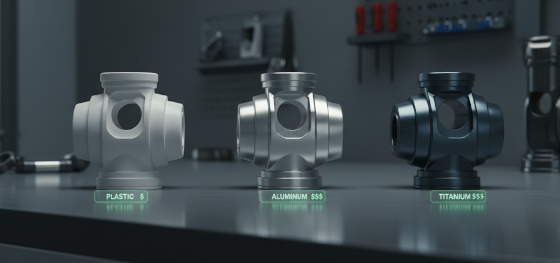
La selección de materia prima es el factor más inmediato en estimación de costos de prototipos de robots. Si bien el aluminio 6061-T6 es la base económica para la robótica, pasar a 7075-T6 o titanio aumenta el costo del material en 2x y 10x respectivamente. Más allá del precio por kilogramo, los materiales más duros aumentan el desgaste de las herramientas y reducen las velocidades de avance, lo que genera cargos por hora-máquina más altos. JUCHENG recomienda utilizar aluminio para el 90% de las construcciones Alpha, reservando aleaciones exóticas solo para las uniones de mayor tensión donde la física lo exige absolutamente.
La complejidad geométrica determina el componente de "Hora-Máquina" de la cotización. En piezas de robots industriales, características como bolsillos profundos, paredes delgadas (menos de 1 mm) y roscas internas en metales duros requieren herramientas especializadas y pasadas lentas y cuidadosas. Una configuración CNC de 5 ejes es más cara por hora que una de 3 ejes, pero a menudo reduce el número total de configuraciones necesarias, lo que puede reducir el costo total de la pieza. JUCHENG analiza sus archivos CAD para identificar "trampas de costos": características que aumentan el precio sin agregar valor funcional al robot, y sugiere alternativas de DFM en cada cotización.
Los cargos de Ingeniería No Recurrente (NRE) representan el costo de "configuración" del proyecto. Esto incluye el tiempo necesario para la programación CAM, el diseño de accesorios personalizados y la calibración de la máquina. Para un ensamblajes de robot prototipo, el NRE puede representar el 50% o más de la factura total. JUCHENG gestiona estos costos utilizando accesorios modulares universales y bibliotecas de herramientas estandarizadas, lo que nos permite amortizar el tiempo de ingeniería en múltiples piezas similares. Esta eficiencia es la razón por la que JUCHENG sigue siendo un socio preferido para las startups que necesitan iterar en componentes individuales semanalmente sin verse abrumadas por cargos de configuración recurrentes.
Las primas por plazo de entrega son el "impuesto de urgencia" de la industria. Si una demostración está programada para el próximo viernes, el costo del hardware puede aumentar entre un 30 y un 50% para cubrir el envío acelerado de materiales y la mano de obra de horas extras. JUCHENG elimina estas primas para nuestros socios de I+D a largo plazo al mantener un ciclo de producción 24/7 en nuestro centro de fabricación de precisión en Shenzhen. Nuestra capacidad "Siempre Activa" significa que un tiempo de entrega de 3 días es nuestro procedimiento operativo estándar, no un servicio especial, lo que le permite mantenerse en el cronograma sin inflar su presupuesto.
Datos Técnicos: Multiplicadores de Costos de Material y Proceso
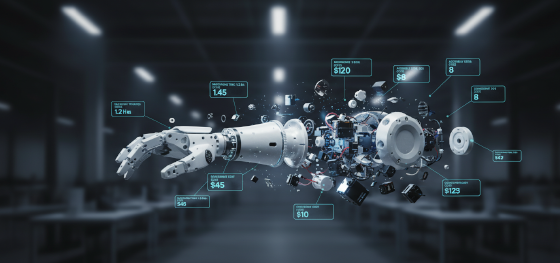
Visualizar el impacto en el costo de las opciones de material y proceso es el primer paso para un estimación de costos de prototipos de robots. La siguiente tabla proporciona un índice de costo relativo utilizando aluminio 6061 mecanizado por CNC como base (1.0). Use estos datos para identificar dónde se consume su presupuesto de I+D durante las fases Alpha y Beta.
| Material / Proceso | Índice de Costo Relativo | Impacto en el Tiempo de Mecanizado | Factor de Decisión Principal |
|---|---|---|---|
| Aluminio 6061-T6 | 1.0 (Base) | Estándar | Chasis de Propósito General |
| Aluminio 7075-T6 | 1.4 - 1.6 | +15% (Desgaste de Herramienta) | High-Torque Joint Links |
| PEEK (Plástico) | 4.0 - 6.0 | +20% (Stability) | Thermal/Chemical Barrier |
| Acero Inoxidable 316L | 2.5 - 3.5 | +50% (Hardness) | Environment/Hygiene |
| Titanium Gr. 5 | 10.0+ | +200% (Speeds) | Aerospace/Bionic Weight |
Moving from 6061 to 7075 aluminum is often a "high-ROI" upgrade in estimación de costos de prototipos de robots. For a 40% increase in cost, you receive nearly double the yield strength. However, moving to Titanium is rarely justified for an early-stage ensamblajes de robot prototipo unless weight is the absolute limiting factor for flight or agility. JUCHENG helps procurement teams identify these "Sweet Spots" in the material matrix, ensuring that every dollar spent translates directly into valid R&D data.
Gastos Ocultos: Acabado, Control de Calidad y Mano de Obra de Ensamblaje
Aesthetic finishing is the most common "Hidden Cost" in robotic prototyping. While a raw-machined part is functional, trade-show requirements often demand Class-A painting, bead-blasting, or hard-anodizing. These processes add secondary logistics and labor that can account for 20-30% of a estimación de costos de prototipos de robots. JUCHENG manages these finishes in-house, eliminating the "Third-Party Markup" and ensuring that the final surface quality matches the engineering specifications without the standard 5-day delay of outsourced plating shops.
Quality Control (QC) and metrology requirements must be budgeted based on the part's function. A simple cosmetic cover does not need a CMM report, but a J2 gearbox housing requires sub-micron verification of bearing concentricity. Excessive QC requests on non-critical parts inflate the project cost by adding inspection labor and machine-wait time. JUCHENG’s "Tiered QC" approach allows you to specify different inspection levels for different components within the same ensamblajes de robot prototipo build, focusing the budget where the precision actually matters for machine performance.
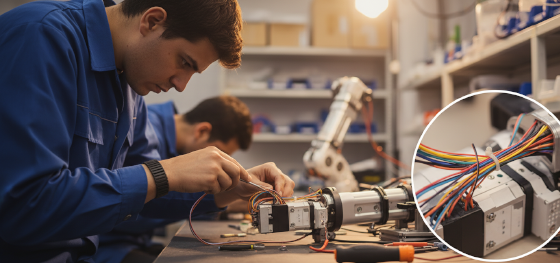
Assembly labor and hardware fitment can derail a project's finances during the final week. If the manufactured parts have "tolerance stack-up" issues, your expensive robotics engineers will spend their time hand-grinding parts to fit rather than writing code. JUCHENG eliminates this "Internal Labor Sink" by performing physical pre-assembly and interference checks on every robotic assembly we ship. We ensure that the hardware is "Ready-to-Bolt," effectively saving you thousands in high-level engineering overhead during the integration phase.
Packaging and international logistics are the final hidden hurdles. Shipping a 100kg robot chassis across the ocean in a standard cardboard box is a recipe for expensive damage. JUCHENG provides custom-fitted wooden flight cases with internal shock-dampening for all functional prototypes. While this adds a small upfront cost to the estimación de costos de prototipos de robots, it prevents the multi-thousand dollar loss of a damaged Alpha unit, ensuring your hardware arrives in the lab calibrated and ready for its first power-up.
Estrategias de Optimización: 5 Formas de Reducir el Gasto en Prototipos
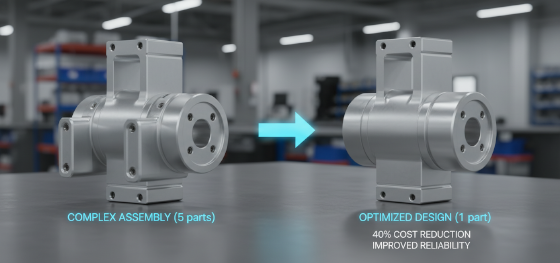
Reducing the cost of a ensamblajes de robot prototipo does not mean compromising on quality; it means manufacturing smarter. The first strategy is "Part Consolidation." Using 5-axis CNC machining, JUCHENG can often combine three separate brackets into a single monolithic part. This reduces the number of unique setups, eliminates the cost of dozens of fasteners, and drastically lowers assembly time. By simplifying the skeleton, you reduce both the manufacturing price and the failure points in the field.
Standardize your hardware interfaces. Using non-standard thread pitches or custom-headed bolts adds unnecessary expense to the estimación de costos de prototipos de robots because it requires the manufacturer to source or machine custom fasteners. JUCHENG maintains a vast inventory of standard ISO and imperial fasteners; designing your mounts to match these off-the-shelf items can shave hundreds of dollars off your R&D bill. We provide a "Standard-Hardware Guide" to our clients to help them align their designs with global supply chain availability.
Utilize "Prototype Tooling" for Beta fleets. If you need 20 sets of enclosures, don't jump straight to a $50,000 hardened steel injection mold. JUCHENG utilizes aluminum rapid tooling or vacuum casting to provide production-grade parts for a tenth of the price. This "Bridge to Production" allows you to finalize your design through real-world testing without a massive upfront capital commitment, preserving your cash for the eventual mass-market rollout in [2026].
Relax tolerances on aesthetic surfaces. In piezas de robots industriales, engineers often apply a blanket "+/- 0.05mm" tolerance to the entire part out of habit. By identifying "Non-Critical Zones"—such as external covers or wire-routing channels—and allowing for +/- 0.2mm tolerances, you reduce the machine-time and scrap-rate of the part. JUCHENG’s DFM reviews specifically look for these "Tolerance Over-Specs" and suggest where you can save budget without impacting the robot’s accuracy or durability.
Consolidate your shipments and iterations. Sourcing the drivetrain from one vendor and the chassis from another increases shipping costs and leads to "Finger-Pointing" if parts don't fit. JUCHENG’s integrated hub handles the entire ensamblajes de robot prototipo lifecycle—from CNC and 3D printing to final painting. By consolidating your build with a single high-tier partner, you eliminate multiple layers of markup and ensure that the responsibility for fitment and function rests with a single, accountable manufacturing engine.
JUCHENG: Presupuestación Transparente para I+D en Robótica
Dominating the [2026] robotics market requires a partner that provides financial clarity alongside mechanical precision. Jucheng Precision operates with a 24/7 manufacturing mindset in our Shenzhen precision manufacturing hub, delivering high-tolerance estimación de costos de prototipos de robots data and structural components with industry-leading speed. We provide a "Bridge to Production" that allows you to scale from a single functional prototype to a commercial pilot run of 50 Beta units with consistent metallurgical and dimensional quality.
Integrating your budget goals with JUCHENG’s expertise ensures that your ensamblajes de robot prototipo survives the "Cash-Burn Season" and moves into mass adoption. We offer comprehensive DFM reviews within 24 hours, identifying potential cost-saving opportunities or weight-reduction risks in your design before they become financial failures. Whether you are building an autonomous vineyard scout or a heavy-duty industrial mobile base, Jucheng Precision provides the transparent foundations that keep your innovation moving through the high-speed cycles and the years of hard labor.
Our facility is equipped with 150+ CNC machines and dedicated assembly and testing cells, allowing us to manage the entire prototype lifecycle in one location. We manage the complexity of multi-process manufacturing and material science so your engineering team can focus on the autonomy and the AI. By combining Shenzhen's speed with industrial-grade material verification, JUCHENG remains the preferred partner for the world's most aggressive ensamblajes de robot prototipo challenges. Contact us today to start your next project.
Preguntas Frecuentes: Presupuestación para Hardware de Prototipos de Robots
What is NRE and why is it so high for 1 part?
NRE covers the one-time programming and setup work required to teach a machine how to make your unique part.
Is CNC always more expensive than 3D printing?
No. For high-torque structural parts or quantities over 20 units, CNC is often cheaper and provides better material durability.
How much does a custom robot chassis typically cost?
Depending on size and material, a functional aluminum mobile base prototype typically ranges from $2,500 to $8,000.
Does JUCHENG provide volume discounts for Beta fleets?
Yes. We amortize NRE costs across the run, significantly reducing the per-unit price for 10 to 50 unit orders.
How can I get the fastest quote for my robot project?
Upload a clean 3D step file with a clear bill of materials and tolerance requirements to our secure Shenzhen portal.
Budget inaccuracies in the robotics sector are absolute hardware killers. Partnering with Jucheng Precision ensures that your financial planning is built with the transparent estimación de costos de prototipos de robots and specialized DFM techniques the industry demands. Reach out to our Shenzhen manufacturing hub today for a complete DFM review and build the cost-effective foundation your autonomous fleet requires.

