


Balancing product specifications with strict project budgets represents one of the hardest daily realities for hardware development teams. When drafting engineering drawings for rapid soft tools, the temptation to apply blanket high-precision tolerances across every single feature can trigger exponential increases in machining time and tooling outlays. Understanding the financial and technical boundaries of standard versus precision tolerances in rapid molds allows mechanical designers to allocate capital intelligently without compromising functional assembly performance.

Evaluating precision classes within tolerancias de herramientas rápidas requires distinguishing between general commercial requirements and fine, mission-critical mating dimensions. Utilizing modular aluminum or pre-hardened steel bridge tools accelerates prototyping cycles while keeping upfront NRE investments manageable. Let us analyze the distinct economic impacts driving commercial grades versus high-precision mold categories.
Tabla de Contenidos
1. Defining Commercial versus Fine Precision Tolerances
2. How Tight Tolerances Drive Up Tooling and Machining Costs
Defining Commercial versus Fine Precision Tolerances
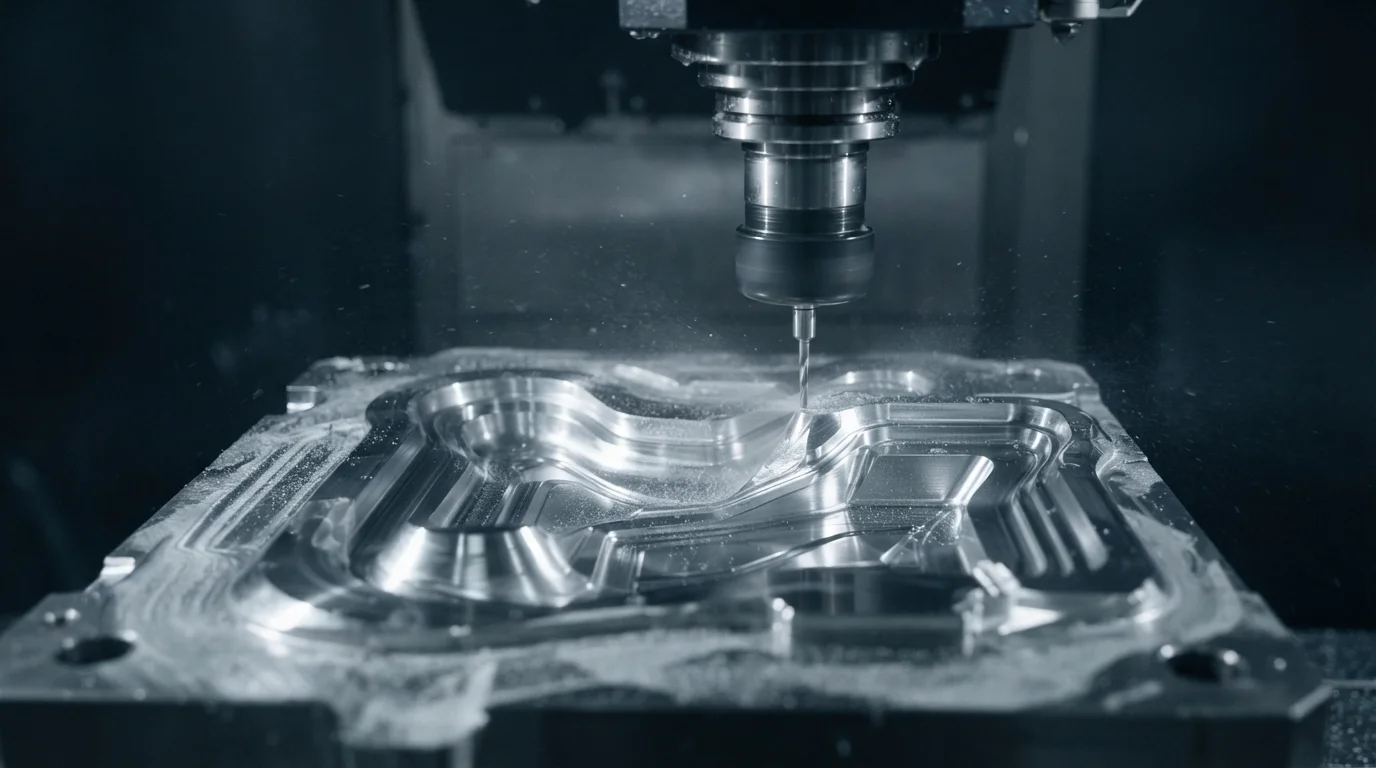
Commercial-grade manufacturing standards typically accommodate standard linear variances suitable for general cosmetic enclosures and non-critical structural brackets. Conversely, fine precision classes demand microscopic control, requiring meticulous toolroom hand-bench work, slow EDM finishing, and stringent temperature-controlled metrology inspections.
Selecting the appropriate precision category requires close collaboration between product designers and manufacturing engineers. Utilizing an agile Servicio de moldeo por inyección ensures process consistency, while an experienced Servicio de prototipos lets development teams test functional fit. Sourcing precision parts through an specialized Servicio de mecanizado CNC guarantees clean matching features across soft metal mold blocks.
Comparing typical dimensional class boundaries highlights clear operational distinctions:
| Tolerance Tier | Typical Linear Variance | Aplicación principal de ingeniería |
|---|---|---|
| Commercial Standard | ±0.10 mm to ±0.20 mm | General housings, consumer bezels, cosmetic covers |
| Clase de Precisión Fina | ±0.03 mm to ±0.05 mm | Mating gearboxes, optical mounts, snap-fit electronics |
How Tight Tolerances Drive Up Tooling and Machining Costs

Enforcing micron-level tolerances across every surface of a rapid mold drastically escalates tooling expenditures. Toolmakers must slow down CNC feed rates, execute secondary manual grinding, and perform extensive CMM inspection mapping. Recognizing when over-tolerancing occurs protects project capital from unnecessary waste.
Managing economic efficiency while maintaining required component performance involves monitoring specific cost drivers:
- Increased machining hours—Ultra-fine tool paths require reduced spindle speeds and extended finishing passes
- Extended toolroom benching—Manual fitting and polishing of tight shut-offs add substantial labor expenses
- Higher scrap rates—Stricter acceptance criteria lead to rejected pilot parts during early sampling runs
Striking the Right Balance for Your NPI Phase
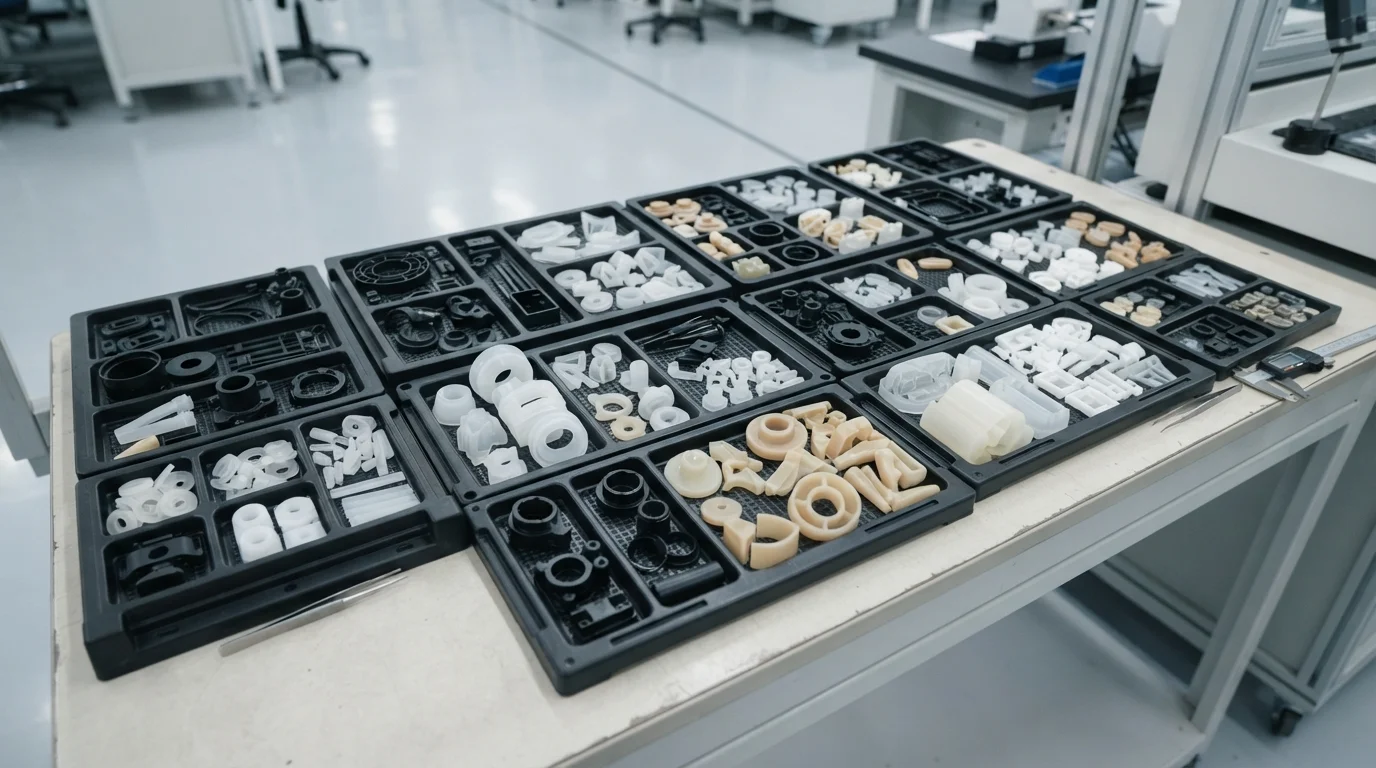
Jucheng Precision apoya a los desarrolladores de hardware entregando DFM gratuito las 24 horas reviews that evaluate dimension callouts, separating critical mating interfaces from general cosmetic surfaces prior to cutting metal. Operating with 150+ advanced CNC machines—including 25 high-precision 5-axis systems—alongside 35+ specialized injection molding presses, our ISO 9001 certified facilities ensure absolute quality control.
Key operational advantages of our custom tolerance engineering framework include:
- Strategic tolerance allocation—Applying fine precision strictly to functional mating features while keeping commercial standards elsewhere
- Advanced CNC machining accuracy—Utilizing multi-axis workstations to achieve reliable dimensional control
- Sin restricciones de cantidad mínima de pedido—Las políticas sin cantidad mínima de pedido permiten una alineación exacta del inventario con ejecuciones de producción piloto personalizadas
Preguntas Frecuentes (FAQ)
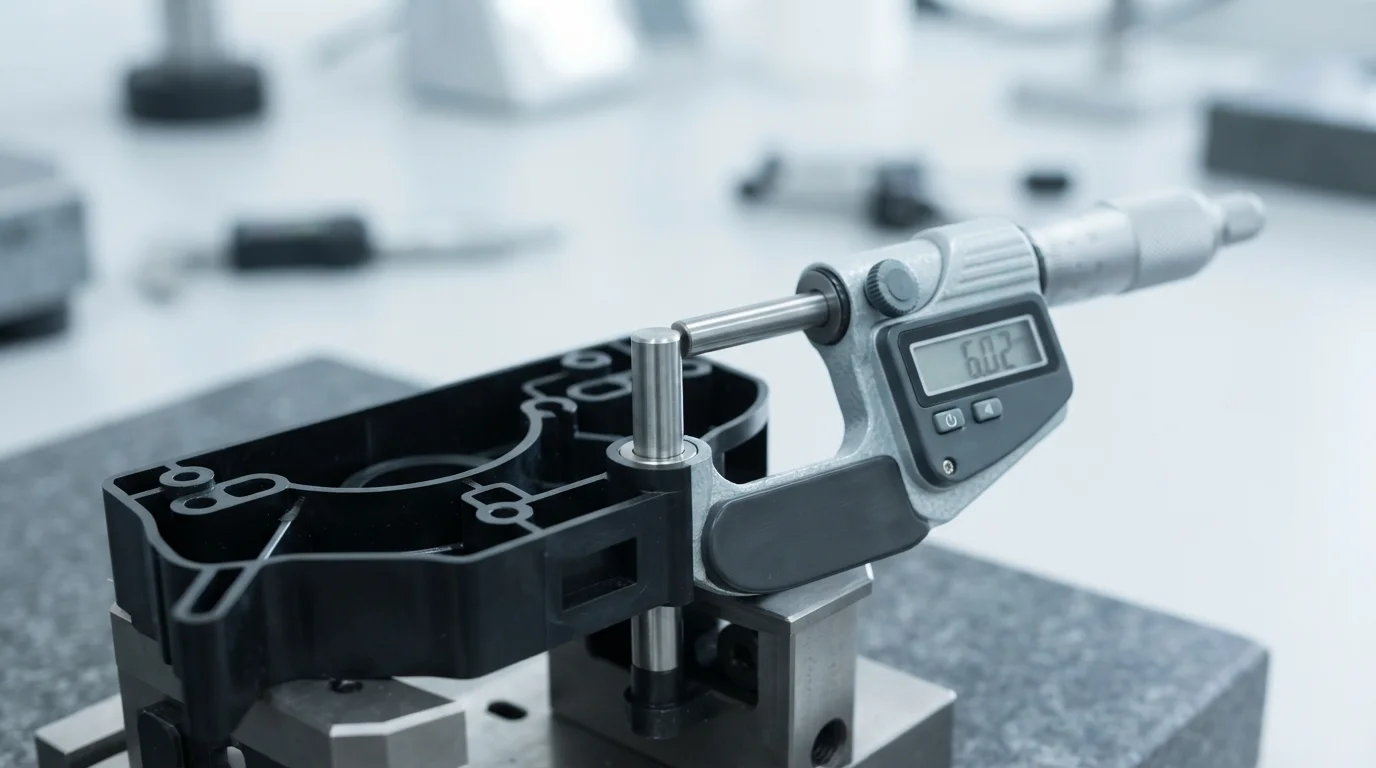
What is the difference between commercial and precision tolerances in rapid molds?
Commercial standards accommodate general linear variances suitable for standard enclosures, whereas precision tolerances demand microscopic control for critical mating mechanical features.
Why do tight dimensional tolerances significantly increase rapid tooling costs?
Tight tolerances require slower CNC machining feeds, extensive manual toolroom benching, and rigorous CMM inspection mapping, which substantially drive up labor and time expenses.
How does Jucheng Precision help optimize component tolerance callouts?
Jucheng Precision provides 24-hour free DFM reviews, strategic tolerance allocation guidance, and high-precision CNC machining to balance project accuracy with budget limits.

