


A sensor housing on a wind turbine may be smaller than a fist, yet its material decision is shaped by the entire machine. A nacelle-mounted vibration sensor sees oil mist and temperature cycling. A tower sensor faces condensation. A blade-root unit receives shock and repeated flexing. Offshore hardware adds salt spray and difficult maintenance.
This is why wind turbine sensor housing materials should be selected from the installation outward. Strength alone is not enough. The housing must preserve alignment, protect electronics, maintain seals, control corrosion, and remain manufacturable after cables, fasteners, windows, and mounting features are added.
Location Comes Before Material
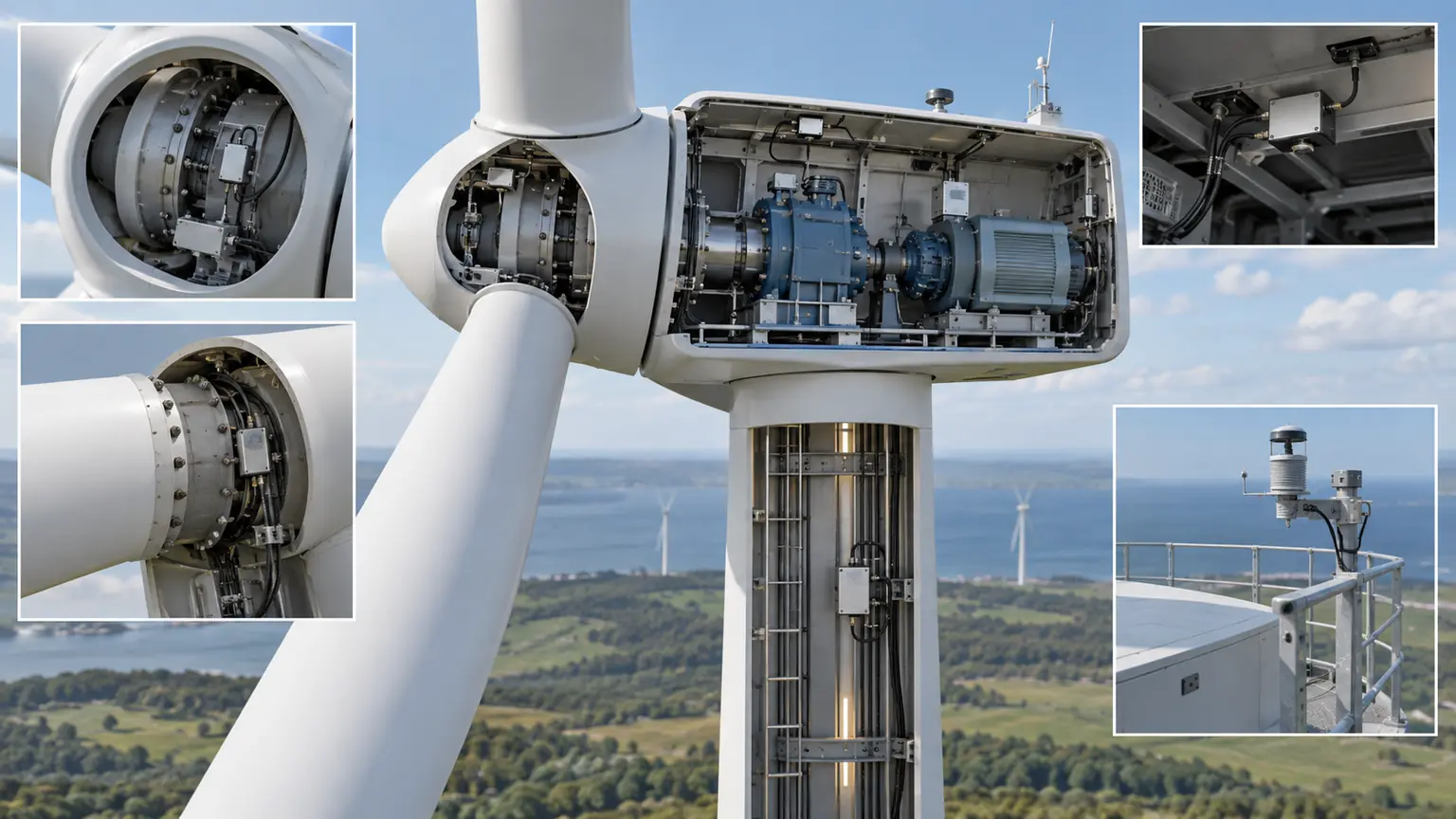
Begin by marking the exact turbine zone, orientation, mounting surface, service interval, and cable direction. A material that works inside a controlled cabinet may be a poor choice on the outside of a nacelle. The same housing can also behave differently when mounted upside down, behind a heat source, or beside a galvanically incompatible bracket.
Five exposure profiles
- Inside the nacelle: heat, vibration, oil mist, electrical noise, and limited airflow.
- Hub and blade root: cyclic loads, shock, tight packaging, and difficult cable routing.
- Tower interior: condensation, cold surfaces, long cable runs, and service handling.
- External tower or platform: rain, UV, ice, wind-driven particles, and impact.
- Offshore installation: salt, persistent humidity, galvanic coupling, and high maintenance cost.
The output of this step is not a generic label such as “outdoor use.” It is an exposure profile with temperatures, chemicals, mechanical loads, ingress paths, expected life, and inspection access. That profile becomes the evidence behind every later choice.
Four Field Failures Tell the Real Story
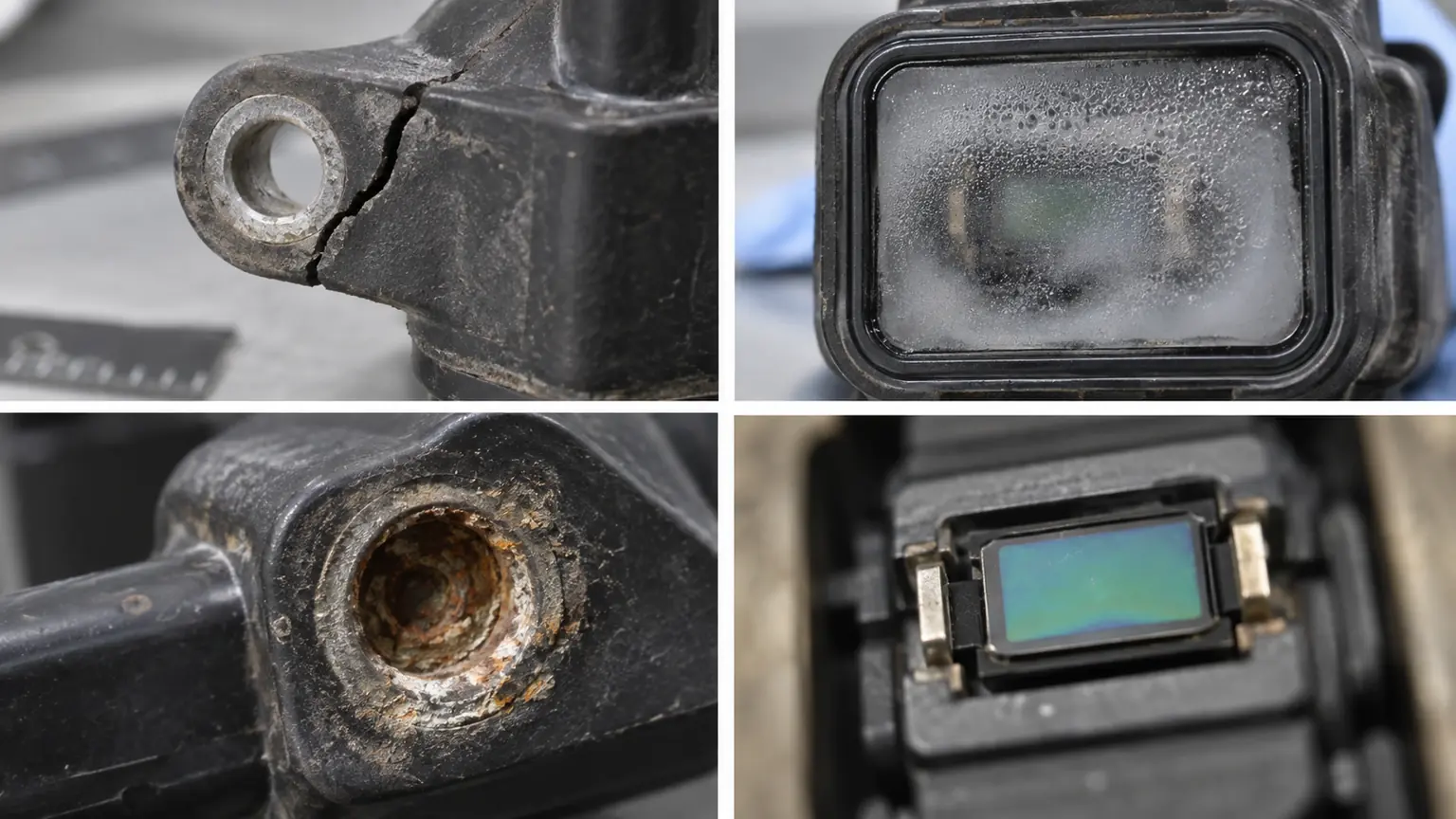
A cracked mounting ear usually points to local stress, assembly over-torque, insufficient radius, or a housing that is too rigid for the supporting structure. Changing to a stronger material without correcting the load path may only move the crack.
A fogged optical window can come from condensation inside the cavity rather than rain crossing the primary seal. Permeation, trapped assembly moisture, pressure cycling, and an ineffective vent deserve investigation.
A corroded fastener pocket often reveals a water trap or galvanic cell. The housing alloy, insert, washer, coating damage, electrolyte path, and drain geometry work together; they cannot be diagnosed independently.
A drifting sensor signal may be mechanical. Housing creep, joint relaxation, thermal expansion, or a changing datum can alter the sensor’s orientation even when the electronics remain healthy.
A Decision Matrix for Common Housing Materials
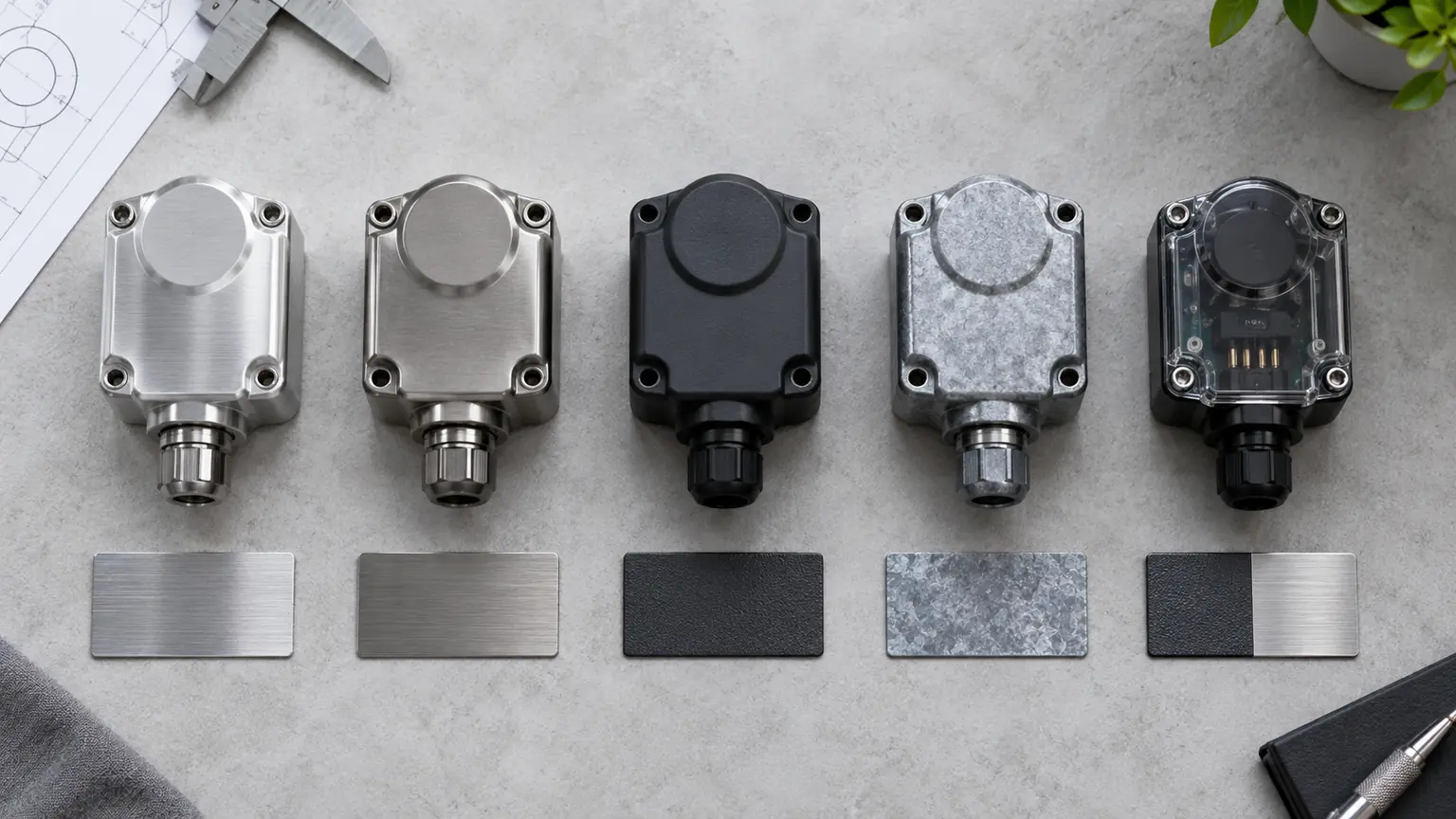
| Material family | Where it earns attention | Main design cautions | Typical prototype route |
|---|---|---|---|
| Machined aluminum | Low mass, heat spreading, precise mounting datums, complex sealed geometry | Galvanic isolation, coating damage, thread durability, wall stiffness | mecanizado CNC |
| Acero inoxidable | Salt, impact, thin durable covers, aggressive maintenance environments | Weight, cost, heat transfer, grade and finish compatibility | Machining or formed sheet |
| Engineering thermoplastic | Electrical isolation, RF transparency, low weight, integrated features | UV, creep, moisture uptake, flame behavior, insert loads | 3D print, machined plastic, or prototype tooling |
| Die-cast aluminum or zinc | Repeatable medium-to-high-volume housings with ribs and bosses | Draft, porosity, sealing lands, tooling change cost, finish | Machined surrogate followed by trial casting |
| Hybrid construction | Metal datum or heat path combined with polymer cover or radome | Differential expansion, joint sealing, fastener loads, recycling | Mixed-process assembly |
The matrix is a screening tool, not a substitute for requirements. Stainless steel can still corrode in the wrong grade and finish. Aluminum can survive offshore when drainage, isolation, pretreatment, coating, and maintenance are coordinated. A polymer can outperform metal when radio transmission and electrical isolation dominate, but only if creep and UV exposure are controlled.
The Housing Usually Fails at an Interface
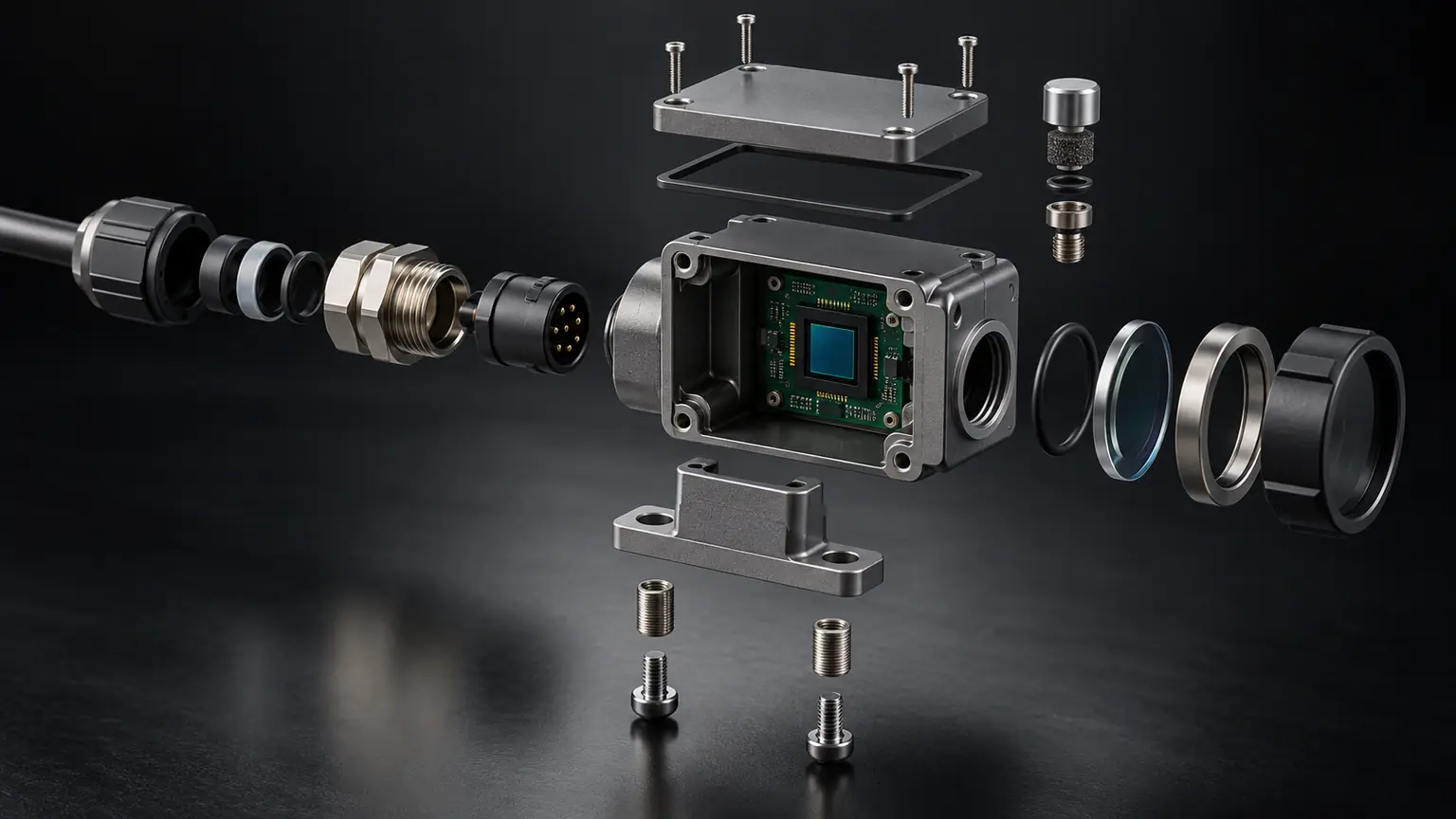
The enclosure wall is rarely the weakest feature. Pay more attention to the cable gland, connector, window, vent, lid joint, mounting foot, threaded insert, and sensor datum. Each interface needs a defined load path and a plan for water, dirt, assembly variation, and thermal movement.
Mounting and alignment
Accelerometers, position sensors, and condition-monitoring devices can depend on orientation and contact stiffness. Define the functional datum, flatness, surface condition, fastener preload, and permissible adhesive thickness. If a precision datum is essential, mecanizado CNC can place the sealing land, mounting face, bore, and connector features in one controlled setup.
Gaskets, vents, and pressure cycling
A gasket requires stable compression, not just a groove. Include tolerance stack-up, compression stops, lid stiffness, fastener spacing, surface texture, and material recovery over temperature. A vent may reduce pressure cycling, but its placement must avoid direct spray, pooled water, oil mist, and blocked service positions.
Windows and radio-transparent zones
Optical, radar, GPS, or wireless sensing may require a transparent region. Evaluate transmission needs together with impact, UV exposure, coating, adhesive compatibility, condensation, and replacement. A plastic window captured in a metal housing often needs room for differential thermal expansion.
Corrosion Protection Is a Stack, Not a Finish Name
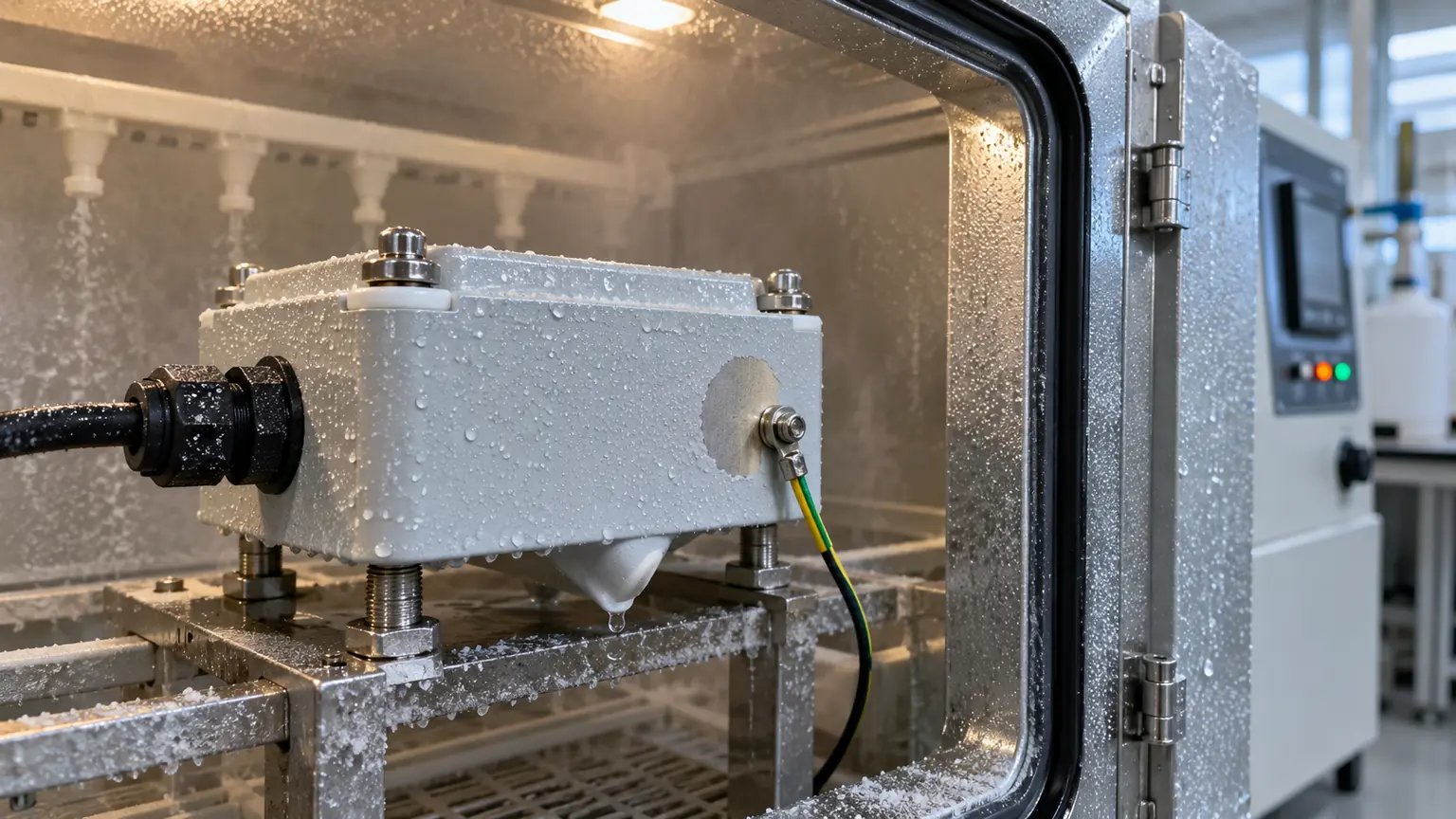
A durable system combines base material, cleaning and pretreatment, coating or passivation, compatible hardware, isolated dissimilar metals, drainable geometry, controlled masking, and repair rules. Specifying “outdoor powder coat” without substrate preparation, film requirements, and inspection leaves the most important variables undefined.
Review every metal pair in the presence of moisture. Stainless fasteners in aluminum, a copper-containing cable shield, carbon-fiber contact, or a damaged plated insert can create a local cell. Isolation washers, sealants, coatings, sacrificial choices, and drainage can reduce risk, but the solution must not interrupt grounding or sensor performance.
Early trials with a surface finishing service should include real recesses, threads, masking boundaries, engraved areas, edges, and assembled fasteners. Flat coated coupons alone do not reproduce housing geometry.
Let Production Volume Change the Manufacturing Route
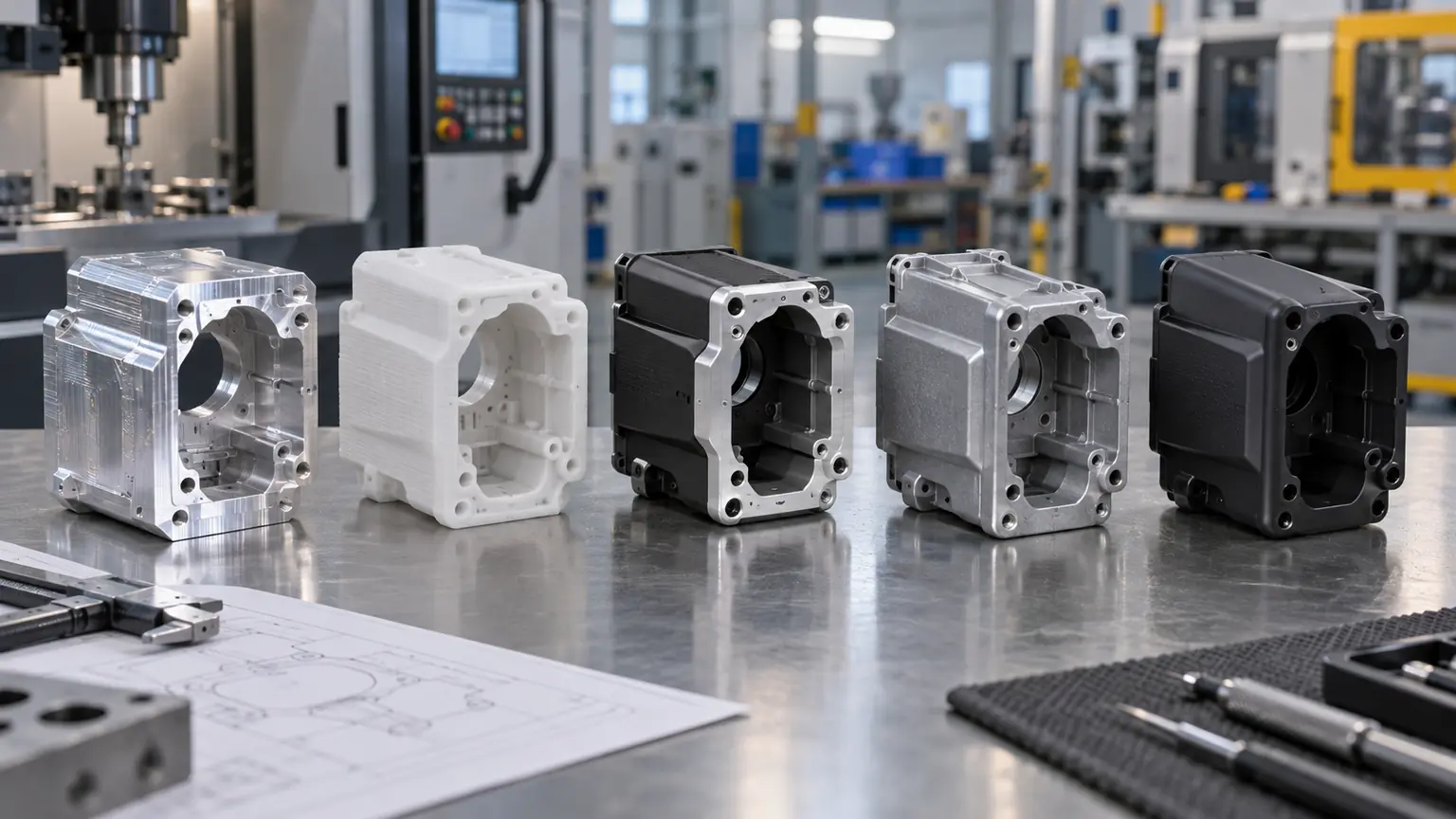
For early prototypes, machining provides fast design changes and accurate datums. Additive manufacturing can test cable routing, access, covers, and internal packaging, although printed parts should not automatically be treated as environmental equivalents of molded production parts.
At low volume, a machined metal body with a fabricated or printed cover may minimize tooling while protecting the key interfaces. As demand stabilizes, die casting can integrate ribs, bosses, and mounting features; injection molding can produce electrically insulating covers and complex cable-management details. The production design must then account for draft, wall transitions, shrinkage, gate or overflow locations, inserts, secondary machining, and finishing.
Jucheng Precision’s prototyping service can combine machined metals, printed polymer parts, fabricated elements, finishes, and assembly checks so the first build answers functional questions rather than merely copying the final appearance.
Build a Qualification Dossier, Not a Single Pass Result
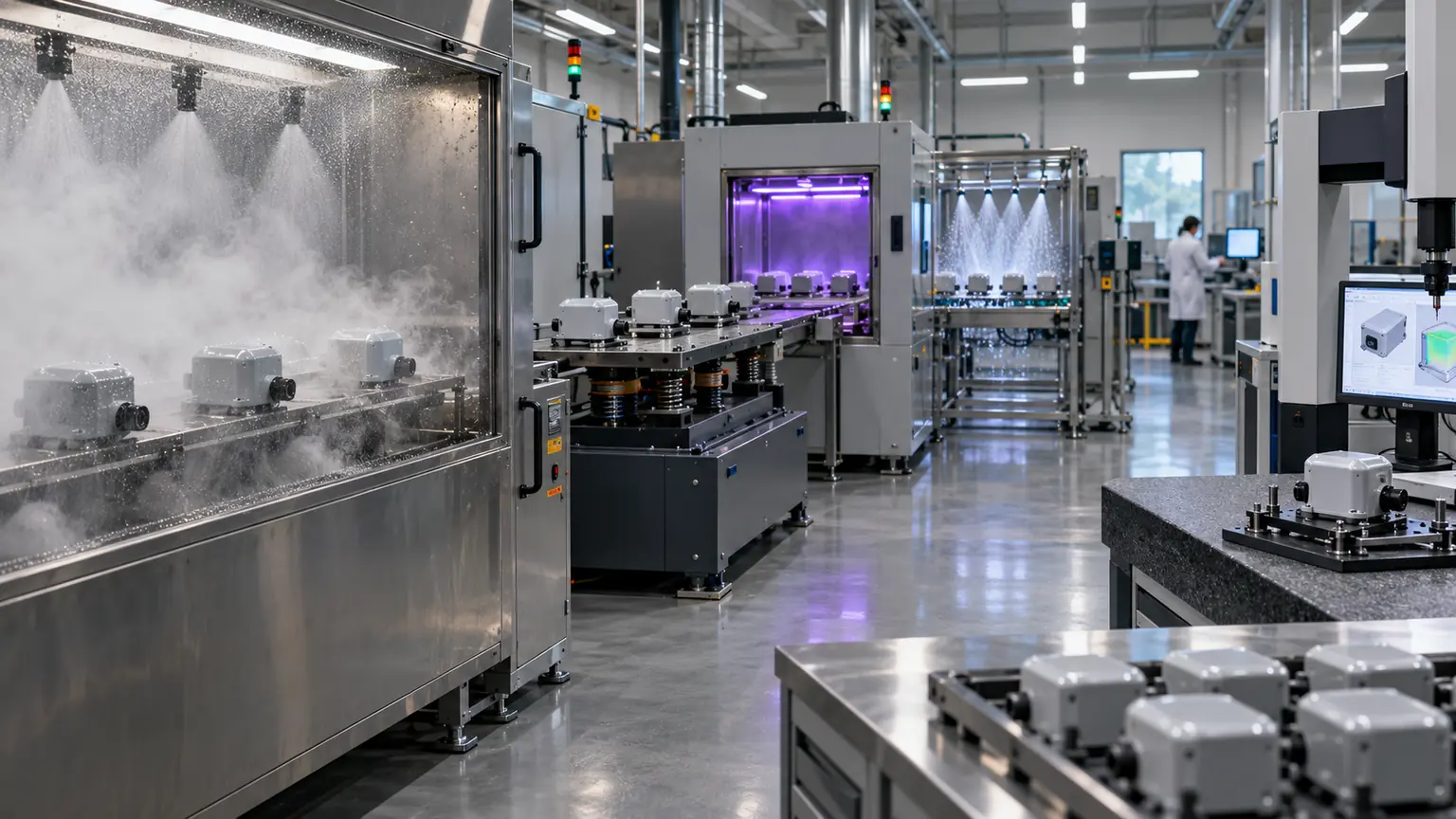
A useful validation record connects each risk to a specimen, setup, acceptance rule, and inspection after test. Separate material screening from enclosure validation and complete-system qualification.
- Baseline metrology: record datums, sealing-plane flatness, window position, connector orientation, mass, and critical torque.
- Environmental exposure: apply relevant temperature cycling, humidity, UV, salt, fluids, dust, or water methods using the installed orientation.
- Mechanical exposure: test vibration, shock, cable pull, mounting load, impact, and service operations where applicable.
- Post-test inspection: look for dimensional drift, joint relaxation, coating damage, corrosion initiation, seal movement, cracks, and sensor-output change.
- Teardown: inspect hidden interfaces, gasket compression, trapped moisture, fastener condition, vent cleanliness, and adhesive boundaries.
The test standard and severity depend on the turbine, site, certification route, and sensor function. The housing supplier should manufacture and document the agreed specimen; the system owner remains responsible for defining and approving the product-level qualification plan.
Notes to Settle Before Material Release
Can one housing material cover onshore and offshore versions?
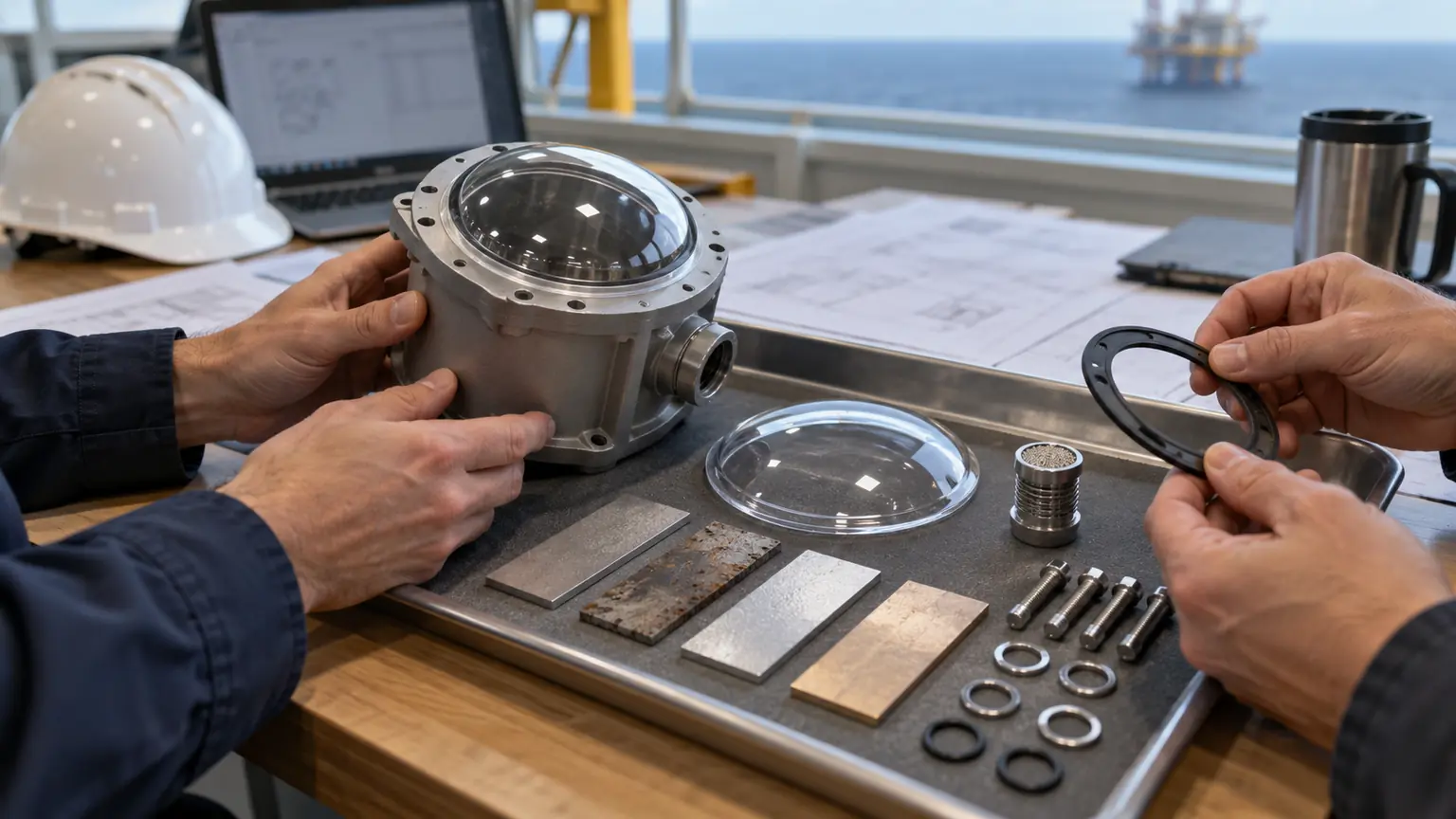
Sometimes, but shared geometry does not guarantee shared protection. Offshore exposure may require a different alloy, finish stack, fastener set, isolation detail, drainage strategy, or inspection plan.
When is stainless steel worth the added weight?
It becomes attractive when salt, impact, thin-wall durability, maintenance damage, or long service intervals outweigh mass and machining cost. Grade, surface condition, and crevice geometry still matter.
Should a prototype use the production material?
Use it when corrosion, stiffness, thermal movement, sealing texture, or chemical compatibility is under test. A surrogate is acceptable for packaging or assembly learning only when the unanswered material risks are clearly documented.
Which drawing notes prevent the most supplier ambiguity?
State the operating environment, exact material grade, functional datums, sealing surfaces, finish and masking, insert requirements, critical dimensions, torque assumptions, cosmetic zones, inspection method, and test responsibility.
Material Selection Ends With Evidence
The best wind turbine sensor housing material is the one that maintains the sensor’s function at its actual location and can be produced consistently at the required volume. Start with exposure, study the interfaces, choose a process-aware material system, and qualify the risks that would be expensive to discover in the field.

