


La obtención de maquetas de plástico y metal mediante procesos de capas aditivas representa una de las rutas más rápidas para validar físicamente diseños de productos complejos, sin embargo, presupuestar estas piezas requiere un profundo conocimiento de las matemáticas de tiempo de construcción y la mano de obra de soporte. Los equipos de desarrollo de productos frecuentemente esperan que el precio de la impresión 3D escale limpiamente por peso, solo para recibir facturas sorprendentemente altas por piezas con grandes volúmenes o voladizos complejos. Las horas de exposición láser, la química del material fotopolímero crudo y las limpiezas manuales posteriores al procesamiento dictan la factura final mucho más de lo que la geometría CAD estándar puede sugerir. Obtener comentarios técnicos tempranos ayuda a los diseñadores a optimizar sus diseños espaciales, asegurando que obtengan piezas de alta fidelidad sin pagar primas innecesarias. Veamos la física real detrás de su costo de prototipo de impresión 3D y exploremos cómo puede mantener su presupuesto de desarrollo bajo estricto control.
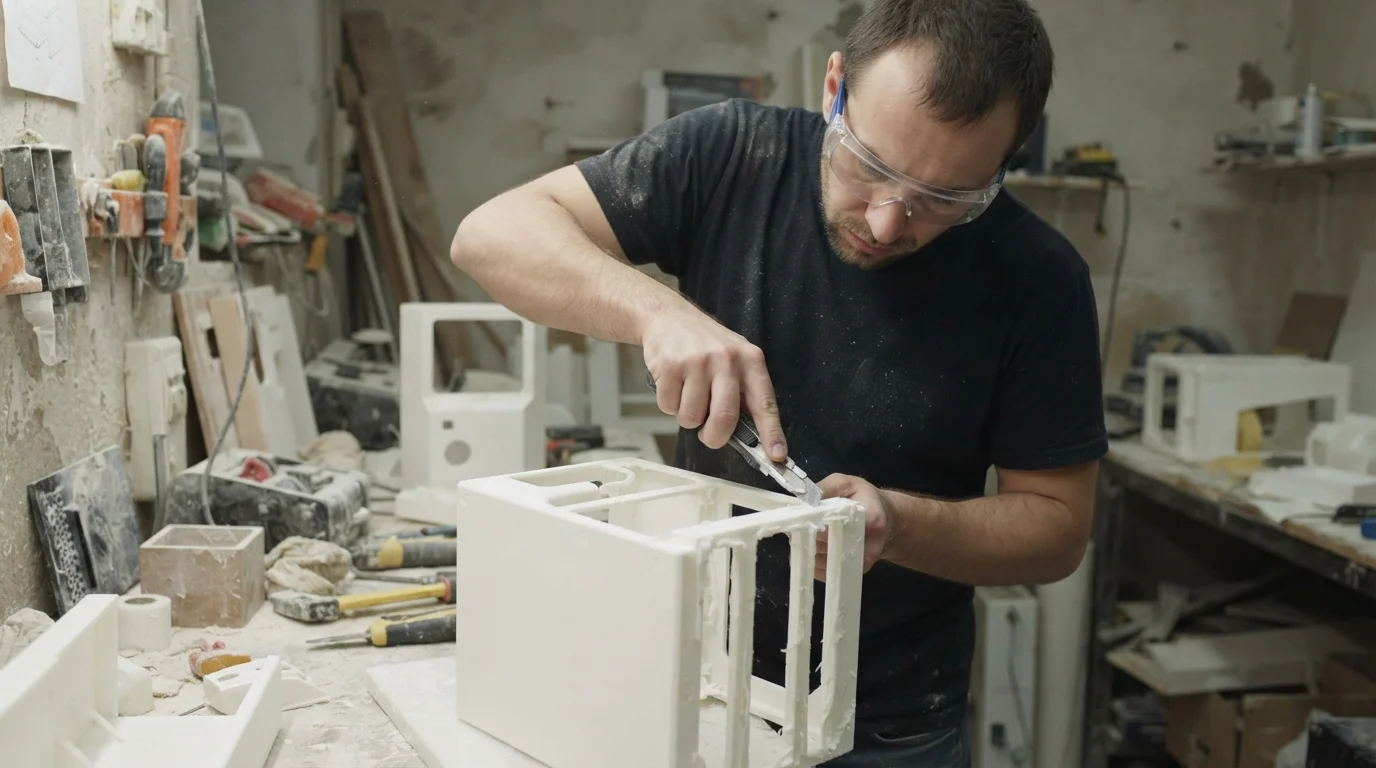
Tabla de Contenidos
1. Cálculo del costo por volumen y tiempo de impresión
2. Presupuestos de impresión plástica SLA versus SLS
Cálculo del costo por volumen y tiempo de impresión
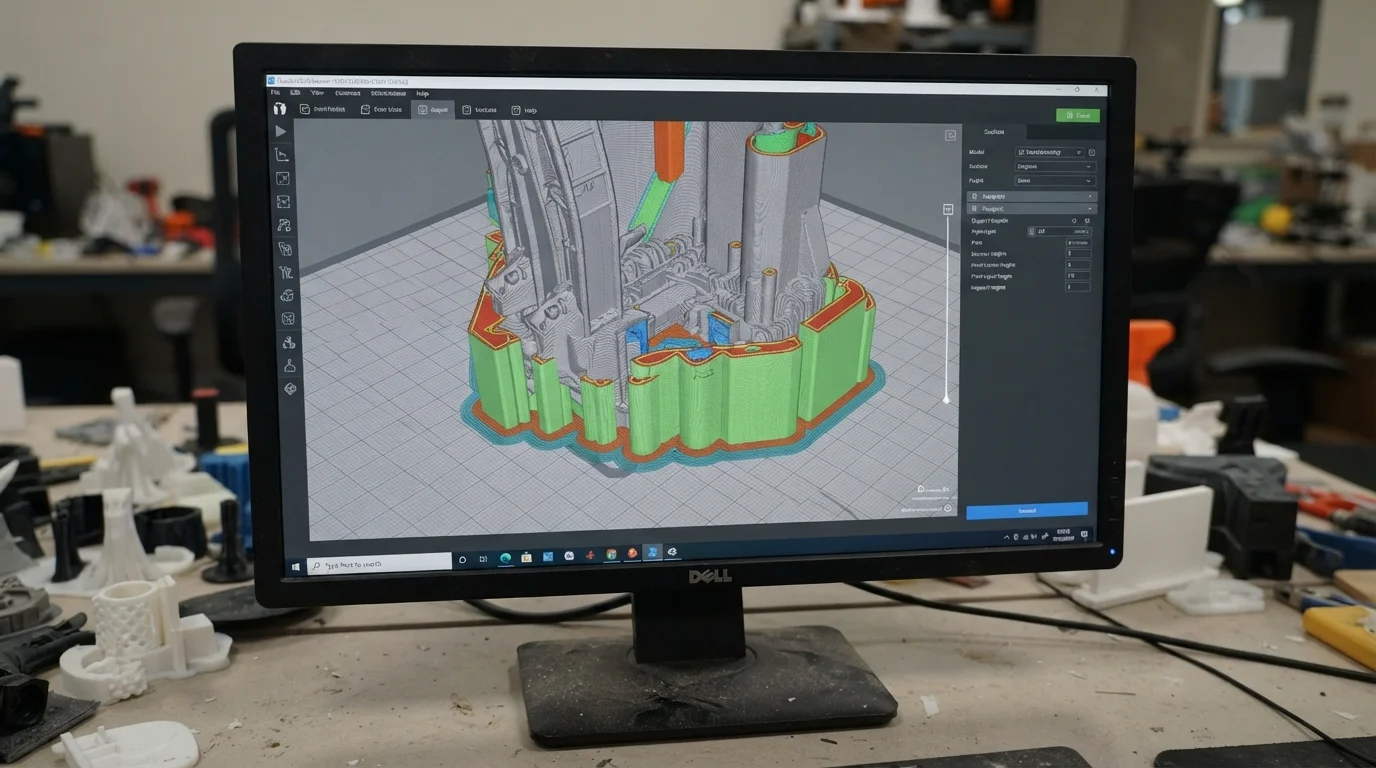
Pregunta: ¿Cómo fijan los fabricantes el precio de la creación de prototipos aditivos? Los talleres industriales calculan las tarifas basándose en el volumen total de polímero crudo, la altura del espacio de la cámara de la máquina y las horas de curado láser.
Las impresoras 3D poligonales calculan el precio de las piezas analizando cuánto espacio activo de la máquina y tiempo consume su diseño dentro del volumen de construcción. Las secciones sólidas y pesadas utilizan cantidades significativas de resina líquida o polvo, lo que aumenta la porción de materia prima de su factura. El software de corte mide las dimensiones de la caja delimitadora de sus archivos CAD, prediciendo exactamente cuántas capas verticales deben curarse para completar el trabajo. Los componentes altos requieren más pasos de capa vertical, aumentando las horas de impresión totales incluso si la pieza en sí es delgada y liviana.
Colocar múltiples piezas juntas dentro de una sola cámara de construcción permite a los fabricantes optimizar los tiempos de ejecución de la máquina y reducir los costos unitarios individuales. Obtener pequeños lotes de diez a veinte piezas a menudo produce excelentes descuentos por unidad porque la mano de obra de configuración se distribuye en toda la ejecución. Los ingenieros evitan las geometrías de bloque sólido, eligiendo paredes huecas con nervaduras de refuerzo para reducir el volumen de materia prima. Disminuir el volumen de la pieza reduce directamente los tiempos de exposición al láser, generando ahorros inmediatos en la factura total de su proyecto.
Las estructuras de soporte representan un factor de costo a menudo pasado por alto que agrega tanto desperdicio de material como horas de mano de obra manual a su proyecto. Las características en voladizo requieren soportes impresos para evitar que los polímeros crudos se comben o deformen mientras se curan. La eliminación de estos soportes requiere mano de obra manual calificada, ya que los trabajadores deben raspar y lijar cuidadosamente la pieza para restaurar los acabados superficiales prístinos. Minimizar los voladizos severos en su diseño CAD elimina el desperdicio de soporte, acortando significativamente los tiempos de acabado manual.
Presupuestos de impresión plástica SLA versus SLS
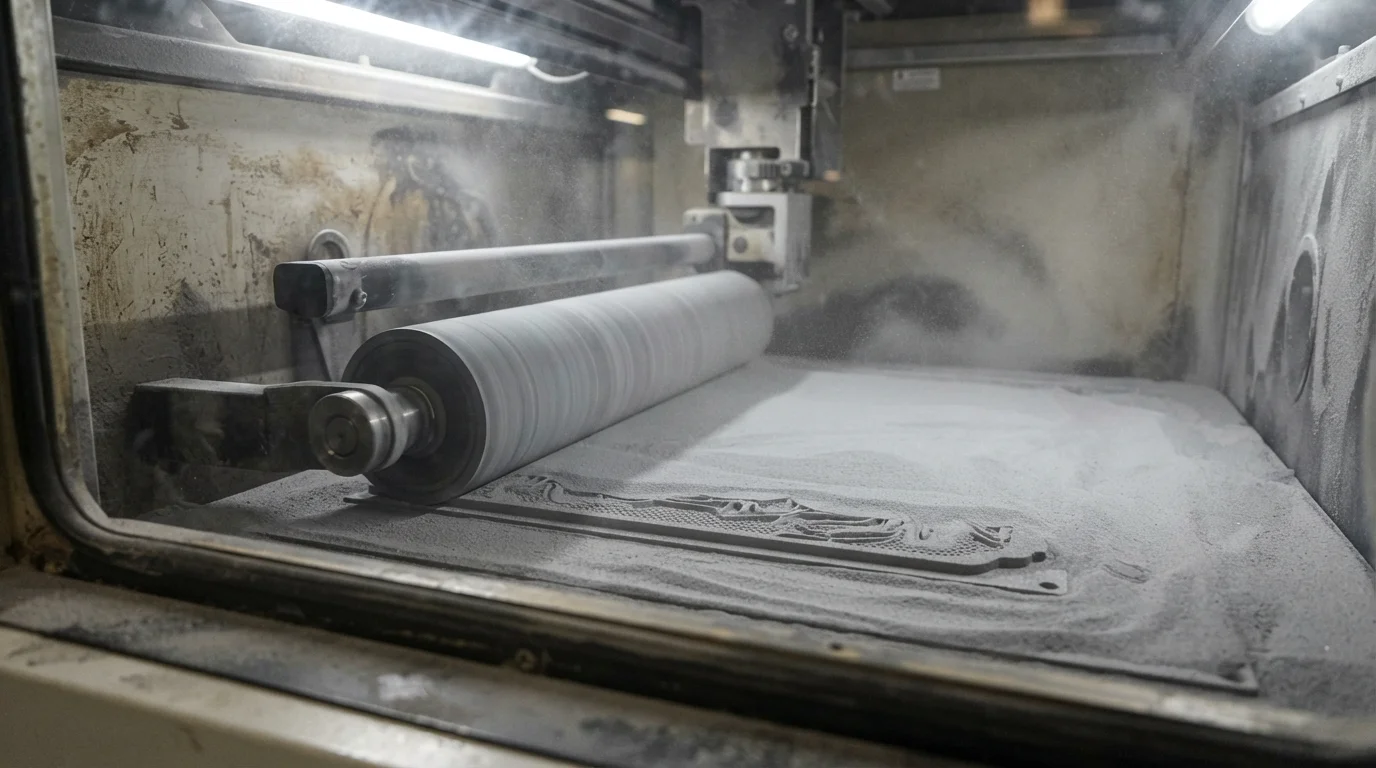
Pregunta: ¿Es la impresión 3D SLA o SLS más barata para volúmenes bajos? La estereolitografía SLA generalmente cuesta menos para modelos visuales individuales y altamente detallados, mientras que la sinterización selectiva por láser SLS se vuelve altamente económica para lotes más grandes porque elimina las estructuras de soporte.
Elegir entre fotopolímeros de resina líquida y polvos fusionados depende de si su prototipo requiere una suavidad cosmética extrema o una resistencia funcional robusta. La estereolitografía (SLA) ofrece hermosos acabados superficiales de grado comercial pero utiliza resinas frágiles que imitan el ABS o PC pero se fracturan fácilmente bajo carga. La sinterización selectiva por láser (SLS) utiliza polvos duraderos de Nylon 12 (PA) para construir componentes resistentes y flexibles que soportan el abuso mecánico. Esta propiedad física y la variación de precios influyen directamente en su total costo de prototipado rápido durante las pruebas de desarrollo tempranas.
Las piezas de nailon sinterizado no requieren estructuras de soporte físicas porque el lecho de polvo sin fusionar circundante soporta completamente la pieza a medida que se construyen las capas. Eliminar los soportes permite a los fabricantes empaquetar múltiples geometrías complejas dentro de una sola cámara de construcción, maximizando la producción. Adquirir de cinco a cincuenta carcasas funcionales es altamente económico usando SLS porque se reduce el trabajo manual de posprocesamiento. Esta tabla compara los factores de costo base en los procesos estándar de impresión de plástico:
| Proceso de impresión | Costo de configuración inicial | Calidad del acabado superficial | Volumen de lote ideal |
|---|---|---|---|
| SLA (Resina) | Muy bajo (corte automatizado) | Ópticamente suave, listo para pintar | 1 a 3 unidades (modelos visuales) |
| SLS (Nailon) | Bajo (sin necesidad de soportes) | Mate, ligeramente granulado | 5 a 50 unidades (piezas funcionales) |
Navegando por el alto costo de la impresión DMLS en metal
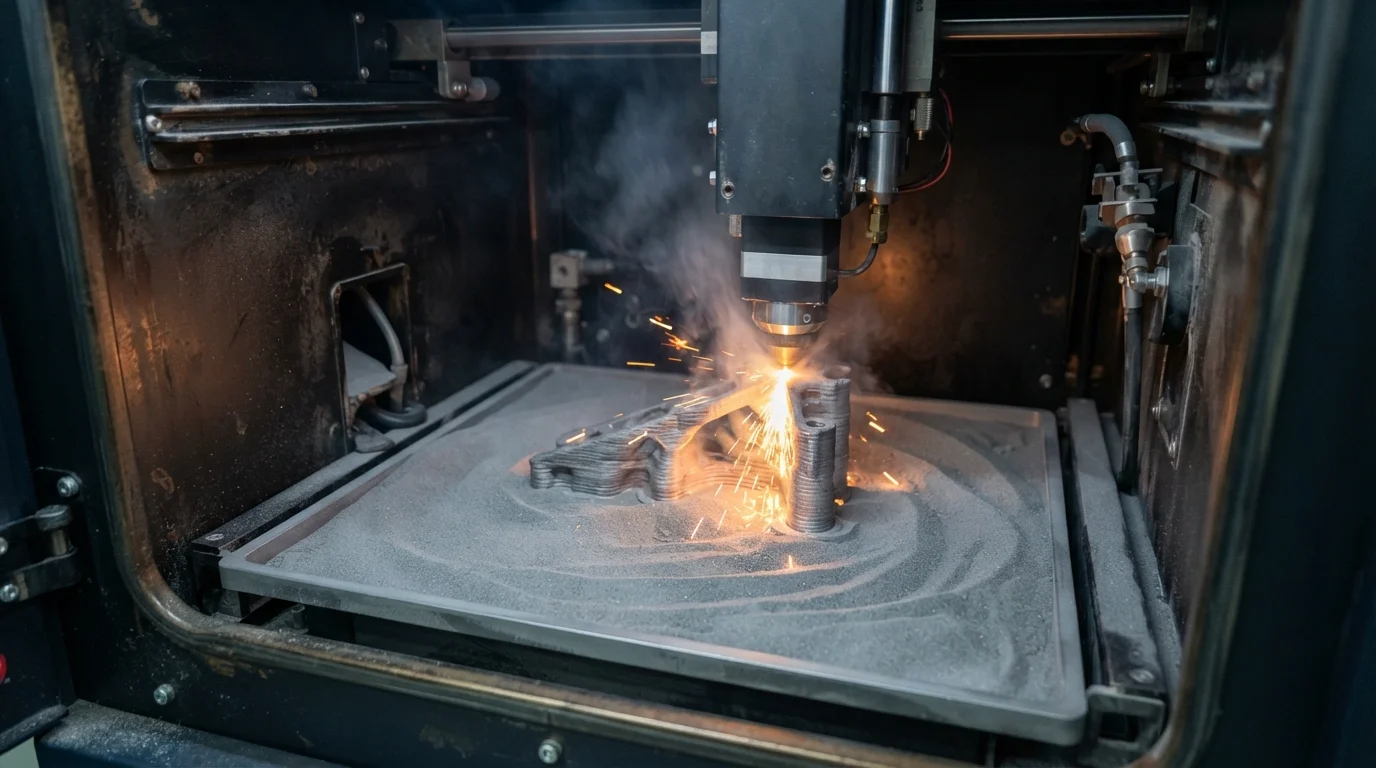
Pregunta: ¿Por qué la impresión 3D en metal es tan cara? La sinterización directa de metal por láser (DMLS) utiliza costosos polvos de titanio o aleaciones de níquel, requiere láseres de fibra de alta potencia y exige acabados posteriores con electroerosión por hilo o CNC.
La sinterización directa de metal por láser (DMLS) representa el extremo premium de la fabricación aditiva, produciendo componentes increíblemente densos y listos para vuelo a partir de aleaciones exóticas. La obtención de polvos de titanio, cromo-cobalto o Inconel conlleva costos de materia prima extremadamente altos en comparación con las resinas poliméricas estándar. Los láseres de fibra de alta potencia requieren velocidades de escaneo lentas y altamente controladas dentro de cámaras de gas argón inerte para evitar la oxidación del polvo. Las altas temperaturas de procesamiento crean severas tensiones residuales internas, haciendo obligatorios los tratamientos de alivio de tensiones térmicas posteriores a la soldadura.
Las piezas metálicas impresas también requieren operaciones secundarias de fresado CNC o electroerosión por hilo para separar la pieza de la placa base de acero y refinar las superficies de acoplamiento críticas. Los pasos de posprocesamiento especializados añaden tiempos significativos de configuración de máquina y horas de mano de obra a su costo total. costo de prototipo de impresión 3D. Diseñar piezas con ángulos autosoportados por debajo de 45 grados minimiza la necesidad de soportes metálicos pesados, reduciendo los tiempos de mecanizado posteriores a la impresión. Obtener revisiones tempranas de fabricación le ayuda a decidir si el fresado CNC a partir de bloques macizos de metal es una alternativa mucho más económica.
Jucheng Precision apoya a los equipos de desarrollo ofreciendo opciones de fabricación transparentes y altamente personalizadas que se alinean con presupuestos ajustados. Obtener una revisión experta de diseño para fabricabilidad (DFM) ayuda a los grupos de producto a optimizar los espesores de pared y eliminar socavados internos difíciles de mecanizar desde el principio. El corte manual de archivos CAD permite a los toolmakers experimentados sugerir si el moldeo al vacío es una ruta más económica para tiradas de más de diez unidades. Tener capacidades tanto aditivas como de CNC de alta precisión en nuestras instalaciones garantiza que reciba asesoramiento honesto y de ahorro de costos para su programa de hardware específico.
Asociarse con un fabricante certificado le ayuda a navegar la transición desde maquetas visuales tempranas hasta herramientas de puente de bajo volumen sin problemas. Obtener sus cotizaciones manualmente garantiza que ingenieros experimentados analicen sus archivos STEP 3D para encontrar formas adicionales de reducir su costo total. costo de prototipo de impresión 3D. Los componentes funcionales se someten a rigurosos controles de metrología por coordenadas para confirmar el cumplimiento dimensional exacto. Obtener prototipos de alta calidad asegura que sus diseños estén construidos para soportar fuerzas dinámicas severas de manera segura.
Preguntas Frecuentes (FAQ)
¿Es la impresión 3D en metal más barata que el mecanizado CNC para soportes de bajo volumen?
El fresado CNC a partir de tochos macizos de aluminio es significativamente más barato que la impresión 3D DMLS en metal. La impresión 3D en metal requiere costosos polvos de grado aeroespacial y horas continuas de escaneo láser, costando hasta cinco veces más que el fresado sustractivo.
¿Cómo puedo reducir el costo de mi prototipo de impresión 3D en piezas de gran formato?
Vaciar secciones macizas y diseñar paredes uniformes representa la forma más efectiva de reducir el volumen de resina y los tiempos de impresión. Hacer agujeros de escape en áreas ocultas permite que el material no curado drene, reduciendo su factura total del proyecto.
¿Cuál es la opción de resina más cara para prototipado SLA?
Las resinas de ingeniería especializadas, como los fotopolímeros de alta temperatura, rellenos de cerámica o biocompatibles, tienen costos premium elevados. Las resinas estándar transparentes o tipo acrílico resistentes son mucho más rentables para estudios generales de forma y ajuste.

