


How to Choose a Robotics Component Manufacturer: Sourcing Checklist
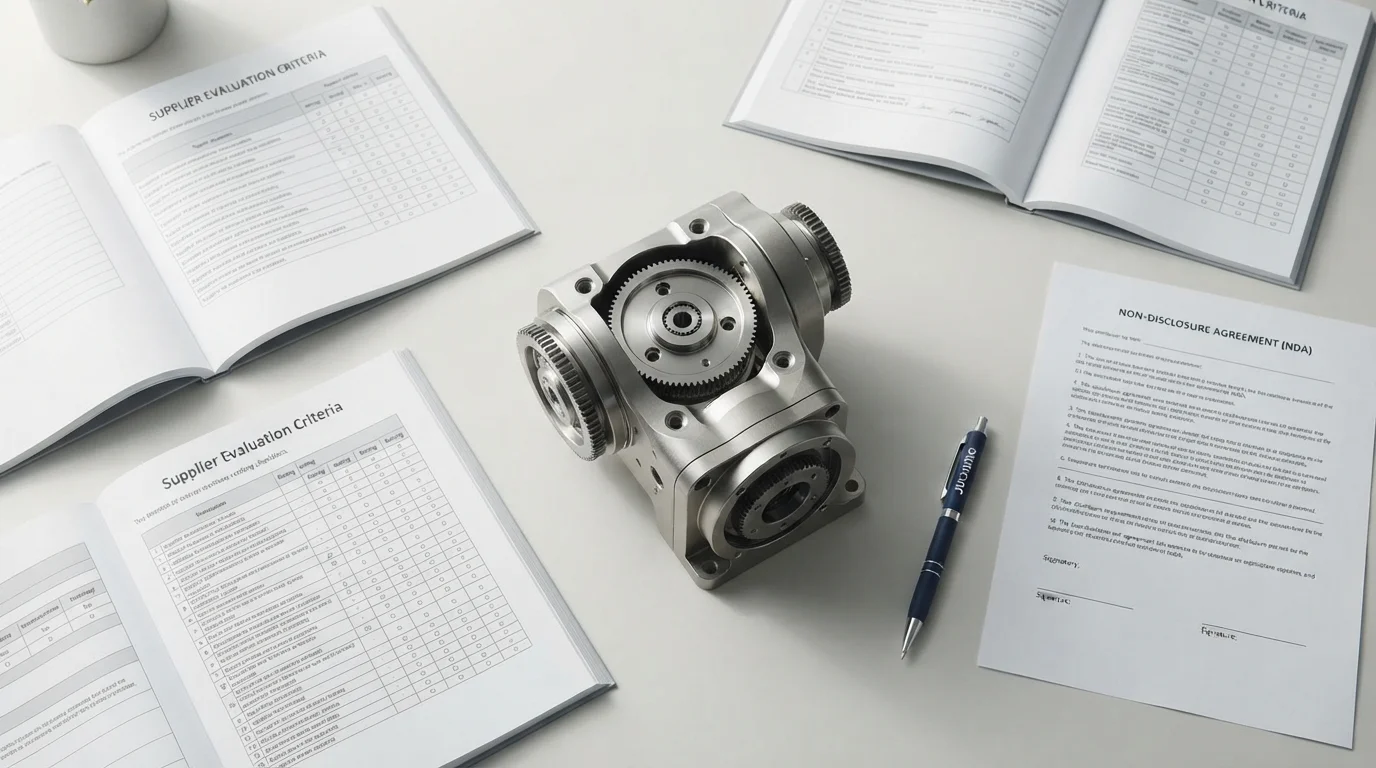
How do you choose a reliable robotics component contract manufacturer? Evaluating a precision manufacturing partner requires four non-negotiable auditing benchmarks: verified in-house multi-axis (5-axis continuous) CNC machining infrastructure to maintain ±0.005 mm concentricity across joint actuator housings, an on-site climate-controlled coordinate measuring machine (CMM) metrology center, end-to-end multi-process versatility spanning rapid CNC prototyping to bridge injection tooling under one roof, and legally binding intellectual property (IP) protection protocols backed by strict non-disclosure agreements. Understanding how to choose a robotics manufacturer ensures that complex humanoid and industrial automation projects transition from digital blueprints into certified hardware without catastrophic assembly misalignments or supply chain leaks.
Selecting an unverified machine shop lacking specialized mechatronic experience introduces severe risks of kinematic backlash, bearing bore ovality, and unaccounted thermal expansion drift. Let us examine the technical criteria, equipment verification checklists, and quality assurance benchmarks that guide successful contract manufacturing sourcing.
Evaluating Machining Capability: 5-Axis CNC Centers and In-House Metrology
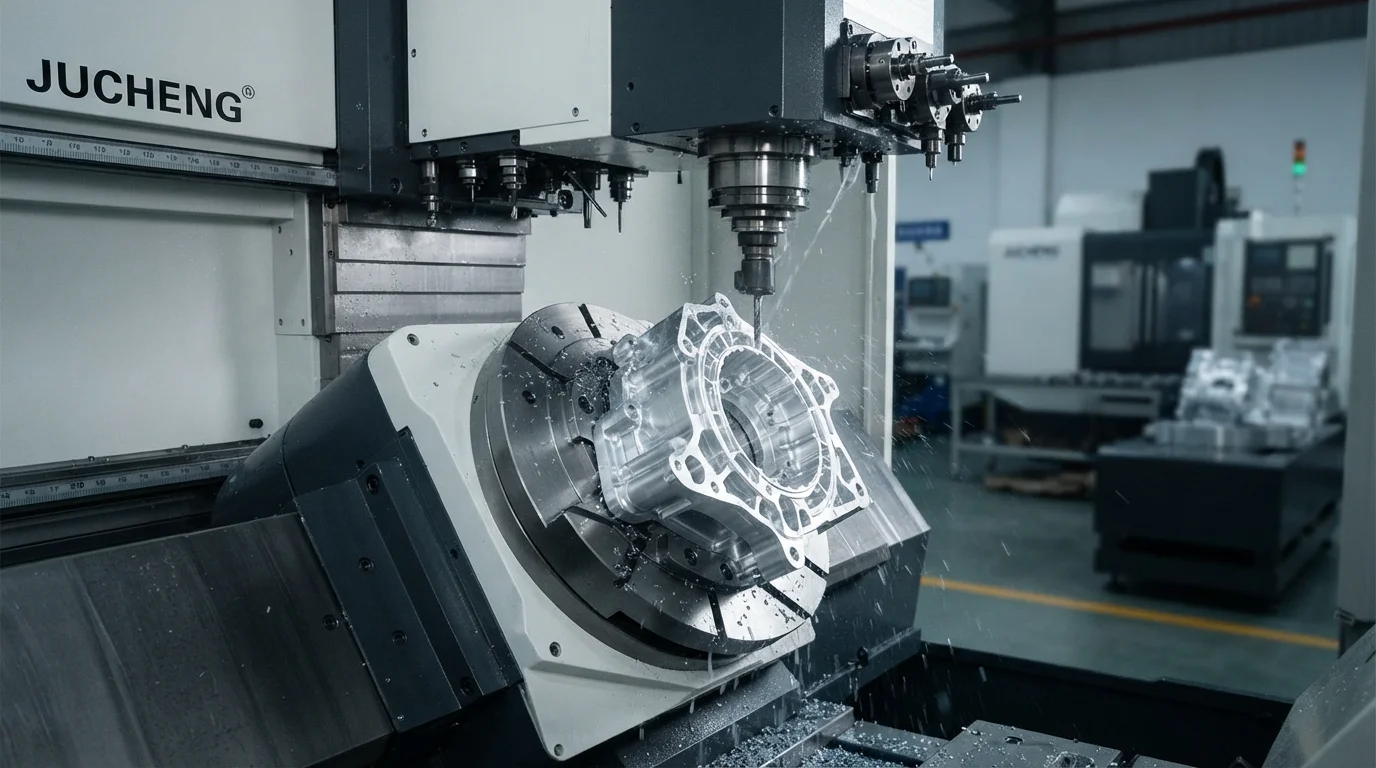
Robotic actuator cases, harmonic reducer housings, and structural arm yokes feature compound angles, thin-walled weight-reduction pockets, and intersecting internal cable passages that cannot be machined accurately across multiple fixture setups. Re-clamping a complex aluminum link arm introduces cumulative setup errors that exceed strict ISO H6 bearing tolerances. A qualified supplier must operate high-rigidity mecanizado CNC de 5 ejes centers capable of finishing all critical bearing journals, dowel pin locations, and mounting faces in a single continuous clamping operation.
Key equipment indicators to verify during a technical facility audit include:
- High-end machine brands: Look for premium multi-axis platforms (such as Haas, Mazak, or DMG Mori) equipped with high-resolution linear optical scales and active thermal compensation.
- Dedicated temperature-stabilized metrology rooms: Confirm that coordinate measuring machines (such as Zeiss CMMs) operate in cleanrooms held at 20°C (±0.5°C) to prevent thermal measurement error.
- Micro-jig boring capabilities: Verify that the shop can execute fine single-point boring on aluminum and steel to hold ±0.005 mm bore concentricity reliably.
Multi-Process Versatility: Seamless Scaling from CNC Prototyping to Injection Tooling
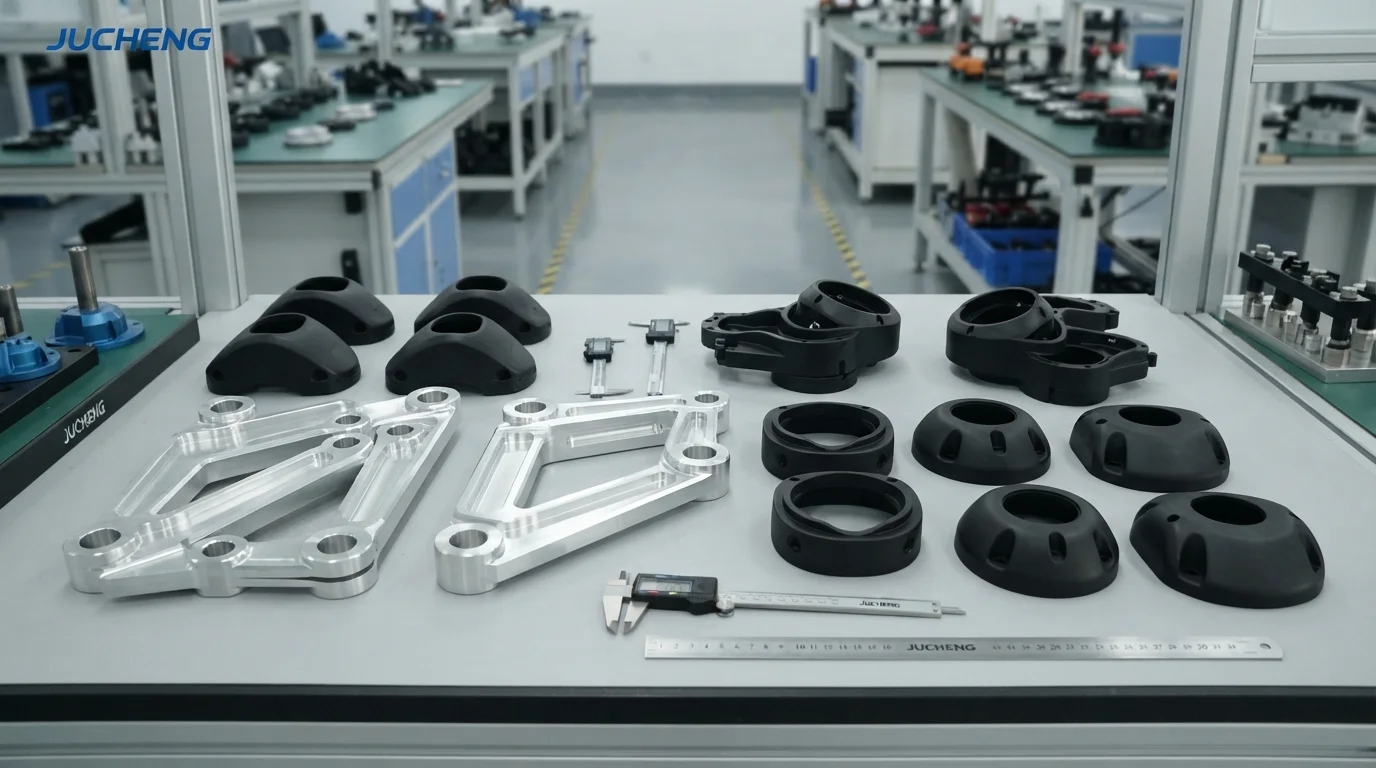
Robots are complex mechatronic assemblies combining precision-milled aluminum link arms, heavy-duty welded sheet metal AGV mobile chassis frames, and lightweight molded polymer protective covers. Fragmenting these subsystems across disparate subcontractors introduces administrative friction, multi-tier shipping delays, and assembly fitment disputes. When sourcing executives research how to choose a robotics manufacturer, partnering with a single-roof provider capable of handling precision CNC cutting, sheet metal bending, and bridge injection molding streamlines the entire development roadmap. Discussions on robotics sourcing groups across Reddit and Facebook emphasize that single-vendor accountability eliminates finger-pointing during final system integration.
Comparing vendor tiers highlights distinct operational and risk profiles:
| Supplier Tier | Manufacturing Capabilities | Primary Program Risk / Benefit |
|---|---|---|
| Standard Machine Shop | 3-axis milling and manual turning only | High setup error on complex joints; requires multiple secondary subcontractors |
| Turnkey Prototyping House | 5-axis CNC, 3D printing, rapid sheet metal | Fast prototype turnaround (3–7 days); ideal for alpha functional testing |
| Certified Contract Manufacturer | Multi-axis CNC, rapid tooling injection, cleanroom assembly, Zeiss CMM | Seamless scaling from alpha prototype to 10,000-unit pilot runs under ISO quality systems |
Intellectual Property (IP) Security and Strict NDA Compliance
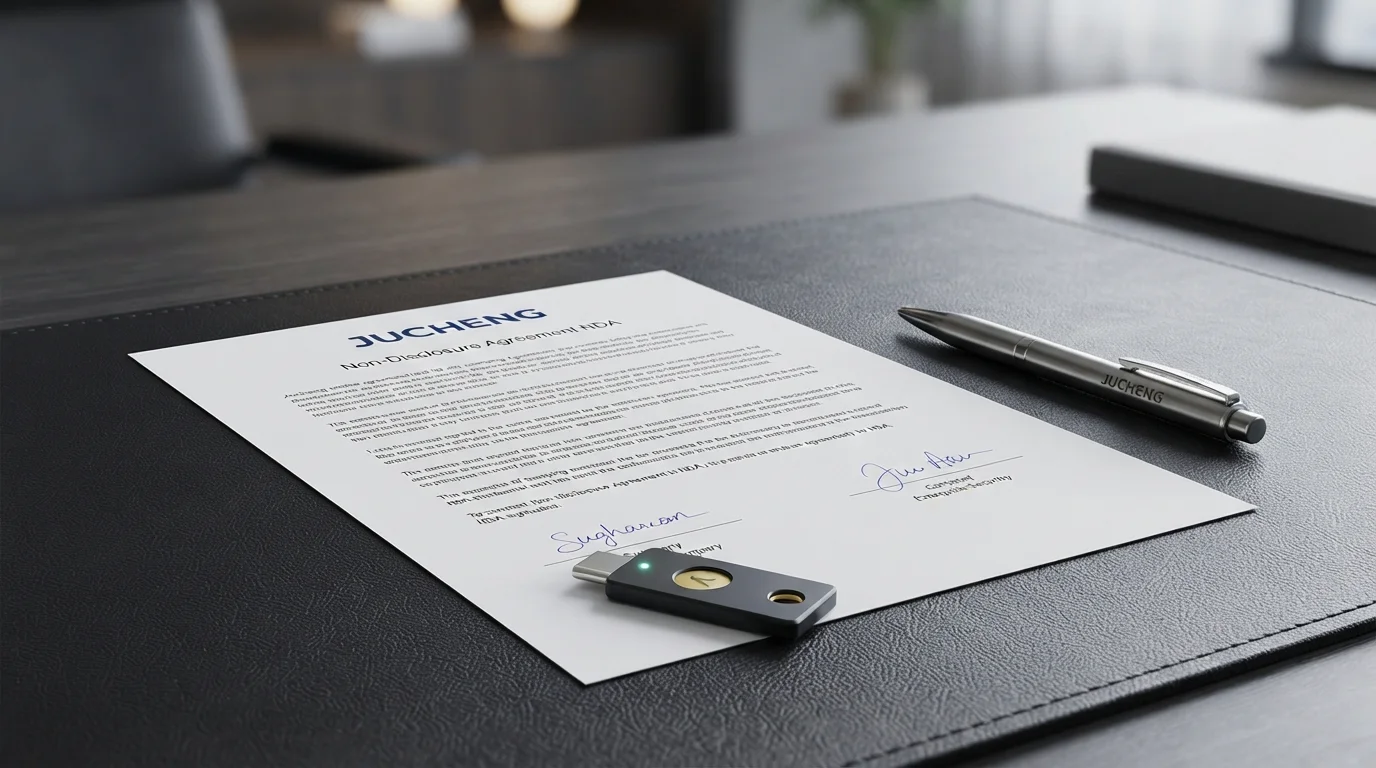
Custom robot kinematics, proprietary gear reduction ratios, and patented bionic gripper linkages represent the core commercial value of an automation venture. Sourcing components from facilities with lax digital security exposes sensitive CAD files to unauthorized duplication. A qualified manufacturing partner must enforce legally binding non-disclosure agreements (NDAs), maintain encrypted on-premise CAD/CAM storage servers, and enforce strict physical cleanroom access controls to safeguard proprietary client data.
Material Traceability, Mill Certificates, and Quality Transparency
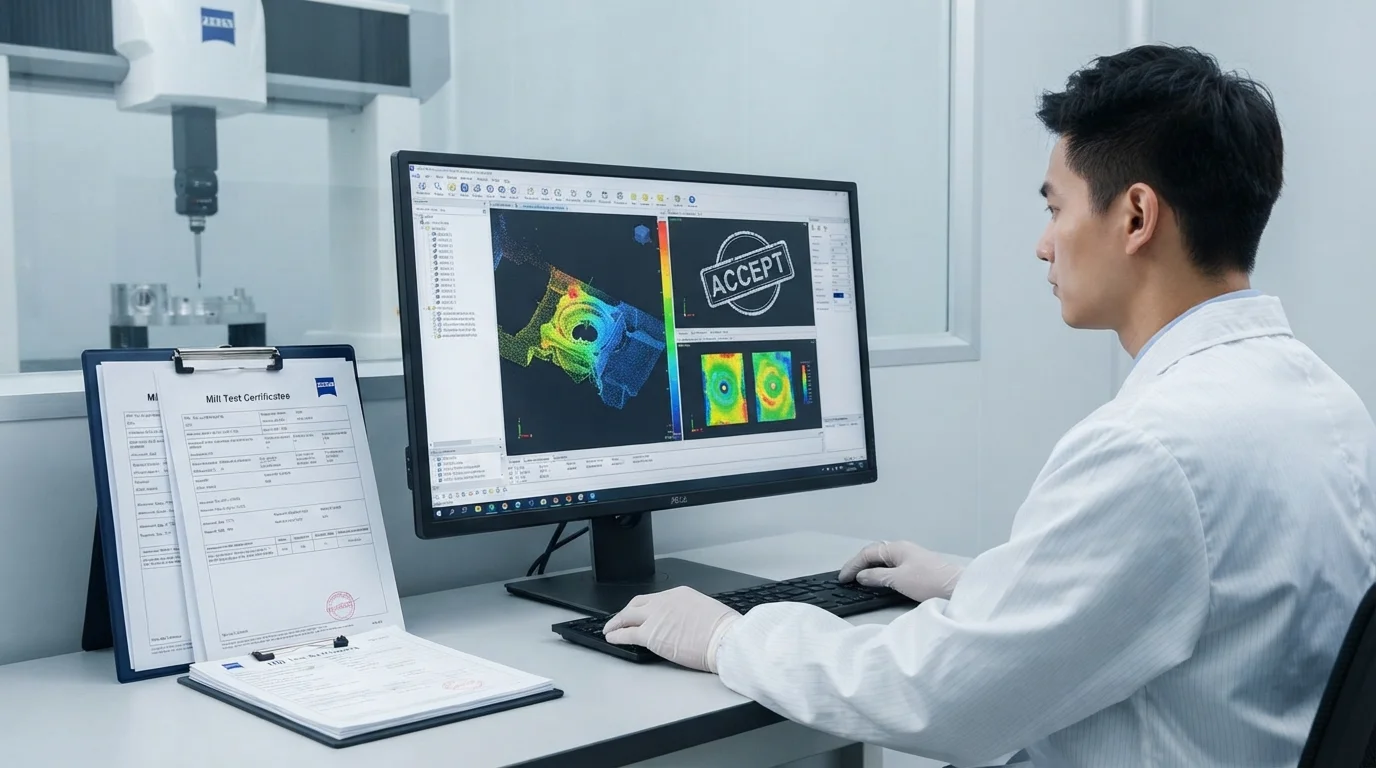
Structural robotic arm linkages subjected to high acceleration require certified forged billet stock rather than cheap extruded aluminum that harbors internal micro-porosity. An audit-ready supplier must provide complete raw material traceability, supplying genuine Material Test Reports (MTR) verifying chemical spectrometry and mechanical tensile properties for every alloy batch, alongside comprehensive CMM dimensional inspection logs.
Factory Audit Checklist and Supplier Management Best Practices
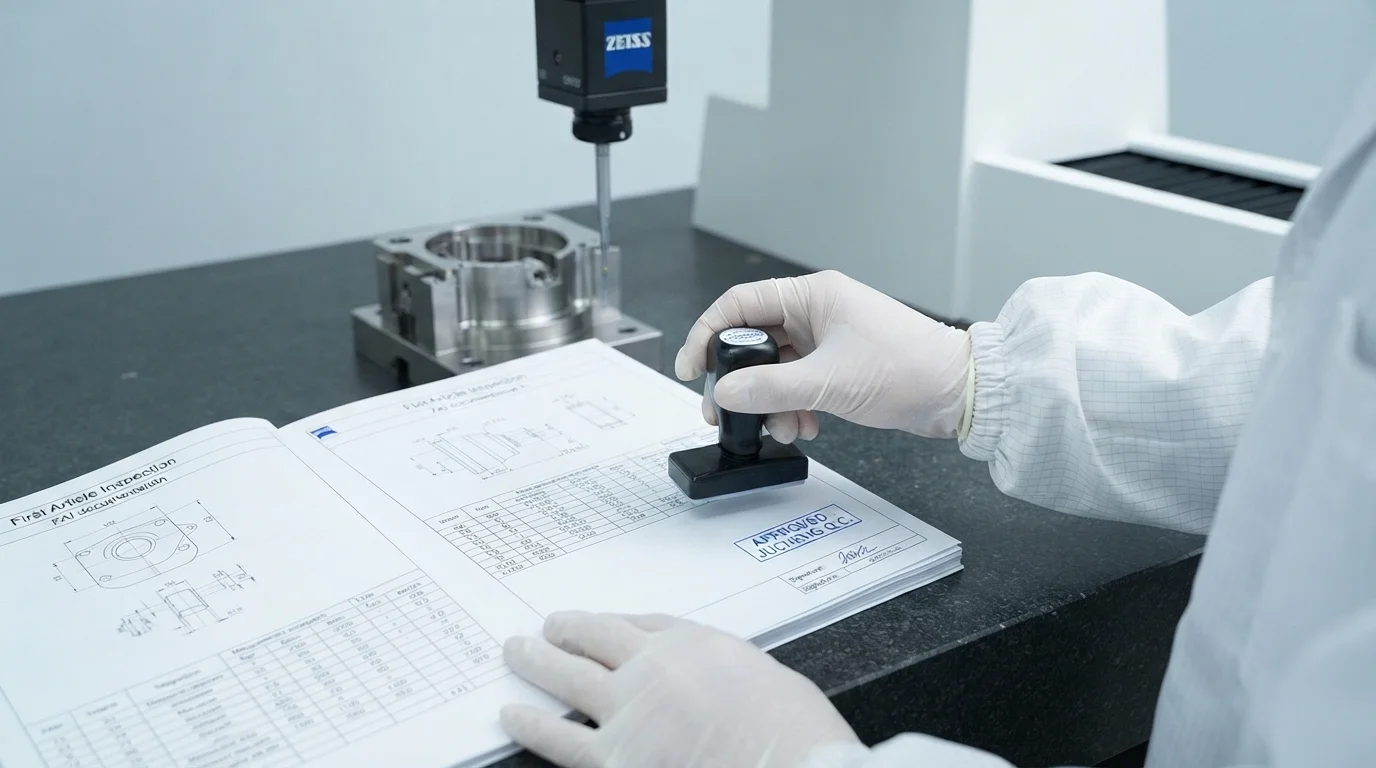
Before issuing production purchase orders, engineering teams should conduct a rigorous virtual or on-site facility audit to evaluate technical competence and quality consistency. Verifying shop-floor discipline prevents unexpected delivery delays.
Key inspection points on an OEM audit checklist include:
- Calibration certificate currency: Verify that all CMM touch probes, height gauges, and micrometers maintain active calibration stickers traceable to national metrology standards.
- Raw stock segregation: Confirm that aerospace-grade AL7075-T6, titanium, and engineering PEEK billets are stored in labeled, climate-controlled racks to prevent material mix-ups.
- First Article Inspection (FAI) discipline: Ensure the quality department conducts 100% characteristic ballooned drawing verification on initial production samples before mass machining.
Preguntas Frecuentes (FAQ)
1. What is the most important capability to look for in a robotics component manufacturer?
The most vital capability is single-setup 5-axis CNC machining combined with on-site CMM metrology, which guarantees that bearing bores and actuator mounting faces maintain ±0.005 mm concentricity without cumulative fixture errors.
2. How do reputable contract manufacturers protect proprietary robotics CAD data?
They execute legally binding bilateral NDAs, store digital engineering files on encrypted internal servers, and restrict toolroom cleanroom access to authorized personnel.
3. What quality documentation should a robotics supplier provide with finished parts?
The supplier should provide authenticated raw material test reports (MTR), CMM dimensional inspection scans, surface coating thickness certs, and an official Certificate of Conformity (CoC).
4. Why is multi-process capability beneficial for robotics startups?
Single-roof suppliers can machine structural aluminum links, fabricate welded sheet metal chassis, and mold lightweight polymer covers concurrently, eliminating multi-vendor coordination bottlenecks.
5. How do engineers verify whether a supplier can hold tight bearing bore tolerances?
Reviewing the supplier’s machine tool brands (such as 5-axis Haas or Mazak), checking temperature-controlled metrology environments, and requesting sample CMM inspection data reports confirms micro-machining readiness.
6. How does Jucheng Precision support global robotics OEMs?
Jucheng Precision provides 5-axis CNC machining, rapid tooling, sheet metal fabrication, and Zeiss CMM quality verification under certified ISO 9001 and IATF 16949 systems.
Why Choose JUCHENG for Your Robotics Sourcing
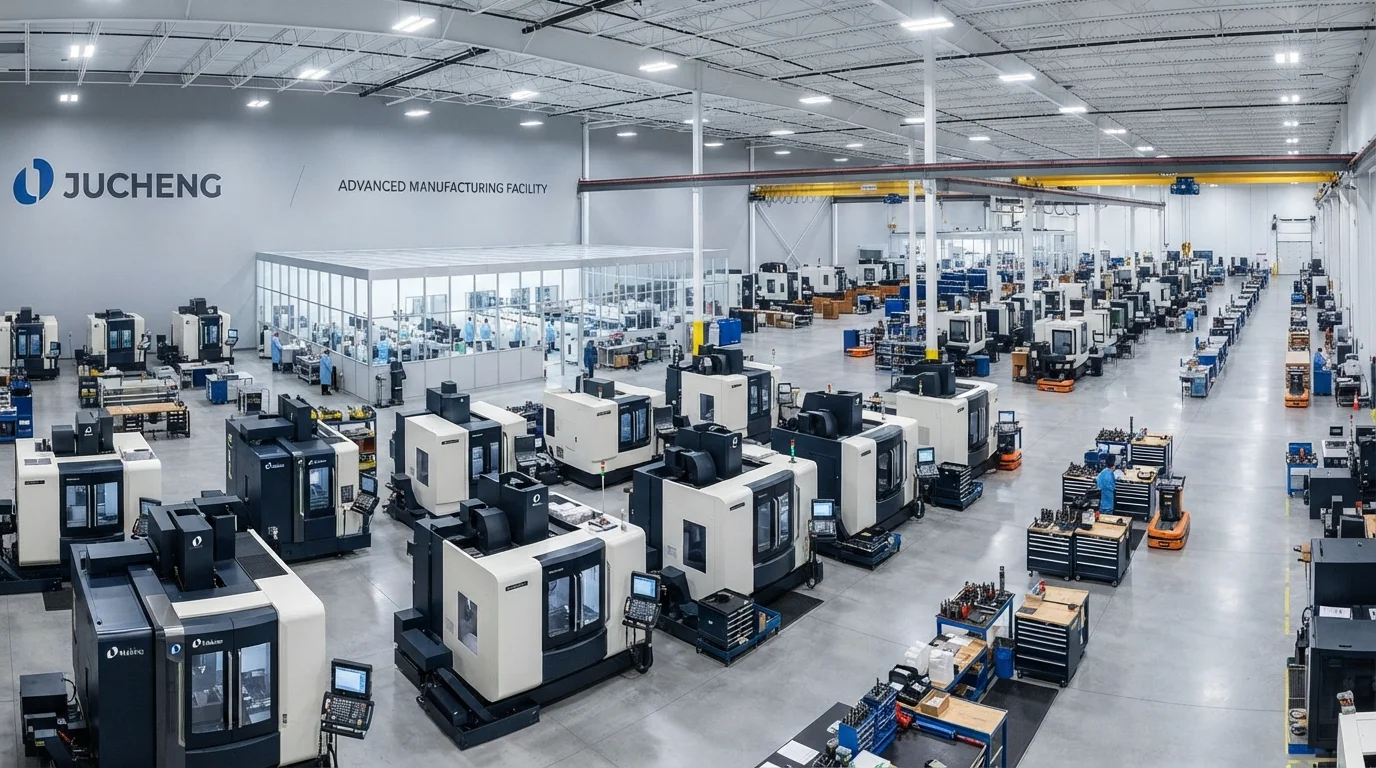
Achieving zero-backlash kinetic motion and seamless supply chain integration requires an experienced contract manufacturing partner with audit-ready production facilities. JUCHENG supports robotics innovators by delivering comprehensive DFM gratuito las 24 horas reviews that analyze bearing bore alignments, toolpath clearances, and structural pocketing ratios prior to cutting metal stock. Founded in Shenzhen in 2012 with an 8,000-square-meter facility in Dongguan, our factory houses 150+ advanced machines, including 25+ high-performance 5-axis Haas and Mazak milling centers [9.10].
Backed by ISO 9001, ISO 14001, ISO 13485, and IATF 16949 certifications, our engineering teams ensure that mastering how to choose a robotics manufacturer leads directly to sub-micron bearing concentricity, zero backlash alignment, full material traceability, and absolute batch consistency.
Ready to Audit Your Robotics Manufacturing Partner?
Suba sus modelos 3D hoy mismo para recibir comentarios instantáneos, precios competitivos y análisis DFM profesional de nuestros experimentados expertos en ingeniería. ¡Permita que JUCHENG dé vida a sus diseños complejos con velocidad y fiabilidad inigualables!
Obtenga su cotización instantánea gratuita y comentarios DFM

