


Robotics Manufacturing Processes: The Complete Technical Guide
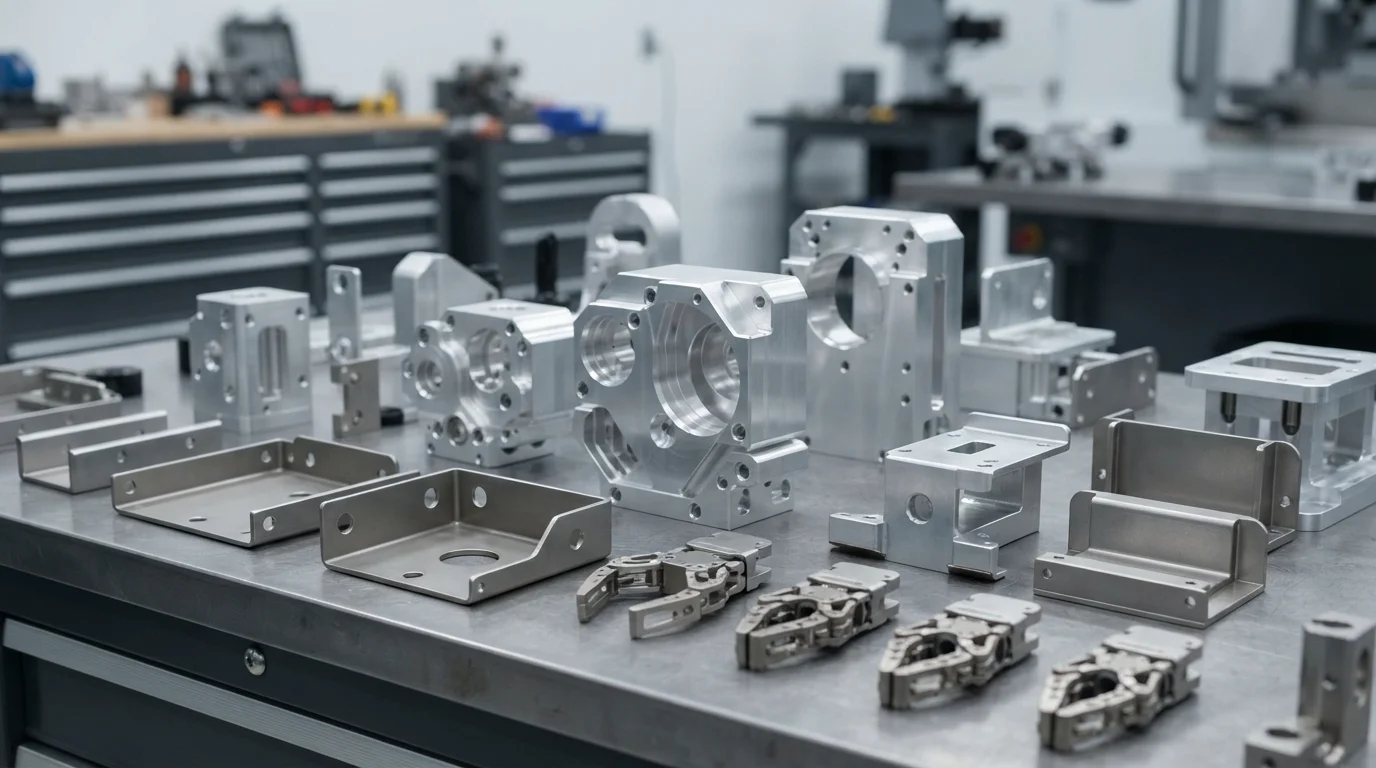
What manufacturing processes are used to build modern robots? Modern robot production relies on a synchronized multi-process framework: high-rigidity mecanizado CNC de 5 ejes carves micron-level harmonic reducer housings and joint actuators; heavy-duty sheet metal laser cutting and robotic welding construct rugged mobile autonomous mobile robot (AMR) chassis; utillaje rápido injection and reaction injection molding (RIM) produce lightweight, impact-resistant protective covers; while Direct Metal Laser Sintering (DMLS) 3D printing manufactures topology-optimized bionic grippers. Choosing the optimal robotics manufacturing processes ensures that robotic arms maintain high rotational accuracy and zero backlash under continuous high-torque operations.
Utilizing certified production partners ensures that high-strength AL7075-T6 aluminum link arms and wear-resistant PEEK bushings transition smoothly from digital 3D models into mission-ready automated hardware. Let us examine the multi-process manufacturing protocols that drive industrial and humanoid robotics innovation.
Module 1 – Definition and Working Principles of Multi-Process Robotics Fabrication
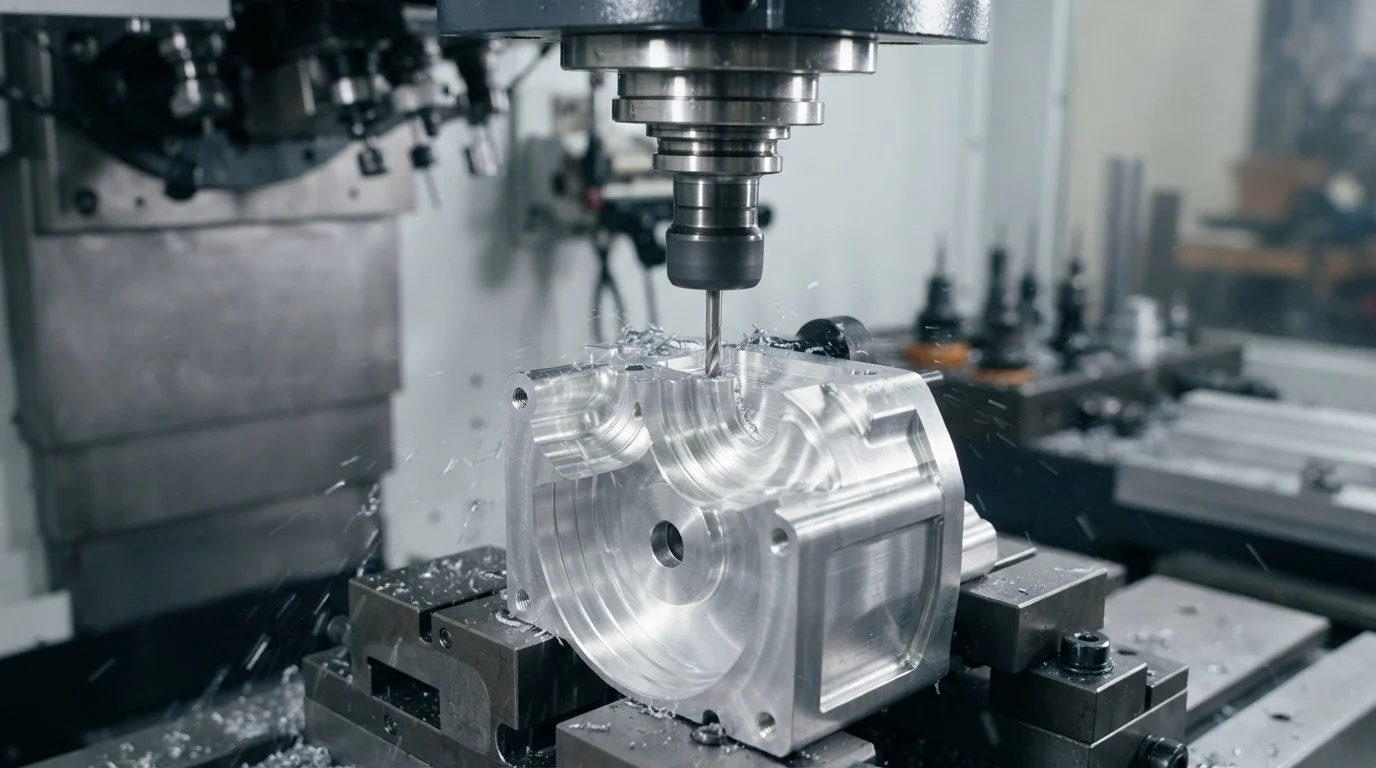
Robotics manufacturing integrates multi-axis subtractive cutting, formative sheet metal welding, reactive polymer casting, and additive powder bed fusion to satisfy conflicting mechanical demands. The working principle relies on translating dynamic CAD mechanisms into rigid physical structures without introducing cumulative kinematic backlash, angular runout, or thermal distortion. While mobile bases require welded plate strength, joint modules depend on single-setup multi-axis milling to guarantee sub-micron bearing concentricity.
To execute a structured manufacturing workflow on robotic hardware, engineering teams could follow these practical steps:
- Actuator Single-Setup Milling: Machine harmonic drive gearboxes and servo motor mounts on 5-axis machining centers in a single clamping setup to maintain perfect bore alignment.
- Chassis Robotic Welding: Laser-cut heavy structural steel plates and assemble mobile base frames using robotic TIG welding to withstand dynamic payload shifting.
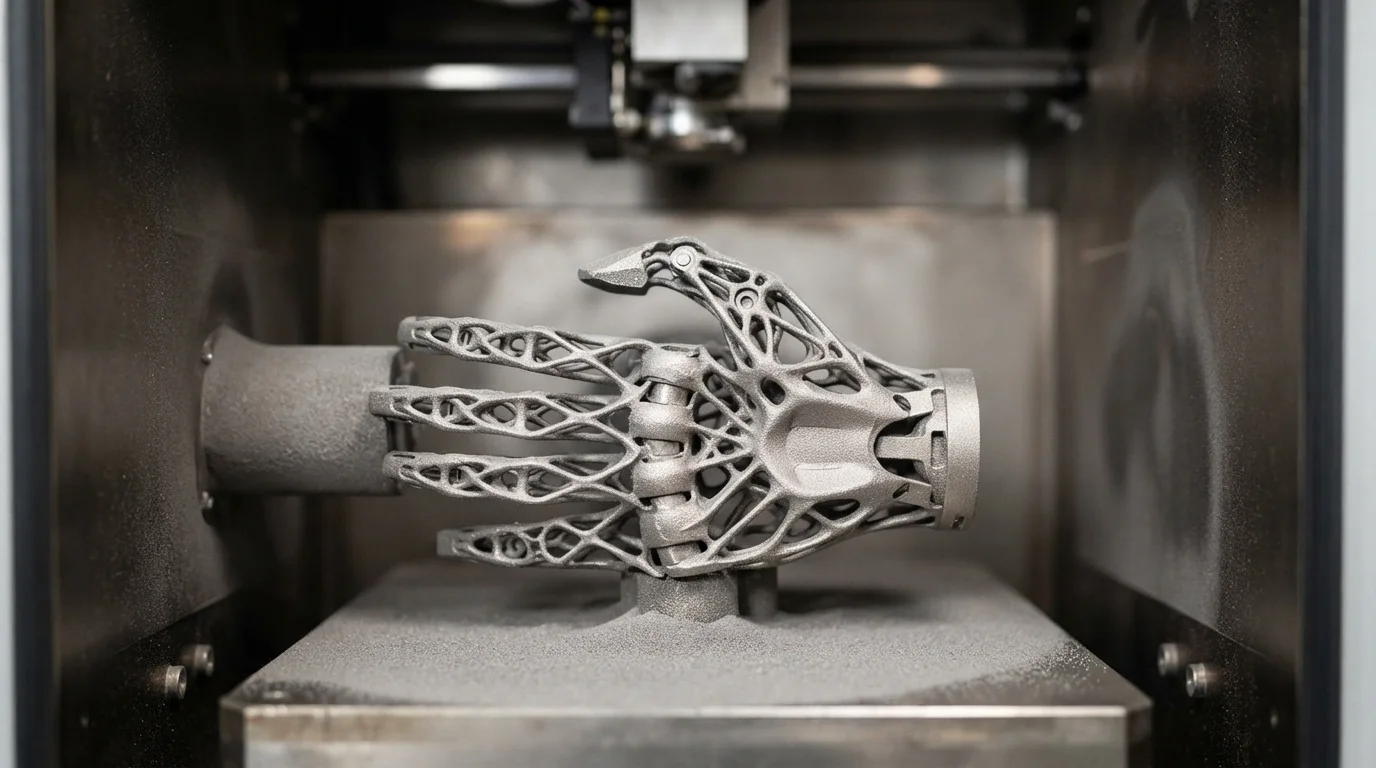
- Bionic End-Effector Sintering: 3D-print lightweight comercialmente puro gripper fingers with internal vacuum channels using DMLS metal additive systems.
Module 2 – Core Application Scenarios Across Robotic Subsystems
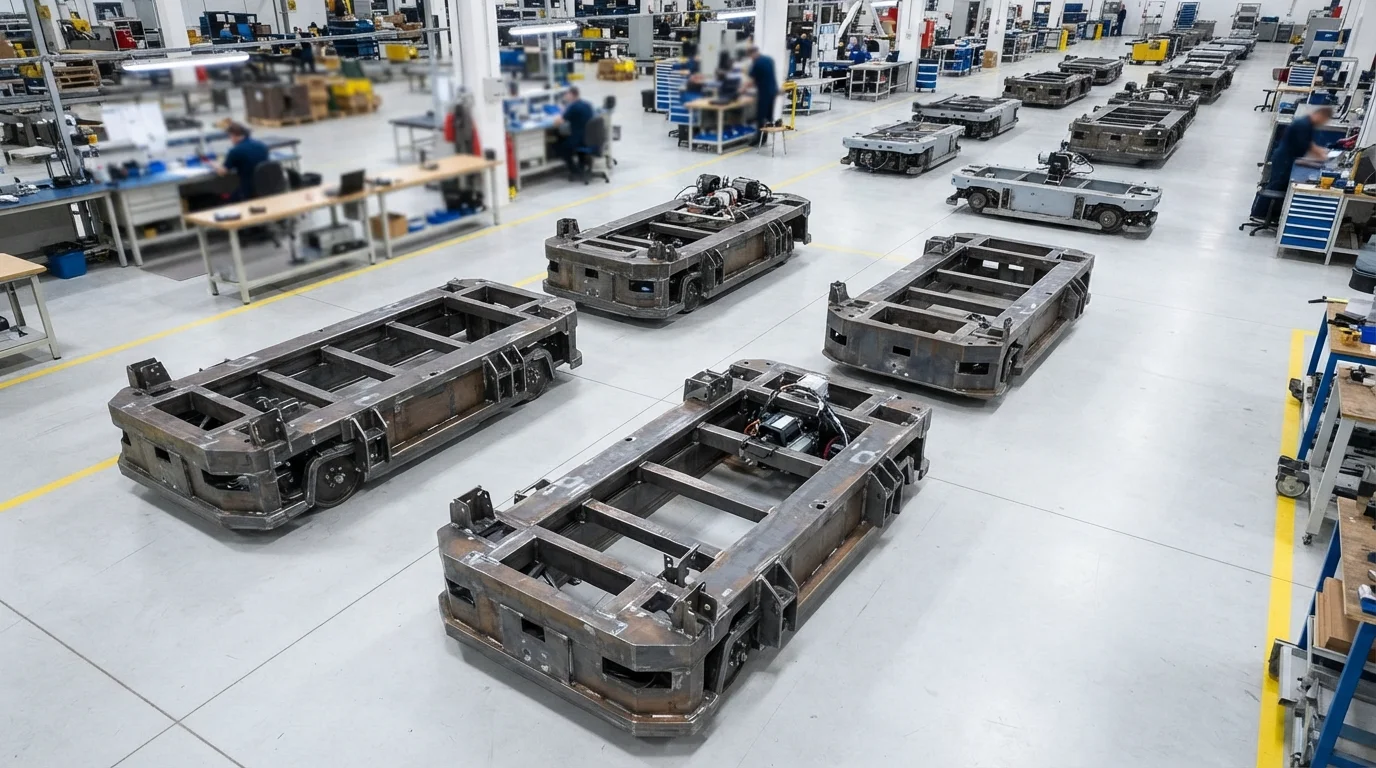
Deploying specialized automation manufacturing is vital across collaborative robotic arms (cobots), autonomous mobile robots (AMRs), humanoid bionic platforms, and heavy industrial articulation cells where structural rigidity governs positioning repeatability. When robotics OEMs scale new automation hardware, deploying cohesive robotics manufacturing processes eliminates mechanical backlash and reduces total arm inertia. Discussions across robotics engineering groups on Reddit and Facebook emphasize that single-vendor manufacturing prevents dimensional stacking errors across multi-joint arm chains.
Los sectores de aplicación principales incluyen:
- Joint Actuators & Harmonic Drives: Machining high-strength aluminum and alloy steel housings with tight ±0.005 mm bearing pocket tolerances.
- AGV & AMR Mobile Platforms: Fabricating heavy-duty welded sheet metal chassis bases, battery trays, and suspension rocker linkages.
- Protective Outer Cowlings: Molding lightweight, impact-resistant polyurethane (PU) shells and teach pendant enclosures via rapid bridge tooling.
Módulo 3 – Factores clave de selección para el éxito del proyecto
When specifying production pathways for robotic components, engineering teams must evaluate rotational tolerance classes, structural stiffness-to-weight ratios, and batch scalability. Evaluating these core parameters ensures your automated hardware delivers micro-millimeter positioning repeatability.
| Proceso de Fabricación | Primary Materials Used | Primary Robotics Advantage |
|---|---|---|
| 5-Axis CNC Milling | AL7075-T6, Titanium, Delrin (POM) | Sub-micron bearing concentricity (±0.005 mm) to eliminate rotational backlash |
| Heavy Sheet Metal Fabrication | Carbon Steel, Structural Aluminum | High-rigidity chassis frames capable of supporting dynamic multi-ton payloads |
| Rapid Tooling & RIM | Polyurethane, Engineering ABS | Low-cost, high-impact exterior shells and ergonomic teach pendant cases |
Módulo 4 – Consejos de instalación y mantenimiento
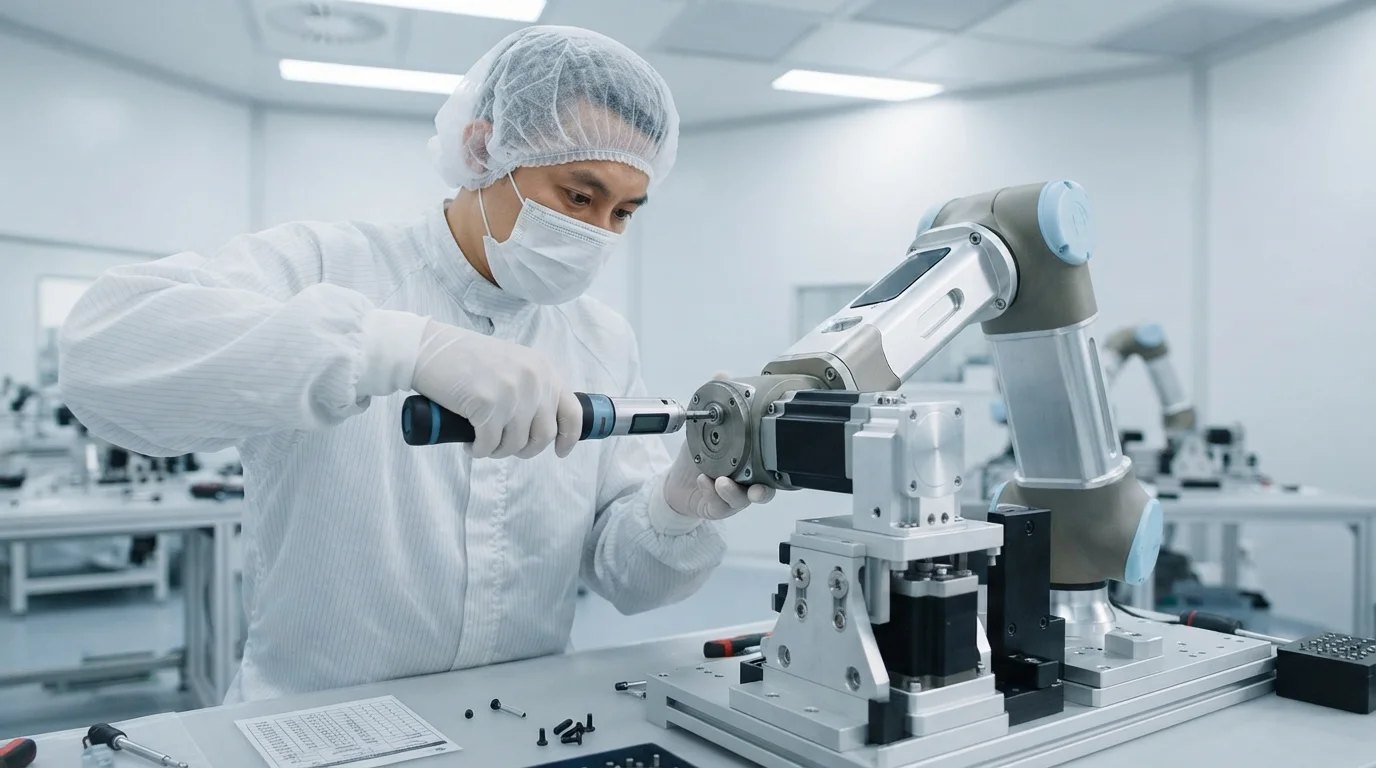
Proper bearing press-fitting, torque calibration, and routine kinematic metrology auditing safeguard robotic hardware across active factory deployments. Protecting precision joint interfaces from mechanical over-torque prevents premature reducer wear.
Los consejos clave de instalación y mantenimiento incluyen:
- Controlled Bearing Press-Fitting: Use hydraulic arbor presses with custom pilot bushings to seat harmonic bearings squarely without galling aluminum bore walls.
- Calibrated Fastener Torquing: Tighten motor mounting bolts in a cross-star pattern using calibrated torque wrenches to maintain uniform joint clamping force.
- Backlash Auditing: Inspect joint mechanical play periodically with dial indicators to catch gear teeth wear before positioning errors accumulate.
Módulo 5 – Preguntas frecuentes (FAQ)
1. Why is multi-axis CNC essential for robotics manufacturing?
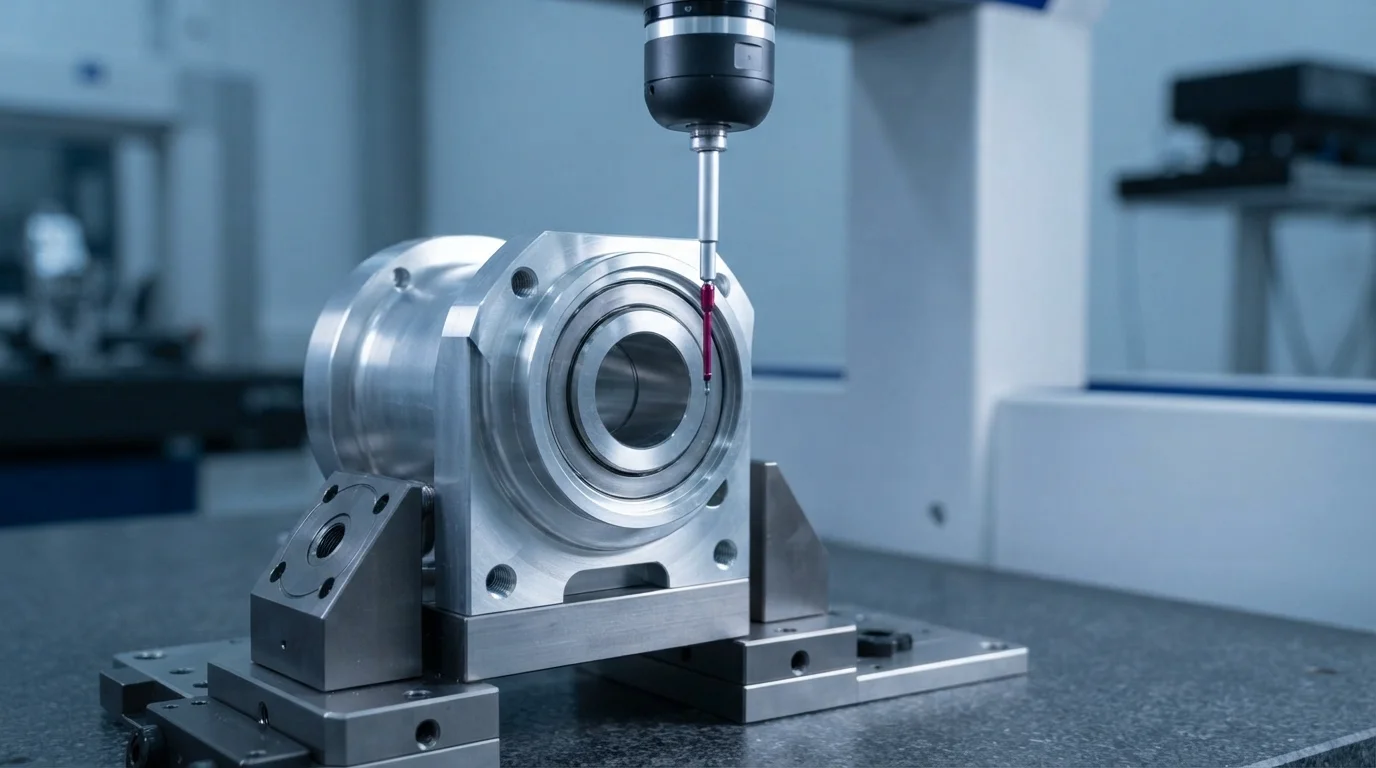
Because robot joint actuators require integrating high-torque servo motors and harmonic reducers in ultra-compact envelopes, 5-axis CNC machining allows single-setup milling of all bearing bores, ensuring sub-micron concentricity and eliminating mechanical backlash.
2. What metals are best for lightweight robotic arm links?
Aerospace-grade AL7075-T6 aluminum and magnesium alloy AZ91D are heavily favored due to their exceptional specific strength, which lowers arm inertia and minimizes terminal jitter during emergency stops.
3. When should Reaction Injection Molding (RIM) be chosen for robot covers?
RIM is ideal for large-format exterior body panels, AGV bumper fascias, and protective robot cowlings where low-cost tooling is required for production batches between 100 and 2,000 units.
4. How does DMLS metal 3D printing benefit bionic gripper design?
DMLS prints topology-optimized titanium and aluminum gripper fingers with organic internal hollow lattice cavities and integrated pneumatic lines that cannot be cut via line-of-sight CNC tools.
5. Why is internal cable routing integrated into robotic joint designs?
Internal routing channels protect power busbars and sensor cables from external snagging, friction wear, and continuous bending fatigue during high-speed multi-axis motion.
6. How does Jucheng Precision support robotics manufacturing programs?
Jucheng Precision provides 5-axis CNC actuator machining, heavy sheet metal chassis fabrication, rapid tooling, and Zeiss CMM metrology verification under certified ISO 9001 quality systems.
Módulo 6 – Por qué elegir JUCHENG para su proyecto
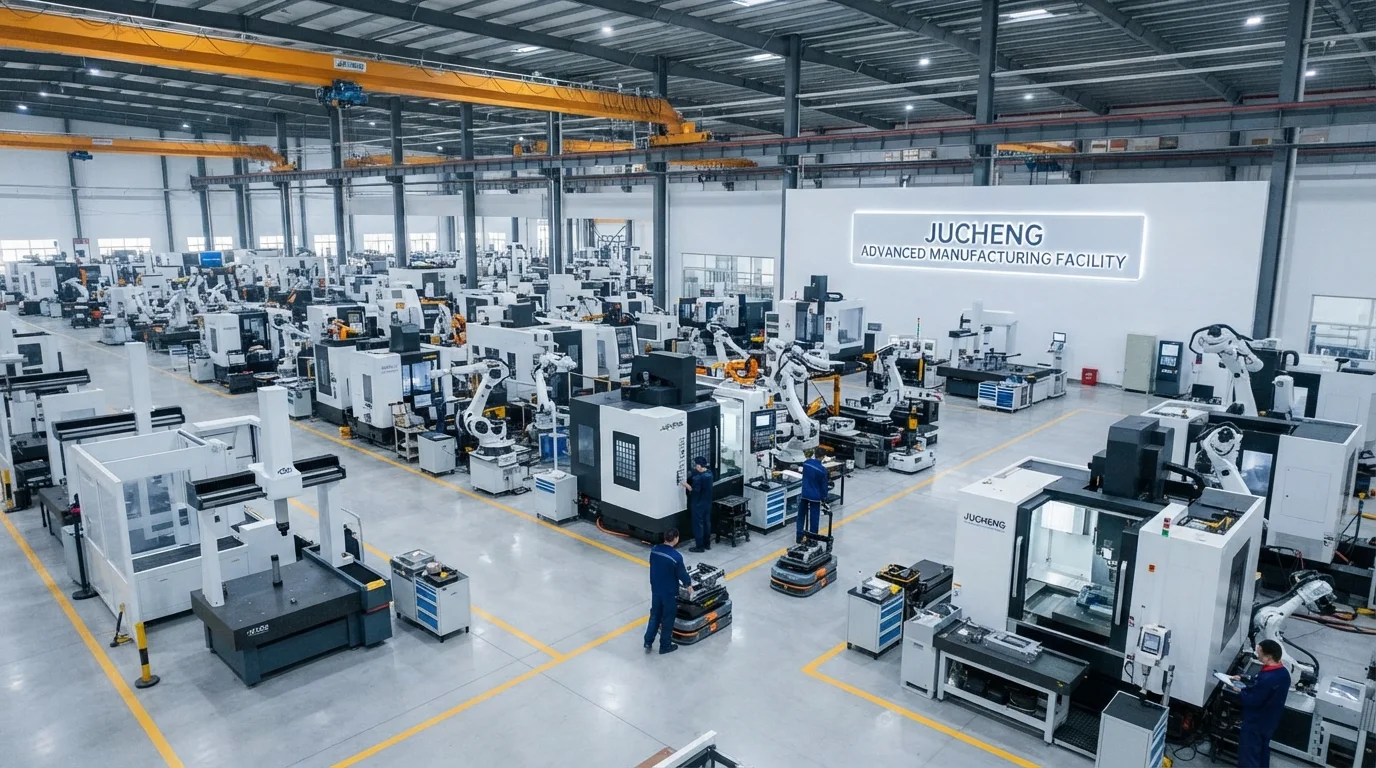
Achieving uncompromising kinematic motion and structural durability requires an experienced contract manufacturing partner with integrated multi-process infrastructure. JUCHENG supports robotics innovators by delivering comprehensive DFM gratuito las 24 horas reviews that analyze bearing fit tolerances, cable clearance channels, and structural wall thicknesses prior to cutting metal. Founded in Shenzhen in 2012 with an 8,000-square-meter facility in Dongguan, our factory houses 150+ advanced machines, including 25+ high-performance 5-axis Haas and Mazak milling centers alongside dedicated sheet metal and rapid tooling cleanrooms [9.10].
Backed by ISO 9001, ISO 14001, ISO 13485, and IATF 16949 certifications, our engineering teams ensure that executing high-precision robotics manufacturing processes achieves sub-micron bearing concentricity, zero backlash alignment, and absolute batch consistency.
Ready to Manufacture Your High-Precision Robotics Hardware?
Suba sus modelos 3D hoy mismo para recibir comentarios instantáneos, precios competitivos y análisis DFM profesional de nuestros experimentados expertos en ingeniería. ¡Permita que JUCHENG dé vida a sus diseños complejos con velocidad y fiabilidad inigualables!
Obtenga su cotización instantánea gratuita y comentarios DFM

