


A cleanroom controls the environment around a process; it does not automatically make the process clean. Oil trapped in a blind hole, particles released by a fixture, fibers from packaging, residue from washing, or poor personnel flow can reach the product inside a well-classified room. Medical device cleanroom manufacturing must control the entire contamination pathway.
This guide follows a component from fabrication to clean transfer, assembly, inspection, and packaging. The focus is not on claiming that every medical part needs the highest room classification. It is on matching environmental control to product risk and proving that the selected system works.
Contents
- Begin with contamination risk
- Design one-way product and people flow
- Control what arrives from upstream processes
- Cleaning needs a defined endpoint
- People, tools, and maintenance
- Monitor the process, not only the room
- Preserve the state through packaging
- Jucheng clean manufacturing support
- Preguntas frecuentes
Begin With Contamination Risk
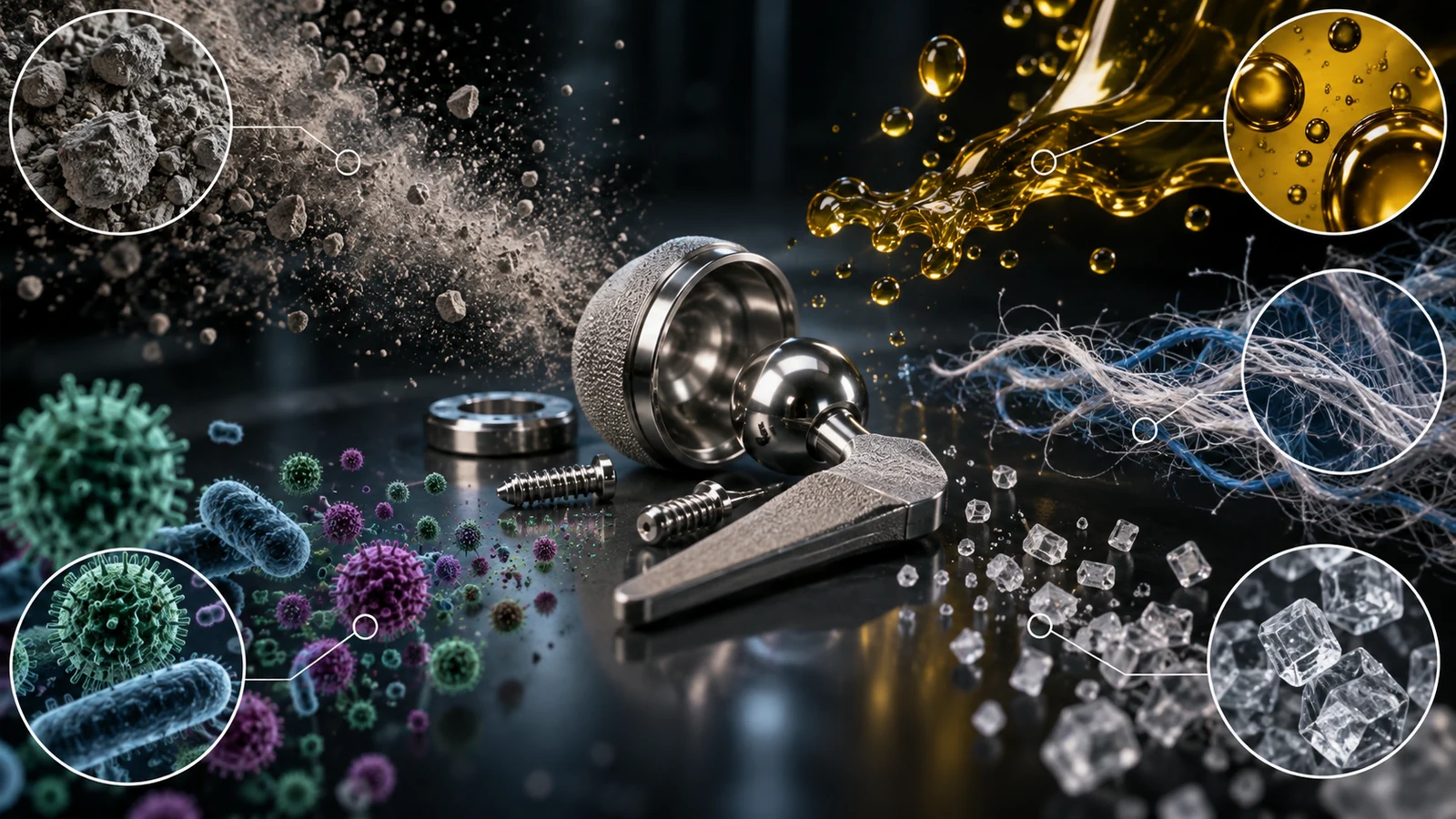
Define what must be controlled and why. Relevant contaminants may include particles, fibers, machining fluid, mold release, cleaning chemistry, microorganisms, pyrogens, silicone, metals, skin oils, or cross-contamination from another product. The acceptable state depends on the component, manufacturing stage, later cleaning, packaging, sterilization, and intended use.
Map product surfaces and contact. A sealed internal bracket may have different requirements from a fluid-path component, optical surface, adhesive bond, or sterile-barrier interface. Classification should follow the process risk, not become a marketing label detached from the product.
Cleanroom work is one branch of the full medical device manufacturing processes chain. Upstream machining, molding, finishing, and transport can determine whether the clean operation begins with a controllable input.
Build a contamination-control map
- List product surfaces and their functional sensitivity.
- Identify contamination sources at every operation and transfer.
- Define prevention, removal, detection, and acceptance controls.
- Assign ownership and records.
- Review changes that can introduce a new source.
Design One-Way Product and People Flow
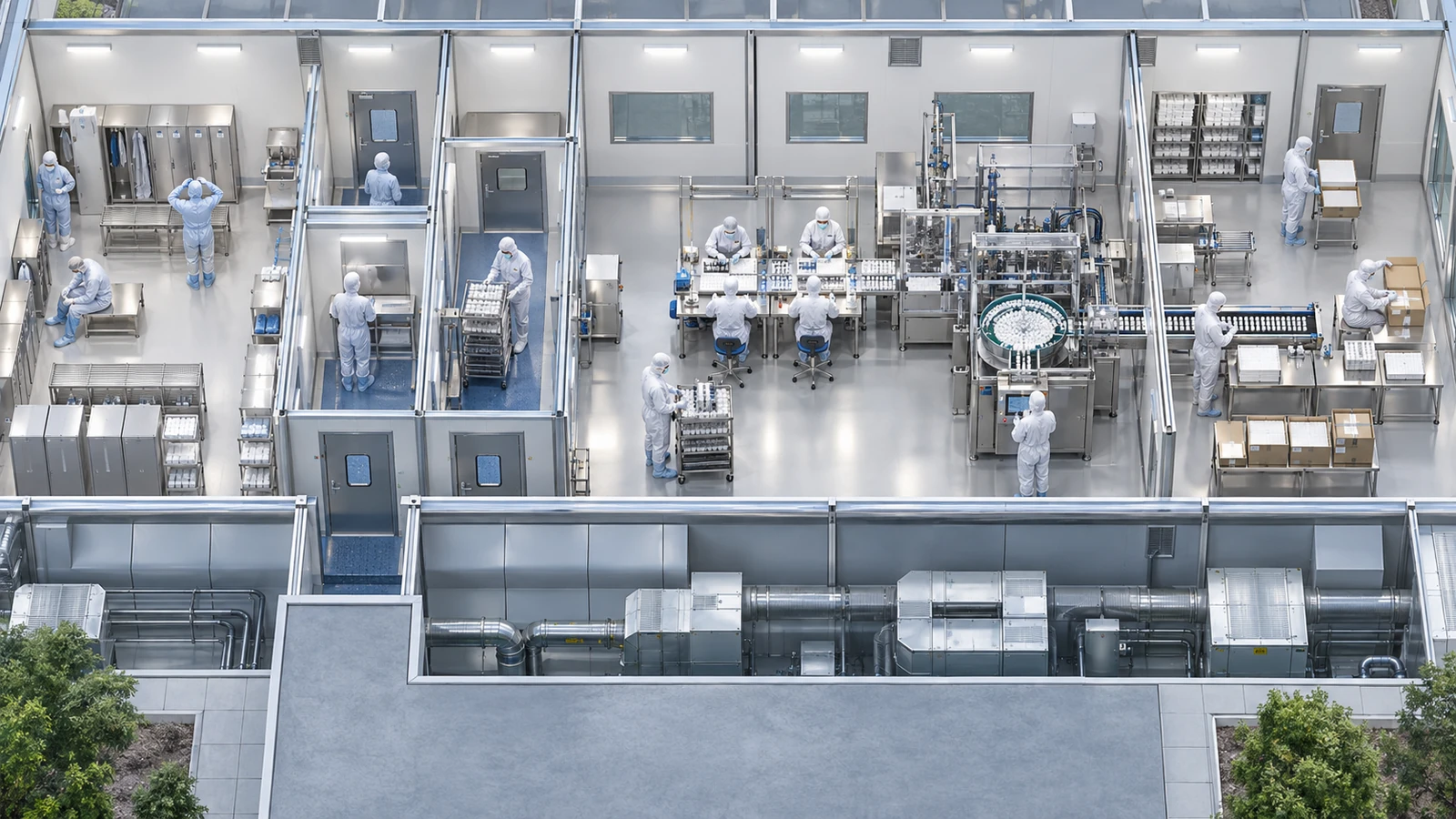
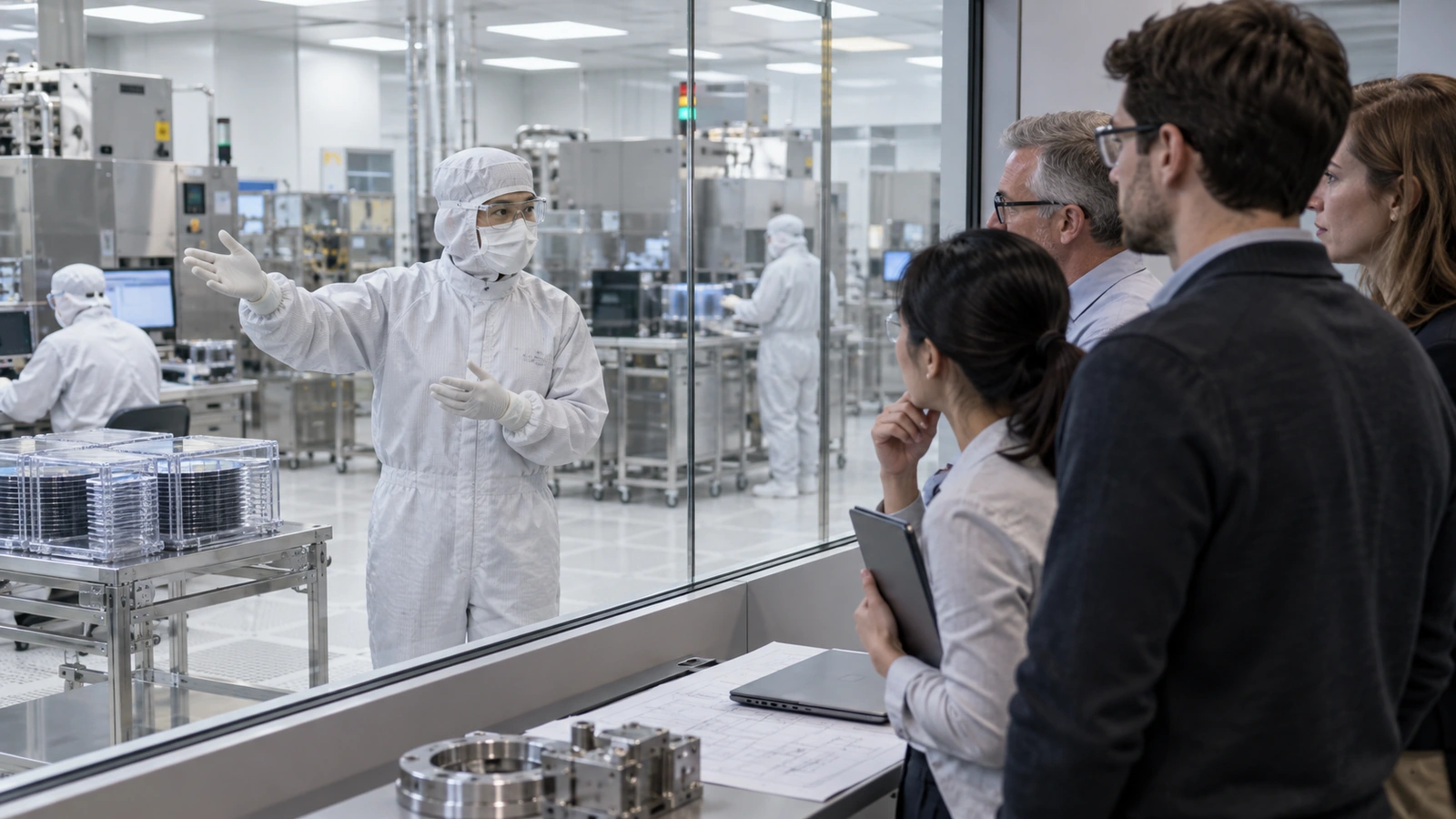
Layout should prevent clean items from crossing dirty returns, waste, maintenance tools, or incoming packaging. Define gowning, material airlocks, transfer containers, staging limits, rejected-product routes, and exit flow. A short path is not always a controlled path.
| Flow | Control question |
|---|---|
| People | Where do gowning, hand hygiene, movement, breaks, and re-entry occur? |
| Materiales | How are outer packaging, transfer disinfection, staging, and status identified? |
| Product | How are clean, in-process, rejected, and completed units separated? |
| Tools and fixtures | Where are they cleaned, stored, maintained, and returned? |
| Waste | Can waste exit without crossing exposed product? |
Use visual status controls that survive the environment and do not shed particles. Electronic travelers may reduce paper, but devices, screens, cables, and scanners become cleanroom items that need their own introduction and cleaning controls.
Control What Arrives From Upstream Processes
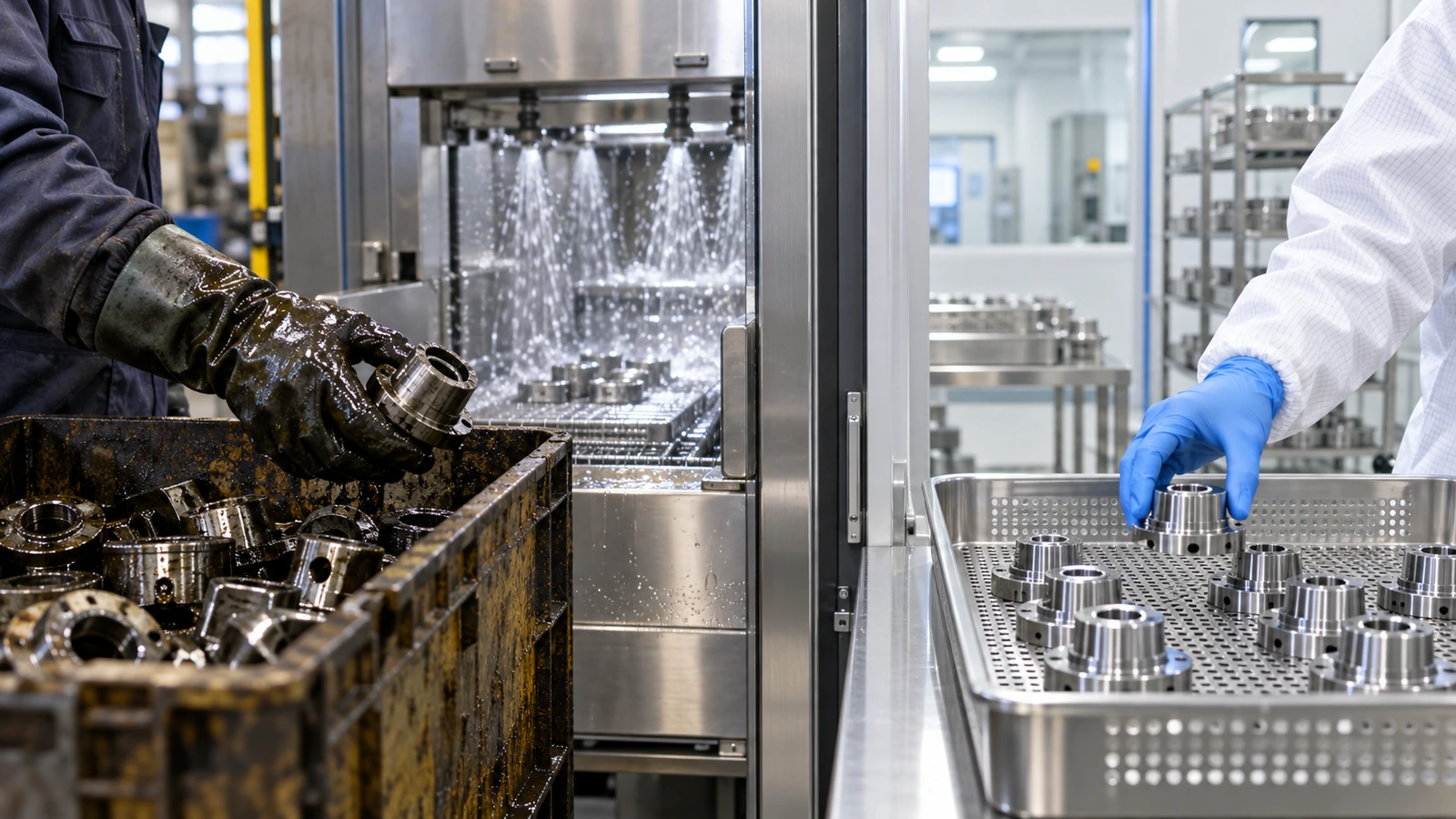
CNC machining can leave oil, chips, abrasive media, and burrs. Sheet-metal work can leave lubricant, weld discoloration, particles, or sharp edges. Molding can introduce release agents, resin dust, degraded material, or packaging fibers. Surface finishing can leave chemical residue or trapped solution. A cleanroom cannot reliably remove problems that upstream specifications never defined.
Create incoming criteria for cleanliness, packaging, burrs, surface condition, and documentation. Use dedicated or controlled transfer containers. If components are cleaned before entry, define the maximum hold time, packaging configuration, transport condition, and re-cleaning trigger.
Boundary risk: the handoff between general manufacturing and controlled-environment work is often more vulnerable than either operation alone.
Cleaning Needs a Defined Endpoint
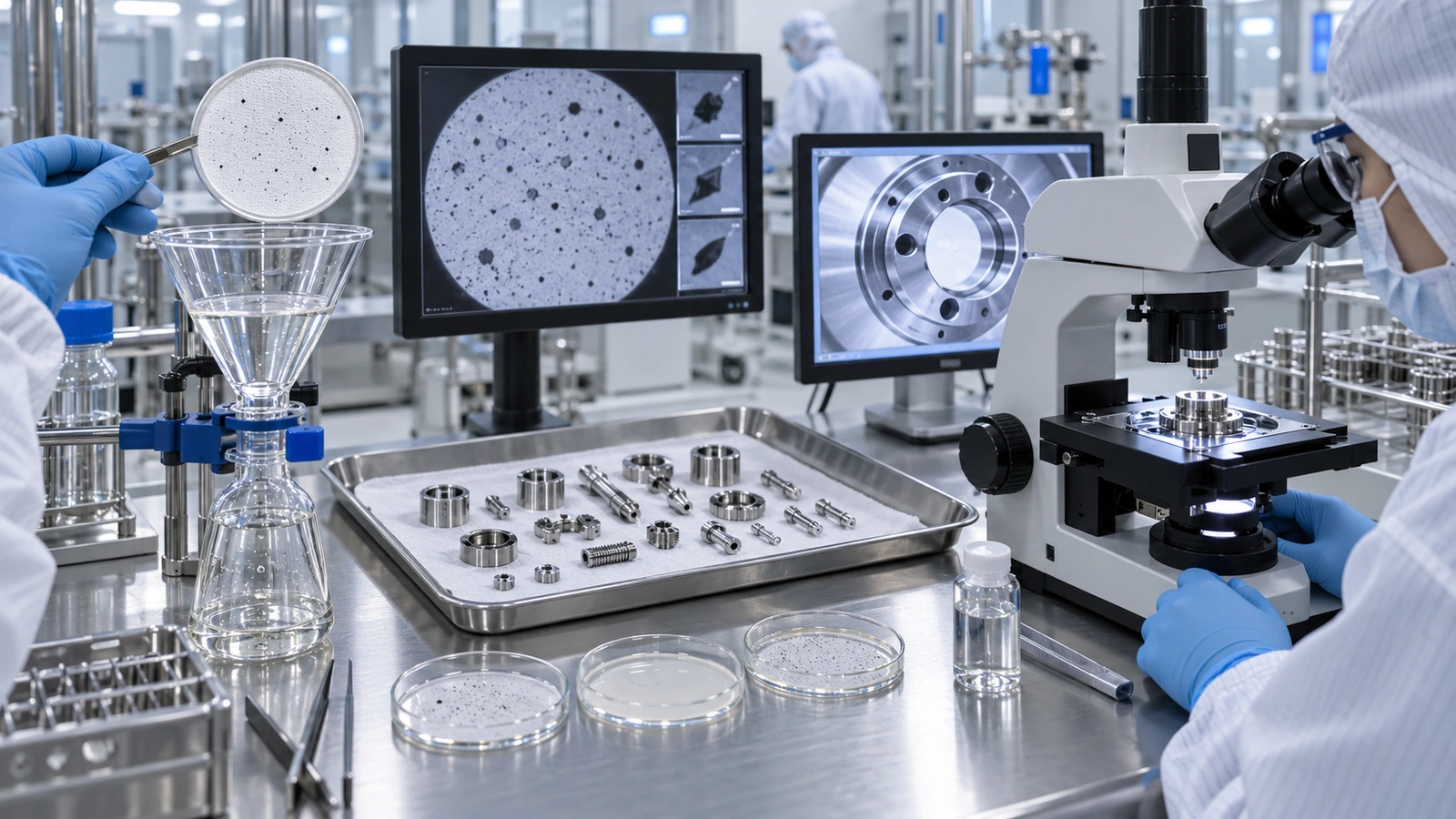
A cleaning instruction that says wash until clean cannot be validated or repeated. Define soil, chemistry, concentration, time, temperature, agitation, rinse quality, drying, handling, equipment loading, and acceptance. Consider blind holes, threads, textured surfaces, small lumens, overlapping joints, and materials that retain or react with chemistry.
The endpoint may involve visual criteria, particle limits, nonvolatile residue, ionic contamination, bioburden, or another product-specific measure. Select methods that can detect the relevant residue at meaningful locations. Recovery studies and sampling design matter because an insensitive swab on an accessible flat area may not represent the hardest-to-clean feature.
Separate cleaning from sterilization. Cleaning removes soil and reduces contamination to a defined state; sterilization is a later process with its own requirements. A sterilization cycle should not be expected to remove oil, particles, or chemical residue.
People, Tools, and Maintenance Define Daily Reality
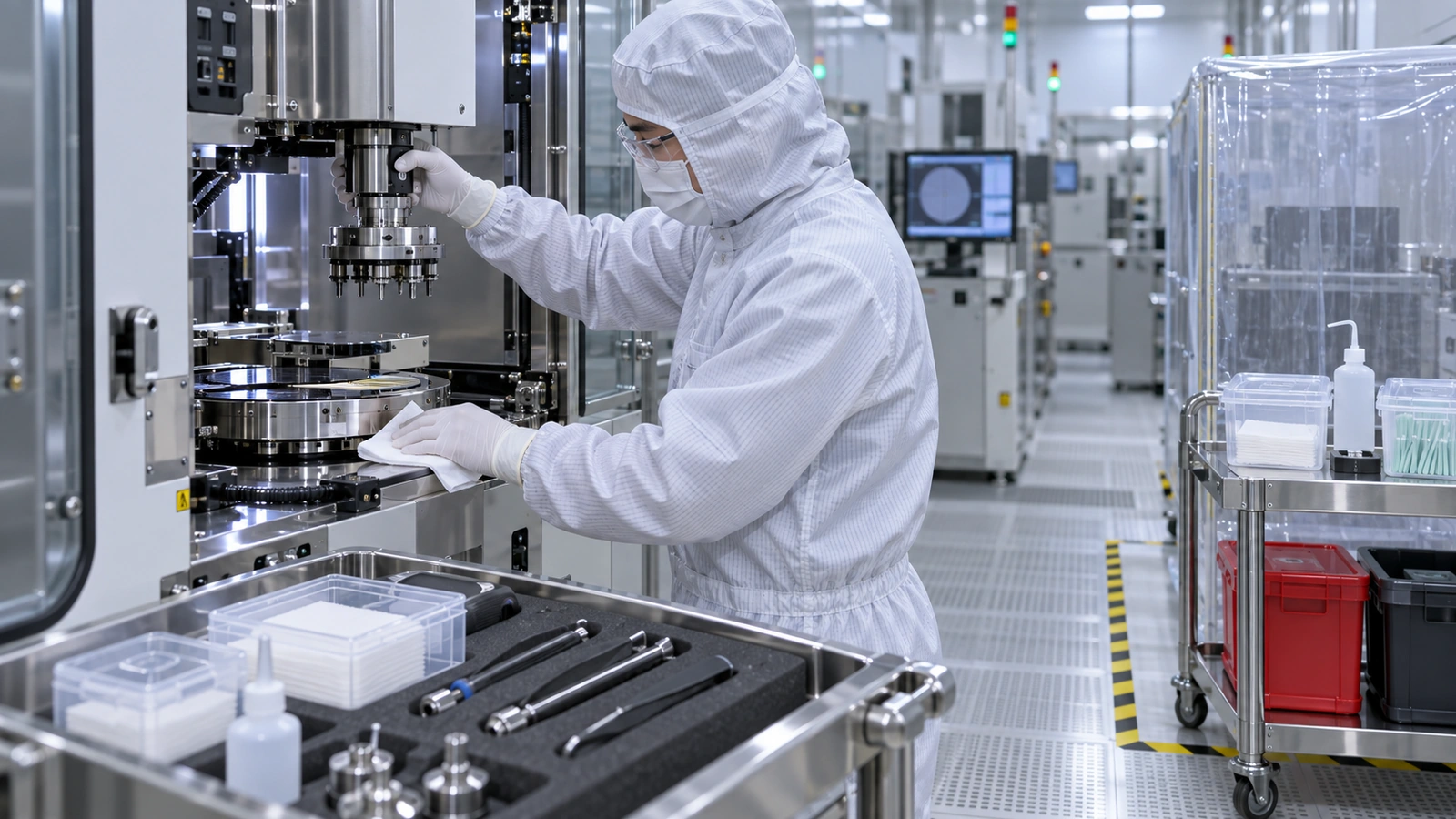
Operators are essential and also major contamination sources. Training should cover behavior, not only gowning order: movement, talking, glove contact, dropped-item response, material transfer, line clearance, and intervention during equipment alarms.
Controls that deserve routine observation
- Gown condition and correct donning sequence
- Glove changes after non-clean contact
- Tool and fixture status before entry
- Open-product exposure time
- Cleaning of touch points and equipment surfaces
- Maintenance barriers and post-maintenance release
- Material and waste movement during production
Maintenance is a planned contamination event. Define how work is isolated, what tools and lubricants are allowed, how the area is cleaned, which environmental checks are required, and who releases the equipment and room back to production.
Monitor the Process, Not Only the Room
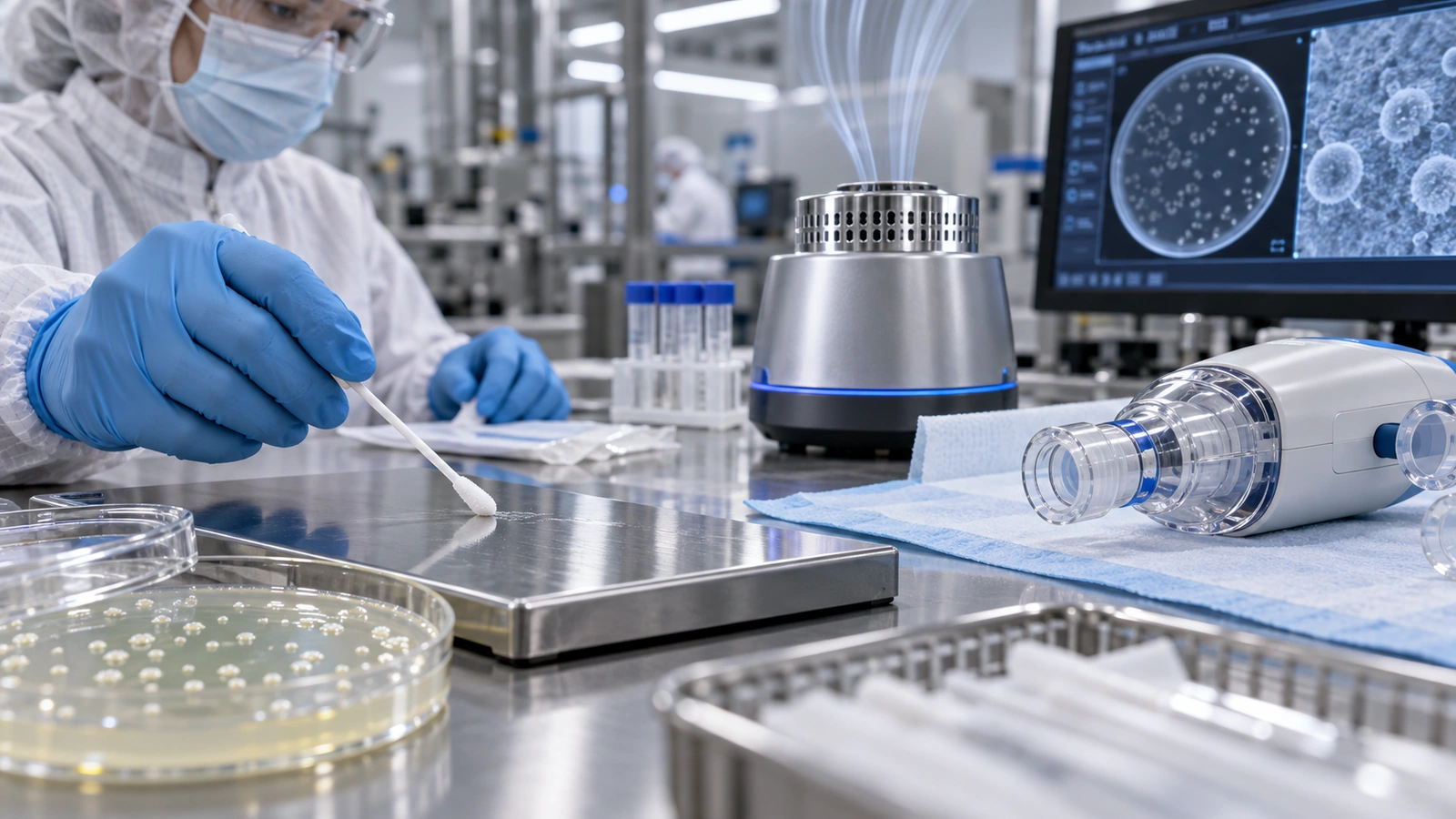
Environmental monitoring can show airborne or surface conditions at selected locations and times. It does not directly prove product cleanliness. Interpret room data alongside cleaning results, personnel practices, equipment condition, product sampling, deviations, and trends.
Set alert and action levels with defined responses. A single excursion needs impact assessment; repeated alerts may indicate drift before an action limit is exceeded. Investigate changes in occupancy, maintenance, HVAC performance, cleaning, construction, product mix, and sampling technique.
The quality-system expectations described in medical device manufacturing standards help connect monitoring with records, investigation, corrective action, supplier control, and change management.
A cleanroom classification describes an environmental condition under defined circumstances. Product quality depends on what the process does inside that environment.
Preserve the Controlled State Through Packaging
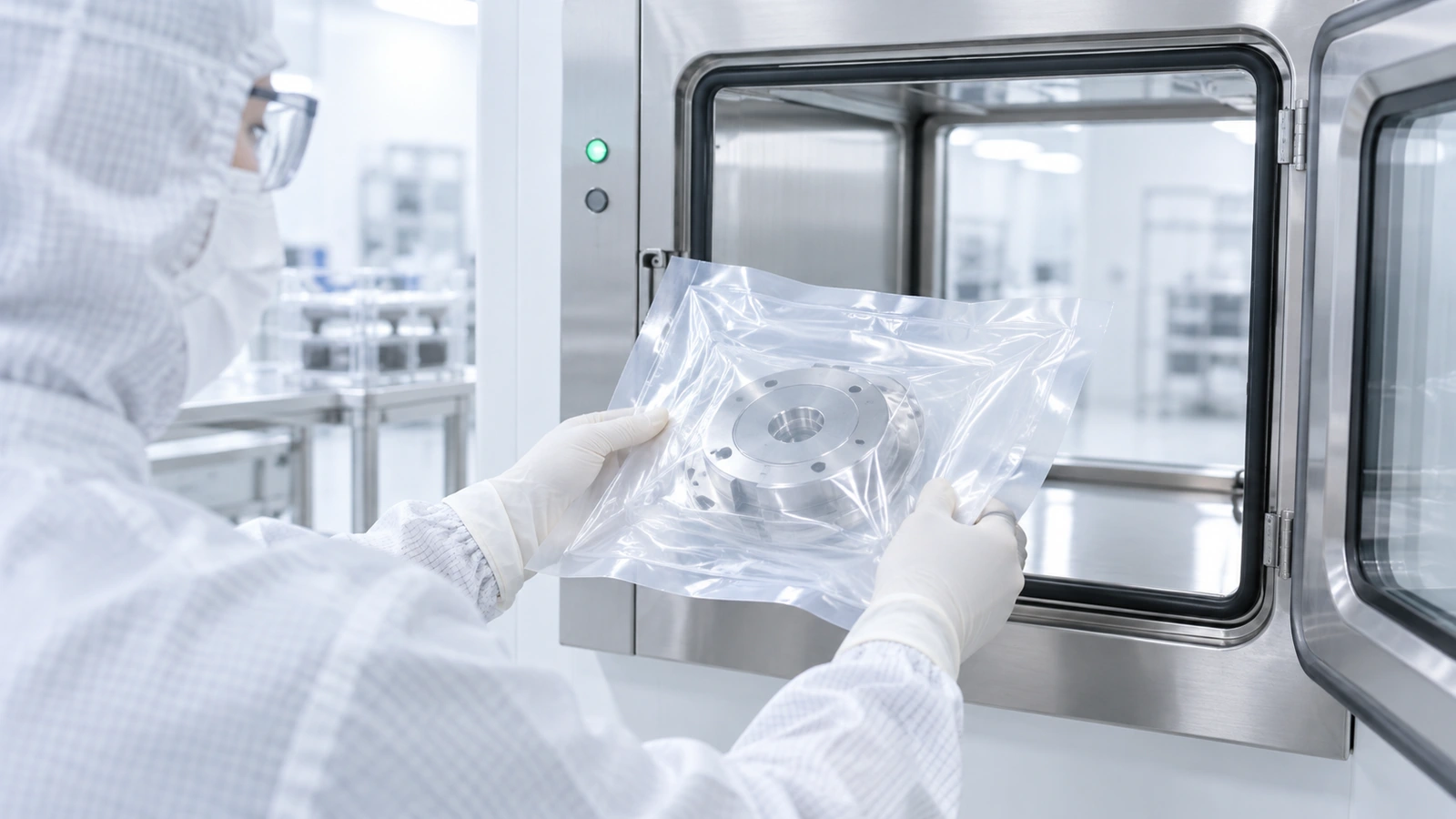
The clean state ends if packaging sheds, tears, traps contamination, or is applied after uncontrolled handling. Define primary protection, orientation, seals, labels, double-bag strategy where needed, handling, storage, transport, and maximum time before the next operation.
Packaging should be compatible with the part surface, edges, weight, and downstream process. A polished component can abrade against an unsuitable bag. A sharp sheet-metal corner can puncture protection. A molded part may need support to prevent deformation. Inspect packaging as part of release rather than treating it as an administrative step.
Jucheng Clean Manufacturing Support
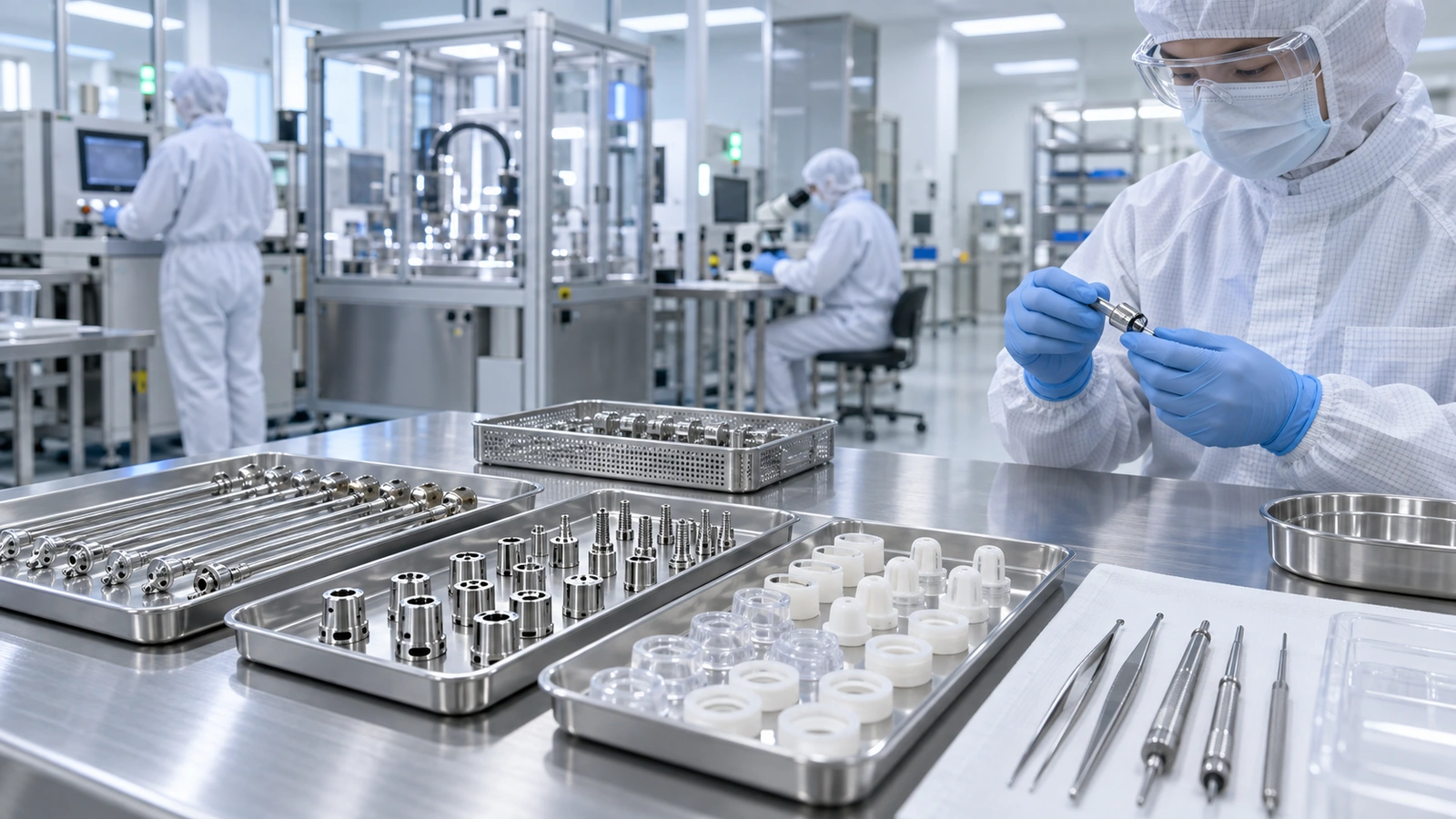
Jucheng Precision can coordinate component manufacture, cleaning requirements, controlled transfer, inspection, assembly, and packaging for medical-device programs. The manufacturing route may include CNC machining, sheet metal, injection molding, additive manufacturing, finishing, and dedicated fixtures before controlled-environment work.
Customers should define the required cleanliness state, sensitive surfaces, later sterilization or packaging steps, evidence, and applicable standards. Jucheng can review upstream contamination risks, geometry that traps soil, packaging protection, and the handoff between general manufacturing and clean operations.
For projects centered on molding, the existing article on medical device cleanroom injection molding addresses process-specific concerns. This broader page covers the cross-process clean manufacturing system.
Cleanroom Manufacturing FAQ
Does every medical device component need a cleanroom?
No. Environmental control should match product risk, manufacturing stage, contamination sensitivity, downstream cleaning, packaging, and intended use. Some components can be fabricated in a controlled general environment and cleaned before later clean processing.
Is cleanroom classification the same as product cleanliness?
No. Classification describes airborne particle conditions under defined test circumstances. Product cleanliness also depends on upstream processes, contact surfaces, cleaning, handling, tools, people, packaging, and time.
Can sterilization replace cleaning?
No. Sterilization and cleaning serve different purposes. Sterilization does not necessarily remove oil, particles, fibers, chemical residues, or manufacturing debris.
What should be monitored in a clean manufacturing process?
Monitoring may include environmental particles, microbiological conditions, surfaces, personnel, cleaning outcomes, process parameters, product cleanliness, pressure or HVAC conditions, and packaging integrity. The plan should follow risk.
What changes may require reassessment?
Equipment moves, layout changes, new products, increased occupancy, cleaning chemistry changes, packaging changes, maintenance, HVAC work, new upstream processes, and recurring excursions can affect the controlled state.
Control the Path, Not Just the Room
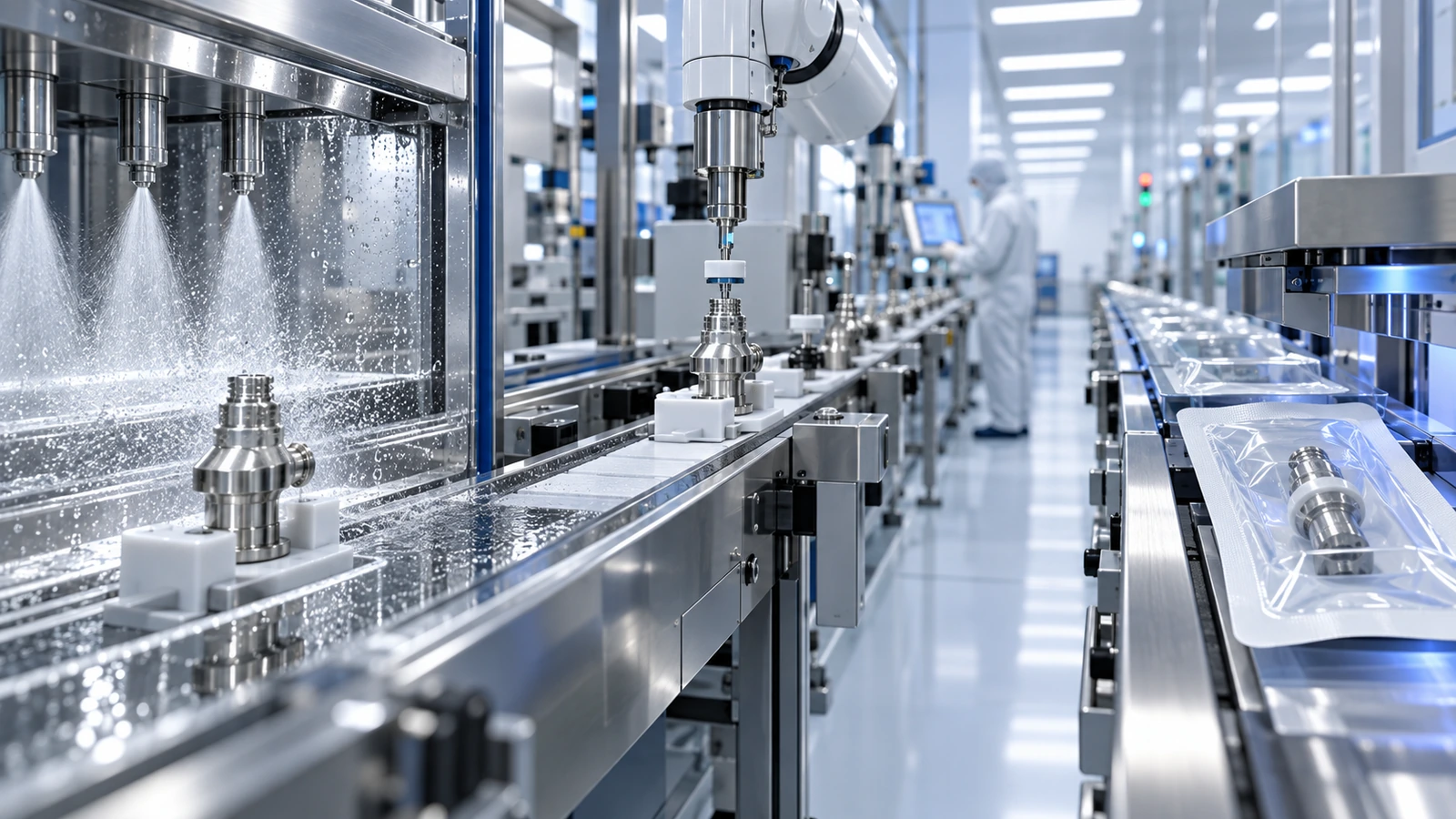
Medical device cleanroom manufacturing is a chain from incoming material to protected output. Classification matters, but the stronger question is whether every contamination source, transfer, cleaning step, person, tool, record, and package supports the product’s required state.
Send Jucheng your component files and cleanliness requirements to review the manufacturing route and controlled-process handoffs.

