


A surgical instrument can be made from the correct alloy and still fail because the surface, heat treatment, joint, cleaning access, or manufacturing residue is wrong. Surgical instrument material selection must account for the complete instrument: load path, edge or gripping function, repeated cleaning and sterilization, corrosion exposure, wear pairs, ergonomics, assembly, and refurbishment.
This engineering guide compares material families through instrument functions rather than presenting one universal ranking. The final grade and process require application-specific risk assessment, testing, and regulatory review.
Contents
- Begin with the instrument function
- Match material families to the task
- Design for repeated reprocessing
- The surface carries the clinical interaction
- Manufacturing creates the final material state
- Joints and mixed materials
- Control grade, condition, and evidence
- Developing instruments with Jucheng
- Preguntas frecuentes
Begin With the Instrument Function
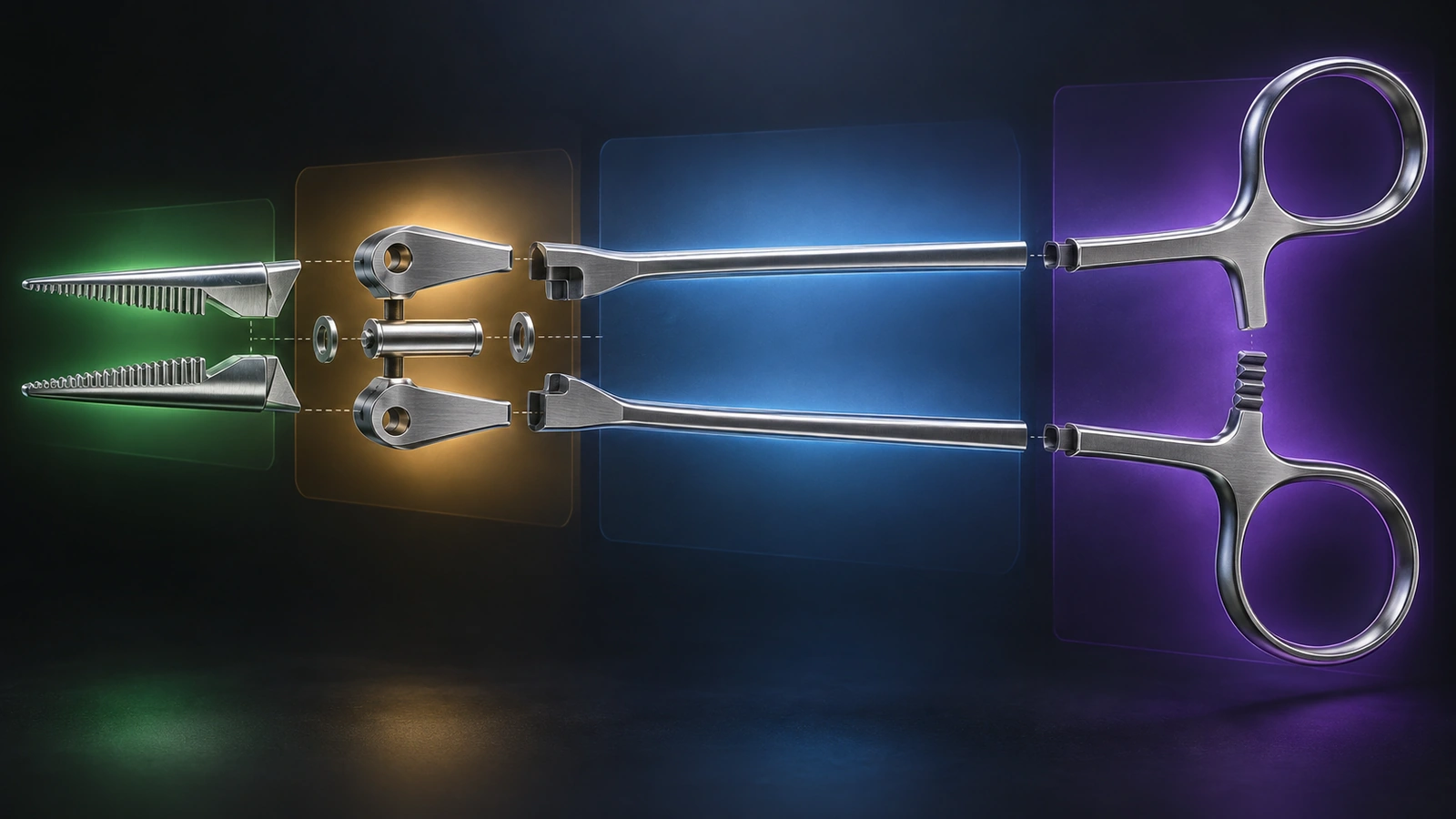
The word instrument covers cutting tools, forceps, clamps, retractors, guides, handles, drivers, robotic end effectors, scopes, trays, and reusable accessories. Their material demands differ. A cutting edge needs hardness and edge retention. A spring feature needs fatigue behavior. A long shaft may need stiffness, low weight, and torsional control. A reusable handle may prioritize grip, insulation, impact, and sterilization durability.
Write a functional profile before selecting an alloy: applied forces and cycles, geometry, contact surfaces, temperature, chemicals, sterilization method, expected service life, imaging environment, cleaning access, and repair strategy. The parent overview of medical device materials provides the wider selection context; instrument design adds repeated handling, reprocessing, and human-interface demands.
Divide the instrument into functional zones
- Working end: cutting, gripping, dissecting, driving, or positioning
- Transmission: shaft, linkage, hinge, cable, or gear
- User interface: handle, grip, trigger, control, or connector
- Cleaning path: joints, lumens, crevices, and drainage features
- Identification: scales, serials, orientation, and traceability marks
Match Material Families to the Task
| Material family | Potential advantages | Design questions |
|---|---|---|
| Martensitic stainless steels | Hardness and edge capability after suitable heat treatment | Corrosion resistance, temper, grind damage, passivation, sharpening |
| Austenitic stainless steels | Corrosion behavior, formability, weldability in selected grades | Hardness, galling, cold work, surface finish, magnetic needs |
| Precipitation-hardening stainless steels | Strength with useful corrosion behavior | Heat-treatment condition, distortion, welding sequence |
| Titanium alloys | Low weight, corrosion behavior, nonferromagnetic potential | Wear, galling, stiffness, cost, surface engineering |
| Engineering polymers | Electrical insulation, grip, low weight, color coding | Sterilization cycles, creep, chemicals, molding stress, joining |
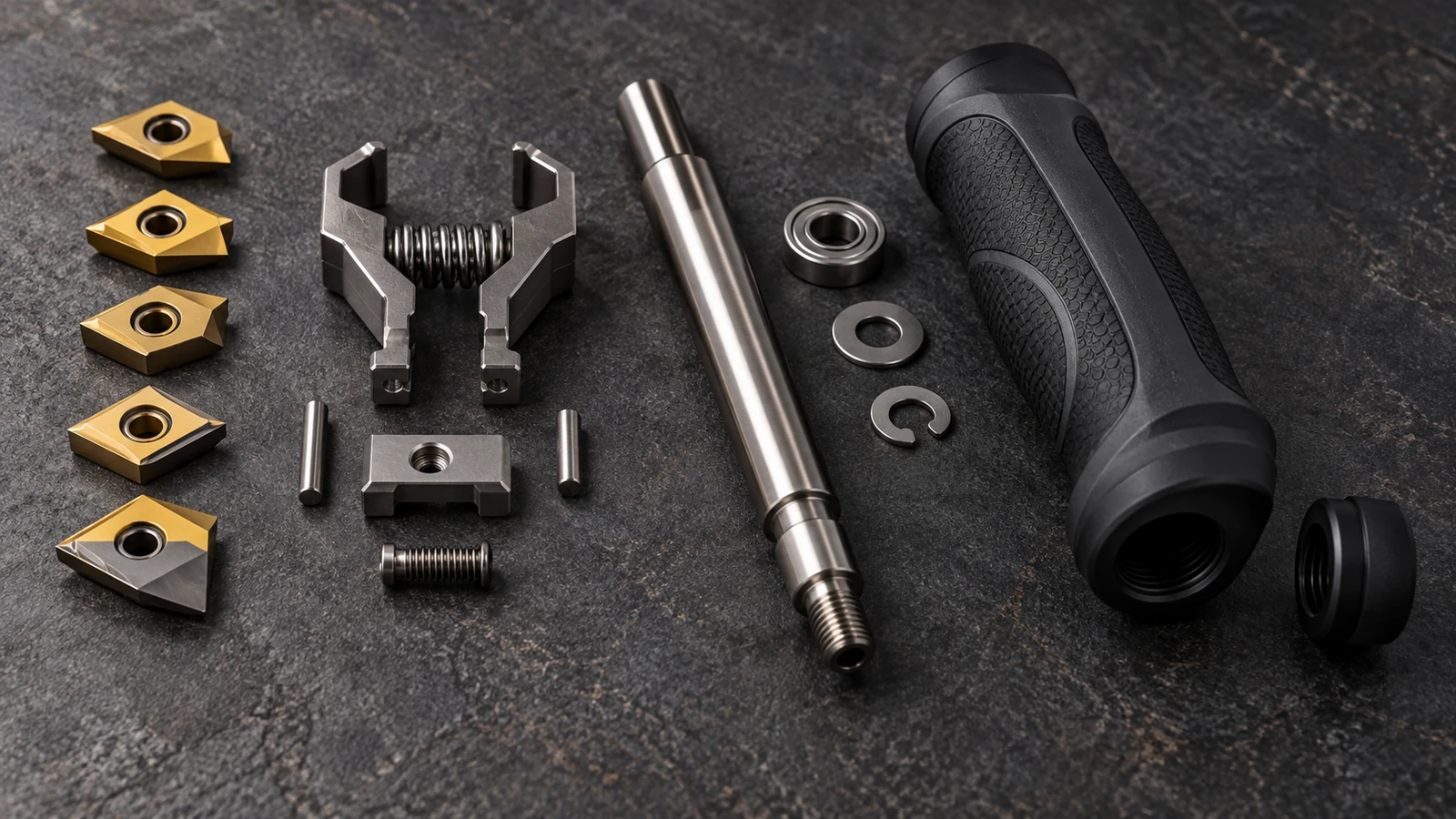
The same instrument may use several families. A hardened stainless working tip, titanium shaft, polymer grip, and stainless fastener create interfaces that need wear, thermal, galvanic, cleaning, and assembly review.
Design for Repeated Reprocessing
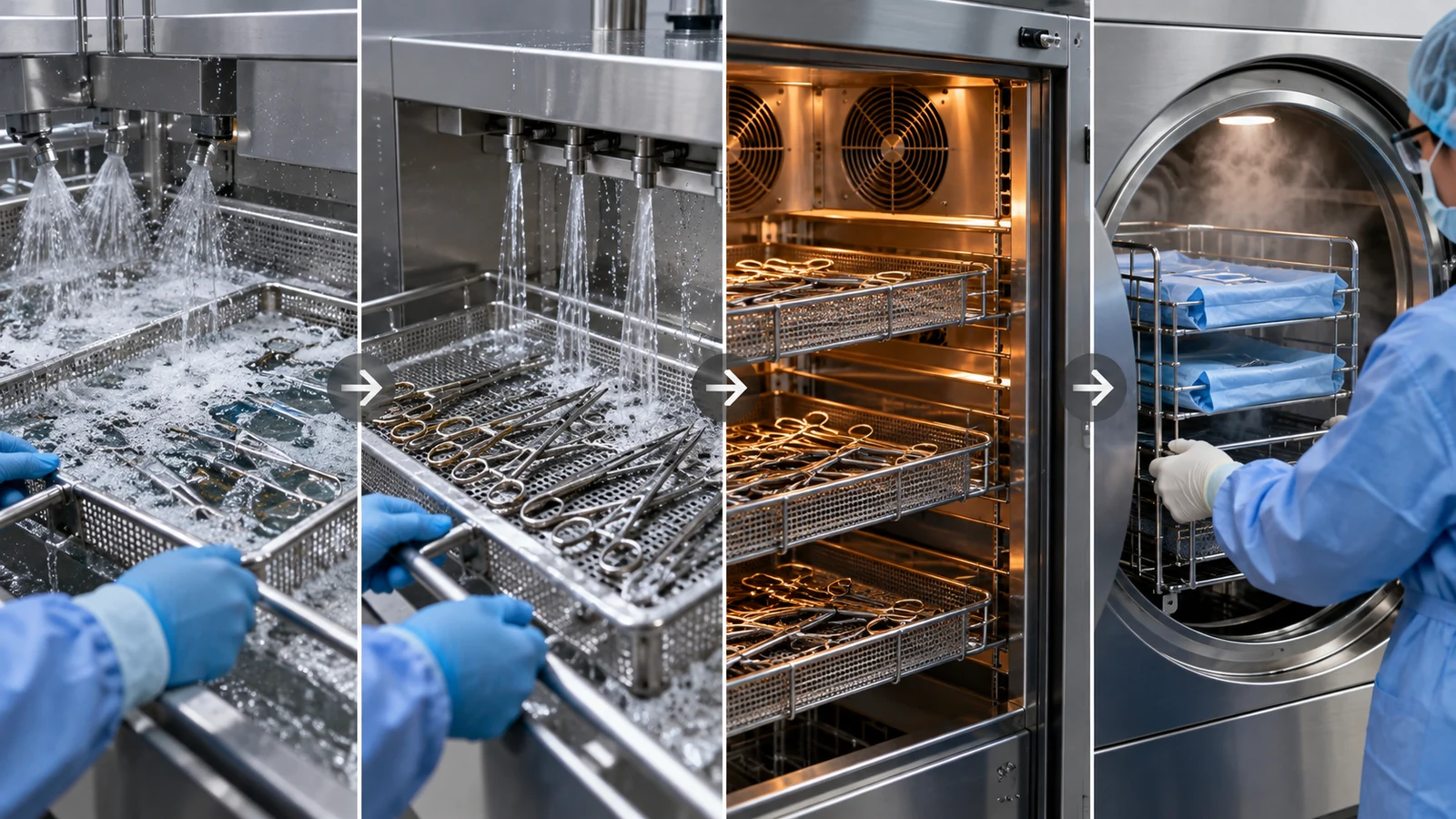
Reusable instruments experience a lifecycle of use, soil, transport, cleaning chemistry, mechanical washing, rinsing, drying, inspection, packaging, and sterilization. Material selection should consider the sequence and cumulative cycles rather than only the sterilization temperature.
Crevices can trap chemistry, hinges can retain moisture, and dissimilar materials can create local corrosion conditions. Polymer grips may discolor, crack, creep, or lose texture. Laser marks may fade or create roughness. Lubricants and coatings need compatibility with reprocessing and the instrument’s intended use.
Lifecycle test principle: evaluate representative finished instruments after repeated, worst-credible reprocessing isolated raw-material coupons after one ideal cycle.
The Surface Carries the Clinical Interaction
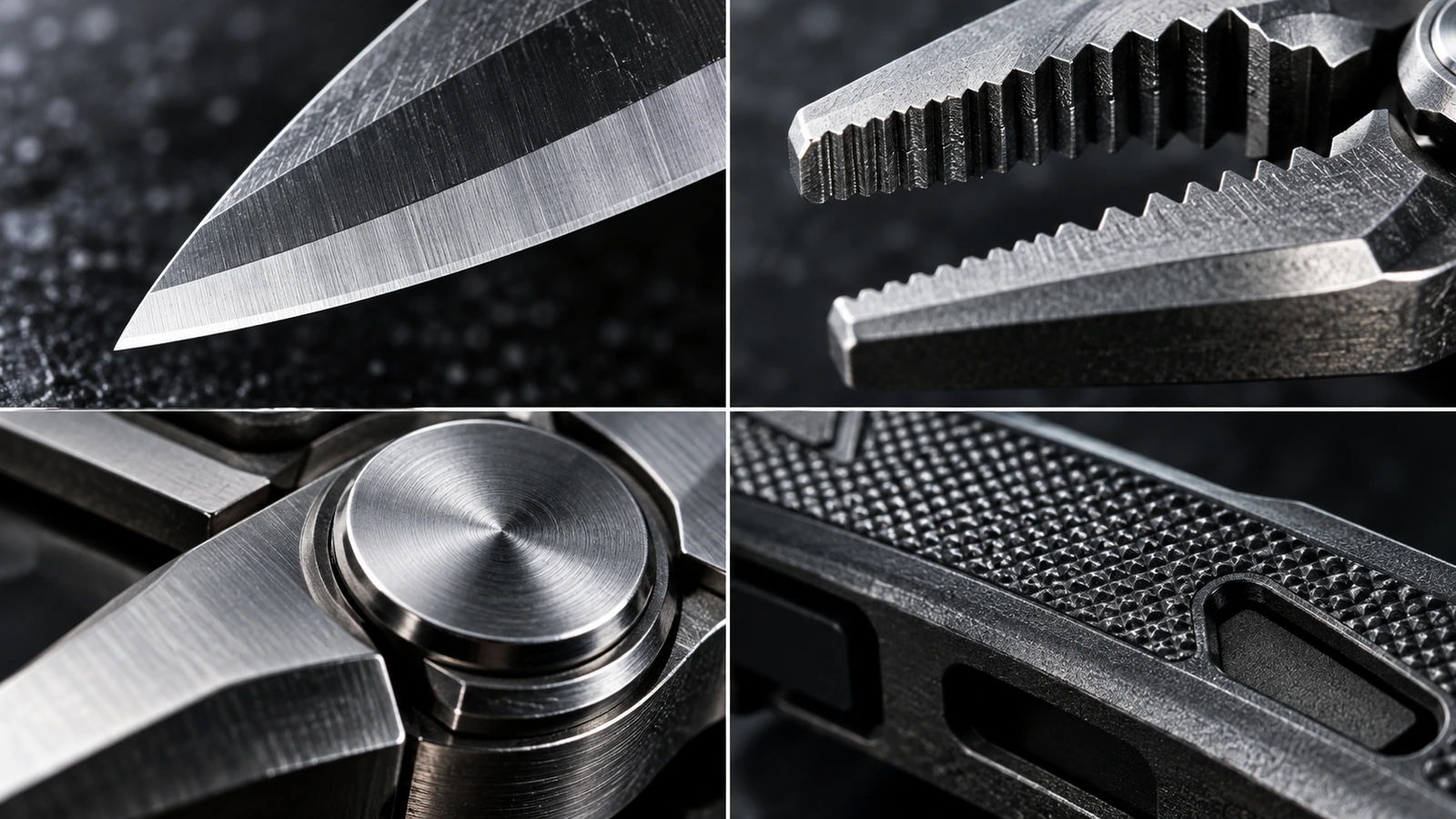
Bulk alloy properties do not define friction, glare, cleanability, corrosion initiation, edge performance, or tactile grip. Grinding, polishing, blasting, passivation, electropolishing, anodizing, coating, and laser marking can each change the working surface.
Specify surfaces by zone
- Cutting edges: geometry, hardness, burr, finish, and sharpening condition
- Gripping jaws: tooth form, alignment, texture, and wear
- Hinges: clearance, lubrication, debris traps, and galling risk
- Shafts: straightness, glare, finish, and cleaning access
- Handles: texture, insulation, color, and repeated sterilization
- Identification areas: mark readability without corrosion or residue risk
El medical surface finishing discussion helps link finish choice with cleanability, appearance, corrosion control, and manufacturing sequence.
Manufacturing Creates the Final Material State
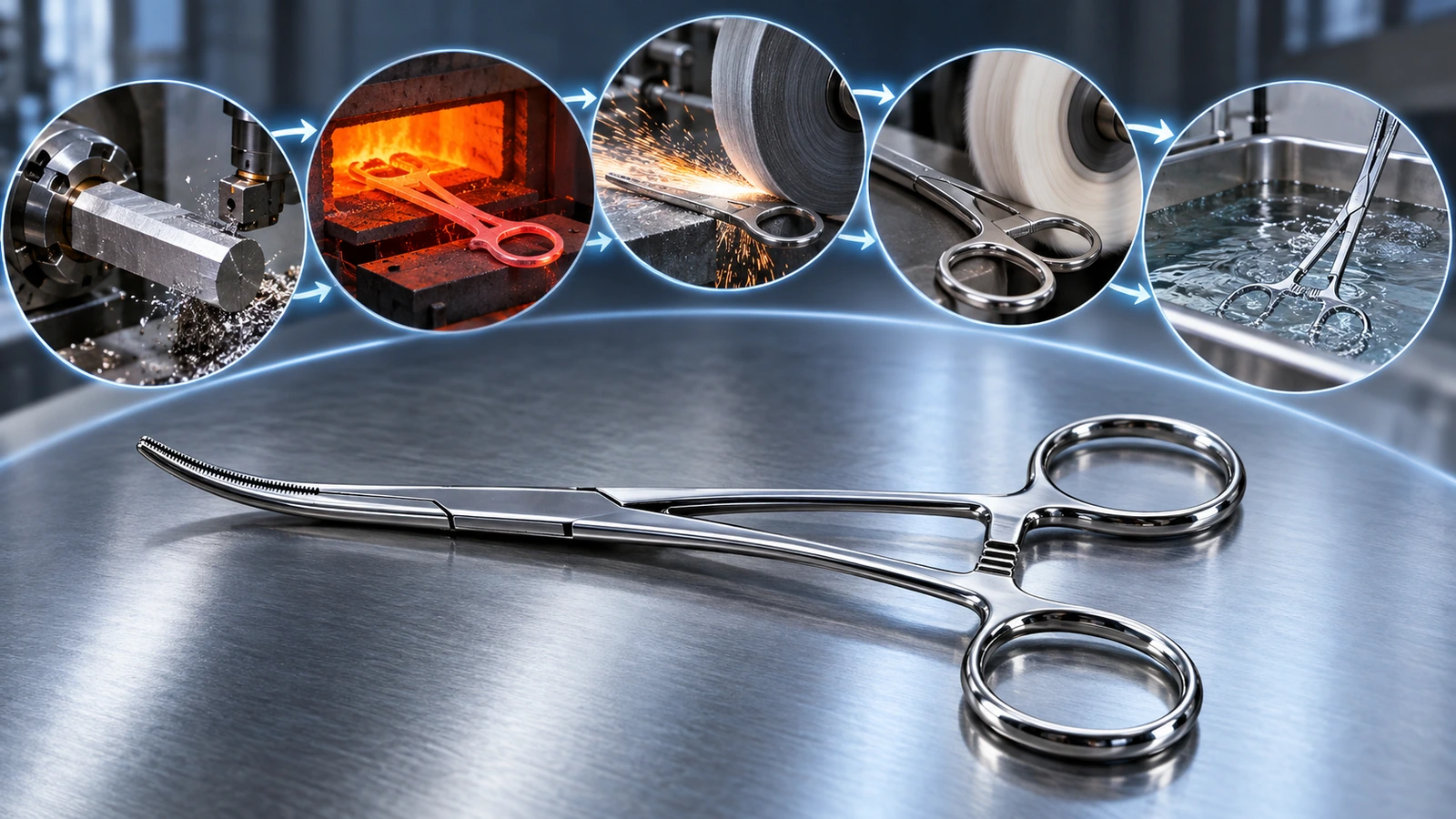
Bar stock certification is only the start. Forging, forming, machining, heat treatment, welding, grinding, polishing, and cleaning determine dimensions, hardness, residual stress, surface chemistry, and fatigue-sensitive features. The order matters.
Machining hardened material may control distortion but increase tool wear. Machining before heat treatment may require stock allowance and a final finishing step. Welding can locally alter microstructure or corrosion behavior. Aggressive grinding can overheat a cutting edge. Polishing can round functional geometry or embed media if not controlled.
Create a manufacturing route showing every material-state change and its inspection. The medical device manufacturing processes framework can be used to align raw material, machining, joining, finishing, cleaning, marking, assembly, and release.
Joints and Mixed Materials Need Their Own Risk Review
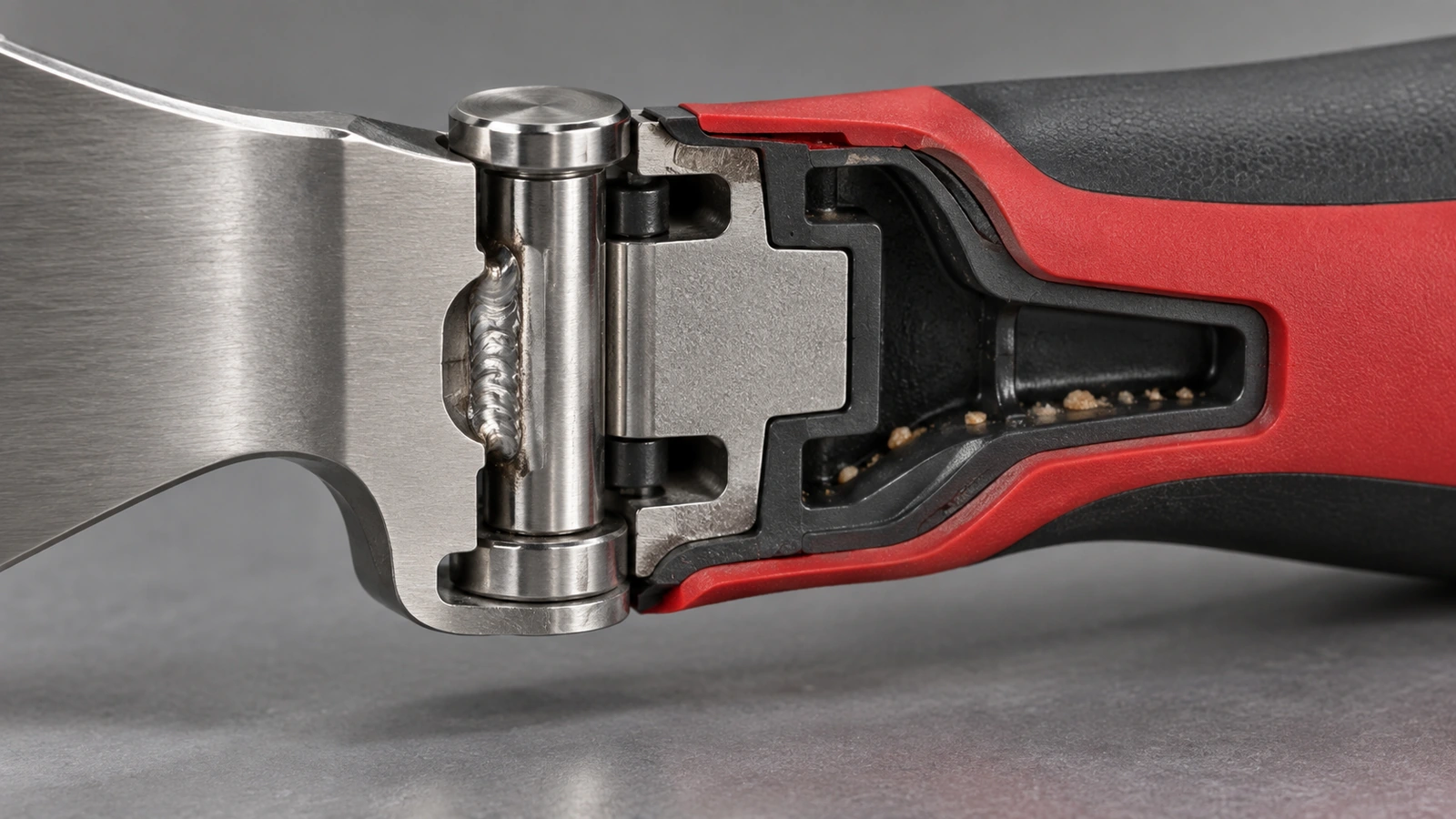
Pins, screws, welds, brazed joints, adhesives, press fits, overmolded grips, and mechanical captures each introduce failure and cleaning considerations. A joint can loosen, trap residue, corrode, wear, or become impossible to inspect.
Define the load path and whether the joint is permanent, serviceable, or adjustable. Control torque, interference, weld penetration, adhesive volume, cure, and staking geometry as applicable. Confirm that assembly does not damage passivated or polished surfaces. Mixed metals require review of contact, environment, and area ratio rather than a simplistic compatibility label.
If a joint cannot be cleaned, inspected, or repaired as intended, it is not merely an assembly detail; it is a lifecycle design decision.
Control Grade, Condition, and Evidence
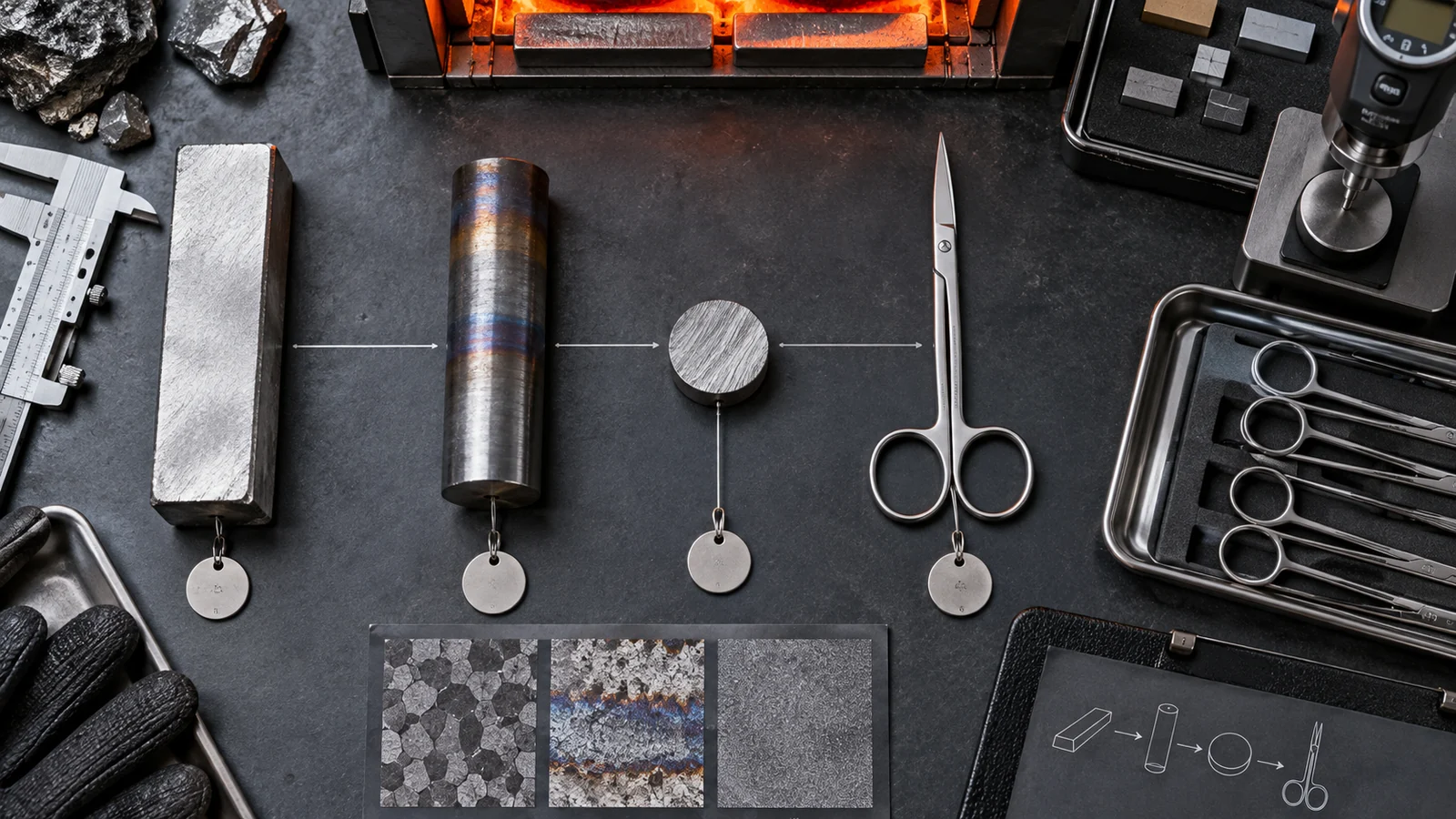
Drawings and purchasing specifications should identify exact grade, applicable standard, heat-treatment condition, product form, finish, and required certificates. Define approved substitutions and who can authorize them. Link each lot to material heat or batch, manufacturing revision, special-process records, and release evidence.
| Evidence | Question answered |
|---|---|
| Material certificate | What incoming alloy, polymer, condition, and lot were supplied? |
| Heat-treatment record | Was the required thermal cycle applied and controlled? |
| Hardness or mechanical test | Did the processed state achieve the defined property? |
| Finish and cleaning record | Was the approved surface sequence completed? |
| Dimensional and functional report | Does the finished instrument meet geometry and performance requirements? |
Developing Instruments With Jucheng
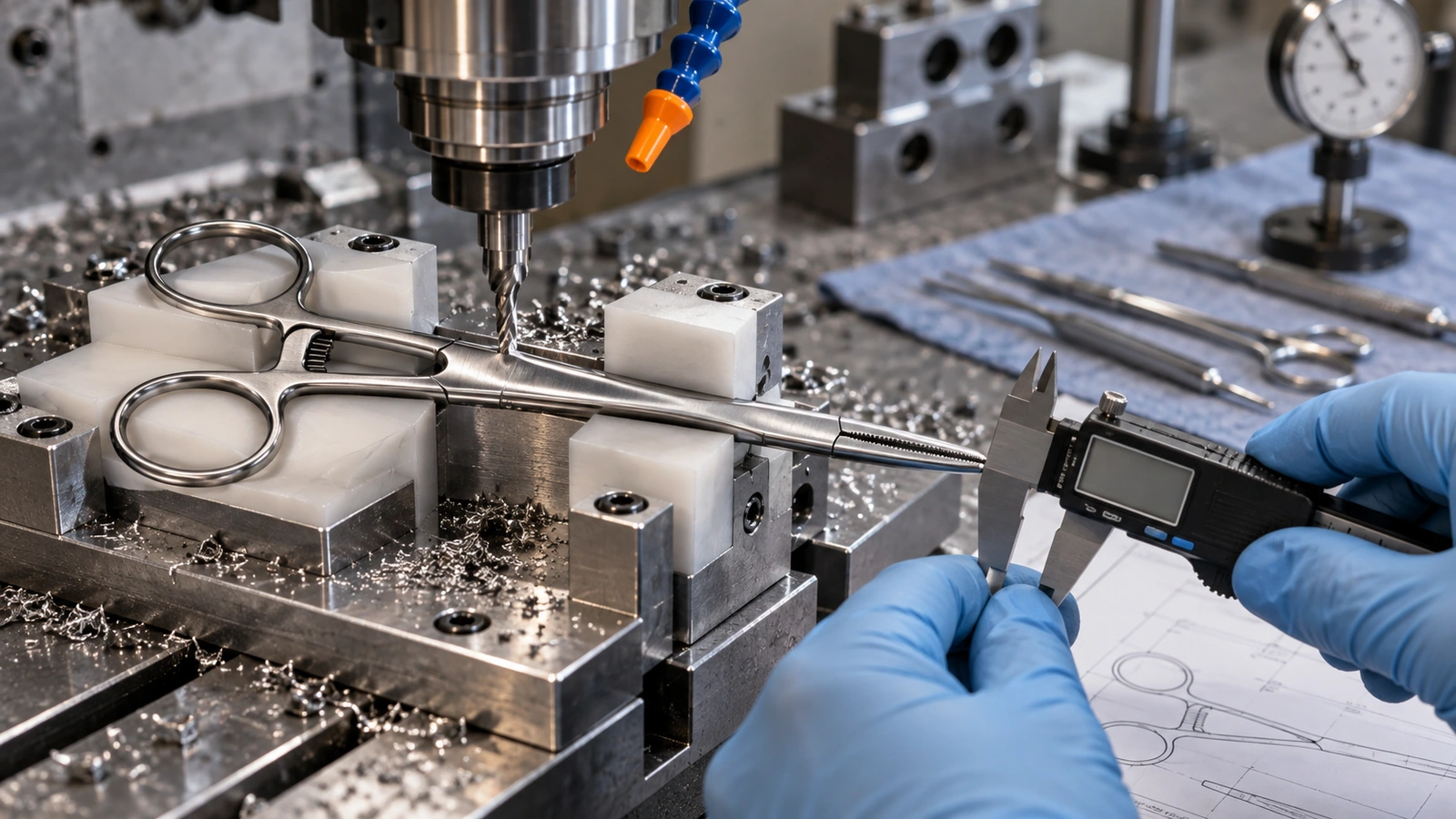
Jucheng Precision can support surgical-instrument prototypes, fixtures, handles, shafts, housings, trays, and related components through CNC machining, sheet-metal fabrication, molding, additive manufacturing, joining support, surface finishing, inspection, and assembly.
Useful project inputs include instrument function, exact grade and condition, loads, reprocessing method, critical surfaces, finish, tolerances, marking, quantities, and evidence requirements. Jucheng can review manufacturability and process sequence before the design is committed to tooling or production.
Surgical Instrument Material FAQ

Which stainless steel is best for surgical instruments?
No single stainless grade is best for every instrument. Cutting performance, corrosion resistance, strength, formability, welding, magnetic behavior, heat treatment, and reprocessing requirements determine the appropriate grade and condition.
Why is titanium used in some instruments?
Titanium can reduce weight and offer useful corrosion and nonferromagnetic characteristics in selected designs. Its lower stiffness, wear and galling behavior, cost, machining, and mating interfaces still require evaluation.
Can polymers be used for reusable instrument handles?
Yes, when an exact grade is shown to meet mechanical, chemical, sterilization, electrical, appearance, and lifecycle requirements. Grip geometry, overmolding, joining, and repeated-cycle testing are important.
Does passivation prevent all corrosion?
No. Passivation supports the corrosion-resistant surface condition of suitable stainless steel, but alloy, heat treatment, surface damage, residues, crevices, cleaning chemistry, and mixed-material contact still affect corrosion risk.
Should the entire instrument have one surface finish?
Usually not. Working edges, jaws, hinges, shafts, handles, identification zones, and cosmetic surfaces perform different functions. Zone-specific specifications are more useful than one global roughness value.
Select the Finished Instrument System
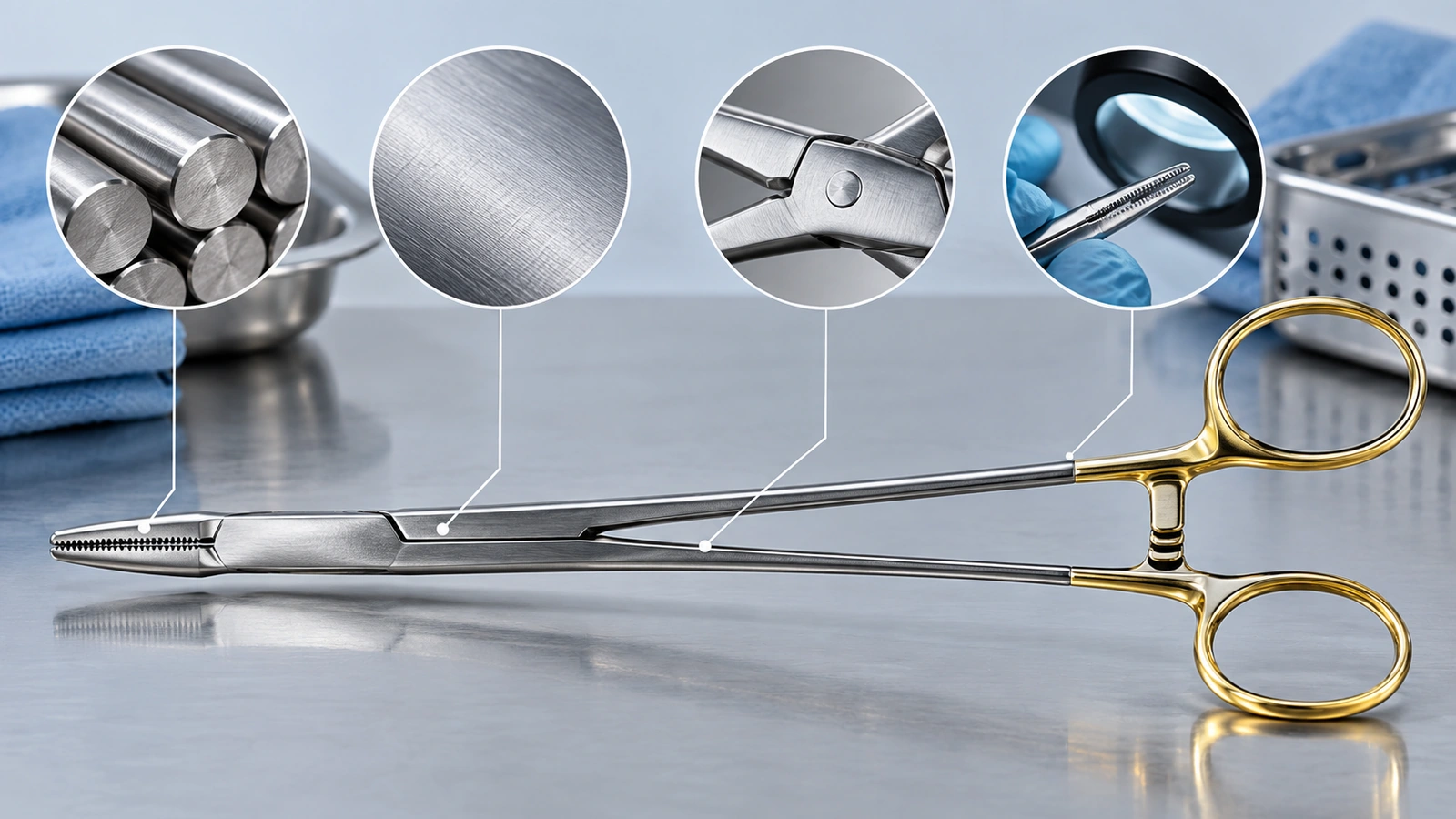
Surgical instrument material selection ends with a finished, joined, processed, cleaned, and tested instrument鈥攏ot with a datasheet. Define the function by zone, control the exact material state, and test representative lifecycle exposure.
Send Jucheng your instrument files and material requirements for a manufacturing and quotation review.

