


Opciones de acabado posterior al moldeo para piezas moldeadas por inyección rápida
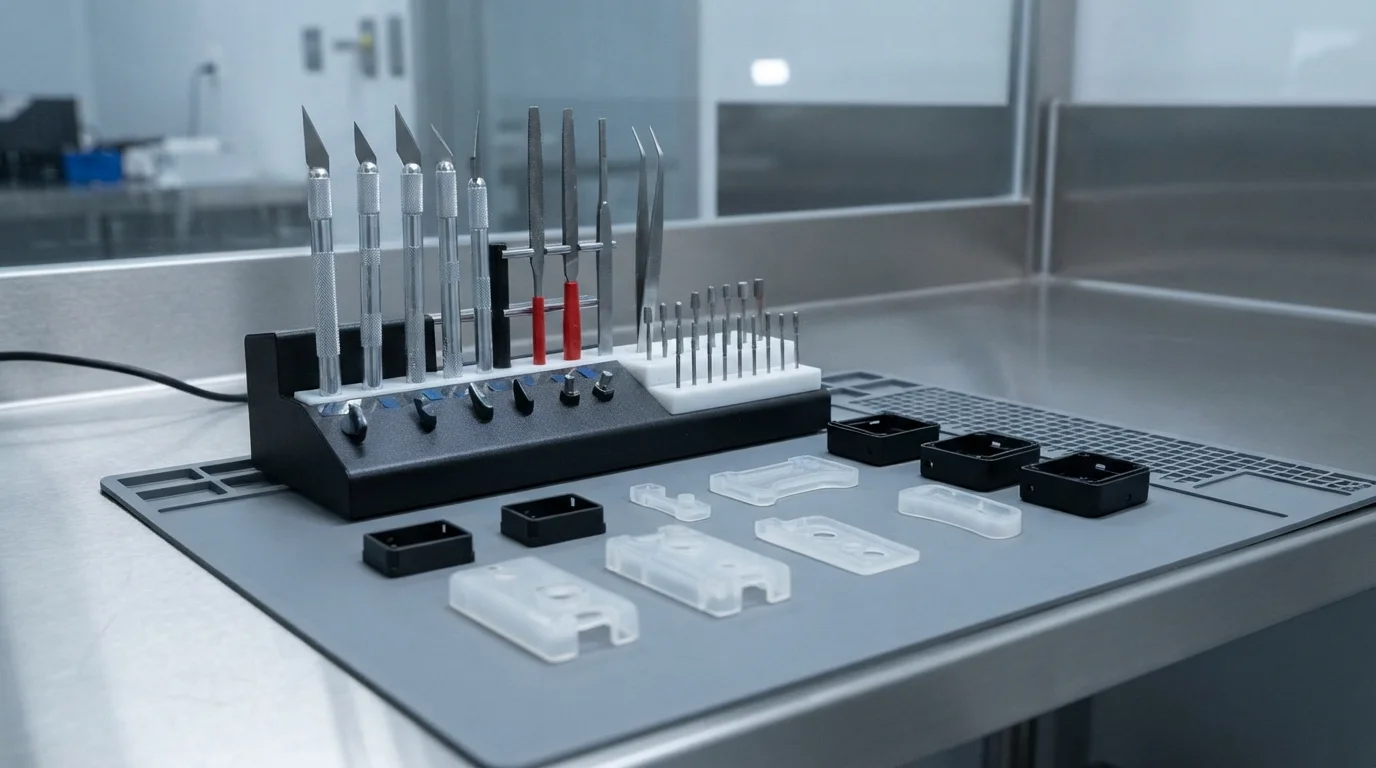
Extracting raw components out of an injection press marks only the halfway point in producing market-ready hardware. When engineering teams evaluate post molding finishing for rapid injection molding, managing secondary operations efficiently prevents multi-vendor supply chain delays. Without proper gate trimming, ultrasonic cleaning, and deburring, even the most precisely molded parts can fail aesthetic and structural assembly requirements.
Utilizar un proveedor utillaje rápido provider ensures that secondary treatments are executed under strict quality oversight right after moldes de inyección cycles finish. Let us explore the primary post-molding processes that elevate raw parts into pristine end-use components.
Module 1 – Definition and Working Principles of Post-Molding Operations
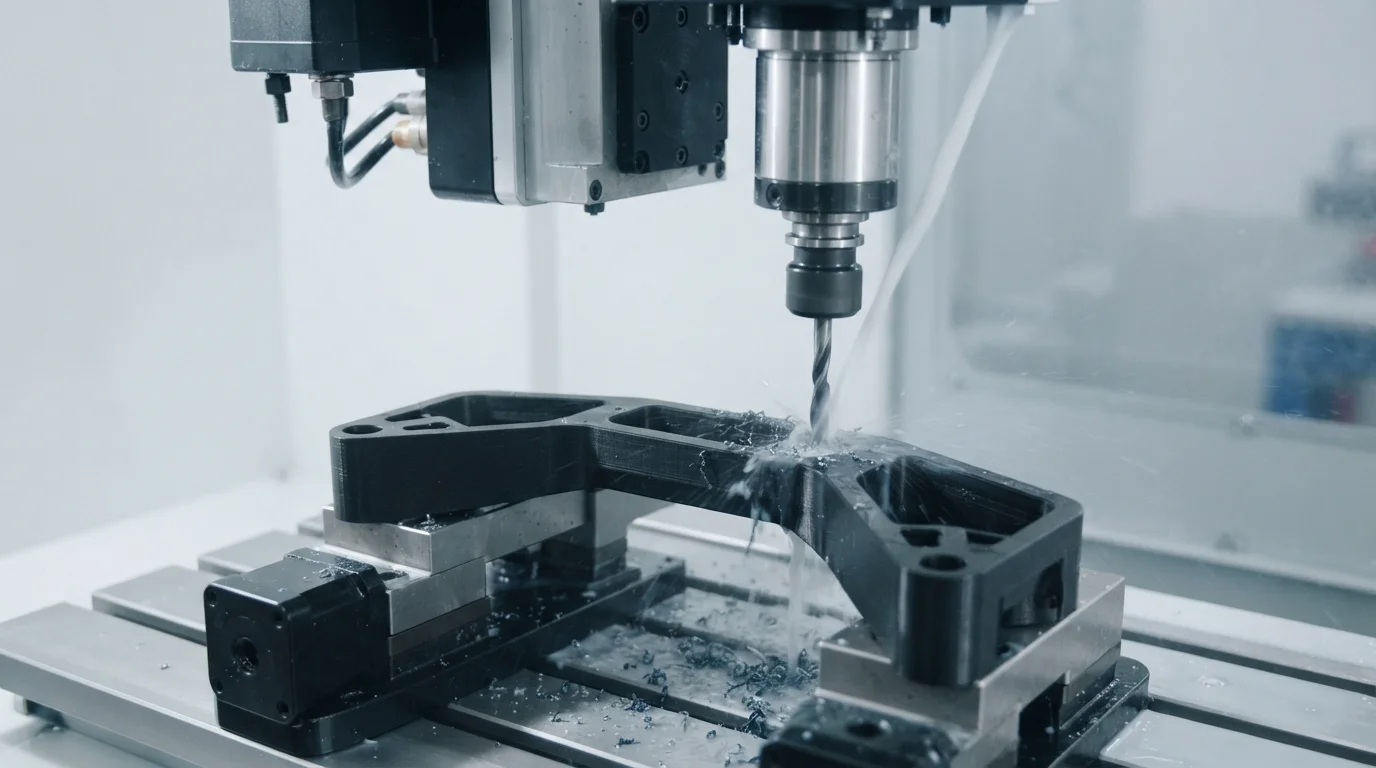
Post-molding finishing encompasses all physical and chemical processes applied to polymer components after they are ejected from the mold cavity. The working principle relies on removing gate vestiges, smoothing parting line flash, and enhancing functional features through secondary mecanizado CNC or manual craftsmanship. This ensures raw ABS, polycarbonate (PC), or nylon parts achieve exact assembly specifications.
To implement structured post-molding workflows, manufacturing technicians could follow these practical steps:
- Gate Vestige Trimming: Shear or clip runner remnants flush with the part surface using precision micro-nippers.
- Deburring & Flash Removal: Eliminate minor parting line flash using manual scraping blades or automated tumbling media.
- Secondary Feature Machining: Drill precise cross-holes or tap internal threads that could not be molded directly due to line-of-sight draft constraints.
Módulo 2 – Escenarios de aplicación principales
Comprehensive post-molding operations are essential across high-stress sectors including consumer electronics, medical device assemblies, and robotic housings where aesthetic continuity and clean mating surfaces dictate market success. Feedback from professional prototyping groups on Reddit and Facebook indicates that turnkey post-processing eliminates the coordination headaches of multi-vendor supply chains.
Los sectores de aplicación principales incluyen:
- Electrónica de consumo: Trimming and cleaning handheld device enclosures to ensure seamless snap-fit enclosure assembly.
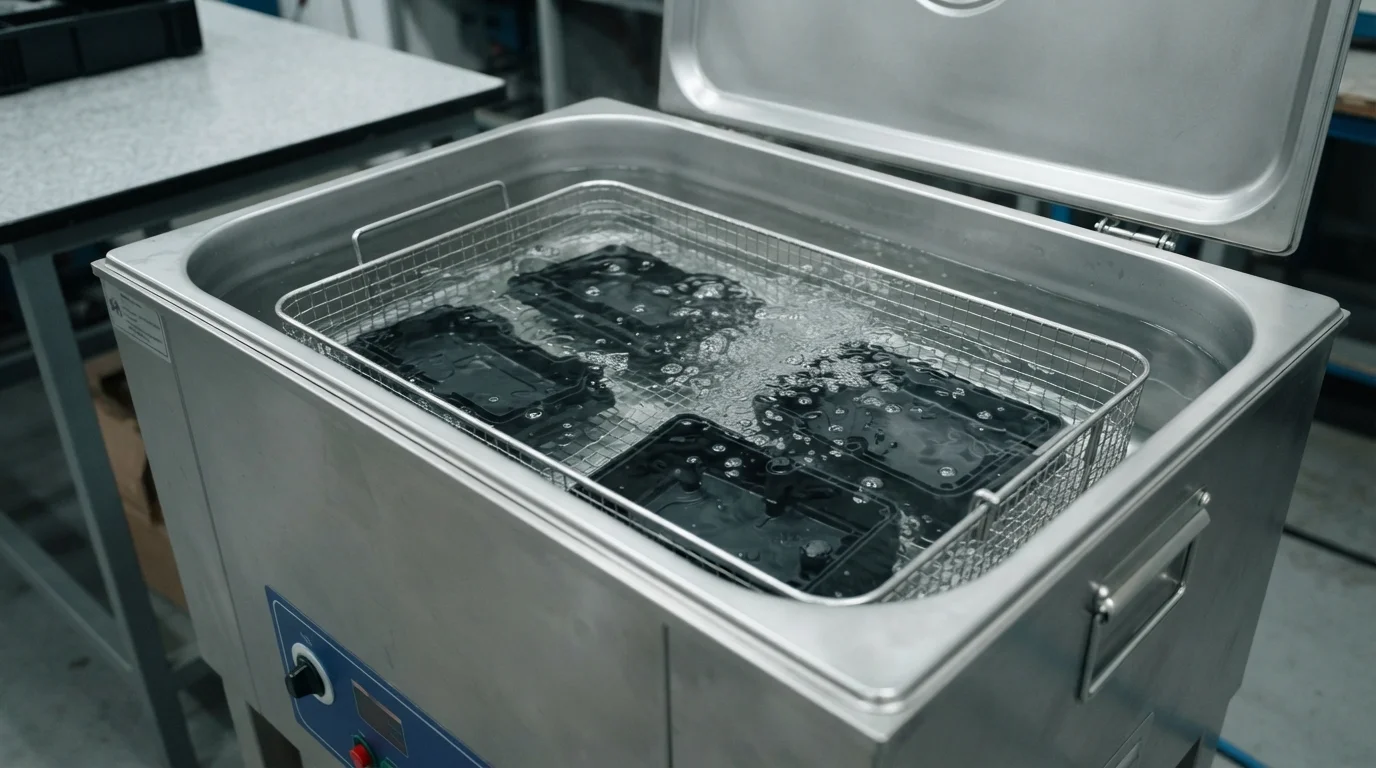
- Medical Equipment: Providing ultrasonic cleaning and residue removal for clinical diagnostic device shells.
- Automotive Assemblies: Deburring functional interior clips and brackets to guarantee proper mechanical retention.
Módulo 3 – Factores clave de selección para el éxito del proyecto
When planning secondary finishing operations for rapid molded parts, engineering teams must weigh labor intensity against aesthetic goals and assembly tolerances. Evaluating these core parameters ensures your components achieve production-grade quality.
| Secondary Operation | Tooling & Execution Method | Beneficio funcional principal |
|---|---|---|
| Gate Trimming | Manual flush-cutting or hot-knife shearing | Removes runner vestiges for clean outer contours |
| Limpieza Ultrasónica | Aqueous solvent immersion and sound waves | Strips microscopic oils, dust, and release agents |
| Secondary Machining | CNC milling, drilling, and tapping stations | Adds un-molded undercuts, cross-holes, and threads |
Módulo 4 – Consejos de instalación y mantenimiento
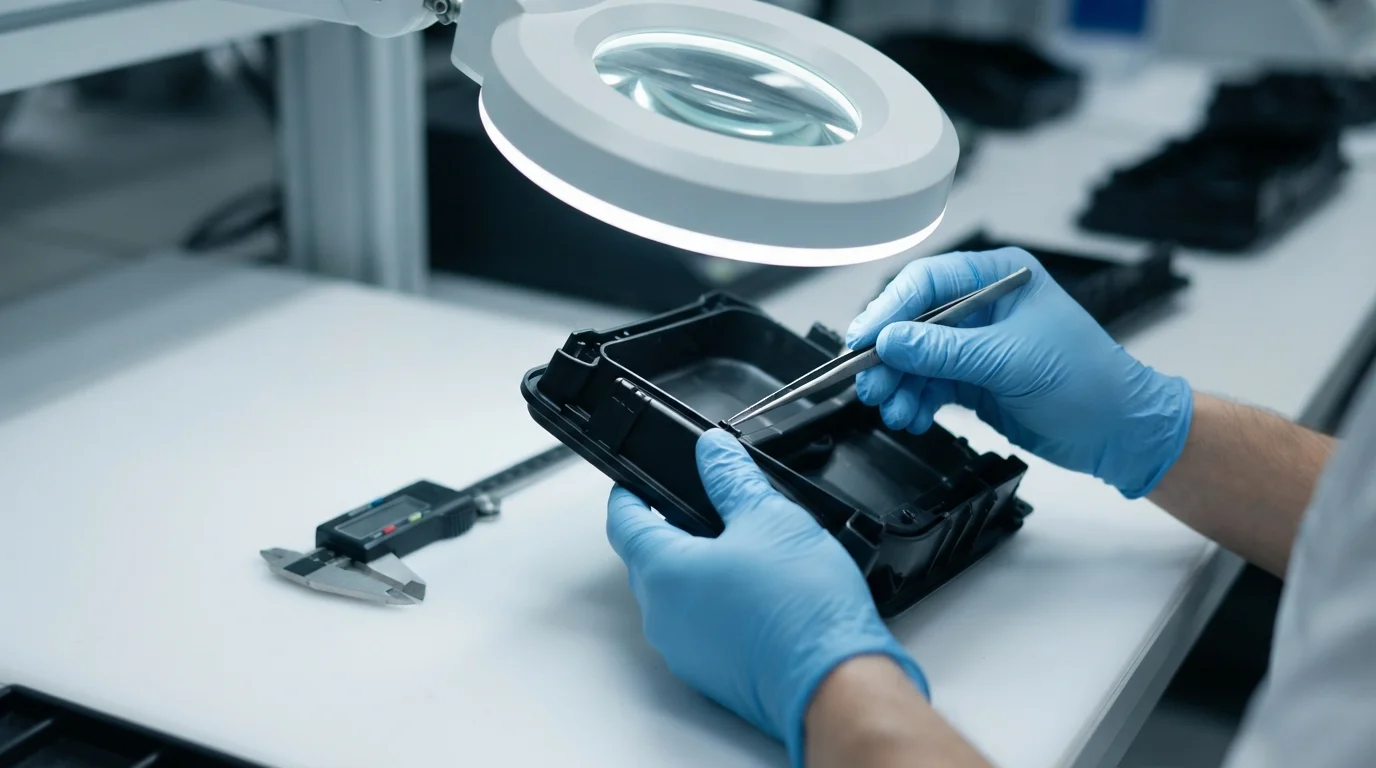
Proper handling during post-molding processing safeguards final part dimensions and cosmetic integrity. Protecting finished surfaces from handling scratches during secondary trimming ensures pristine component delivery.
Los consejos clave de instalación y mantenimiento incluyen:
- Protective Workstations: Use padded anti-static work mats during manual gate trimming to prevent surface scuffing.
- Controlled Deburring: Apply light, uniform pressure when scraping parting line flash to avoid gouging adjacent walls.
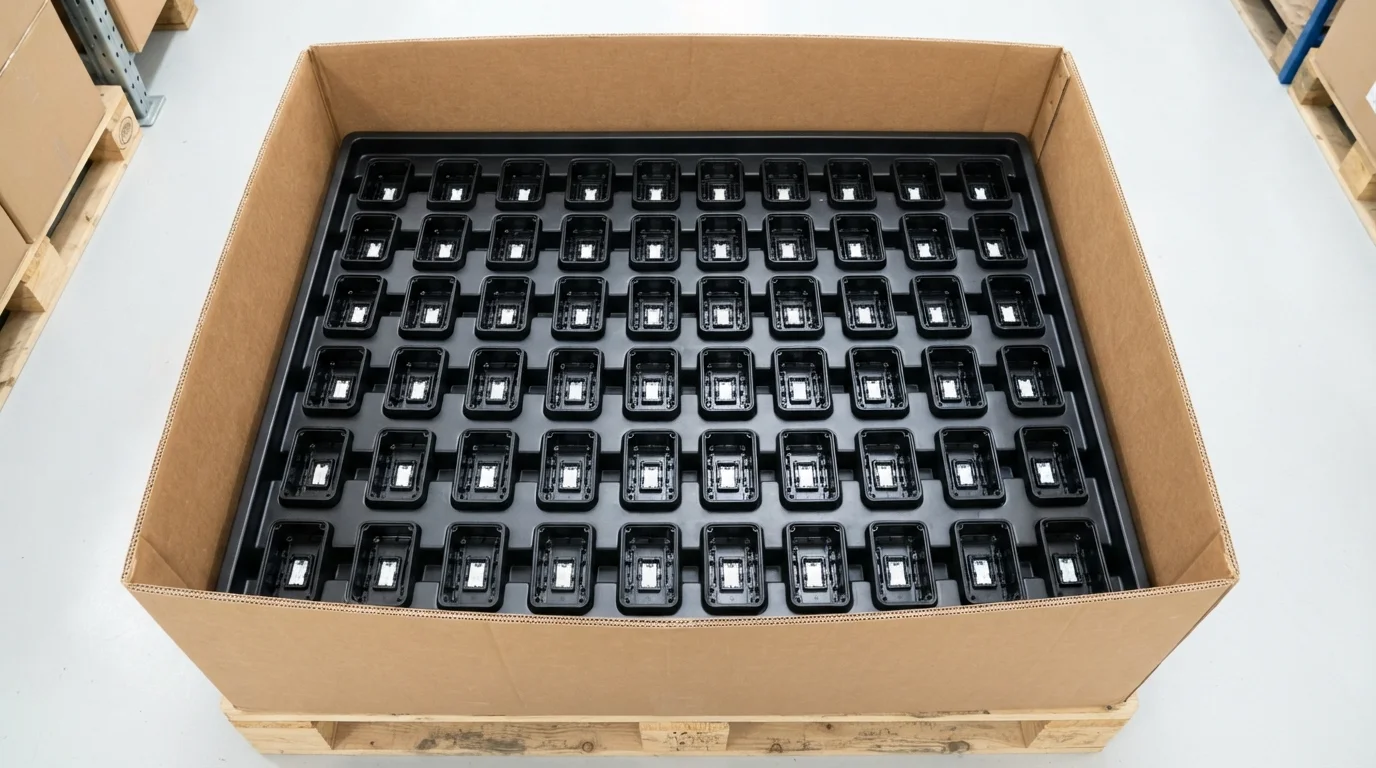
- Clean Packaging: Pack finished components inside partitioned trays immediately after ultrasonic cleaning to prevent dust accumulation.
Módulo 5 – Preguntas frecuentes (FAQ)
1. What does post-molding finishing involve for rapid injection parts?
Post-molding finishing includes gate trimming, flash deburring, ultrasonic cleaning, and secondary CNC machining operations to transform raw press shots into finished components.
2. Why is turnkey manufacturing beneficial for post-molding operations?
Turnkey manufacturing eliminates multi-vendor coordination, reducing shipping lead times and ensuring consistent quality oversight from press extraction to final packaging.
3. Can secondary holes and threads be added after injection molding?
Yes, secondary CNC machining stations can drill cross-holes, tap threads, and mill features that cannot be molded directly due to line-of-sight draft constraints.
4. How are gate vestiges managed on rapid molded parts?
Gate vestiges are carefully clipped, sheared, or hand-trimmed flush with the part contour to maintain smooth outer surfaces and proper assembly fitment.
5. What is the purpose of ultrasonic cleaning for plastic parts?
Ultrasonic cleaning submerges parts in aqueous solutions, using high-frequency sound waves to strip away microscopic oils, dust, and residual mold release agents.
6. How does Jucheng Precision execute complete post-molding services?
Jucheng Precision provides turnkey post-molding finishing—including gate trimming, deburring, and secondary machining—under strict ISO 9001 quality controls.
Módulo 6 – Por qué elegir JUCHENG para su proyecto
Achieving seamless component finishing requires an experienced manufacturing partner. JUCHENG apoya a los innovadores de hardware entregando revisiones integrales DFM gratuito las 24 horas reviews that analyze draft angles, post-molding operations, and gate locations prior to tool cutting. Founded in Shenzhen in 2012 with an 8,000-square-meter facility in Dongguan, our factory houses 150+ advanced machines, including 25+ high-performance 5-axis Haas and Mazak milling centers.
Backed by ISO 9001, ISO 14001, ISO 13485, and IATF 16949 certifications, our engineering teams ensure your bridge tooling achieves optimal finishing and structural excellence.
Ready to Complete Your Rapid Molded Parts with Expert Finishing?
Suba sus modelos 3D hoy mismo para recibir comentarios instantáneos, precios competitivos y análisis DFM profesional de nuestros experimentados expertos en ingeniería. ¡Permita que JUCHENG dé vida a sus diseños complejos con velocidad y fiabilidad inigualables!
Obtenga su cotización instantánea gratuita y comentarios DFM

