


Miniature consumer electronics worn directly on the human body require an exceptional balance of mechanical space optimization and ergonomic comfort. Designing smart rings, biometric fitness bands, or virtual reality headsets demands microscopic component layouts while maintaining structural sealing against sweat and moisture. Executing high-fidelity wearable device prototyping allows design departments to validate functional sensor contacts, evaluate tactile button responses, and verify structural assembly clearances before executing expensive production runs.
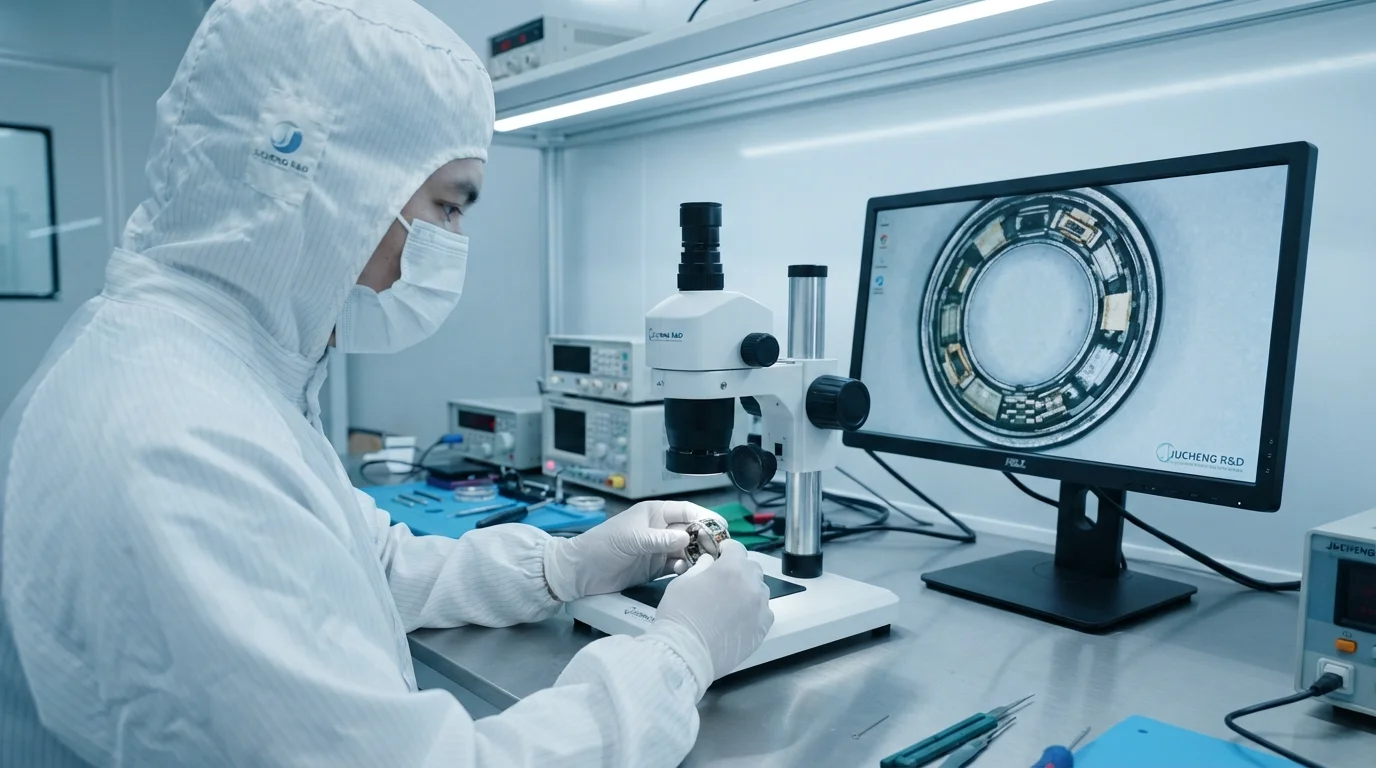
Direct skin contact mandates that raw polymers pass strict dermatological and biocompatibility evaluations to prevent localized allergic reactions. Material scientists select medical-grade elastomers, hypoallergenic silicones, and lightweight titanium alloys to construct these sensitive user interfaces. Combining high-precision CNC micro-milling with multi-shot liquid silicone overmolding ensures the prototype closely replicates the finished retail commodity. Meticulous technical reviews mitigate expensive tooling reworks and assure high end-user satisfaction upon product commercialization.
Ergonomic fitment testing represents a critical phase where physical geometry dictates user comfort across diverse anatomical profiles. Testing wrist curvature clearances, finger joint flexibilities, and headband load distributions demands physical models with variable Shore hardness ranges. Multi-material fabrication programs yield accurate mechanical samples that survive severe user drop-testing and dynamic twist simulations.
Tabla de Contenidos
1. Miniaturization Demands and Micro CNC Machining for Watch Cases
2. Skin-Safe Elastomers and Liquid Silicone Rubber Overmolding
3. Two-Shot Injection Molding and Tactile Ergonomics
Miniaturization Demands and Micro CNC Machining for Watch Cases
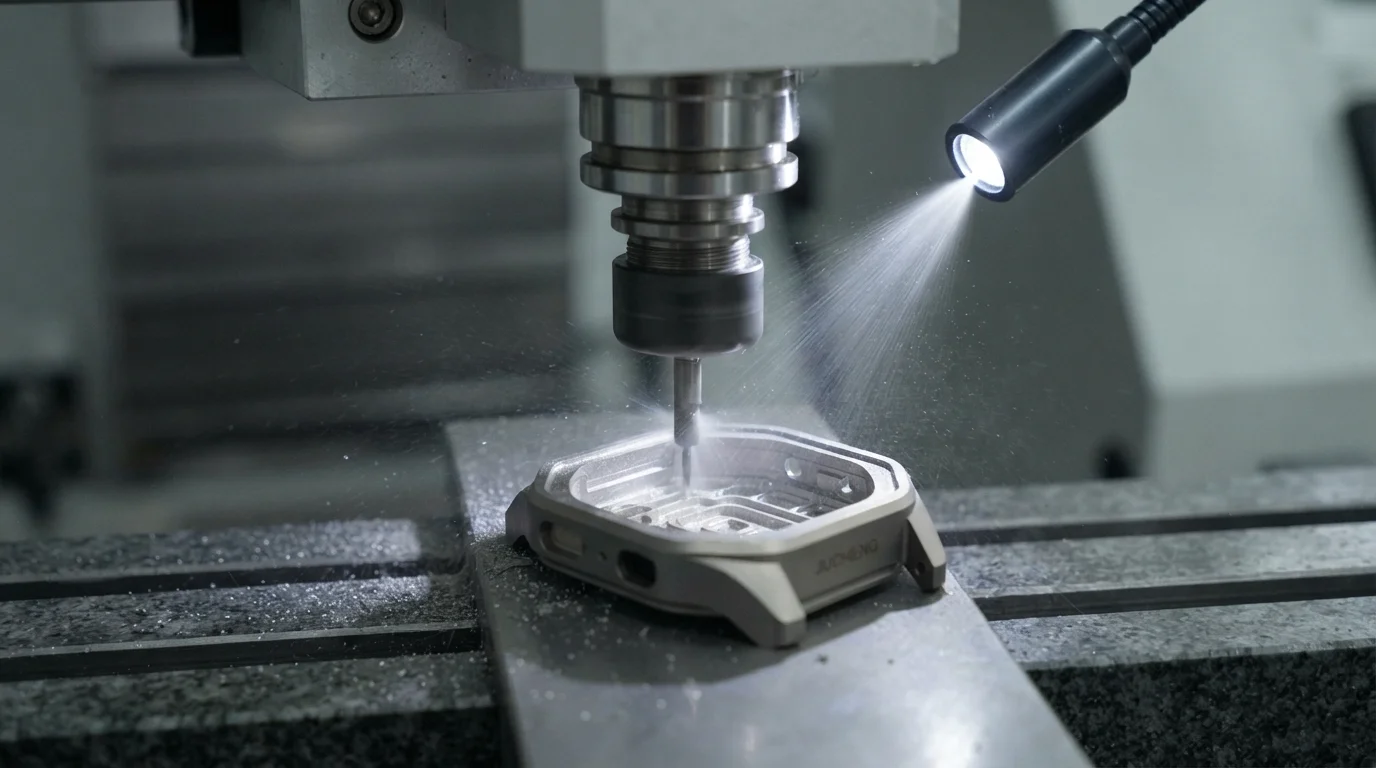
Question: Why is micro-CNC machining critical for wearable hardware? Miniature internal structures require extremely small cutters running at high spindle speeds to carve tight sensor bays.
Intricate wearable housings present unique mechanical challenges because of their microscopic volumetric footprints. Smart rings and sportswatches require high-speed CNC milling centers equipped with specialized micro-cutters to carve wall thicknesses down to 0.4 mm safely. Titanium, magnesium, and specialized aerospace-grade aluminum are machined with microscopic tool paths to locate dynamic optical sensors precisely. Finished metallic parts undergo bead blasting to remove minor tool marks and achieve a premium satin exterior.
Microscopic screw threads and O-ring sealing grooves demand precise multi-axis positioning to secure IP68 waterproof ratings. Machining specialists coordinate high-speed spindle operations under temperature-controlled environments to minimize metal thermal expansion. Specialized tools inspect structural dimensional tolerances at micron levels to confirm total design compliance.
Utilizing multi-axis simultaneous milling centers speeds up wearable device prototyping phases, allowing product teams to test diverse mechanical layouts within days. Designers iterate complex freeform surfaces that conform comfortably to human joints without compromising internal PCB mounting points. Milled titanium watch cases provide outstanding corrosion resistance against human sweat and harsh environmental chemicals.
Elastómeros Seguros para la Piel y Sobremoldeo de Caucho de Silicona Líquida
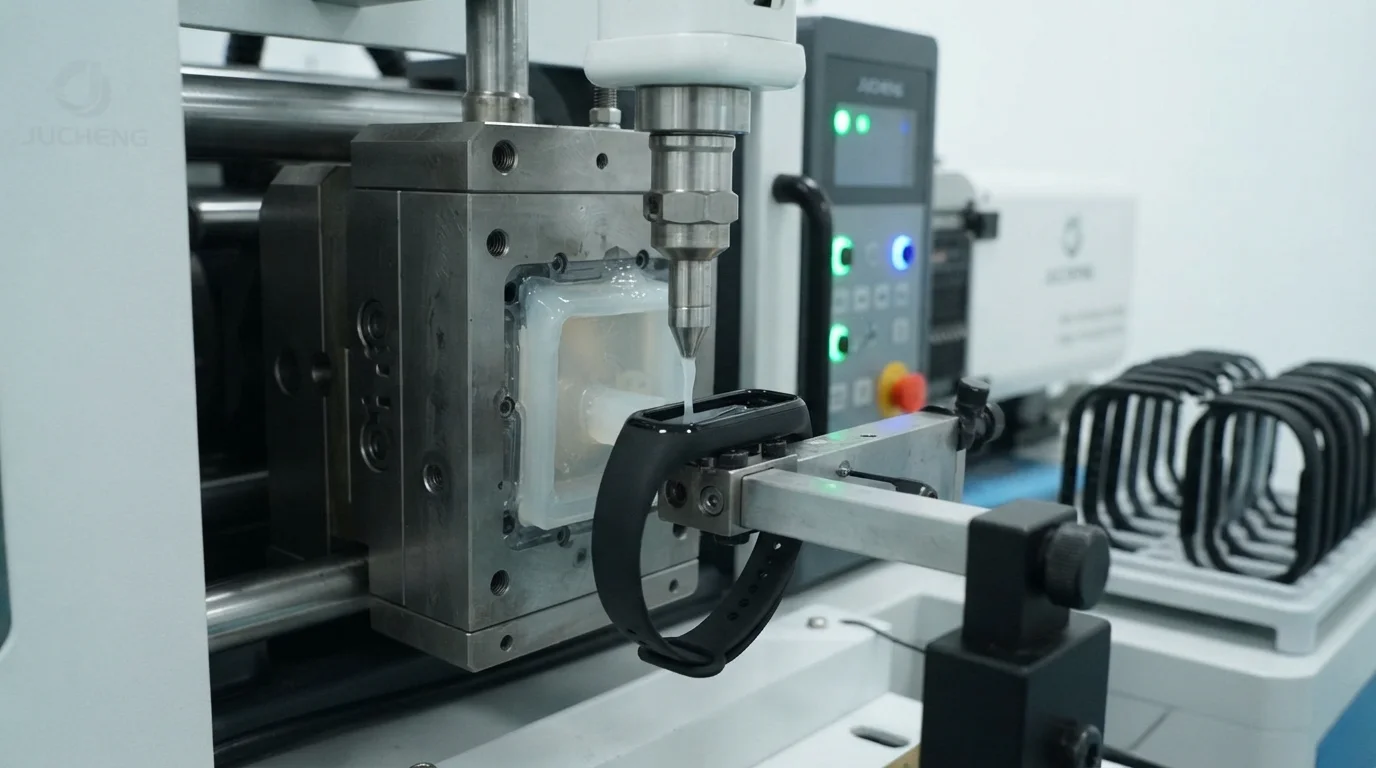
Pregunta: ¿Cómo se combinan las carcasas inteligentes rígidas con las correas flexibles de tacto suave? Los procesos de sobremoldeo de silicona unen caucho de silicona líquida seguro para la piel directamente sobre núcleos de plástico rígido.
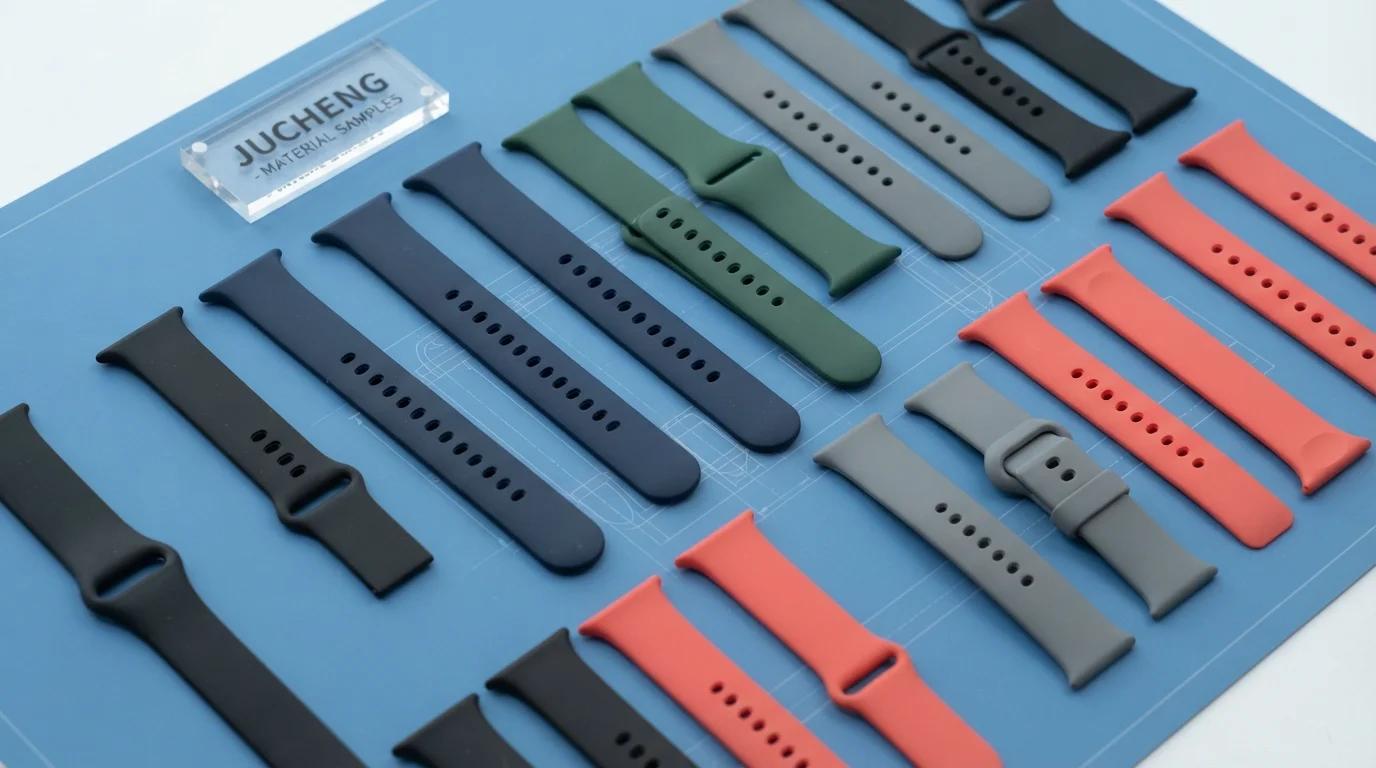
El desarrollo de pulseras inteligentes cómodas y ganchos flexibles para auriculares requiere la integración de elastómeros flexibles seguros para la piel. El moldeo de caucho de silicona líquida (LSR) proporciona una solución altamente biocompatible, que ofrece una excelente resistencia a los rayos UV y suavidad táctil. Las técnicas de fundición al vacío utilizan moldes de silicona para encapsular marcos rígidos de policarbonato con capas suaves de poliuretano, simulando el sobremoldeo de grado de producción. Esta comparación detallada a continuación destaca los polímeros elásticos estándar utilizados para aplicaciones de contacto directo con la piel:
| Base del Material | Dureza Shore | Biocompatibilidad (ISO 10993) | Aplicación de Ensamblaje de Dispositivos Portátiles |
|---|---|---|---|
| Caucho de Silicona Líquida | 40A – 70A | Certificado USP Clase VI | Pulseras, acolchado de contacto suave |
| TPU (Poliuretano) | 80A – 95A | Calidades seguras para la piel disponibles | Protectores de bisel, correas estructurales |
| TPV (Caucho Vulcanizado) | 60A – 80A | Opciones hipoalergénicas | Sellos estructurales, juntas táctiles de botones |
Chemical bonding agents or physical mechanical interlocks secure the adhesion between soft elastomers and hard plastics. Mechanical engineers design structural undercut grooves that capture flowing polymers during overmolding operations. This physical union prevents strap separation when subjected to intense torsional twisting and high pulling forces during athletic use.
Two-Shot Injection Molding and Tactile Ergonomics
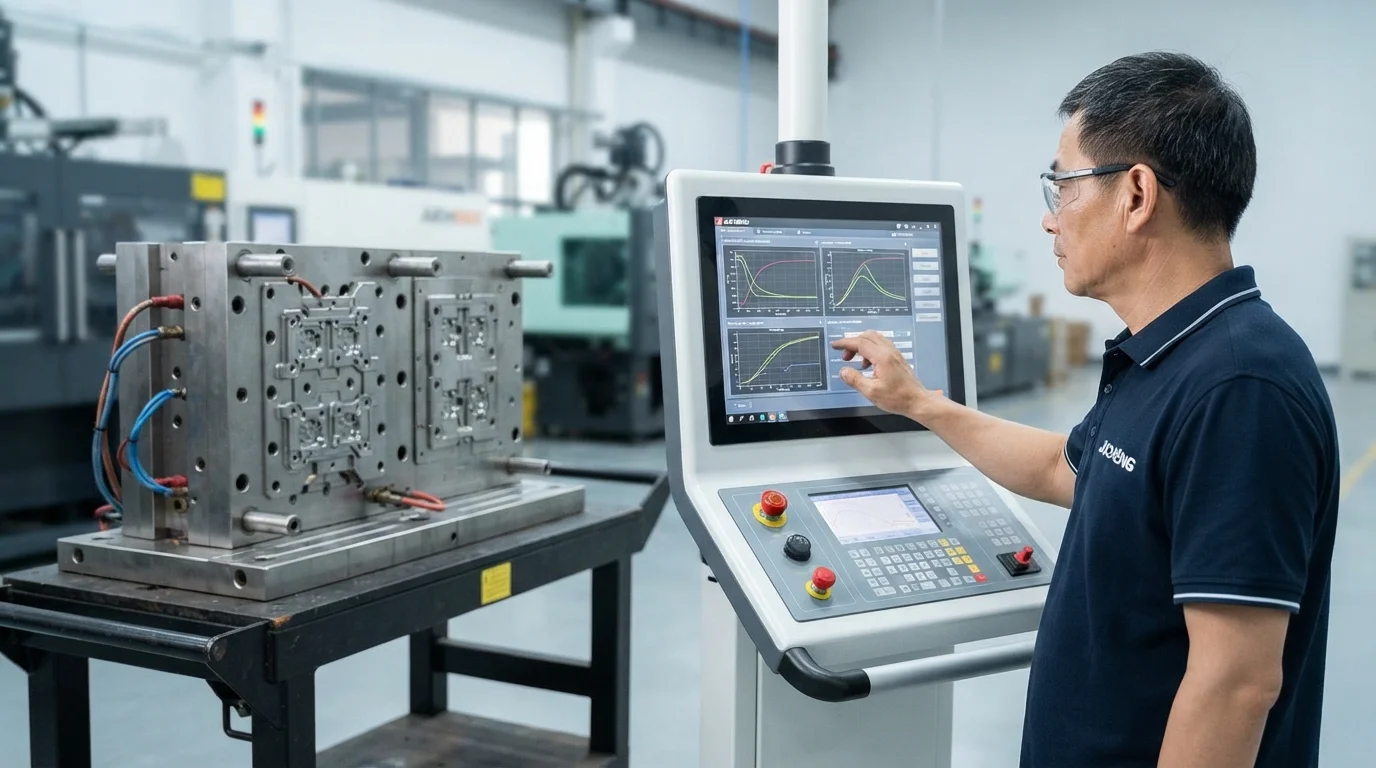
Question: What is the most reliable way to produce multi-color wearable casings? Double-shot injection molding injects two different plastic resins into a single mold setup sequentially.
High-end wristwatches and wearable medical monitors often combine hard housing buttons with soft elastic seals to ensure water resistance. Double-shot injection molding (2K molding) provides a highly precise production-representative manufacturing method for these integrated interfaces. Tooling designers coordinate rotating core configurations to cycle different material injections within a single automated press run. Finished parts exit the press with zero assembly gaps, ensuring pristine aesthetics and absolute dust-proof sealing.
Varias aplicaciones de prototipado rápido in personal wellness devices rely on this advanced multi-shot molding method to evaluate mechanical snap-fits. Real material evaluations ensure buttons actuate with an audible, satisfying tactile click while maintaining chemical resistance against daily sanitizing washes. Engineers evaluate gate locations and mold flow behaviors using high-end software to prevent visible knit lines on critical exterior cosmetic surfaces.
Controlling volumetric shrinkage remains a paramount concern when molding thin-walled overmolded assemblies. Differential cooling rates between rigid plastic bases and soft elastomer covers can induce subtle dimensional warpage. Tooling specialists optimize conformal cooling channels within aluminum rapid molds to ensure uniform temperature reduction across both material zones.
Virtual Reality Gear and Wearable Validation Solutions

Question: How are complex virtual reality headset assemblies validated? Production-grade rapid tooling delivers genuine plastic enclosures to conduct real mechanical assembly checks and drop validations.
Complex virtual reality (VR) headsets and smart eyewear combine highly intricate internal electronics with sophisticated optical mounting plates. Jucheng Precision operates a fully-integrated factory setup featuring 150+ CNC machines, including 25 high-precision Haas/Mazak de 5 ejes machines to cut complex structural internal frames. Standard coordinate measuring machines verify sub-micron clearances, ensuring sensitive lens mounts align perfectly with digital display drivers. Rigid engineering polymers like polycarbonate-ABS provide the dimensional stability needed to withstand dynamic user stress tests.
Developing teams streamline their development cycles by requesting comprehensive DFM gratuito las 24 horas engineering reviews. Specialized utillaje rápido services deliver high-fidelity injection-molded parts within 4 to 15 days, ensuring projects meet critical launch deadlines. Operating with a strict no-MOQ policy allows medical and consumer wearable startups to run multi-batch design evaluations without upfront tooling financial risks.
Partnering with a certified manufacturing partner ensures your wearable device prototyping phase meets identical quality standards as mass-production runs. Technical quality systems under ISO 9001 and ISO 13485 guidelines guarantee strict material traceability and part dimensional repeatability. Designing with confidence allows engineering groups to deliver comfortable, highly functional wearable technologies directly to global consumers.
Preguntas Frecuentes (FAQ)
How does Jucheng Precision guarantee skin safety for plastic prototypes?
Raw medical-grade polymers are sourced directly with certified Certificate of Analysis documentation to verify biocompatibility. We process hypoallergenic liquid silicones and certified skin-safe resins inside clean, controlled manufacturing environments to prevent contamination.
What is the minimum wall thickness possible for milled watch cases?
Precision multi-axis micro-CNC milling allows wall thicknesses to reach 0.4 mm in titanium or high-strength aluminum structural frames. Tooling setups require extreme rigidity and optimized cutting feeds to prevent thin walls from undergoing tool-induced deflection.
Can silicone straps be prototyped without expensive injection molds?
Polyurethane vacuum casting using soft silicone molds replicates production-grade elastomer qualities down to specific Shore hardness ranges economically. This flexible casting method produces small batches of ten to fifty flexible bands quickly without tooling expenses.
Why is titanium preferred for smart ring structural frames?
Titanium Grade 5 provides exceptional tensile strength, extremely low weight, and absolute biocompatibility, making it comfortable for continuous skin contact. Highly stable mechanical properties prevent smart rings from deforming under daily physical impacts.

