Small size does not make a suture anchor a simple turned component. Its thread or retention geometry, suture pathway and insertion interface perform different jobs, and each needs a defined manufacturing and inspection route. Suture anchor manufacturing should begin with that functional separation rather than with a generic request for a medical-grade material.
This article addresses component development and OEM manufacturing. The device owner defines intended use, design requirements and product acceptance. Material selection or a successful machining trial alone does not establish clinical suitability, regulatory clearance or finished-device performance.
Start with the anchor architecture
Identify the component being ordered before comparing suppliers or processes. An anchor body, an eyelet insert and a complete anchor assembly are different deliverables. Some designs use distinct parts; others integrate features into one component. The drawing must make the supplied boundary clear.
Separate three interfaces in the review: the geometry that engages its receiving structure, the pathway that contacts the suture, and the feature used by the insertion instrument. A change intended to simplify one interface can alter another. Increasing access to a small internal passage, for example, may change the remaining section nearby.
These questions connect the part to the wider medical device manufacturing processes. The supplier should understand which characteristics it is responsible for producing and which device-level evaluations remain with the customer. A clear boundary makes the quotation and acceptance package more useful.
PEEK and titanium create different process questions
For a PEEK design, specify the exact material designation, supplied form and required traceability. The word PEEK alone does not define an implantable material specification or the required controls for a finished device. The drawing and purchase specification must identify the intended material and acceptance requirements.
Machining from qualified stock and finish-machining a molded blank are different routes. A molded blank can reduce material removal, but its internal quality still matters. Genesis Medical Plastics describes a suture-anchor project involving voids in molded PEEK blanks that required process investigation before finish machining. That supplier’s example illustrates a route-selection question; it is not evidence about Jucheng parts or a universal defect rate.
El mecanizado de PEEK review should address support of small features, burr control and the accepted condition after processing. Thin sections can be difficult to hold and inspect without influencing the result. Establish handling and inspection methods at the prototype stage rather than after the first production order.
For titanium, grade and condition remain equally important, but the cutting and finishing plan changes. Thread roots, small openings and insertion features require suitable tool access and controlled edge treatment. Do not transfer a toolpath, surface requirement or inspection assumption from a polymer component simply because the nominal model is similar.
Material comparison should stay tied to the customer’s controlled design. A machining supplier can explain manufacturing implications and propose alternatives for review, but should not substitute a material based only on cost, availability or ease of cutting.
Treat the thread and driver feature as a coupled system
A nominal thread diameter is not a complete thread definition. Profile, pitch, transitions and any specialized geometry must be represented in the drawing or its controlled supporting data. A familiar commercial thread gauge may not evaluate a custom anchor profile.
Review how the driver feature relates to the anchor axis and surrounding wall. Its geometry can require milling, broaching or another specified method, depending on the design. The choice should consider accessibility, burr formation and the ability to inspect the finished feature, not only cycle time.
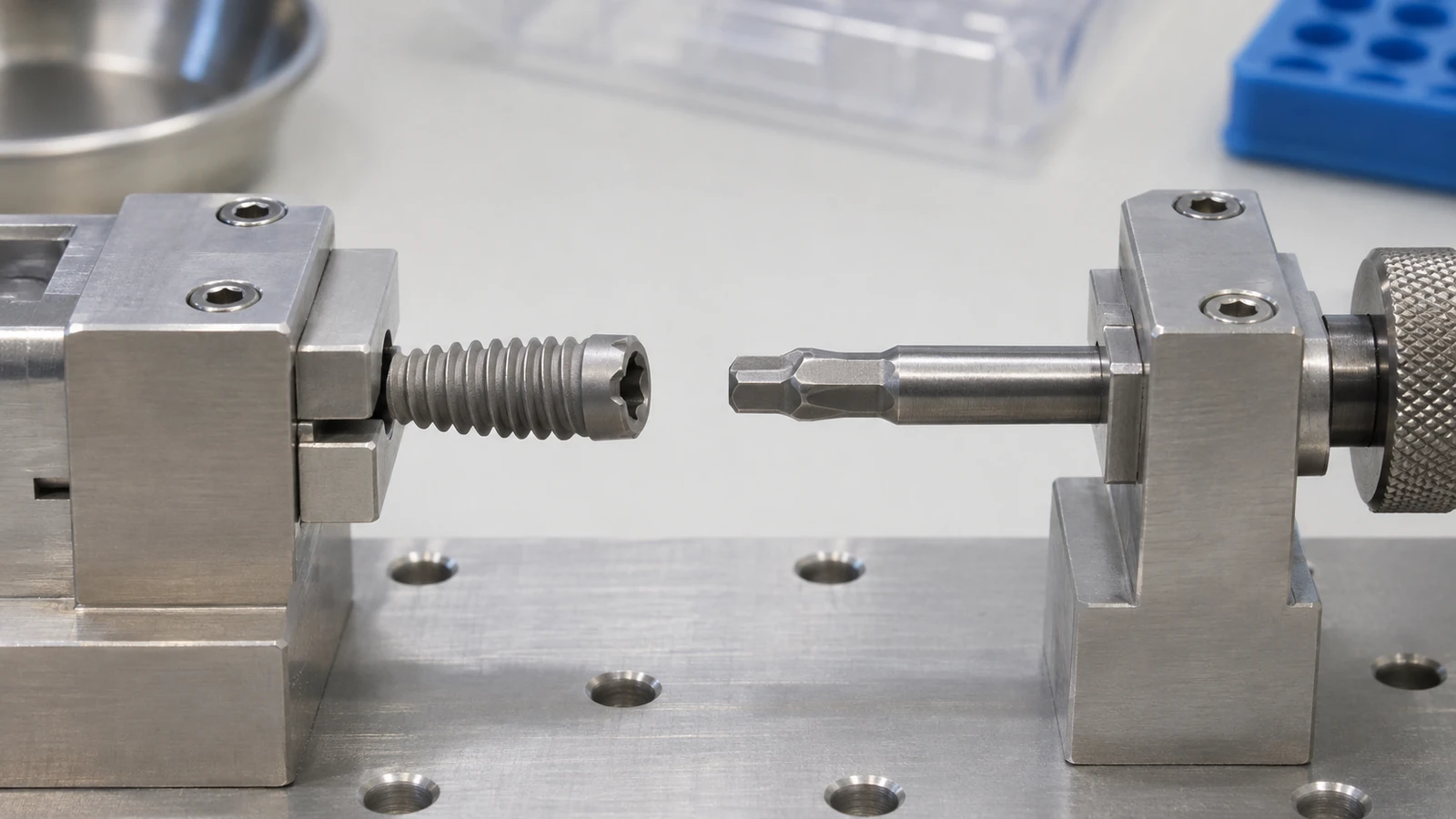
Small tools make tool condition and process control important, but a supplier should avoid promising a universal tolerance without reviewing the feature. Define the actual requirement, select an appropriate measurement method and document any portion that cannot be evaluated by the proposed method.
A fit check with a mating instrument can support an interface review. It does not automatically replace dimensional inspection or the device owner’s functional acceptance requirements. Identify the mating sample and its revision so that the check remains interpretable when either component changes.
The eyelet deserves its own finishing plan
The suture pathway can contain intersecting openings, narrow edges or recessed surfaces that are difficult to see. A general instruction to deburr the part may be insufficient. Specify which edges require controlled transitions and which surfaces need a defined finished condition.

Access drives the finishing choice. A process suitable for an exposed external edge may not treat an internal passage uniformly. Consider how the part is held, how processing media reach the feature and how residue is removed afterward. These are manufacturing questions that should be resolved for the actual geometry.
Avoid using appearance as the only acceptance criterion. A smooth-looking opening can still have a local burr, while aggressive polishing can change a dimension or remove a defined feature. The acceptance plan should distinguish edge condition, surface condition and dimensional compliance.
| Característica | Manufacturing concern | Evidence to agree |
|---|---|---|
| Retention geometry | Profile and transitions | Defined dimensional or profile results |
| Suture pathway | Accessible and hidden edge condition | Suitable visual or other specified inspection |
| Insertion interface | Location and mating geometry | Drawing checks and controlled fit evaluation |
| Finished component | Residue and handling condition | Customer-defined cleanliness and packaging evidence |
Build inspection around what the method can see
Create an inspection plan before the first sample is finished. Identify the critical external dimensions, internal features and relationships between them. Then record which method evaluates each characteristic and where its coverage stops.
Optical inspection can be useful for accessible profiles and edges, but its suitability depends on geometry and setup. A method that sees the entrance to a passage may not evaluate its entire internal surface. Do not describe a partial view as complete internal verification.
If the customer requires additional evaluation of internal quality, agree on the method, acceptance criteria and sampling plan. Inspection should follow the product risk and specification rather than a generic statement that every part receives the same test. Keep prototype learning separate from claims of established production capability.
Traceability should link the material, part revision, processing records and inspection results. For assemblies, clarify whether constituent parts remain individually identified or are controlled through a batch record. The exact system depends on the approved quality arrangement, but the records must support the delivered scope.
Questions to settle before ordering samples
Can one prototype prove the production route?
No. A prototype can answer defined questions about geometry, access or a proposed process. Its evidence applies to the material, route and configuration actually used. A later change in blank source, molding process or finishing method may require additional review.
Should all edges receive the same treatment?
Only if that is what the controlled design requires. External threads, a suture pathway and a driver interface have different functions. A blanket edge instruction can obscure a critical difference or permit an unwanted geometry change.
What should Jucheng receive for a manufacturing review?
Provide the model and drawing revision, exact material specification, quantity, assembly boundary and inspection requirements. Highlight inaccessible surfaces, controlled edges and any required process sources. Jucheng Precision can review these inputs alongside the available fabricación de prototipos route, then identify manufacturing questions that need customer resolution before a sample is approved.